Jenny

Gender: Feminine
Origin: English/German/Swedish
Eng (JEN-nee); Germ/Swe (YEHN-nee)

The name started off as a medieval diminutive for Jane or Johanna, but became to be used as an independent given name by the 18th-century.

It has only been recent that the name has come to be associated with Jennifer.

As of 2009, Jenny was the 708th most popular female name in the United States. The highest she has ranked in U.S. naming history was in 1977 when she was the 108th most popular female name.

She is currently the 30th most popular female name in Norway (2009).

A notable bearer was Swedish opera singer, Jenny Lind (1820-1887).

It was also borne by the wife of Karl Marx, Jenny of Westphalia (1814-1881).

An Icelandic form is Jenný.

Another Swedish form is Jennika.

Designated name-days are: August 15 (Estonia); October 6 (Sweden)

Source

  1. http://www.behindthename.com/name/jenny

Sibyl

a woman looking at the mirror

Photo by cottonbro studio on Pexels.com

Gender: Feminine
Origin: Greek
Meaning: “prophetess; sibyl.”
(SIB-el)

The name comes from the Greek, Σιβυλλα (Sibylla) meaning “prophetess.” In Greek and Roman legend, the sibyls were ten female prophets who were located at various sites throughout the ancient world, one notable location being Delphi.

Among Christians, the sibyls were believed to have had divine knowledge, especially with the coming of Christ, and were respected on par as the prophets of the Old Testament. The name was quite common in Medieval Europe as a result, but fell out of usage after the Protestant Reformation. It was revived in the 19th-century.

The name is the subject of a novel by Benjamin Disraeli (1845).

Other forms of the name include:

Sibil·la (Catalan)
Sibyla (Czech)
Sibylle (Danish/French/German)
Sibille (Dutch)
Pille, Sibülle (Estonian)
Sybille (French/German)
Sibylla (German/Greek/Swedish)
Szibilla (Hungarian)
Szibill (Hungarian)
Sibilina (Italian)
Sibilla (Italian/Latvian/Lithuanian/Polish)
Sybilla (Late Latin/Estonian)
Sibila (Portuguese/Spanish)
Sebille (Turkish)

Nicknames include:

Billie, Sibbie (English)
Bülle, Sibä, Sible (Swiss German)

Notable bearers include: Sibylla of Burgundy, Queen of Jerusalem (1126-1150); Sibylla of Burgundy, Duchess of Burgundy (1065-1103)

The designated name-days are: April 29 (Poland); May 19/20 (Latvia); October 3 (France); October 20 (Sweden)

Source

  1. http://www.behindthename.com/php/find.php?name=sybilla

Rayner, Rainer, Rainier

Gender: Masculine
Origin: German
Meaning: “army advice.”

The name is the English form of the Old Germanic, Raganhar, which is composed of the elements, ragin, meaning “advice” and har, meaning “army.”

The name was introduced into England via the Normans and subsequently fell out of usage by the High Middle Ages.

Other forms of the name include:

Ragnar (Danish/Estonian/Icelandic/Norwegian/Swedish)
Regner (Danish)
Reinier (Dutch)
Rain (Estonian)
Raino (Estonian/Finnish)
Rauno (Estonian/Finnish)
Raknar/Raknari/Raknu (Finnish)
Rainier (French)
Rainer/Reiner (German/Estonian)
Nero (Italian)
Raniero (Italian)
Riniero (Italian)
Neer (Limburgish)
Reneer (Limburgish)
Ragnarr (Old Norse)
Rajner (Polish)
Rávdnár (Sami)
Rainerio (Spanish)

Nicknames include:

Rein (Dutch)
Raik and Reik (German)
Ranuccio, Nero (Italian)
Ragge (Swedish)

Feminine forms are:

Raina (German/Estonian)
Raniera/Rainera (Italian)

The name is a common one in the Grimaldi house of Monaco, it was borne by Prince Rainier I Grimaldi (1267-1314); Rainier II Grimaldi (1350-1407) and the late Prince of Monaco, Prince Rainier III (1923-2005)

The designated name-day is October 1 (Estonia/Finland/Sweden).

Source

  1. http://www.behindthename.com/php/find.php?name=ragnar

Bertha

Bertha of Swabia, by Albert Anker 1888

Gender: Feminine
Origin: German
Meaning: “bright.”
Eng (BER-thuh); Germ (BEHR-tah)

The name is derived from the Old Germanic element, beraht, meaning “bright.”

It was borne by an early Germanic goddess of childbearing and weaving, also known as Perchta or Berchta in Southern Germanic dialects.

According to Jacob Grimm and Lotte Motz, Perchta was the Alpine version of Holda (see http://legitimatebabynames.com/2010/09/15/hulda/)

As a given name, it was quite common among the Franks, as is demonstrated with Charlemagne’s mother, whose name was Bertha.

As is to be expected, the name does not appear in the U.S. Top 1000. In the latter half of the 20th-century, Bertha has taken on a bad reputation as being the worst name one can give to a daughter. In 1883, however, Bertha was the 7th most popular female name in the United States.

Other forms of the name include:

Behrte (Anglo-Saxon)
Berta (Czech/Estonian/Faroese/Hungarian/Icelandic/Italian/Norwegian/Polish/Slovak/Slovene/Spanish/Swedish)
Berthe (French)
Bertille (French)
Bertilla (Italian)
Bertina (Italian/Hungarian)
Behrta/Perchta (Old German)

    Obscure Italian male forms include, Berto, Bertinello, Bertillo, Bertino, Bertolo and Bertonello.

    Other notable bearers include: St. Bertha of Kent (593-612) known for her Christianization of Anglo-Saxon England; St. Berthe Val d’Or (d.c 690); St. Berthe of Artois (c.725); St. Bertha of Bingen (c. 757); Berthe of Burgundy, Queen of France (c. late 10th-century); Bertha of Swabia, Queen of France (907-966); Berthe of Holland, Queen of France ( 1055-1093); Bertha of Sulzbach, renamed Irene, was a Byzantine Empress and first wife of Manual I Comnenus (1110-1159); Blessed Berta de Bardi (d. 1163); Austrian novelist and pacifist, Bertha von Suttner (1843-1914); First woman Puisne Justice of the Canadian Supreme Court, Bertha Wilson (1923-2007).

    The designated name-days are: February 8 (Sweden); May 1 (Germany); May 15 (Poland); July 2 (Slovakia); August 6 (Hungary); August 24 (Estonia); September 23 (Czech Republic)

    Source

    1. http://www.behindthename.com/name/bertha

    Herman

    Gender: Masculine
    Origin: German
    Meaning: “army man.”
    (HER-men)

    The name is composed of the Germanic elements, hari meaning “army” and man, meaning “man.”

    The name was introduced into England in the 11th-century via the Norman invasion. It subsequently died out by the late Middle Ages and was revived in the 19th-century.

    As of 2009, Herman did not rank in the U.S. top 1000, the highest he ranked in U.S. naming history was in 1904, when he was the 47th most popular male name.

    In 2009, Herman was the 56th most popular male name in Norway.

    Other forms of the name include:

    Heřman (Czech)
    Herman (Danish/Dutch/English/Estonian/Finnish/German/Hungarian/Polish/Russian/Scandinavian)
    Harm (Dutch)
    Hermanus (Dutch/Late Latin)
    Mannes (Dutch)
    Hermanni (Finnish)
    Armand (French)
    Armin (German)
    Hariman (German: archaic)
    Hermann (German)
    Armando (Italian/Portuguese/Spanish)
    Armano (Italian)
    Arminio (Italian)
    Ermanno (Italian)
    Arminius (Late Latin)
    Maan (Limburgish)
    German/Gierman Герман (Russian)

    Feminine forms include:

    Armande (French)
    Hermine (French/German)
    Armanda (Italian/Portuguese/Spanish)
    Arminia (Italian)
    Ermanna (Italian)

    Notable bearers include: Herman III the Long of Brandenburg (1275-1308) and St. Herman of Alaska, a Russian Orthodox saint known for his evanglization of Alaska.

    The designated name-days are: July 12 (Estonia); September 25 (France)

    Source

    1. http://www.behindthename.com/name/hermann

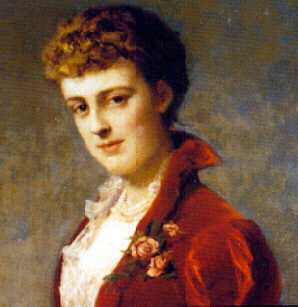
    Edith

    Edith Wharton

    Gender: Feminine
    Origin: Anglo-Saxon
    Meaning: “blessed war; rich war.”
    Eng: (EE-dith); Ger (EH-dit); Fre (AY-deet)

    The name is derived from the popular Anglo-Saxon female name, Eadgyð, being composed of the elements, ead, meaning, “riches; blessed” and gyð, meaning, “war.”

    The name was quite common among Anglo-Saxon royalty, being borne by Saint Edith of Wilton (b.961), the daughter of King Edgar the Peaceful. Other notable Anglo-Saxon ladies included: Ealdgyth (circ. 1015) wife of Edmund the Ironside; Edith of Wessex (c.1029) the wife of King Edward the Confessor; Edith “Matilda” of Scotland, the wife of Henry I (1080-1118).

    The name was very popular in Medieval England, but fell out of usage after the 15th-century and was suddenly revived in the 19th-century.

    Currently, Edith is the 846th most popular female name in the United States (2009). The highest she has ranked in U.S. naming history was in 1894, when she was the 26th most popular female name.

    Other forms of the name include:

    Eadgyð/Ealdgyð (Anglo-Saxon)
    Edita Едита (Croatian/Czech/Lithuanian/Serbian/Slovak/Slovene: eh-DEE-tah)
    Ditte (Danish/Hungarian: DEET-te)
    Ditta (Hungarian/Italian)
    Edith (Dutch/English/Estonian/German/Scandinavian)
    Édith (French)
    Editha (German/Late Latin)
    Éda (Hungarian)
    Edina (Hungarian)
    Edit (Hungarian/Swedish)
    Editta (Italian)
    Ediva (Late Latin)
    Edyta (Polish: eh-DIH-tah)
    Edite (Portuguese)

      A common English short form is Edie.

      The name has also been borne by: French songstress, Édith Piaf (1915-1963); First-Lady, Edith Roosevelt (1861-1948); British poet and critic, Dame Edith Sitwell (1887-1964); actress, Edith “Edie” Sedgwick (1943-1971); Jewish-born German philosopher, theologian, Catholic nun, and Holocaust victim, Edith Stein (1891-1942).

      The designated name-days are: January 13 (Czech Republic); May 9 (Lithuania); May 14 (Estonia); September 16 (France, Hungary, Lithuanian, Poland); September 26 (Slovakia).

      Sources

      1. http://www.behindthename.com/name/edith
      2. http://www.etymonline.com/index.php?term=Edith

      Mariana

      Gender: Feminine
      Origin: Latin
      Meaning: “sea-fearer; sailor.”

      The name is a feminine form of the Roman family name, Marianus, which is derived from the Latin, maris, meaning “sea.”

      However, the name has long been associated with the Biblical Mary and Miriam, and was usually bestowed in honour of the Virgin Mary. In other instances, it has been used in reference to both the Virgin Mary and her legendary mother, St. Anne.

      Mariana currently ranks in as the 289th most popular female names in the United States. Her rankings in other countries are as follows:

      Brazil (# 6, 2009)
      # 5 (Portugal, 2008)
      # 7 (Mexico, 2009)

      Throughout the centuries, Mariana has been borne by several important personages, including:

      Mariana of Austria (1634-1696), Queen Consort of Spain and wife to Philip IV. Mariana Victoria of Spain, Portuguese Queen Consort (1718-1781). Spanish national heroin, Mariana Pineda (1804-1831); Mariana Bracetti (1825-1903), considered the designer of the Puerto Rican flag and viewed as a heroin of Puerto Rican Independence. Mexican Telenovela actress, Mariana Levy (1966-2006); Mexican pop singer and actress, Mariana Ochoa (b.1979); American sculptor, Marianna Pineda (1925-1996); and Brazilian actress, Mariana Ximenes (b.1981).

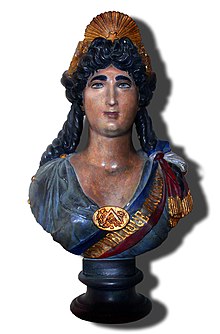
      Shortly after the adoption of the French Republic in 1792, Marianne was a female figure used to personify the state.

      Other forms of the name include:

      Marianna Μαριαννα (Breton/Estonian/Greek/Hungarian/Italian/Occitanian/Polish/Romansch/Slovak)
      Mariana (Bulgarian/Catalan/Czech/English/Italian/Latin/Portuguese/Romanian/Spanish/Swedish)
      Marianne (Danish/Dutch/Estonian/French/English/German/Norwegian/Swedish)
      Marijana Маријана (Croatian/Macedonian/Serbian)
      Mariann (Estonian/Hungarian)
      Mariannina (Italian)
      Marijona (Lithuanian)
      Marianno (Provençal)
      Marionna (Romansch)
      Maryana Марьяна (Russian)

      Nicknames include:

      Májinka/Marjánka/Márinka/Marka/Riana (Czech/Slovak)
      Mariannette (French)

      Male versions include:

      Marijan (Croatian/Slovene)
      Marjan (Croatian/Slovene)
      Mariano (Italian/Portuguese/Spanish)
      Marianno (Italian)
      Mariannino (Italian)
      Marianus (Latin)
      Marian (Polish)

      The designated name-days are: April 30 (Sweden) and September 8 (Czech Republic).

      Source

      1. http://www.behindthename.com/php/find.php?name=mariana

      Egon

      Gender: Masculine
      Origin: German
      Meaning: “sword.”
      Eng (EE-gahn); Germ (EH-gone)

      The name is derived from the Old Germanic, ekka, meaning “sword.” Some sources list the name as a Hungarian form of Eugene, or as a German contraction of the Old German name, Eckhard, which would mean, “sword strength” or “strong as a sword.”

      In German-speaking countries, the name is considered old fashioned. In the Anglo-phone world, it is associated with 1980 films and TV series, Ghostbusters, Ghostbusters II and The Real Ghostbusters, in which one of the main characters was named Egon Spengler.

      The name was also borne by the early 20th-century Austrian painter, Egon Schiele (1890-1918).

      Another form of the name is Egino (German).

      The designated name-days are: March 11 (Sweden); July 15 (Germany, Poland); September 1 (Hungary); November 17 (Estonia)

      Sources

      1. http://de.wikipedia.org/wiki/Egon
      2. http://www.behindthename.com/php/find.php?name=egon

      Ülo

      Gender: Masculine
      Origin: Estonian
      Meaning: “joy.”

      The name is derived from the Livonian element, ilo, meaning “joy.” The name appears in the Chronicle of Henry of Livonia, in the form of the latinized, Ylo. The name was derived in the 19th-century.

      It can also be associated with the modern Estonian words, ülev (exalted) and üllas (noble).

      Other forms of the name include:

      Ülar
      Ülari
      Ülev
      Üllar
      Üllart
      Üllas
      Üllo

      The designated name-day is September 1.

      Sources

      1. http://en.wiktionary.org/wiki/Ülo
      2. http://www.behindthename.com/namedays/lists/9.php

      Bernard, Bernadette

      Gender: Masculine
      Origin: Old German
      Meaning: “brave as a bear; hardy as a bear.”
      (Am. Eng) (ber-NARD); (Brit. Eng) (BER-nerd)

      The name is composed of the Old High Germanic elements, bern (bear) and hard (brave; hardy).

      The name was introduced into England by the conquering Normans in the 10th-century, replacing the more Anglo-Saxon version of Beornheard.

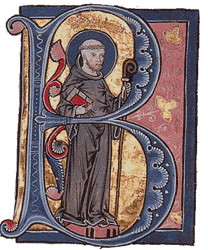
      It became quite prevalent throughout Western Europe during the middle ages due to the associations with St. Bernard of Menthon, a Swiss monastic credited to building hospices in the Alps, (it is from him that the breed of dog, the St. Bernard, takes its name) and St. Bernard of Clairvaux, an influential 12th-century French theologian who is revered as both a saint and Doctor of the Church by the Catholic Church.

      As of 2009, the name fell out of the U.S. top 1000 most popular male names. The highest he ever ranked in U.S. naming history was at # 45 in 1919 and again in 1921.

      Its more popular feminine version of Bernadette became prevalent, especially among Catholics throughout the Western World, after the Canonization of St. Bernadette Soubirous (née Marie-Bernarde Soubirous). St. Bernadette was a 19th-century French peasant girl credited to seeing visions of the Virgin Mary in Lourdes, France.

      Before her recognition throughout the world, Bernadette was primarily a diminutive, used as an affectionate form of the French feminine name, Bernarde.
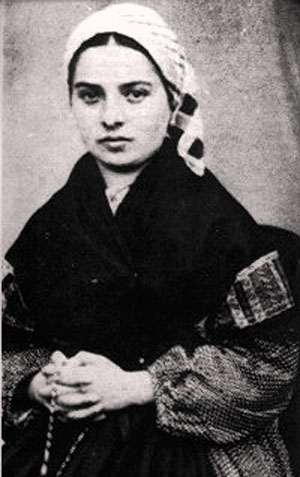
      The last time Bernadette ranked in the U.S. top 1000 was in 1993, coming in at # 891. The highest she ever ranked in U.S. naming history was in 1946, coming in as the 188th most popular female name. Its Hungarian cognate of Bernadett currently ranks in as the 76th most popular female name in Hungary (2009).

      Variations

      Bernard

      Bernardi (Albanian)
      Bernal (Aragonese/Galician)
      Beñat (Basque)
      Bernarta (Basque)
      Bernez (Breton)
      Bernat (Catalan)
      Bernardu (Corsican/Sardinian)
      Bernard (Croatian/Czech/English/French/German/Polish/Romanian/Romansch/Slovenian/Swedish)
      Bernhardt/Bernhart (Danish/Finnish/German/Norwegian/Swedish)
      Berend (Dutch)
      Bernaard (Dutch)
      Bernhard (Dutch/Estonian/German)
      Päärn/Pärn/Pärno (Estonian)
      Pääro (Estonian)
      Pearn/Pearu (Estonian)
      Bernardin (French/Romansch)
      Bent (Frisian)
      Bernaldo (Galician)
      Bernaldino (Galician)
      Berendt (German)
      Berinhard (German: archaic)
      Bernd/Berndt (German/Swedish)
      Bernárd (Hungarian)
      Bernát (Hungarian)
      Bennardo/Bennardino (Italian)
      Berardo (Italian)
      Bernadetto (Italian)
      Bernardino (Italian)
      Bernardo (Italian/Portuguese/Spanish)
      Bernoardo (Italian)
      Bearnárd (Irish-Gaelic)
      Bernardus (Late Latin)
      Bernards (Latvian)
      Bierants (Latvian)
      Biernis (Latvian)
      Bernardas (Lithuanian)
      Beurnard (Poitevin)

      Bernadette

      Bernardete (Albanian/Portuguese)
      Bernada (Catalan/Occitanian)
      Bernadeta (Catalan/Occitanian/Polish)
      Bernarda (Croatian/German/Italian/Slovene/Spanish/Polish/Portuguese)
      Bernadette (English/French)
      Bernarde (French)
      Bernardine (French)
      Bernadett (Hungarian)
      Bernadetta/Bernardetta (Italian)
      Bernardina (Italian)
      Bernadetė (Lithuanian)
      Bernardka (Slovenian)
      Bernardita (Spanish)

      Common English diminutives for both names are Bernie & Benny.

      In French it is Bébère, Nanard and Bernie for males.

      A Polish female diminutive is Bernardetka.

      The designated name-day is August 20.

      Source

      1. http://www.behindthename.com/name/bernard