Solomon

Gender: Masculine
Origin: Hebrew שְׁלֹמֹה
Meaning: “peace.”

The name is borne in the Old Testament by son of David and the King of Israel. He is credited as being the author of Proverbs, the Song of Solomon and Ecclesiastes. In the Talmud he is considered one of the 48 prophets. In Jewish and Christian tradition he is viewed as a wise and holy king but had fallen from grace due to his ego and his marriage to hundreds of foreign wives who led him astray from God. In the Qu’ran, Solomon is a prophet and a messenger from Allah, he is the only one who was ever able to control the djinn with his magical incantations.

The name has always been a popular one among Jews, Muslims and Eastern Orthodox Christians, but has never really been common in the English-speaking world, even after the Protestant Reformation. Currently, Solomon is the 467th most popular male name in the United States, (2010).

Other forms include:

  • Salomo (Afrikaans/Dutch/Finnish/German/Scandinavian)
  • Salomon (Albanian/Croatian/Finnish/French/Polish/Scandinavian/Ukrainian)
  • Sulayman  سليمان (Arabic)
  • Salamon Саламон (Belarusian)
  • Sulejman (Bosnian)
  • Suljo (Bosnian)
  • Solomon Саламон (Bulgarian/English/Macedonian/Romanian/Russian/Serbian)
  • Salomó (Catalan)
  • Šalomoun (Croatian)
  • Saalomon (Estonian)
  • Sálomon (Faroese)
  • Solamh (Gaelic)
  • Solomoni სოლომონი (Georgian)
  • Shlomo שְׁלֹמֹה (Hebrew)
  • Salamon (Hungarian/Occitanian)
  • Silêman (Kurdish)
  • Salomone (Italian)
  • Shelomo (Ladino)
  • Salamans (Latvian)
  • Zālamans (Latvian)
  • Saliamonas (Lithuanian)
  • Sjelomo (Norwegian: archaic)
  • Szlomo (Polish-Yiddish)
  • Salomão (Portuguese)
  • Šalamún (Slovak)
  • Suleymaan (Somalian)
  • Salomón (Spanish)
  • Sөlәjman Сөләйман (Tatar)
  • Süleyman (Turkish)
  • Selyf (Welsh)
  • Zalman (Yiddish)

Common English diminutives are Sol and Solly.

A Russian feminine form which was common among Russian royalty is Solomonia.

Source

  1. http://www.behindthename.com/name/solomon

Adelaide

Gender: Feminine
Origin: Old German
Meaning: “noble kind; noble sort.”
Eng (AD-ə-layd)

An English form of the German name, Adelheid, it is composed of the Germanic elements, adel (noble) and heid (kind, sort, type). It was borne by a 10th-century saint and wife of Otto the Great.

Its popularity in the English-speaking world was sparked in the 19th-century when William IV took Adelaide of Saxe-Meiningen as his wife. As a result, several places throughout the former British Empire were named in her honour, including Adelaide, Australia.

In addition, the name has been borne by several other royal personages throughout history.

Currently, Adelaide is the 434th most popular name in the United States, (2010).

Other forms of the name include:

  • Adelgjejda Адэльгейда (Belarusian)
  • Adeljajda АдэлЯйда (Belarusian)
  • Adelaid (Breton)
  • Adelaida Аделаида (Catalan/Czech/Hungarian/Russian/Slovene/Spanish)
  • Adléta (Czech)
  • Adelaide (Danish/English/Italian/Portuguese/Swedish)
  • Alhed (Danish)
  • Adelheid (Dutch/Finnish/German/Norwegian)
  • Adelheidis (Dutch)
  • Aleida (Dutch/German)
  • Alida (Dutch/Hungarian/Latvian)
  • Aadelheide (Estonian)
  • Alide (Estonian)
  • Adélaïde (French)
  • Alette (French/Norwegian)
  • Aleit (Frisian)
  • Elke (Frisian)
  • Talea (Frisian)
  • Tale (Frisian)
  • Talia/Thalia (Frisian)
  • Talisa (Frisian)
  • Talke/Thalke (Frisian)
  • Adelaira (Galician)
  • Delaira (Galician)
  • Alheit (German)
  • Alke (German)
  • Heide (German)
  • Heidi (German)
  • Adina (Hungarian)
  • Aletta (Hungarian/Italian)
  • Alett (Hungarian)
  • Alitta (Hungarian)
  • Adelasia (Italian: archaic)
  • Aalis (Medieval French)
  • Alides (Norwegian: archaic)
  • Adalais (Occitanian)
  • Asalais or Azalaïs (Occitanian)
  • Ahlheid (Plattdeutsch)
  • Ahlheit (Plattdeutsch)
  • Adelajda (Polish)

Common English diminutives are: Addie, Del and Lady.

The designated name-days are: January 30 (Poland), February 5 (Poland), December 12 (Poland), December 16 (Estonia/Germany/Poland), December 17 (France).

Source

  1. http://www.behindthename.com/name/adelaide

Cyrus

Gender: Masculine
Origin: Persian

The name is found in History and in the Old Testament as the name of one of the most powerful leaders who ever lived, Cyrus the Great (c. 600 BC or 576 BC–530 BC). He was a conqueror of the Babylonians and who, according to the Bible, freed the captive Jews, allowing them to return to their homeland. It is also borne by several other Persian kings.

Cyrus, in its Persian form, has always been a popular male name in Iran. In the English-speaking world, it did not catch on until after the Protestant Reformation. Currently, Cyrus is the 488th most popular male name in the United States, (2010). The name is commonly used among Iranian-Americans, due to it being such a classic name in Iran and the fact that it is easily translatable to English.

As for its etymology, general consensus agrees that it may derive from the ancient Persian elements khor (sun) and vash (likeness). However, the noted linguist, Karl Hoffman (1915-1996), argued that it is based on an Indo-European root meaning “to humiliate.”

Other forms of the name include:

  • Kores (Afrikaans)
  • Kyowros Կյուրոս (Armenian)
  • Ciru (Asturian)
  • Kir Кир (Azeri/Belarusian/Bosnian/Bulgarian/Croatian/Kyrgyz/Polish/Russian/Rusyn/SerbianUkrainian)
  • Kuir (Basque)
  • Ziro (Basque)
  • Kirus (Breton)
  • Cir (Catalan/Occitanian)
  • Kýros (Czech/Icelandic/Slovak/Slovene)
  • Cyrus (Dutch/English/French/Latin/Polish/Romanian)
  • Kyros Κυρος (Estonian/German/Greek/Scandinavian)
  • Kyyros (Finnish)
  • Cyr (French)
  • Syrus (Frisian)
  • Cíoras (Gaelic)
  • K’iros კიროს (Georgian)
  • Koresh כּוֹרֶשׁ (Hebrew)
  • Círus/Cýrus (Hungarian)
  • Kurus (Hungarian)
  • Cirino (Italian)
  • Ciro (Italian. CHEE-ro)
  • Cirotto (Italian)
  • Kurushi Куруши (Kyrgyz)
  • Kûruşê (Kurdish)
  • Kīrs (Latvian)
  • Kyras (Lithuanian)
  • Kurusy (Malay)
  • Kurush/Kourosh کوروش‎ (Persian)
  • Ciro (Spanish/Portuguese. SEE-ro; THEE-ro)
  • Kiros (Turkish)
The designated name-days are: January 31 (Poland) and September 12 (Poland).
The name has several feminine offshoots, including Cyra, (Eng. SY-rah), which was a popular female name during the Byzantine empire and the Russian, Kira (KEER-ah). Kira  is currently the 90th most popular female name in Hungary, (2010) and the 308th most popular in the United States, (2010). Other feminine forms include:
  • Kira Кира (Bulgarian/German/Hungarian/Latvian/Polish/Russian/Ukrainian)
  • Cyra (English/Latin/Polish)
  • Kiira (Estonian/Finnish)
  • Kyra (Greek/English)
  • Kíra (Hungarian)
  • Cira (Italian/Spanish)
  • Cirina (Italian)
The designated name-days for Kira are: March 10 (Latvia), March 12 (Russia), July 7 (Poland), October 12 (Latvia). November 7 (Estonia).
Source

Ari

The name can have a few derivations and meanings depending on the ethnic background of the bearer. In Hebrew, it is the word for lion  אֲרִי, Lev, its Russian counterpart, was a popular cognate among Eastern European Jews.
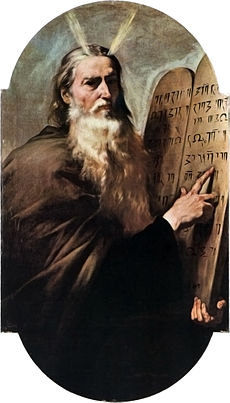
In Albanian it means “gold” and is a common element that appears in many traditional Albanian names.

It is a common Badaga male name, (Badaga is a dialect of Kannada, an Indian language) and it means “sun-like”, it is often anglicized as Harry.

In Finnish and Estonian it was originally used as a form of Adrian and also used as a borrowing from the Old Norse, (see below).

Among Greeks, it is the modern form of the mythological name, Ares, meaning “best”, though commonly used as an independent given name it is also used as a short form of Aristostle.

In Armenian it means brave Արի, and it is also an Old Norse name meaning “eagle.”

Currently, Ari is the 502nd most popular male name in the United States, (2010).

In recent years, Entourage has brought this name to the forefront as the name of one of the key characters.

It is also borne by the husband of Princess Märtha Louise of Norway, Ari Behn (b.1972).

Other notable bearers include:

  • Ari Þorgilsson (Iceland’s foremost Medieval Chronicler 1067-1158)
  • RabbiIsaac Luria (1534–1572), Jewish rabbinical scholar and mystic known also as Ari
  • Ari Emmanuel (brother of Chicago Mayor, Rahm Emmanuel and a famous American talent agent)
  • Ari Fleischer (b.1960, U.S. press secretary for George W. Bush).

Sources

  1. http://www.behindthename.com/name/ari-1
  2. http://en.wikipedia.org/wiki/Ari_(name)

Moses

Gender: Masculine
Origin: Debated
Meaning: debated

The name is borne in the Old Testament and in the Qu’ran by the a renowned prophet and law giver, who according to tradition was placed in a basket by his Hebrew mother and found by the daughter of Pharaoh (in Judeo-Christian religion) or the wife of Pharaoh (in Islamic tradition) and raised as an Egyptian prince. It is from this tradition that the name is believed to be derived from the Hebrew element משה (mšh) as stated in  Exodus 2:10:

“[…] she called his name Moses (משה): and she said, Because I drew him (משיתהו) out of the water.” (KJV).


It has been suggested that the name is in fact of Egyptian origins, being related to the Coptic elements, mo (water) and uses (saved; delivered) hence: “saved from the water.” Another suggestion is the Egyptian element, ms (child; born) as found in such ancient Egyptian male names as Tuth-Mose and Ram-messes.

The name has always been common among Jews, Muslims and Orthodox Christians, but did not catch on in the English-speaking world until after the Protestant Reformation. Medieval Jews of England used the Middle English form of Moss.

It is currently the 509th most popular male name in the United States, (2010).

Other forms of the name include:

  • Moses (Afrikaans/English/German/Scandinavian/Welsh)
  • Moisiu (Albanian)
  • Musa موسى Муса (Amharic/Arabic/Azeri/Bosnian/Kabyle/Swahili/Tatar/Turkish)
  • Moisen (Aragonese)
  • Movses Մովսես (Armenian)
  • Moises (Basque)
  • Majsjej Майсей (Belarusian)
  • Moizez (Breton)
  • Moisej Моисей (Bulgarian)
  • Moisès (Catalan)
  • Moisije Мојсије (Croatian/Serbian)
  • Moše (Croatian)
  • Mojžíš (Czech/Slovak)
  • Mozes (Dutch)
  • Mooses (Estonian/Finnish)
  • Móses (Faroese/Icelandic)
  • Moïse (French)
  • Maois (Gaelic)
  • Mose მოსე (Georgian/German/Romansch/Swedish)
  • Mouses Μωυσης (Greek)
  • Moshe מֹשֶׁה (Hebrew/Ladino)
  • Mózes (Hungarian)
  • Mosè (Italian)
  • Müsa Мұса (Kazakh)
  • Mosa (Kurdish)
  • Mûsa (Kurdish)
  • Moyses (Latin)
  • Mozus (Latvian)
  • Mozė (Lithuanian)
  • Мојсеј (Macedonian)
  • Moss (Middle English)
  • Moïses (Occitanian/Provençal)
  • Mojżesz (Polish)
  • Moisés (Portuguese/Spanish)
  • Moise (Romanian)
  • Moisej Моісей (Rusyn/Ruthenian)
  • Moiséj Моисе́й (Russian)
  • Muozė (Saimogaitian)
  • Mojzes (Slovene)
  • Muuse (Somalian)
  • Mojsej Мойсей (Ukrainian)
  • Moosõs (Voro)
  • Moishe (Yiddish)
Recently, actress Gwyneth Paltrow bestowed this name on her second child, Moses Bruce Anthony Martin (b. 2006)
Sources

Liana

The name can either be a contraction of Juliana or Liliana or it may be taken from the name of the type of vine that grows in the jungle.

Currently, Liana is the 448th most popular female name in France, (2009) and the 525th most popular in the United States, (2010).

Another form of the name is the French and German Liane.

The name is also used in the Czech Republic, Estonia, Greece, Latvia, Romania, Slovakia and in Spanish-speaking and Portuguese-speaking countries.

Designated name-days are: April 8 (Estonia), April 30 (Latvia) and December 10 (Czech Republic and Slovakia)

Czech diminutives include:

Li
Lia
Lianka
Liuška

Sources

  1. http://www.behindthename.com/name/liana
  2. http://cs.wikipedia.org/wiki/Liana
  3. http://www.nordicnames.de/Aussprache.html

Sylvia

Gender: Feminine
Origin: Latin
Meaning: “wood; forest.”
(SIL-vee-ah)

The name is a feminine form of Silvius, which is derived from the Latin silva meaning, “wood; forest.”

In Roman legend it was borne by the mother of Romulus and Remus (the founders of Rome), Rhea Silvia. It has been suggested that at one time she have been worshipped as a minor forest diety.

It was also borne by a 6th-century Italian saint credited as being the mother of St. Gregory the Great.

Before the 16th-century, Silvia’s usage was relegated to continental Europe, it gained notoriety in England after being used by Shakespeare in his 1594 play, The Two Gentleman of Verona. 

The spelling of Sylvia has been the standard in the English-speaking world since the 19th-century.

Currently, it is the 554th most popular female name in the United States, (2010). Her rankings in other countries are as follows:

# 61 (Spain, 2010)
# 282 (the Netherlands, 2010)

Other forms of the name include:

Sylviya Сыльвія (Belarusian)
Silviya Силвия (Bulgarian)
Sílvia (Catalan/Portuguese)
Silvija (Croatian/Lithuanian/Slovene)
Lesana (literally meaning “woods; forest” it is sometimes used as a Czech and Slovakian equivalent of Sylvia)
Silvie (Czech)
Silvia (Estonian/Italian/Romanian/Slovak/Spanish)
Sylvia (Finnish/English/German/Scandinavian)
Sylphide (French)
Sylvaine (French)
Sylviane (French)
Sylvie (French)
Szilvia (Hungarian)
Sylvía (Icelandic)
Silva (Italian/Slovene)
Silvestra (Italian)
Silvana (Italian/Hungarian/Slovene)
Silvania (Italian)
Silviana (Italian)
Silvina (Italian)
Silvietta (Italian)
Sylvi (Norwegian)
Sylwia (Polish)
Sil’vija Сильвия(Russian)
Silvena (Slovene)
Silvenka (Slovene)
Silverija (Slovene)
Silvica (Slovene)
Zülfiye (Turkish)
Síl”viya Сі́львія(Ukrainian)

Common diminutives include:

Silva/Silvinka (Czech)
Sylvette (French)
Silviuccia (Italian)
Lyya or Lyka (Russian)
Syl”va or Sylya (Russian)
Ylya (Russian) 

It is the name of a classical French ballet, Sylvia, ou La nymphe de Diane, (1876).

Sylvia is also the name of a species of warbler.

In recent years the name has been borne by American poet, Sylvia Plath (1932-1963), Queen Silvia of Sweden (b.1943)

Masculine forms include:

Silvije (Croatian)
Silvijo (Croatian/Slovene)
Silvio (Croatian/Italian/Portuguese/Spanish)
Sylvain (French)
Silvius (Latin)
Sylwiusz (Polish)
Silviu (Romanian)

Source

  1. http://www.behindthename.com/name/silvia

Conrad, Cord, Kurt & Koen

It sounds like it could be the name of a law firm, but all of the above are derivatives of the Germanic name Conrad.
Conrad is composed of the Germanic elements, kuoni (brave) and rad (counsel). It was borne by a 10th-century Bavarian saint, and his name has left its mark on Catholic Germany since. In fact, it was a very popular name in Medieval Germany and Konrad has seemed to have been so common that the proverb Hinz und Kunz (the equivalent of the English, Every Tom, Dick & Harry) was created.

It was also borne by several illustrious German kings and dukes.

Conrad is still a fairly common name  modern Germany and is currently rising in popularity in the United States. As of 2010, it was the 772nd most popular male name. Its Dutch diminutive form of Koen has recently appeared in the U.S. top 1000, coming in as the 940th most popular male name (2010). In the Netherlands, Koen ranks significantly higher, he is the 39th most popular male name (2010). In English, it is pronounced (KOH-en) like the common Jewish surname, while in Dutch it is pronounced (KOON).

In 2009, Konrad was the 44th most popular male name in Poland.

The once popular Kurt and the newly introduced Cord are also Germanic contractions.

Other forms of the name include the following:

Conráu (Asturian)
Korrada (Basque)
Konrad Конрад (Belarusian/Bulgarian/Estonian/Finnish/Polish/Scandinavian/Slovene/Ukrainian/Russian)
Conradí (Catalan)
Conradu (Corsican)
Konrád (Czech/Hungarian/Slovak)
Coenraad (Dutch)
Kiefer (Dutch)
Koenraad (Dutch)
Konradijn/Conradijn (Dutch)
Kuber (Dutch)
Conrad (English/French/German/Swedish)
Konradin (German: archaic)
Kunó (Hungarian)
Konráður (Icelandic)
Corrado (Italian)
Corradino (Italian: archaic)
Konrads (Latvian)
Konradas (Lithuanian)
Kondrat (Polish: archaic)
Conrado (Portuguese/Spanish)
Corràdu (Sardinian)
Currado (Sicilian)
Curradino (Sicilian)

In German, Conrad/Konrad has a plethora of diminutives such as: Cohen, Conni, Conz, Curd, Keno, Koni, Konni, Konz, Kord, Kuno and Kuntz.

Feminine forms include:

Conradine/Konradine (German/Norwegian)
Corrada (Italian)
Corradina (Italian)
Konradyna (Polish)

The designated name-days are: February 14 (Poland), February 19 (Poland), April 21 (Hungary & Poland), June 1 (Poland), August 1 (Poland), October 4 (Poland), November 12 (Estonia & Poland), November 21 (Poland) and November 26 (Poland & Germany).

Source

  1. http://www.behindthename.com/name/conrad


Mina

The name has several origins, meanings and derivatives depending on where in the world you find the bearer of the name. In the Western world, it is a female name, a contracted form of Wilhelmina and Hermina. It was always common in Germanic and Scandinavian countries, but was first introduced into the English-speaking world through Bram Stoker’s Dracula (1897).

It is also an Indian name, derived from the Sanskrit word for fish मीना , it is sometimes transliterated as Meena. In Hinduism, it is the name of the daughter of the Goddess Usha and the God Kubera.

It is also a common Persian female name, being derived from the Farsi word for “blue glass; enamel; lapis lazuli.” It also coincides with the name of a valley near Mecca, and is therefore found as feminine given name in the Arabic-speaking world. In Arabic it means “port; harbor.”

Among Coptic Christians, it is a very popular male name. It is borne by a renowned early Christian Egyptian martyr and saint, known in the Western world as St. Menas. Mīna  مينا‎‎ is its original Coptic version and according to legend, the saint’s mother heard a voice saying “amen” while praying for a pregnancy.

Currently, Mina is 41st most popular female name in Norway (2010), the 314th most popular in France (2009) and the 961st most popular in the United States (2010).

The designated name-days are: November 24 (Poland) and December 23 (Lithuania/Poland).

Other forms its masculine Egyptian counterpart include:

Menna (Catalan)
Ménas (French)
Menas (Greek)
Mena (Italian: RARE)

Source

  1. http://www.behindthename.com/name/mina-1
  2. http://www.behindthename.com/name/mina-2


Carina

The name can either be a derivative of the Latin word for a ship keel, or from the Latin word carus meaning (dear), or it may be from the Italian adjective carina (nice; pretty; sweet). Or it can be a contraction of the name Catharina. It has also been suggested to be a feminine form of the Greek male name, Carinos, one of the many epithets of the God, Apollo.

A common Russian hypothesis is that it derived from the ancient Slavic name, Karna (to cry). Karna also known as Karina was the Slavic goddess of mourning and funeral rites

It is the name of a constellation in the southern sky as well as an early Greek Christian martyr. As of 2010, it was the 60th most popular female name in Austria. While in the United States, it only ranked in at #948.

Karina ranks higher in the United States, coming in at # 288 (2010).

Other forms of the name include:

Carine/Karine Կարինե (Armenian/Dutch/French)
Karina Кари́на (Bulgarian/Czech/German/Greek/Latvian/Lithuanian/Polish/Scandinavian/Ukrainian/Russian/Slovak)
Carina (Estonian/English/German/Italian/Portuguese/Romanian/Scandinavian/Spanish)
Kaarina (Finnish)
Karīna (Latvian)
Karine (Norwegian)
Karyna (Polish)

Designated name-days are: January 2 (Czech Republic), March 17 (Latvia), March 24 (Hungary), May 7 (Sweden), August 2 (Poland), November 7 (Lithuania).

Sources

  1. http://www.behindthename.com/name/karina
  2. http://www.behindthename.com/name/carina-1