Lavinia

Gender: Feminine
Origin: Latin
Meaning: uncertain
Eng (lah-VIN-nee-uh)

The name is possibly of Etruscan origins but its meaning has been lost to history. It is borne in the in Roman legend by the wife of Aeneas and the ancestor of the Roman people. Her story has been retoled throughout the centuries and was lately the subject of the 2008 eponymous novel by Ursula K. Le Guin. According to legend, the city of Lavinium was named by Aeneas in honour of his wife.

The name has been borne by a few other famous literary characters such as Shakespeares tragic heroine in Titus Andronicus (1588) and a character in Frances Hodgson Burnett’s 1905 novel, A Little Princess.

It is also the name of a genus of fish and butterfly and it is the name of a suburb of São Paolo Brazil.

Lavinia seems to have been a very popular name in the 18th and 19th-century in both England and the United States. It was often shortened to Vinny or Lovie. Both of which appear as occasional independent given names around the same time.

Its Portuguese form of Lavínia is currently the 45th most popular female name in Brazil, (2011).

Other forms of the name include:

  • Lavynyya Лавиния (Bulgarian)
  • Lavínia (Catalan/Hungarian/Portuguese)
  • Lavinia (Dutch/English/French/German/Italian/Latin/Romanian/Spanish)
  • Lavina (English/Italian)
  • Lauinia (Latin)
  • Lawinia (Polish)
  • Lavinija Лавиния (Russian)
  • Lavíniya Лаві́нія (Ukrainian)
An obscure Polish masculine form is Lawiniusz.

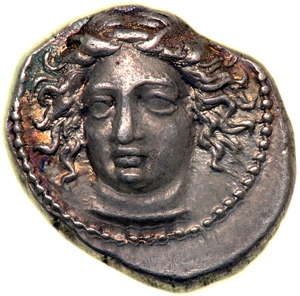
Larissa

Gender: Feminine
Origin: Greek Λαρισα
Meaning: “citadel.”
Eng (lah-RIS-suh)

The name is borne in Greek mythology by a nymph of Thessaly and daughter of Pelasgus. It is also the name of the capitol city of Thessaly, Greece, which is believed to have gotten its name from the nymph, who was considered a sort of patron of the city in pre-Christian times.

The name has always been popular throughout Eastern Europe due to the veneration of an Eastern Orthodox saint of the same name.

It was introduced into the English-speaking world via Boris Pasternak’s 1957 novel, Doctor Zhivago, in which the heroine is named Larissa nicknamed Lara.

Currently, Larissa is the 33rd most popular female name in Brazil, (2011). Her rankings in other countries are as follows:

  • # 41 (Switzerland, German-Speaking, 2010)
  • # 44 (Austria, 2010)
  • # 48 (Slovenia, Larisa, 2010)
  • # 55 (Bosnia & Herzegovina, Larisa, 2010)
  • # 95 (Germany, 2011)
  • # 259 (the Netherlands, 2010)
  • # 760 (United States, 2010)

Other forms of the name include:

  • Larisa Лариса (Bosnian/Bulgarian/Croatian/Greek/Latvian/Lithuanian/Romanian/Russian/Serbian/Slovene)
  • Làrissa (Catalan)
  • Larissa (Dutch/English/German/Italian/Portuguese)
  • Larysa Лариса (Polish/Ukrainian)
A common Russian short form is Lara.

Bettina

Gender: Feminine
Origin: Italian

The name is from a Medieval Italian diminutive form of either Elisabetta or Benedetta. One of its earliest attestations is that of Bettina d’Andrea (d.1335) a famous Italian legal scholar of Medieval Italy.

The name was later introduced to Germany via Elisabeth Catharina Ludovica Magdalena Brentano (1785-1859), a German countess of Italian descent who was a prolific writer, novelist and one of the pioneers of German romanticism, her pen name was Bettina von Arnim.

The name has also been used in Hungary, the English-speaking world, the Netherlands and Scandinavia. Currently, Betina is the 98th most popular female name in Brazil. Another German form is Bettine.

Julian

Gender: Masculine
Origin: Latin

The name is an anglicized form of the French male name, Julien, which is derived from the Latin Julianus (See Julius).

In history, the name was borne by the last non-Christian Roman emperor, Julian the Apostate (4th-century CE). It was also borne by a very popular French saint, Julien the Hospitaller.

In Medieval Englian, Julian was a female name and the traditional masculine cognate was Jolyon. Both names went out of usage by the Renaissance and neither were revived until the 19th-century.

Currently, Julian is the 12th most popular male name in Austria, (2010). His rankings in other countries are as follows:

  • # 15 (Germany, 2011)
  • # 17 (the Netherlands, 2010)
  • # 32 (Norway, 2010)
  • # 53 (United States, 2010)
  • # 59 (France, Julien, 2009)
  • # 66 (Belgium, Julien, 2009)
  • # 98 (Sweden, 2010)
  • # 147 (France, Julian, 2009)
  • # 561 (United States, Julien, 2010)

Other forms of the name include:

  • Juljan (Albanian)
  • Julen (Basque)
  • Juluan (Breton)
  • Yulian Юлиан (Bulgarian/Russian/Ukrainian)
  • Julià (Catalan)
  • Julijan (Croatian/Macedonian/Serbian/Slovene)
  • Julian (Dutch/English/German/Occitanian/Polish/Scandinavian)
  • Jolyon (English)
  • Julien (French)
  • Xulián (Galician)
  • Ioulianos Ιουλιανός (Greek)
  • Giuliano (Italian)
  • Iulianus (Latin)
  • Julijonas (Lithuanian)
  • Juliano (Portuguese/Spanish)
  • Julião (Portuguese)
  • Iulian (Romanian)
  • Julián (Spanish)
  • Turiano (Tahitian)

For feminine forms (see Juliana)

Clement

Gender: Masculine
Origin: Latin
Meaning: “merciful, mild.”

The name is an anglicized form of the Late Latin, Clemens, which is derived from Clementius, meaning, “merciful; gentle.”

The name was extremely popular throughout Medieval Europe as it was borne by several saints and Popes, most notably St. Clement I, the third Pope and St. Clement of Alexandria, an Eastern Christian theologian who reconciled Christian and Platonic philosophies.

In England, the name fell out of usage after the Protestant Reformation, but was revived in the 19th-century.

Currently, Clement is the 20th most popular male name in Belgium, (2009) and the 40th most popular in France, (2009).

Its Latin form of Clemens is the 45th most popular male name in Austria, (2010).

Other forms of the name include:

  • Kelmen (Basque)
  • Klemañs (Breton)
  • Kliment Климентკლემენტ Κλήμης (Bulgarian/Czech/Georgian/Greek/Macedonian/Russian/Serbian/Slovak)
  • Climent (Catalan)
  • Klement (Croatian/Czech/German/Slovak)
  • Clement (English/Romanian)
  • Klemens (Finnish/German/Polish/Scandinavian)
  • Clément (French)
  • Clemens (German)
  • Klemenz (German)
  • Kelemen (Hungarian)
  • Kelen (Hungarian)
  • Clemente (Italian/Spanish)
  • Clementino (Italian)
  • Clemenzio (Italian)
  • Clementius (Late Latin)
  • Klements (Latvian)
  • Klemensas (Lithuanian)
  • Clementi (Sardinian)
  • Klemen (Slovene)
  • Klimant (Sorbian)

Feminine forms include:

  • Clementine (English)
  • Clemence (English)
  • Clemency (English)
  • Clémence (French)
  • Clémentine (French)
  • Klemencia (Hungarian)
  • Clementa (Italian)
  • Clementina (Italian/Portuguese/Spanish)
  • Clemenza (Italian)
  • Clemenzia (Italian)
  • Mentina (Italian)
  • Clementia (Latin)
  • Klimentina Климентина (Macedonian)
  • Klemencja (Polish)
  • Klementyna (Polish)
  • Klementina (Slovene)


Valentine

Origin: Latin
Meaning: “strong; vigorous; healthy.”
(Eng masc: val-en-TINE; Fre fem: vah-lown-TEEN)

The name is derived from the Roman family name, Valentinus, which is derived from the Latin, valens, meaning: “strong, vigourous; healthy.”

In the modern world, the name is mostly associated with the holiday, it was borne by several early Christian martyrs, one of whom whose feast day happened to coincide with the ancient Roman festival of Lupercalia.

The anglicized form of Valentine is masculine, while in French, Valentine is feminine. This is a natural evolution, as Valentine is actually the feminine form of the French masculine,Valentin.

Valentine does not rank in the U.S. top 1000, but Valentine and Valentin are fairly common names in French-speaking countries.

Currently, Valentin is the 36th most popular male name in Austria, (2010). His rankings in other countries are as follows:

  • # 12 (Hungary, Bálint, 2010)
  • # 40 (France, Valentin, 2009)
  • # 106 (the Netherlands, Valentijn, 2010)
  • # 792 (United States, Valentin, 2010)

Other forms of the masculine include:

  • Valentini (Albanian)
  • Balendin (Basque)
  • Vàledin Валедин (Bulgarian)
  • Valentin Валентин (Bulgarian/Croatian/Czech/Estonian/French/German/Scandinavian/Slovene/Romanian/Russian)
  • Valentí (Catalan)
  • Valentyn (Czech)
  • Valentijn (Dutch: same pronunciation as in English)
  • Valentine (English)
  • Valjo/Valju (Estonian: has a different etymology but has been traditionally used as a cognate for Valentinus)
  • Balantin (Extramadurian)
  • Bálint (Hungarian)
  • Valente (Italian)
  • Valentiniano (Italian)
  • Valentino (Italian)
  • Valento (Italian)
  • Valenzano (Italian)
  • Valenzo (Italian)
  • Valentinus (Latin)
  • Valentins (Latvian)
  • Valentinas (Lithuanian)
  • Walentyn (Polish)
  • Walenty (Polish)
  • Valentim (Portuguese)
  • Ualan (Scottish)
  • Valintinu (Sicilian)
  • Valentín (Slovak/Spanish)
  • Folant (Welsh)

Valentina is currently the 19th most popular female name in Austria, (2010), her rankings in other countries are as follows:

  • # 28 (Italy, 2009)
  • # 47 (Croatia, 2010)
  • # 61 (Slovenia, 2010)
  • # 71 (France, Valentine, 2009)
  • # 81 (Catelonia, 2009)
  • # 91 (Belgium, Valentine, 2009)
  • # 92 (Spain, 2010)
  • # 97 (Germany, 2011)
  • # 152 (United States, 2010)
  • # 444 (the Netherlands 2010)

Other forms include:

  • Valentina Валентина (Catalan/Croatian/German/Hungarian/Italian/Romanian/Russian/Slovene/Spanish)
  • Valentine (French)
  • Valentína (Icelandic/Slovak)
  • Valenta (Italian)
  • Valenzia (Italian)
  • Walentyna (Polish)
  • Valentyna Валентина (Ukrainian)

The designated name-day is of course, February 14.

Sources

  1. Calendarium Romanum (Libreria Editrice Vatican, 1969), p. 117
  2. http://www.behindthename.com/php/search.php?nmd=n&terms=Valentine
  3. http://www.askoxford.com/firstnames/valentine?view=uk
  4. http://saints.sqpn.com/saint-valentine-of-rome/
  5. http://ocafs.oca.org/FeastSaintsLife.asp?FSID=101926
  6. http://www.newadvent.org/cathen/15254a.htm

Constantine

Gender: Masculine
Origin: Latin

The name was originally a diminutive form of the Latin male name Constans, but due to the fame and notoriety of Constantine the Great, the name exclusively became an independent given name in the beginning of the Middle Ages.

Currently, its German form of Konstantin is the 39th most popular male name in Austria, (2010) and the 60th most popular in Germany, (2011).

Other forms of the name include:

  • Kosta (Albanian)
  • Kostandin (Albanian/Basque)
  • Kostandini (Albanian)
  • Kostandianos Կոստանդիանոս (Armenian)
  • Kustentin (Breton)
  • Konstantin Константин (Bulgarian/Croatian/Czech/Finnish/German/Hungarian/Macedonian/Plattdeutsch/Russian/Scandinavian/Serbian/Slovene)
  • Constantí (Catalan)
  • Constantijn (Dutch)
  • Stijn (Dutch)
  • Constantine (English)
  • Kuestantinos (Ethiopian)
  • Konsta (Finnish)
  • Constantin (French/German/Romanian)
  • Konstantine კონსტანტინე (Georgian)
  • Constantinos Κωνσταντινος (Greek)
  • Costas Κώστας (Greek)
  • Dinos Ντίνος (Greek)
  • Konstantínus (Icelandic)
  • Costantino (Italian)
  • Costanzo (Italian)
  • Konstantīns (Latvian)
  • Konstantinas (Lithuanian)
  • Konstantyn (Polish)
  • Konstanty (Polish)
  • Constantim (Portuguese)
  • Constantino (Portuguese/Spanish)
  • Costel (Romanian)
  • Costin (Romanian)
  • Dinu (Romanian)
  • Kuonstantėns (Saimogaitian)
  • Antine (Sardinian)
  • Costantìnu (Sardinian)
  • Custantino (Sicilian)
  • Konštantín (Slovakian)
  • Kostyantyn остянтин (Ukrainian)
  • Cystennin (Welsh)
Common Russian diminutives are Kosta and Kostya.

Feminine forms include:

  • Konstandina (Albanian/Greek/Slovene)
  • Konstantina Константина Κωνσταντίνα (Bulgarian/Croatian/Czech/Greek/Macedonian/Hungarian/Russian/Serbian/Slovene)
  • Dina (Greek)
  • Konstantyna (Polish)
  • Costantina (Italian)
  • Constantina (Latin/Portuguese/Romanian/Spanish)
  • Costela (Romanian)

Adrian

Gender: Masculine
Origin: Latin
Meaning: “from Hadria”

The name is derived from the Latin Hadrianus, a Roman cognomen meaning, “from Hadria.” Hadria was a small town in the North of Italy. It gave its name to the Adriatic Sea.
The name was borne by Publius Aelius Hadrianus (76-138 CE), known in the modern world as Emperor Hadrian, he is most famous for the wall he built across Great Britain, known as Hadrian’s Wall.
The name remained common throughout Europe, and is fairly popular across the Western World till this day. It was borne by several saints and popes, including the first and only English pope, Adrian IV, as well as the only Dutch pope, Adrian VI.
Currently, Adrian is the 6th most popular male name in Spain, (2010) and the 7th most popular in Norway, (2010). His rankings in other countries are as follows:
  • # 29 (Catalonia, 2009)
  • # 33 (Poland, 2010)
  • # 43 (Germany, 2011)
  • # 48 (Austria, 2010)
  • # 49 (Croatia, 2010)
  • # 51 (France, Adrien, 2010)
  • # 56 (United States, 2010)
  • # 60 (Sweden, 2010)
  • # 63 (Hungary, 2010)
  • # 81 (Belgium, Adrien, 2009)
  • # 455 (France, Adrian, 2009)

Other forms of the name include:

  • Ad (Afrikaans/Limbergish)
  • Adriaan (Afrikaans/Dutch)
  • Adrianus (Afrikaans/Latin)
  • Arrie (Afrikaans)
  • At (Afrikaans)
  • Daan (Afrikaans)
  • Jaans (Afrikaans)
  • Adrian Адриан (Albanian/Bulgarian/Croatian/Dutch/English/Finnish/Polish/Romanian/Russian/Scandinavian/Ukrainian)
  • Ardian (Albanian)
  • Adrianu (Asturian/Corsican/Sicilian)
  • Adiran (Basque)
  • Adrijan (Bosnian/Croatian/Serbian/Slovene)
  • Hadrijan (Bosnian)
  • Adrià (Catalan)
  • Jadran(ko) (Croatian)
  • Adrián (Czech/Hungarian/Slovak/Spanish)
  • Arie (Dutch)
  • Arjan (Dutch)
  • Hadrian(us) (Dutch/German/Latin)
  • Adrien (French)
  • Hadrien (French)
  • Aidrean (Gaelic)
  • Adrán (Galician)
  • Adrao (Galician)
  • Hadrán (Galician)
  • Hadrao (Galician)
  • Hádrian (Galician)
  • Adrianos Αδριανός (Greek)
  • Adorján (Hungarian)
  • Adrían (Icelandic)
  • Adriano (Italian/Portuguese)
  • Adrio (Italian)
  • Adriāns (Latvian)
  • Adrianas (Lithuanian)
  • Adrijonas (Lithuanian)
  • Adrião (Portuguese)
  • Adriànu (Sardinian)

Feminine forms include:

  • Adriana  (Albanian/Bulgarian/Catalan/Czech/Galician/German/Greek/Italian/Latin/Lithuanian/Polish/Romanian/Russian/Slovak/Spanish)
  • Adrijana (Bosnian/Croatian/Serbian)
  • Hadrijana (Bosnian/Croatian/Serbian)
  • Jadranka (Croatian)
  • Adriána (Czech/Hungarian/Slovak)
  • Ariane (Dutch)
  • Hadriana (Galician/Latin)
  • Adria (German/Italian)
  • Adriane (German)
  • Adrienne (French)
  • Adrienn (Hungarian)
  • Adrianna (Polish)
  • Drina (Spanish)

Polish feminine diminutives are Ada and Adi.

Juliana, Gillian

Gender: Feminine
Origin: Latin
Eng (JOO-lee-AH-nah); (JILL-yen; JILL-ee-EN)

The name is a feminine form of the Roman male name Iulianus, which is intern derived from Julius. Today, Julian is considered the English masculine cognate, but was used as a feminine name in Medieval England, as in the case of St. Julian of Norwich (1346-1416), an English mystic who is considered to be the first woman to have ever published a book. Though Julian remained a popular saint even after the Reformation, the name fell out of usage and was not revived until the 19th-century: as a male name. It was thereafter that Gillian and Juliana were used as the official feminine forms in the English-speaking world. Juliana has been the name of several other saints throughout Europe, and was most recently borne by Queen Juliana of the Netherlands (1909-2004).

Its Italian form of Giuliana is currently the 39th most popular female name in Argentina, (2009) and the 376th most popular in the United States, (2010). While its Central European form of Julianna is currently the 176th most popular female name in the United States, (2010).

Other forms of the name include:

  • Yuliana Юлиана (Bulgarian/Russian)
  • Julijana Јулијана (Croatian/Macedonian/Slovene)
  • Juliana (Dutch/English/Polish/Portuguese/Slovenian/Spanish)
  • Gillian (English)
  • Juliane (French/German)
  • Julienne (French)
  • Julianna (Hungarian/Polish)
  • Giuliana (Italian)
  • Giulianella (Italian)
  • Iuliana (Romanian)
  • Uliana Ульяна (Russian/Ukrainian)

Delphine, Delfina

Gender: Female
Origin: French
Meaning: “dolphin”
(del-FEEN)

This French classic was quite popular in the English-speaking world during the early 19th-century, now seen as a sort of vintage classic, the name may hold appeal to those who are endeared to such names as Josephine, Louise or Marguerite.

The name has its origins in the Greek male name, Delphinos, who, in Greek mythology was a dolphin lord under the god Poseidon.

When his master was wooing the beautiful Naiad Amphitrite, Poseidon demanded Delphinos to seek Amphitrite and to propose to her on his behalf. When Delphinos found the Naiad and brought her before the sea god, Poseidon made Delphinos into a constellation in gratitude for his services.

Alternately, the name could also be taken from the Greek city, Delphi, which ultimately has the same origin as Delphinos, meaning “dolphin.”

In the mortal world, the name first made its appearance in France around the 14th-century. It was borne by a Provençal saint. It was thereafter commonly used among the French aristocracy.

The name was also the subject of a famous French book entitled Delphine by Anne Louise Germaine de Staël, (1802).

The Delphinium plant has the same root and meaning as the name Delphine.

In English, delphine is also used as the adjectival form of dolphin.

Currently, Delfina is the 15th most popular female name in Argentina, (2009).

Other forms of the name include:
  • Delphia (Greek)
  • Delphina (Latin)
  • Delphinia (Latin)
  • Delfina (Italian/Polish/Spanish)
  • Delfino (Provençal)

It also has some male incarnations such as the French Delphin (del-FAHn). Other forms include

  • Delfin (French/Polish)
  • Delphinos (Greek)
  • Delphinus (Latin)
  • Delfino (Italian/Spanish)

Its designated name-day is November 9th.