Verena


The name is possibly derived from the Latin, verus, meaning “true.” Others have suggested that the name may actually be of some unknown Egyptian source.

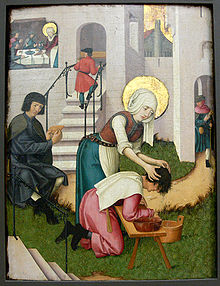
The name was borne by a 3rd-century Egyptian saint who found her way to Switzerland while marching along with the Theban legions. She is considered the patron saint of hairdressers as she was known for converting young native Swiss women to Christianity while washing and styling their hair. There is a shrine dedicated to St. Verena in Zurich, Switzerland.

The name has been popular in Germany and Switzerland and has even experienced some usage in the United States during the 18th and 19th-centuries, no doubt, brought over by German immigrants. It is also an especially common name among Mennonite, Hutterite and Amish families and is a popular name among Egyptian Christians.

It is also the name of a fictional goddess in the popular fantasy/video game series Warhammer. She is the goddess of healing and learning and is based on both Minerva and Athena.

Currently, Verena is the 383rd most popular female name in Germany, (2011).

Other forms of the name include:

  • Virina (Coptic)
  • Vérène (French)
  • Verena Верена (English/German/Italian/Russian/Slovene)
  • Werena (Polish)
  • Frena (Romansch)
  • Varena (Romansch)
  • Vreni (Swiss-German)
  • Vreneli (Swiss-German)


Orlando

Gender: Masculine
Origin: Italian/Spanish

The name is an Italian form of the Germanic, Roland, meaning “famous land.” Orlando has been in usage in the English-speaking world since at least the 16th-century, most likely due to the character in Shakespeares As You Like It (1599). It also the name of the eponymous character of the Italian epic Orlando Furioso (circ. 1520).

The name has been borne by English composer, Orlando Gibbons (1582-1625), American general, Orlando Ward (1891-1972) and British actor, Orlando Bloom (b.1977).

It is also the name of a city in Florida, which, according to legend may have been named for the Shakespeare character or it could have been named for an American sentinel Orlando Reeves who was killed during the Seminole warrior.

Actor Orlando Bloom was named for Orlando Gibbons.

Currently, Orlando is the 425th most popular male name in Germany, (2011) and the 435th most popular in the United States, (2010).

A feminine form is Orlanda.

Erwin, Irvin

Gender: Masculine
Origin: German
Meaning: “army friend.”
Germ (AIR-veen), Eng (ER-vin)

The name is derived from the Old High German, Hariwini, which is composed of the elements, hari (army) and win (friend).

A notable bearer was Austrian physicist, Ervin Schroediger (1887-1961).

It is currently the 419th most popular male name in Germany, (2011), while Ervin is the 87th most popular male name in Bosnia & Herzegovina, (2010)

Other forms of the name include:

  • Ervin (Albanian/Bosnian/Croatian/Hungarian/Slovene)
  • Erwin (Dutch/German/Polish/Swedish)
  • Irvin (English)
  • Ervino (Italian)
  • Ervīns (Latvian)
  • Ervín (Slovak)
 Feminine forms are the Hungarian, Ervina and the Polish, Erwina.


Cosima

Gender: Feminine
Origin: German/Italian
Germ (KOH-zee-mah); It (KOH-zee-muh)

The name is a feminine form of Cosmas. It was introduced into Germany through Cosima Wagner (1837-1930) the daughter of Hungarian composer, Franz Liszt and the wife of German composer, Richard Wagner. She was the director of the Beyreuth Festival for 31 years.

Currently, Cosima is the 416th most popular female name in Germany, (2011). German supermodel, Claudia Schiffer, recently chose this name for her youngest daughter, Cosima Violet (b. 2010), as did writer and director Sofia Coppola the same year. It is also the name of Lady Cosima Windsor (b.2010) and Australian pop singer, Cosima De Vito.

Another German for is Kosima.

Vanessa

Gender: Feminine
Origin: English
(vuh-NES-sah)

The name is popularly believed to be invented by Jonathan Swift, he is said to have created the name out of his tutoree’s first and last name, Esther Vanhomrigh. The name was used for a character in his 1726 poem, Cadenus & Vanessa. It has also been suggested that Swift may have been inspired by the Greek mystical name, Phanes or that he elaborated an Anglo-Norman cognate of Veronica, Venisse.

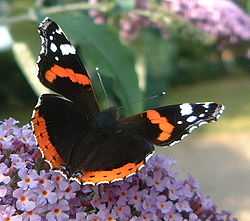
The name has often been erroneously listed as being a name of Greek origin with the meaning of butterfly. This is false. It is, however, the name of a genus of butterfly which was possibly named for the Jonathan Swift character.

The name did not catch on in usage until the 20th-century, it was internationally popularized by British actress, Vanessa Redgrave (b.1937).

Currently, Vanessa is the 32nd most popular female name in Austria, (2010). Her rankings in other countries are as follows:

  • # 38 (Switerland, German-Speaking Cantons, 2010)
  • # 78 (Germany, 2011)
  • # 71 (Croatia, Vanesa, 2010)
  • # 88 (Croatia, 2010)
  • # 106 (United States, 2010)
  • # 355 (France, 2009)

Other forms of the name include:

  • Vanesa (Croatian/Czech/Slovak/Slovene)
  • Vanessa (Dutch/French/English/German/Italian/Portuguese/Spanish/Swedish)
  • Vanessza (Hungarian)
  • Wanesa/Wanessa (Polish)

Lena

Eng (LEE-nuh; LAY-nuh); Germ (LEH-nah)

The name is currently very popular in German-speaking countries and the most popular consensus is that it is a contraction of Magdalena or Helena.

It also happens to be the name of a river in Siberia, of which, Lenin took his name. Lena’s usage in Russia may be in reference to the river, but I have been unable to confirm if this is so.

In Poland, its usage as an independent given name is recorded as early as 1418, though the name did not become popular in Poland until the last 10 years.

It was also very in vogue at the turn of the 20th-century in the United States.

It is currently the 3rd most popular female name in Austria, (2010) and her rankings in other countries are as follows:

  • # 9 (Poland, 2010)
  • # 10 (Germany, 2011)
  • # 16 (France, 2009)
  • # 44 (Belgium, 2009)
  • # 47 (Hungary, 2010)
  • # 68 (Croatian, 2010)
  • # 83 (Ireland, 2010)
  • # 94 (Slovenia, 2010)
  • # 121 (Netherlands, 2010)
  • # 382 (United States, 2010)

Other forms of the name include:

  • Lena Лена (Croatian/Dutch/English/French/German/Hungarian/Italian/Polish/Russian/Scandinavian/Slovene/Ukrainian)
  • Lenka Ленка (Czech/Slovak/Slovene/Serbian/Sorbian)
  • Lene (Danish/German/Norwegian)
  • Leni (Danish/German)
  • Lenette (Danish)
  • Lenna (Estonian)
  • Leena (Finnish)
  • Leeni (Finnish)
  • Lenke (Hungarian)
  • Lejna (Sorbian)
  • Leńka (Sorbian)
The name was borne by singer, actress and civil rights activist, Lena Horne (1917-2010). It is also borne by Swedish actress, Lena Olin (b.1955) and Swedish pop singer, Lena Philipsson (b.1966)

Marlene

Gender: Feminine
Origin: German
Eng (mar-LEEN); Germ (mahr-LEH-neh)

The name is a blend of Maria and Magdalena, originally, it was usually bestowed in honour of St. Mary Magdalen by German-Catholic parents.

The name experienced a surge in popularity in Germany during WWII due to a popular song, Lili Marleen.

In the United States, the name was introduced by German actress, Marlene Dietrich (1901-1992), who was born Maria Magdalena von Losch.

Currently, in German-speaking countries, the name is experiencing a revival, it is the 29th most popular female name in Austria, (2010) and the 41st most popular in Germany. In the United States, she stands at # 902, (2010)

Other forms of the name include:

  • Marleen (Dutch/German)
  • Marla (English/German)
  • Marlene (English/German/Scandinavian)
  • Marlène (French)
  • Marlen (German)
  • Marilena (Italian)
  • Marlena (Polish/Slovene)

Angelina

Gender: Feminine
Origin: Greek/Italian
Eng (AN-je-LEE-nah); It (ahn-jay-LEE-nah)

The name is often listed as an Italian diminutive form of Angela, but seems to have a much longer history as an independent given name stretching all the way back to the Byzantine Empire.

The name seems to have been used as a feminine form of Angelos for the female offspring of the Angelos family. The Angelos family was the ruling dynasty of the Byzantine Empire during the 12th-century, it is believed that their name was either derived from the traditional Angelos or may have been from a toponym (Agel), a district near Amida.

As a result, the name became fairly common among South Eastern European royalty of the Middle Ages, one of whom, St. Angelina of Serbia (15th-century, CE), is revered as a saint in the Serbian Orthodox Church.

Theodora Angelina, Duchess of Austria (d.1246), the wife of Leopold VI of Austria, was from the Angelos family. As a result, the name has had some usage in German-speaking countries, but really exploded in popularity during the last decade, perhaps more to due to the fame of actress, Angelina Jolie (b.1975).

Angelina also seems to have been a common name in 18th and 19th-century America. It was borne by Angelina Eberly (1798-1860) a famous innkeeper during the Texas Archives War. In addition, it was borne by early suffragette and abolitionist activist, Angelina Grimké (1805-1879) as well as Angelina Weld Grimké, (1880-1958), a poet and writer.

The name is currently experiencing a sharp rise in popularity. It is the 59th most popular female name in Austria, (2010) and her rankings in other countries are as follows:

  • # 84 (Germany, 2011)
  • # 86 (Australia, 2010)
  • # 93 (United States, 2010)
  • # 107 (France, 2009)
  • # 224 (Netherlands, 2010)

Other forms of the name include:

  • Angjelina (Albanian)
  • Angelina Ангелина Անգելինա (Armenian/Bulgarian/Croatian/Dutch/English/German/Greek/Hungarian/Italian/Macedonian/Polish/Russian/Serbian/Slovene/Spanish)
  • Angéline (French)
  • Andżelina (Polish)


Letitia

Gender: Feminine
Origin: Latin
Meaning: “happiness; joy.”
Eng (luh-TISH-ah)

The name is an English form of the Latin female name, Laetitia, which is derived from laeta meaning, “joy; happiness.”

The name was popularized by an early Christian Spanish saint. In Medieval England, the name was used in the form of Lettice, (sounds like lettuce). After the Reformation, it went out of usage but was revived in the 18th-century in the more elaborate incarnation of Letitia. It remained a very popular name in England and the United States between the 18th-century and the 19th-century, leading to the diminutive offshoot of Lettie, which also appears as an an independent given name in records of the same period.

In Rome, it was the name of a minor goddess of gaiety. In modern Italian, the word survives in the form of letizia (joy) and is also used as a given name. Letizia was also the name of Napoleon Bonaparte’s mother.

Currently, its Portuguese form of Letícia is the 20th most popular female name in Brazil, (2011). Her rankings in other countries are as follows:

  • #320 (France, Laëtitia, 2009)
The name is currently borne by Letizia Ortiz Rocasolano (b.1972), the wife of Crown Prince Felipe of Spain.

Other forms of the name include:

  • Levenez (Breton)
  • Letícia (Catalan/Hungarian/Portuguese)
  • Letizia (Corsican/Italian)
  • Lettice (English)
  • Letitia (English)
  • Laëtitia (French)
  • Laetitia (German)
  • Letiţia (Moldovan/Romanian)
  • Letycja (Polish)
  • Leticia (Spanish)
  • Leta (Swiss-German)