Florian

Gender: Masculine
Origin: Latin
Meaning: “flower.”

The name is derived from the Latin Florianus, which is derived from the Roman gens name Florus, meaning “flower.”

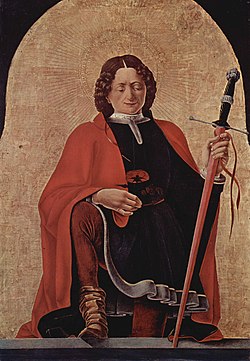
The name is borne by an early Christian saint and martyr who is considered the patron saint of Upper Austria, Poland and firefighters. In German slang, fighfighters are sometimes generically referred to as Florian, and there is a German folk saying called the Florian Principle which refers to a prayer to the saint, which goes:

O holy Saint Florian, spare my house, kindle others

This saying is the equivalent of the English saying, “not in my backyard.”

Florian has always been a popular name in German-speaking countries. It is currently the 10th most popular male name in Austria, (2010). His rankings in other countries are as follows:

  • # 35 (Germany, 2011)
  • # 79 (France, 2009)
  • # 84 (Belgium, 2009)
  • # 100 (Hungary, 2010)
  • # 155 (the Netherlands, 2010)

Other forms of the name include:

  • Florian Флориан (Albanian/Bulgarian/Dutch/English/French/German/Hungarian/Polish/Romanian/Russian/Spanish/Ukrainian)
  • Florià (Catalan)
  • Florijan (Croatian/Slovene)
  • Florián (Czech/Slovak)
  • Floriaan (Dutch)
  • Florianus (Dutch/Latin)
  • Flórián (Hungarian)
  • Flóris (Hungarian)
  • Fóris (Hungarian)
  • Fiorino (Italian)
  • Floreano (Italian)
  • Floriano (Italian/Portuguese)
  • Florians (Latvian)
  • Florijonas (Lithuanian)
  • Tworzyjan (Polish: sometimes used as a vernacular form)
  • Florin (Romanian)
  • Flurin (Romansch)
  • Florianu (Sicilian)
  • Florjan (Slovene)

Feminine forms include:

  • Floriana (Albanian/Italian/Romanian)
  • Florijana (Croatian/Slovene)
  • Floriane (French/German)
  • Fiorina (Italian)
  • Floreana (Italian)
  • Florianna (Polish)
  • Floryjana (Polish: archaic form)
  • Florina (Romanian)
  • Flurina (Romansch)
  • Florika (Slovene)
  • Florjana (Slovene)
Polish diminutives are Floszka and Tworka.


Simeon, Simon

Gender: Masculine
Origin: Biblical, Hebrew
Meaning: “he has heard.”
Eng (SIE-mun)

Simeon first appears in the Old Testament as a patriach of the Simeonite tribe and one of the 12 sons of Jacob.

The name origins are debated. The Torah claims that the name is in reference to Leah’s cry of anguish to God over her husband’s deference to her. Being a derivative of the Hebrew shama’on meaning “he has heard my suffering.” In this case, the name would share the same etymology as the name Ishmael (God has heard).

In some classical Rabbinical texts the name is sometimes translated to mean “he who listens to the words of God.” It has even been suggested that it is derived from the Hebrew sham’in meaning “there is sin” which is in reference to Zimri, an ancestor of Simeon’s, who committed the sin of having a relationship with a Midianite woman.

The name was borne by several other characters in the Old and New Testament, in the forms of Simeon and Simon. Simon later became associated with St. Peter. During the early Christian era, the Greek world took the name to mean “snub nosed” due to its similarity in sound to the Greek word σιμοσ (simos).

Simon has always been prevalent in the Western World, it is currently very trendy in continental Europe. The rankings of popularity in various countries are as follows:

  • # 3 (Poland, Szymon, 2010)
  • # 7 (Austria, 2010)
  • # 10 (Belgium, 2009)
  • # 12 (Italy, Simone, 2008)
  • # 26 (Germany, 2011)
  • # 32 (Denmark, 2010)
  • # 37 (Sweden, 2010)
  • # 49 (France, 2009)
  • # 56 (the Netherlands, Siem, 2010)
  • # 60 (Croatian, Šimun, 2010)
  • # 60 (Norway, Simen, 2010)
  • # 64 (Norway, 2010)
  • # 71 (Croatia, Šime, 2010)
  • # 75 (the Netherlands, 2010)
  • # 91 (Hungary, 2010)

Other forms of the name include (divided alphabetically by origin)

  • Simeon Սիմէօն (Albanian/Armenian/Bulgarian)
  • Simon Симон Սիմոն (Albanian/Armenian/English/Finnish/German/Hungarian/Macedonian/Malayalan/Norwegian/Occitanian/Slovenian/Swedish/ Romanian)
  • Samān (Arabic)
  • Shamo (Assyrian)
  • Shamun ܫܡܥܘܢ (Assyrian)
  • Şımon (Azeri)
  • Ximun (Basque)
  • Shyman Шыман (Belarusian)
  • Symon Сымон (Belarusian)
  • Simó (Catalan)
  • Simone (Corsican/Italian)
  • Šime (Croatian)
  • Šimo (Croatian)
  • Šimun (Croatian)
  • Šimon (Czech/Prekmurian/Slovak)
  • Simion (Danish/Romanian)
  • Simoen (Danish)
  • Siemen (Dutch/Frisian)
  • Siem (Dutch)
  • Siimon (Estonian/Finnish)
  • Smeon ስምዖን, (Ethiopian)
  • Símeon /Símun (Faroese)
  • Sema (Finnish)
  • Semen (Finnish/Gascon)
  • Semjon (Finnish)
  • Semoi (Finnish)
  • Siim (Finnish)
  • Siimoni (Finnish)
  • Simeoni (Finnish)
  • Simo (Finnish/Serbian)
  • Symeon Συμεών (Greek)
  • Symeonos Συμεώνος (Greek)
  • Siimuut (Greenlandic)
  • Shimon שמעון (Hebrew)
  • Símon (Icelandic)
  • Síomón (Irish)
  • Sshimeoni (Kosovar)
  • Sīmanis (Latvian) 
  • Sīmans (Latvian)
  • Simons (Latvian)
  • Saimonas (Lithuanian)
  • Saimontas (Lithuanian)
  • Simanas (Lithuanian)
  • Simas (Lithuanian)
  • Simeonas (Lithuanian)
  • Simonas(Lithuanian)
  • Sime Симе (Macedonian)
  • Shimon (Malayalam)
  • Simen/Simian (Norwegian)
  • Simå (Norwegian dialectical form: Norrland & Østerdalen)
  • Sømjo (Norwegian dialectical form: Rogaland)
  • Simonu/Symeonu (Old Church Slavonic)
  • Symeon (Polish)
  • Szymon (Polish: Szymek and Szymuś are diminutives)
  • Simão (Portuguese)
  • Simeão (Portuguese)
  • Simun (Quecha)
  • Schimun (Romansch)
  • Semyon Семён (Russian)
  • Sim (Scottish)
  • Šimej (Slovene)
  • Simón (Spanish)
  • Jimeno (Spanish)
  • Ximeno (Spanish)
  • Simoni (Swahili)
  • Shemod (Syrian)
  • Shimeon (Syrian)
  • Semen/Symon Симон (Ukrainian)
  • Mişon (Turkish)
  • Seimon (Welsh)
  • Simwnt (Welsh)
  • Shimmel (Yiddish)

Feminine forms include:

  • Simona (Czech/Italian/Portuguese/Romanian/Slovak/Slovenian)
  • Simonia/Simonie (Danish)
  • Simoona (Finnish)
  • Simone (French)
  • Simonette (French)
  • Szimóna (Hungarian)
  • Szimonetta (Hungarian)
  • Símonía (Icelandic)
  • Simonetta (Italian)
  • Sima (Lithuanian)
  • Simonė (Lithuanian)
  • Szymona (Polish)
  • Simoneta (Portuguese)
  • Ximena (Portuguese/Spanish)
  • Simoneta/Šimona (Slovak)
  • Simeona (Slovene)
  • Jimena (Spanish)

The designated name-day is October 28, and October 30 in Slovakia.

Tobias

Gender: Masculine
Origin: Hebrew
Meaning: “Yahweh is good.”
Eng (toh-BYE-us)

The name is a Greek form of the Hebrew male name, Toviyyah טוֹבִיָּה, which appears in the Old Testament as the name of an Ammonite. It is borne by several other minor characters in the Old Testament. In earlier versions of the New Testament, it is the name of Tobit in the Book of Tobit.

The name gained popularity in England after the Reformation and is often shortened to Toby. It is currently the 2nd most popular male name in Austria and his rankings in other countries are as follows:

  • # 11 (Norway, 2010)
  • # 20 (Denmark, 2010)
  • # 95 (Netherlands, 2010)
  • # 519 (United States, 2010)

Other forms of the name include:

  • Tobias (Dutch/English/German/Scandinavian)
  • Tobiáš (Czech)
  • Topias (Finnish)
  • Topi (Finnish)
  • Tobie (French)
  • Tuvya טוּבִיָה (Hebrew)
  • Tóbiás (Hungarian)
  • Tobia (Italian)
  • Tobasz (Polish)
  • Tobiasz (Polish)
  • Tobijasz (Polish)
  • Tovija Товия (Russian)
  • Tovij Товий (Russian) 
  • Tevye (Yiddish)

Thales

Gender: Masculine
Origin: Greek Θαλης
Meaning: “to blossom.”

The name is derived from the Greek θαλλω (thallo) meaning, “to blossom.” It was borne by a 6th-century BCE Greek philosopher and Mathematician, Thales of Miletus.

The name shares the same etymological root as Thalia.

Currently, Thales is the 90th most popular male name in Brazil, (2011).

Other forms of the name include:

  • Fales Фалес (Azeri/Belarusian/Bulgarian/Russian)
  • Tales (Catalan/Polish/Portuguese/Spanish)
  • Thalés (Czech)
  • Thales (English/Greek/Portuguese-Brazilian/Zazaki)
  • Thalès (French)
  • Tailéas (Gaelic)
  • Thalész (Hungarian)
  • Talete (Italian)
  • Talesi თალესი (Georgian)
  • Taless (Latvian)
  • Talee (Lombard)
  • Talis (Lithuanian)
  • Taleti (Sicilian)


Elijah, Elias

Gender: Masculine
Origin: Hebrew
Meaning: “Yahweh is God.”
Eng (ee-LIE-jah ; e-LIE-jah)
Eng (ee-LIE-us; eh-LIE-us)

The name is derived from the Biblical Hebrew, אֱלִיָּהוּ, (Eliyyahu), meaning, “Yahweh is God.”

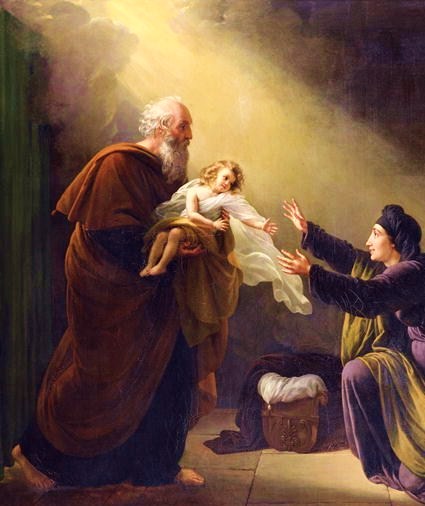
The name is borne in the Old Testament by an extremely important prophet who is speculated to have been alive around the 9th-century C.E.

Many miraculous occurrences were attributed to him, the most spectacular being that he could raise the dead, invoke fire from the sky and it is also believed that he ascended into heaven, (body and soul), via a chariot of fire flanked by cherubs.

He is an extremely popular figure in both Judaism and Christianity.

In the New Testament, it is believed that Elijah appeared with Moses during the Transfiguration of Christ.

Elijah has always been revered as a great saint by the Eastern Orthodox Churches, and in Russia and other Slavo-Orthodox nations, Elijah has been equated as a sort of folk character: he is responsible for bad weather if angered.

In Judaism, Elijah is invoked during the weekly Havdalah, the Passover seder and during the ritual circumcision.

In the the Church of Jesus Christ of Latter-Day Saints, it is believed that Elijah visited Joseph Smith and Oliver Cowdery in 1836.

Unlike other Old Testament names, Elijah has had a longer usage among Christians, going as far back as the Middle Ages. However, in Medieval England, the Middle English form of Elis, was more widely used.

In addition to the prophet Elijah, the name was also borne by at least two Catholic/Orthodox Saints.

Currently, Elijah is the 18th most popular male name in the United States, (2010). So far, this is the highest he has ranked in U.S. naming history. His rankings in other countries are as follows:

  • # 45 (Australia, 2010)
  • # 78 (Canada, B.C., 2010)
  • # 311 (the Netherlands, 2010)
  • # 427 (France, 2009)

His Hellenized counterpart of Elias, is also an up-and-comer, he is currently the # 141st most popular male name in the United States, (2010) and his rankings in other countries are as follows:

  • # 4 (Sweden, 2010)
  • # 9 (Austria, 2010)
  • # 10 (Norway, 2010)
  • # 13 (Germany, 2011)
  • # 18 (Denmark, 2010)
  • # 44 (Belgium, 2009)
  • # 119 (France, 2009)
  • # 225 (the Netherlands, 2010)

Other forms of the name include:

  • Ilyas إلياس (Arabic)
  • Ilia/Ilya Илья (Bulgarian/Old Church Slavonic/Russian)
  • Ilija Илија (Bulgarian/Croatian/Macedonian/Serbian)
  • Elies (Catalan)
  • Elijáš (Czech)
  • Elia (Dutch/Finnish/Georgian/Italian/Norwegian)
  • Eliah (English)
  • Eelis (Finnish)
  • Eljas (Finnish)
  • Élie (French)
  • Elias Ηλιας (English/Estonian/Finnish/German/Greek/Portuguese/Scandinavian)
  • Ellis/Elis (English)
  • Elija (German)
  • Elise ელისე (Georgian)
  • Eliou Ηλιου (Greek)
  • Eliyyahu/Eliyahu אֱלִיָּהוּ (Hebrew)
  • Éliás (Hungarian)
  • Illés (Hungarian)
  • Elías (Icelandic/Spanish)
  • Illyas (Indonesian)
  • Oillil (Irish-Gaelic)
  • Eliya (Kiswahili)
  • Helias (Latin: Biblical)
  • Habacus (Latin: Vulgate)
  • Elijas (Lithuanian)
  • Eliasz (Polish)
  • Ilie (Romanian)
  • Eliáš (Slovakian)
  • İlyas (Turkish)

A Romanian feminine form is Ilinca, (ee-LEEN-kah).

The name is borne by American actor, Elijah Wood (b. 1981)

The designated name days are March 24, July 20 and August 2nd.

Felix

Gender: Masculine
Origin: Latin
Meaning: “happy; lucky.”
Eng (FEE-liks); Germ (FEH-leeks)

Felix is derived from an Old Roman agnomen, (nickname), which describes one who is happy or lucky.

In ancient History, it was bestowed as a descriptive nick name upon the Roman dictator, Lucius Cornelius Sulla, (c.138 B.C.E-78 B.C.E), it was also borne by a few other Roman officials.

The name also makes an appearance in the New Testament.

The name was borne by at least 15 saints and 5 popes, rendering the name extremely popular in Medieval Continental Europe.

The name was also in usage in Medieval England, but seems to have gone out of style after the Protestant Reformation, being revived again in the 19th-century.

Currently, Felix is the 9th most popular male name in Germany (2011), in the United States, however, he only ranked in as the 3331st most popular male name, (2010). The highest he has ever ranked in U.S. naming history was in 1884, coming in as the 137th most popular male name.

In the English speaking world, Felix is usually associated with the Cartoon character, Felix the Cat.

His rankings in other countries are as follows:

  • # 14 (Austria, 2010)
  • # 38 (Denmark, 2010)
  • # 50 (Sweden, 2010)
  • # 83 (Norway, 2010)
  • # 177 (France, 2009)
  • # 201 (the Netherlands, 2010)

A list of all the variations are as follows:

  • Feliu (Catalan)
  • Felix Феликс (Croatian/Czech/Dutch/English/Finnish/German/Romanian/Russian/Scandinavian/Serbian)
  • Feliks (Croatian/Polish/Croatian/Serbian/Slovene)
  • Feeliks (Finnish)
  • Feliksas (Finnish)
  • Félix (French/Hungarian/Portuguese/Slovakian/Spanish)
  • Feliksz (Hungarian)
  • Felice (Italian)
  • Felicetto (Italian)
  • Felicino (Italian)
  • Felicio (Italian)
  • Feluccio (Italian)
  • Felicius (Latin)
  • Szczęsny (Polish:a vernacular form of Felix, this form is archaic and has been replaced in usage by Felix)
  • Felici (Romansch)
  • Srečko (Slovene; Croatian: direct translation, literally meaning “happy, lucky” in Southern Slavic languages)

Another offshoot is the Latin Felician, which literally means “the happy one” or “the lucky one.”

Derivatives are:

  • Felician (English)
  • Félicien (French)
  • Feliciano (Italian/Portuguese/Spanish)
  • Feliziano (Italian)
  • Liciano (Italian)
  • Felicianus (Latin)
  • Felicjan (Polish: fe-LEET-syahn)
  • Felicián (Slovak)

Its feminine form of Felicia has been in usage in England since the Middle Ages, currently, she does not appear in the U.S. top 1000, she was last seen in 2005 coming in as 993rd most popular female name. The highest she ever ranked in U.S. naming history was in 1986 coming in as the 90th most popular female name.

She is currently the 251st most popular female name in the Netherlands (2008) and the 15th most popular in Sweden (2007).

Variations are:

  • Felicia (English/Italian/Romanian: feh-LEE-shah Eng; fay-LEE-chah Italian)
  • Félicie (French: fay-lee-SEE)
  • Félicienne (French)
  • Felicie (German: fe-LEE-tsee-e)
  • Felícia (Hungarian/Portuguese)
  • Felicetta (Italian: obscure)
  • Feliciana (Italian/Latin/Spanish)
  • Felicina (Italian: obscure)
  • Felicja (Polish: Felcia, Felka, Fila and Filka are the diminutives. fe-LEET-syah)
  • Felina (Polish)
  • Feliksa (Polish)
  • Szczęsna (Polish)
  • Srečka (Slovene/Croatian)

The name was borne by German composer, Felix Mendelssohn (1809-1847).

The designated name-days are January 14 (Sweden), February 12 (France), May 30 (Germany), June 9 (Hungary), November 1st (Czech Republic), November 20 (Slovakia).

Eloise

Gender: Feminine
Origin: French
Meaning: “wide and healthy.”
Eng (EL-o-eez, el-o-EEZ )

The name is an anglicized form of the Old French, Héloïse which is derived from the Germanic name Helewidis, composed of the elements heil (healthy) and wide (wide). The meaning of the name is probably in reference of the parents wishing for an overweight child. In the early Medieval world, being overweight was a sign of wealth and health, especially in the harsh climes of Northern Europe.

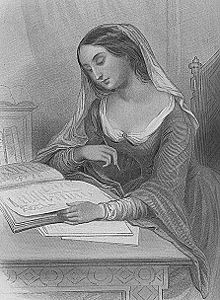
The name was borne by a Medieval French philosopher, writer, nun, scholar and abbess, Héloïse d’Argenteuil (1101-1164). She and her lover Abelard are the source of many medieval romances. According to the story, Héloïse became a nun after her jealous uncle castrated her lover, who she was legally yet secretly married to at the time.

The name was also borne by a few early French saints.

In England, the name has been in usage since at least after the Norman Conquest. The common Medieval English form was Helewis, which died off and was later replaced by Eloise in the 19th-century.

Eloise is also the name of a series of childrens’ books written by Kay Thompson in the 1950s.

Currently, its Portuguese form of Heloisa is the 35th most popular female name in Brazil, (2011). Her rankings in other countries are as follows:

  • # 61 (France, Éloïse, 2009)
  • # 93 (France, Héloïse, 2009)
  • # 530 (United States, 2010)

Other forms of the name include:

  • Eloiza (Azeri)
  • Heloïsa (Catalan)
  • Eloise (English/Swedish)
  • Helewis (English)
  • Éloïse (French)
  • Héloïse (French)
  • Helewidis (German)
  • Heloisa (German)
  • Eloisa (Italian)
  • Eloisia (Italian)
  • Heloiza (Polish)
  • Heloísa (Portuguese)
  • Jeloíza Элои́за (Russian)
  • Eloísa (Spanish)


Deborah

Gender: Feminine
Origin: Biblical Hebrew
Meaning: “bee.”
דְּבוֹרָה
Eng (DEB-uh-ruh); Eng (deh-BORE-uh)

In the Old Testament, the name is found in the Book of Judges as the name of a prophetess and female judge who led a defeat against the Canaanites.

It was also borne by a nurse of Rebecca.

The name has always been a common Jewish name, but did not catch on with Christians until after the Protestant Reformation, when the name became especially prevalent among the Puritans.

Deborah experienced a sharp vogue in the mid 20th century when, in 1955, she ranked in as the 2nd most popular female name in the United States. Deborah remained in the top 10 between 1950 and 1962. As of 2010, Deborah only ranked in as the 776th most popular female name.

Currently, its Portuguese form of Débora is the 88th most popular female name in Brazil, (2011). Her rankings in other countries are as follows:

  • # 328 (France, 2009)
  • # 491 (the Netherlands, 2010)

Other forms of the name include:

  • Deborha (Amharic)
  • Diba دیبا (Arabic)
  • Debara Дэбара (Belarusian)
  • Dihya (Berber)
  • Debora დებორა Девора (Bulgarian/Czech/Dutch/Finnish/Georgian/German/Italian/Polish/Russian/Scandinavian)
  • Devora Девора (Bulgarian)
  • Dèbora(Catalan)
  • Debra (English)
  • Deboora (Estonian)
  • Débora (French/Portuguese/Spanish)
  • Debbora Δεββωρα (Greek: Biblical)
  • Devorah דְּבוֹרָה (Hebrew: Biblical)
  • Dvora/Dvorit דְּבוֹרָה (Hebrew: Modern)
  • Debóra (Icelandic)
  • Deborra (Late Latin)
  • Depke (Plattdeutsch)


Common Nicknames include:

Deb, Debbie (English)
Debbos, Debo, Deby (German)

Other notable bearers include: British actress, Deborah Kerr (1921-2007); American pop singer, Deborah “Blondie” Harry (b.1945); American Singer, Debbie Gibson (b.1970); Italian actress, Debora Caprogli0 (b.1968); Estonian poet and translator, Debora Varaandi (1916-2007); Polish philsopher and poet, Debora Vogel (1900-1942); Belgian actress, Déborah François (b.1987).

The designated name-days are: April 24 (Poland); September 21 (France); November 4 (Poland).

Sources

  1. http://www.behindthename.com/php/find.php?name=deborah
  2. http://www.jewishencyclopedia.com/view.jsp?artid=689&letter=J&search=Judges
  3. http://www.newadvent.org/cathen/04663a.htm
  4. http://www.houseofdavid.ca/anc_heb.htm
  5. http://www.houseofdavid.ca/anc_heb_6.htm#Deborah

Melissa

Gender: Feminine
Origin: Greek Μέλισσα
Meaning: “honey-bee.”
Eng (meh-LIS-sah)

The name comes directly from the Greek word μέλισσα (melissa) which shares a root with the Greek word for honey μέλι (meli). In fact, the Hititte word, melit (honey) shares the same etymological root.

The name is borne in Greek mythology by a nymph who taught mankind how to harvest honey, it is believed that this same nymph also nursed the god Zeus. It is actually borne by several characters in Greek mythology, including a priestess of Demeter who was murdered when she refused to release the secrets of initiation rights of Demeter.

It seems the name was common in ancient Greece, as it was also borne by a female Pythagorean philosopher (6th-century, CE).

The Italian poet Ludovico Ariosto used it as a name for the good witch who helps Ruggiero escape from the evil Alcina in Orlando Furioso (1516).

Melissa is also the scientific name of the lemon balm plant.

In the English-speaking world, the name caught on during the 18th-century and remained a common name since. The highest she ranked in U.S. naming history was between 1977 and 1979 when it was the 2nd most popular female name. Currently, she is the 157th most popular female name in the United States, (2010).

In Brazil, she is the 37th most popular female name, (2011). Her rankings in other countries are as follows:

  • # 49 (France, 2009)
  • # 74 (Germany, 2011)
  • # 80 (Sweden, 2010)
  • # 97 (Scotland, 2010)
  • # 142 (the Netherlands, 2010)

Other forms of the name include:

  • Melisa (Albanian/Kurdish/Polish/Spanish/Turkish)
  • Melissa ميليسا (Catalan/Dutch/English/French/German/Greek/Italian/Lebanese/Portuguese/Scandinavian/Slovak)
  • Mélissa (French)
  • Melitta (German/Greek)
  • Melika (Hawaiian)
A common English diminutive is Missy, in Polish is it Melcia or Meliska.


Juliet

Gender: Feminine
Origin: English
(JOO-lee-et, JOOL-yət)

The name is probably an anglicized form of the Italian, Giulietta, which was originally a diminutive form of Giulia.

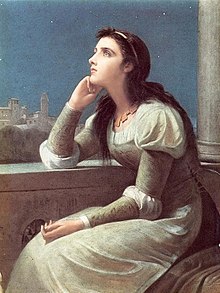
In the English-speaking world, the name is first found in Shakespeare’s Romeo & Juliet (1596) which he based on Luigi Porto’s Giulietta e Romeo (1530)

Currently, Juliet is the 285th most popular female name in the United States, but its Spanish form of Julieta is currently the 6th most popular female name in Argentina, (2009). Her rankings in other countries are as follows:

  • # 21 (Belgium, Juliette, 2009)
  • # 22 (France, Juliette, 2009)
  • # 139 (the Netherlands, Juliette, 2010)
  • # 371 (United States, Juliette, 2010)

Other forms of the name include:

  • Cülyetta (Azeri)
  • Juliette (French)
  • Xulieta (Galician)
  • Juliet’a ჯულიეტა (Georgian)
  • Giulietta (Italian)
  • Džuljeta (Latvian/Lithuanian)
  • Julietta (Polish)
  • Julieta (Portuguese/Romanian/Spanish)
  • Dzhul’etta Джульетта (Russian)