Said

Gender: Masculine
Origin: Arabic سعيد
Meaning: “happy.”
(sah-EED)

The name comes directly from the Arabic meaning, “happy.”

As of 2009, Said was the 459th most popular male name in France.

Other forms of the name include:

  • Said سعيد Саид (Albanian/Arabic/Azeri/Bosnian/Bulgarian/Chechen/Circassian/Dagestani/Egyptian/Indonesian/Iranian/Javanese/Kazakh/Kyrgyz/Lebanese/Ossetian/Pashtun/Syrian/Tatar/Turkmen/Uzbek)
  • Saïd (Algerian/Moroccan/Tunisian)
  • Sead (Bosnian)
  • Sejad (Bosnian)
  • Sait (Kurdish/Turkish)
The feminine form is Saida.
 

Idris

Gender: Masculine
Origin: Arabic إدريس‎ or Welsh
Welsh Meaning: “ardent lord.”
Arabic Meaning: uncertain

Idris is of two different origins and is used in two separate cultures. In Welsh, it is composed of the elements, udd (lord; prince) and ris (ardent, enthusiastic.” In Welsh mythology it was borne by a giant who used the mountain peak of Cadair Idris (Seat of Idris) as an observatory. Legends claims that if you spend one night on the mountain peak you wake up either as a madmen or as a great poet. The name was also borne by a 7th-century Welsh prince, Idris ap Gwyddno.

In the Qu’ran, the name is borne by a prophet, traditionally ascribed to being the same as the Biblical prophet Enoch. Many modern Islamic scholars now believe that Idris was a separate person from Enoch. In this case, the name is believed to be of pre-Islamic and possibly of non-Arabic roots of undeterminate etymology, some, however have connected the name with the Arabic root d-r-s, meaning, “study.”

As of 2009, Idris was the 479th most popular male name in France. In France it is used both among the Bretons and among recent Muslim immigrants.

Other forms of the Arabic include:

  • Idris إدريس‎) Идрис (Albanian/Arabic/Baloch/Bosnian/Bulgarian/Circassian/Dagestani/Ethiopian/Indonesian/Javanese/Malaysian)
  • İdris (Azeri/Turkish)
  • Idriss (Chadian)
  • Driss (Berber/Maghrebi Arabic)
  • Ydyrys Ыдырыс (Chechen/Kazakh/Kyrgyz/Tajik/Tatar/Turkmen/Uzbek)
  • Idrîs (Kurdish)
  • Idriis (Somali)
  • Idrissa (West African)

Alma

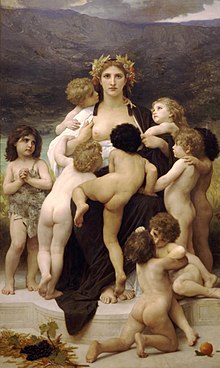
The name has several different origins and meanings. Its usage as a name in Britain skyrocketed around 1854, after the victorious Battle of Alma, which took place near the Alma River in the Crimea.

In this case, the name is derived from the Tatar word for, “apple.” It is interesting to note that Alma, till this day, is a traditional and common female name across Central Asia, especially among Russian-Tatars, Kazakhs and Uzbeks. In Uzbek, it appears in the form of Olma. Alma is also the word for apple in Hungarian, where it is also occasionally used as a female given name.

The name also appears in Edmund Spenser’s The Faerie Queen as the name of a minor character, the head of the House of Temperance in Book 2. In this case, the name is most likely taken from the Portuguese and Spanish word for “soul.”

Alma appears sparingly as a female given name in Renaissance Italy, in this case, it is most likely derived from the Latin, almus, meaning, “nourishing”; hence the term, alma mater (fostering mother). This usage of the name also appears as an epithet for a few Roman goddess, particularly Venus and Ceres.

It is the name of a book in The Book of Mormon, but in this case, it is masculine, being the name of two prophets, a father and son; Alma the Younger being the Chief Judge among the Nephites.

Other etymologies which have been suggested, include:

  • It is from the Greek, αλμη (salt water)
  • It is from an Arabic source, al-ma, meaning, (the water).
  • It is a contracted form of Amalia and Amalberga.

The name is used in virtually every European country, including Scandinavia, where it is currently very trendy.

As of 2010, Alma was the 8th most popular female in the Faroe Islands. Her rankings in other countries are as follows:

  • # 23 (Sweden, 2010)
  • # 24 (Denmark, 2010)
  • # 48 (Norway, 2010)
  • # 49 (Bosnia & Herzegovina, 2010)
  • # 80 (Spain, 2010)
  • # 849 (United States, 2010)


Eva, Eve

Gender: Feminine
Origin: Hebrew
Meaning: “life.”
Eng (EEV); (EE-vuh); Germ/Sp/Pol (EV-ah)

The name is borne in the Bible and in the Quran by the first woman created by God. She and her husband were expelled from the Garden of Eden after eating from the Tree of Knowledge.

The name is believed to be derived from the Hebrew roots חַוָּה, Ḥavvāh, from the Hebrew root ḥāyâ meaning “life” and the Semitic element, ḥyw “to live.” Both the Hebrew word chavah meaning “to live” and chayah meaning “to breath” share the same root.

Despite Eve’s fall from Grace in the Bible, the name was always in usage among Jewish, Christian and Muslim communities. In England, its usage can be traced back to the 12th-century. Its Latinate form of Eva, has always been a classic in continental Europe, especially in Germany, Poland, Slovakia and the Czech Republic.

As of 2010, Eva was the most popular female name in the Faroe Islanda and in Slovenia. Eve, Eva and all her various forms’ rankings in other countries are as follows:

  • # 3 (Iceland, 2010)
  • # 4 (French-speaking, Switzerland, 2010)
  • # 5 (Netherlands, 2010)
  • # 7 (Ieva, Lithuania, 2010)
  • # 10 (Armenia, 2010)
  • # 10 (Evie, England/Wales, 2010)
  • # 14 (Northern Ireland, 2010)
  • # 15 (France, 2009)
  • # 17 (Scotland, 2010)
  • # 20 (Belgium, 2009)
  • # 24 (New Zealand, 2010)
  • # 26 (Australia, NSW, 2010)
  • # 29 (Croatia, 2010)
  • # 31 (Evie, Scotland, 2010)
  • # 33 (Evie, Australia, NSW, 2010)
  • # 37 (England/Wales, 2010)
  • # 44 (Eevi, Finland among Finnish-speakers, 2010)
  • # 44 (Ireland, 2010)
  • # 46 (Austria, 2010)
  • # 47 (Canada, BC, 2010)
  • # 48 (Spain, 2010)
  • # 55 (Catalonia, 2010)
  • # 55 (Éabha, Ireland, 2010)
  • # 56 (Eve, Northern Ireland, 2010)
  • # 59 (Eve, Ireland, 2010)
  • # 86 (Norway, 2010)
  • # 91 (United States, 2010)
  • # 92 (Eve, England/Wales, 2010)
  • # 99 (Eve, Australia, NSW, 2010)
  • # 201 (Eve, France, 2009)
  • # 589 (Eve, United States, 2010)
  • # 705 (Evie, United States, 2010)

Other forms of the name include:

  • Eva Ева ევა
    (Afrikaans/Albanian/Armenian/Basque/Belarusian/Bosnian/Catalan/Croatian/Czech/Dutch/Faroese/French/Frisian/Galician/Georgian/German/Icelandic/Italian/Portuguese/Romansch/Spanish/Scandinavian)
  • Evis (Albanian)
  • Mahalet/Mahlet (Amharic)
  • Hawa حواء Хауа (Arabic)
  • Yeva (Armenian)
  • Həvva (Azeri)
  • Yeva Ева Эва (Belarusian/Russian/Ukrainian)
  • Yevga Евга (Belarusian)
  • Hava (Bosnian)
  • Evy (Danish/Norwegian/Swedish: initially a diminutive form, occasionally used as an independent given name)
  • Eveke (Dutch: initially a diminutive form, used as an independent given name, EV-eh-ke)
  • Eve (English/Estonian/Walon)
  • Evie (English)
  • Hawat/Hewa (Egyptian/Coptic)
  • Eeva (Estonian/Finnish)
  • Eevi (Estonian/Finnish)
  • Evi (Estonian)
  • Ivi/Iivi (Estonian)
  • Iivika (Estonian)
  • Ève (French)
  • Eefje, Eefke (Frisian)
  • Hawwa ሕይዋን (Ge-ez)
  • Eua Ευα (Greek)
  • Chava חַוָה (Hebrew: Modern: KHAH-vah, gutteral CH sound)
  • Éva (Hungarian: AY-vaw, diminutive form is Évike)
  • Hawa (Indonesian/Malayalam)
  • Éabha (Irish-Gaelic)
  • Ieva (Latvian/Lithuanian: YEH-vah)
  • Evuzus (Malaysian)
  • Aaue (Manx)
  • Èva (Occitanian)
  • Ewa (Polish: EH-vah, diminutive forms are Ewka, Ewunia and Ewusia)
  • Evá (Sami)
  • Evelia (Spanish)
  • Evita (Spanish)
  • Eba (Tagalog)
  • Havva (Turkish)
  • Efa (Welsh)

Italian masculine form is Evo.

Traditionally, in most European countries, the name-day for Adam and Eve is December 24.

Tara

Gender: Feminine
Origin: Various
Eng (TAH-rah; TARE-uh)

The name can be of several different origins and meanings depending on the bearer of the name. It could be from the Sanskrit and Hindi तारा meaning, “star.”

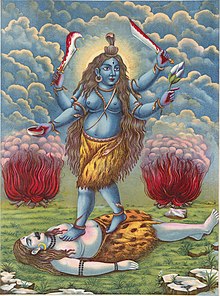
In Hinduisim, Tara (Devi), a Mahavidya of Mahadevi, Kali or Parvati is a star goddess, she is considered one of the Great Wisdom goddesses.

In Buddhism, Tara is the name of a tantric meditation goddess.

In the Hindu epic, the Ramayana, it is the name of the wife of the monkey king, Vali, who married the king’s brother, Sugriva, after Vali’s death.

Among the Irish Diaspora, the name was usually used in reference to the sacred hill, Tara, where the high kings were usually coronated. In this case, the name is an anglicized form of the Gaelic, Teamhair, meaning, “elevated place.”

It may have been further popularized in the English-speaking world by the 1936 Margaret Mitchell novel, Gone with the Wind, in which the plantation is called Tara, in honour of the hill in Ireland.

In South Slavic languages, it could either be a contracted form of Tamara, or it could be taken from the name of the river which runs through Montenegro and Bosnia and Herzegovina. It is also the name of a river in Russia.

As of 2009, Tara was the 30th most popular female name in Croatia. Her popularity in other countries are as follows:

  • # 50 (Slovenia, 2010)
  • # 62 (Ireland, 2010)
  • # 77 (Northern Ireland, 2010)
  • # 126 (Netherlands, 2010)
  • # 774 (United States, 2010)

It is also the name of a sea goddess in Polynesian Mythology.

Ayna

Gender: Feminine
Origin: Turkish
Meaning: “mirror.”
(I-nah)

The name comes directly from the Turkish meaning, “mirror.”

As of 2010, its Bosnian form of Ajna was the 3rd most popular female name in Bosnia & Herzegovina.

Other forms of the name include:

  • Ajna Айна (Bosnian/Chechen/Dagestani/Kazakh/Tatar)
  • Ajnela (Bosnian)
  • Ajnash Айнаш (Kazakh)

A Bosnian male form is Ajni.

Ammar

Gender: Masculine
Origin: Arabic  عمّار
Meaning: “pious; virtuous.”

The name is from the Arabic meaning, “pious; virtuous.”

It was borne by Ammar ibn Yasir al-Ansi, a desciple of the Prophet Mohammed.

As of 2010, its Bosnian form of Amar was the most popular male name in Bosnia & Herzegovina. His rankings in other countries are as follows:

  • # 10 (Iraq, 2007)
  • # 10 (United Arab Emirates)
  • # 45 (Amer, Bosnia & Herzegovina, 2010)
  • # 80 (Ammar, Bosnia & Herzegovia, 2010)

Other forms of the name include:

  • Amar (Bosnian)
  • Əmmar (Azeri)
  • Gammer Гаммәр (Tatar)
The name is used throughout the Islamic world.
A Bosnian feminine form is Amera.

Tariq

Gender: Masculine
Origin: Arabic طارق
Meaning: “morning star; messenger; the knocking one; traveller, path finder.”
طارق

The name is of Arabic origins and can have several different interpretations, one is that it is from the Arabic verb ṭaraqa meaning “to knock” or “to pound.” In this case, the name would take on the meaning of “messenger” or “bringer of news.”

In the Qu’ran, the morning star is named ṭāriq and is described as something that shines and leads the way and in this case, the name can take on the meaning of “someone who leads the way” “traveller” or “pathfinder.”

As of 2010, Tarik was the 2nd most popular male name in Bosnia & Herzegovina, while Tareq is the 8th most popular male name in Libya.

The name was most notably borne by Tariq ibn Ziyad, the Islamic general who helped conquer Spain in the 8th-century.

The name is used by both Muslim and Christian Arabs.

Other forms of the name include:

  • Tarik (Albanian/Bosnian)
  • Tarak/Tarek (Algerian/Lebanese/Moroccan/Tunisian: these are usually the way the name is transcribed in French and hence is most often used in the Francophone world)
  • Tarık (Azeri/Kurdish/Turkish)

The name is also transliterated as Tareq and Tareeq.

Saira

Gender: Feminine
Origin: Arabic
Meaning: “traveler.”
(SYE-rah)

The name comes from the Arabic meaning, “traveler.”

This was the Muslim name of Scottish-Afghan writer, Saira Shah, (neé Elizabeth Louise Mackenzie 1900-1960), sometimes writing under the pseudonym of Morag Murray Abdullah. It is also borne by her grand-daughter, the author, reporter and documentary film-maker, Saira Shah (b.1964). It is also borne by Canadian fashion model, Saira Mohan (b.1978)

Its Bosnian form of Sajra is currently the 14th most popular female name in Bosnia & Herzegovina, (2010).

A Turkish and Azeri form is Saire.

Leila, Layla

Gender: Feminine
Origin: Arabic לילה‎ ليلى
Meaning: “night.”
(LAY-la)

The name is derived from the Arabic and has a variety of different meanings depending on its spelling, the most popular etymology is that it is from a Semitic root, l-y-l, meaning, “night” and shares the same etymology as the name Lilith.

The name has always been popular in the Middle East and is found in the 7th-century romantic poem, Qays & Layla also known as Layla & Majnun (written by Persian poet, Nizami Ganjavi). The legend trickled down to throughout the Middle East, Near East, Central Asia and South Eastern Europe, making the name a long time classic in all those regions.

It was introduced into the English-speaking world via Lord Byron in which the name appears in two of his works, The Gaiour (1813) and Don Juan (1819). It was further popularized in the 1970s when the name was the subject of two songs, one being the famous Eric Clapton song and the other being “Layla” by Derek and the Dominos.

Her Bosnian form of Lejla is the 7th most popular female name in Bosnia & Herzegovina, (2010). Her rankings in other countries are as follows:

  • # 3 (Leyla, Azerbaijan, 2010)
  • # 36 (Layla, Australia, 2010)
  • # 37 (Layla, United States, 2010)
  • # 44 (Layla, England/Wales, 2010)
  • # 50 (Layla, Ireland, 2010)
  • # 50 (Layla, Scotland, 2010)
  • # 71 (Leila, Hungary, 2010)
  • # 76 (Layla, Canada, BC, 2010)
  • # 95 (Laila, England/Wales, 2010)
  • # 138 (Laila, United States, 2010)
  • # 143 (Leila, France, 2009)
  • # 204 (Leila, United States, 2010)
  • # 304 (Layla, Netherlands, 2010)
  • # 478 (Laila, Netherlands, 2010)
  • # 747 (Leyla, United States, 2010)

The name is also common in Iran, Israel, the Balkans and in the Turkic world.

In the Middle East, the name was popularized by a 7th-century poet by the name of Qays, whose lady love was named Layla. His story became a popular Medieval Arabic romance.

Other forms of the name include:

  • Lejla Лейла (Albanian/Bosnian/Dagestani/Kazakh/Maltese/Tatar)
  • Laïla (Algerian/Moroccan/Tunisian)
  • Leïla (Algerian/Moroccan/Tunisian)
  • Leyli Լեյլի (Armenian)
  • Leyla (Azeri/English/Kurdish/Turkish)
  • Lajla Лайла (Chechen)
  • Leila ლეილა (Circassian/English/Ethiopian/French/Georgian/Hungarian)
  • Laila (Dutch/English/Estonian/Finnish/Hindi/German/Latvian/Scandinavian/Urdu)
  • Layla (English/Italian/Uzbek)
  • Lejli Лейли (Kazakh)
  • Ljajlim Ляйлим (Kazakh)
Laila can also be a Sami form of Helga.