Asma

Gender: Feminine
Origin: Arabic أسمى
Meaning: “supreme.”
(AHS-mah)

The name comes directly from the Arabic, أشد (asma), meaning, “supreme.”

The name is of pre-Islamic origins and was borne by a legendary 7th-century female poetess, Asma bint Marwan. According to legend, she tried to incite the populous of Medina to rebel against the Prophet Mohammed in which she was summarily killed by the Prophet. Her existence and story has been questioned and debated by scholars.

Another notable bearers include Asma al-Assad, First Lady of Syria (b.1975). Its Turkish form of Esma was borne by two Turkish sultanas.

As of 2010, Esma was the 18th most popular female name in Bosnia & Herzegovina. Other Bosnian forms include: Esmana, Esmina and Esminka.

Baqir

Gender: Masculine
Origin: Arabic باقر
Meaning: “to rip apart; to dissect.”
(BAH-KEER)

The name is taken from an epithet of Mohammed ibn ‘Alī, known as Al-Baqir (676-733 C.E.) He was the fifth Imam to the Twelver Shi’a and the fourth Imam to the Ismaili Shi’a. He was later nicknamed Al-Baqir due to his analyzation of different topics.

As of 2010, its Balkan form of Bakir was the 31st most popular male name in Bosnia & Herzegovina.


Amram

Gender: Masculine
Origin: Biblical Hebrew  עַמְרָם
Meaning: “exalted one.”

The name is found in the Old Testament as the name of the husband of Jochebed and the father of Moses, Aaron and Miriam. In the Qu’ran, the name appears in its Arabic form of Imran عمران as the name of both the father of Moses and the father of the Virgin Mary, (analogous to the Catholic Joachim).

As of 2010, Imran was the 17th most popular male name in Bosnia & Herzegovina. His rankings in other countries are as follows:

  • # 243 (Netherlands, 2010)
  • # 365 (France, 2009)

Other forms of the name include:

  • Imram عمرام (Arabic)
  • Ambram Αμβραμ (Greek)
  • ‘Îmran (Kurdish)
A Bosnian feminine form is Amra, which is currently the 27th most popular female name in Bosnia & Herzegovina, (2010).

Aladdin

Gender: Masculine
Origin: Arabic علاء الدين
Meaning: “glory to religion.”

The name is composed of the Arabic words  علاء (‘ala) “glory, praise; excellence” and  دين (din) “religion.”

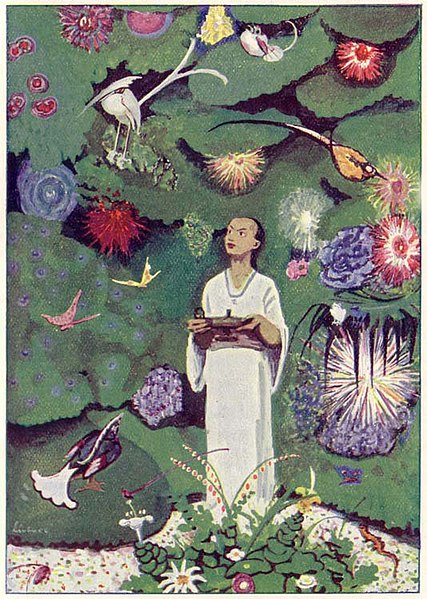
The name was borne by several Delhi Sultans, but came was introduced into the Western World via the Middle Eastern folktale as written in 1001 Nights. It is the name of the impoverished Chinese hero who is kidnapped and forced into slavery by an evil and powerful North African sorcerer. The tale recounts the Aladdin’s obtainment of a genie and his eventual rise to prestige.

As of 2010, its Bosnian modified form of Aldin, was the 23rd most popular male name in Bosnia & Herzegovina, while its female form of Aldina was the 97th most popular female name in Bosnia & Herzegovina.

Other Balkan forms include Aladin and Alaudin.

Adnan

Gender: Masculine
Origin: Arabic  عدنان‎
Meaning: “settler.”
(AHD-nahn)

The name is derived from the Semitic root ‘adn meaning, “to stay; to abide.”

This is the traditional name of the progenitor of the Adnani Arabs, they are believed to be the direct descendants of Ismael and this is the tribe from which the Prophet Mohammed came.

As of 2010, Adnan was the 18th most popular male name in Bosnia & Herzegovina.

The name is used throughout the Islamic world.

Bosnian feminine forms include Adna and Adnana.

Iman

Gender: Feminine
Origin: Arabic  إيمان Иман
Meaning: “faith.”
(ee-MAHN)

The name comes directly from the Arabic word for faith.

The name is used throughout the Islamic world and as of 2010, it was the 30th most popular female name in Bosnia & Herzegovina, (2010).

Its North African form of Imane is currently the 80th most popular female name in Belgium, (2009), the 163rd most popular in France, (2009) and the 411th most popular in the Netherlands, (2010).

Iman was brought to attention in the Western World by Somali-born model, Iman (b.1955)

The name is also borne by two Jordanian princesses and Persian Princess Iman Pahlavi, daughter of Reza Pahlavi, the deposed Crown Prince of Iran.

Other forms include:

  • Imane (Algerian/Moroccan/Tunisian)
  • İman (Azeri/Turkish)
  • Îmân (Kurdish)
  • Imaan (Somali)
  • Imani (Swahili) 

Zarina

Gender: Feminine
Origin: Persian
Meaning: “gold”
(zah-REE-nah)

The name is derived from a Persian element meaning, “gold” and its usage can be traced to the Scythians. According to Herodotus, it was supposedly borne a Scythian queen who led a rebellion against the Parthians.

The name is extremely popular throughout Central Asia. It is also occasionally used by Russians.

As of 2010, its Bosnian form of Zerina was the 50th most popular female name in Bosnia & Herzegovina.

Its modern Persian form is Zarine  زرین.

An Armenian form is Zarineh Զարինեհ

An Urdu form is Zareen زرین

Aïda

Gender: Feminine
Origin: Arabic عائدة
Meaning: “the return; the visitor.”
It (ah-EE-dah); Al/Bos (I-dah)

The name has a two different possible etymologies. One is that it is from the Arabic, meaning, “returning; visitor.”

In the case of Verdi’s Opera, Auguste Mariette was inspired by a possible Greco-Egyptian male name which was recorded on the Rosetta Stone, AitusThe name was initially feminized to Aita, but was later changed to Aïda. Mariette attests to the origin of the name himself in a letter he wrote:  “Don’t be alarmed by the title. Aida is an Egyptian name. Normally it would be Aita. But that name would be too harsh, and the singers would irresistibly soften it to Aida.”

The opera is about an Ethiopian princess who is captured and enslaved in Egypt. An Egyptian military commander by the name of Radamnes must chose between his love for Aida or his loyalty to the pharoah.

As of 2010, Aida was the 52nd most popular female name in Bosnia & Herzegovina, (2010).

Its Arabic form is sometimes transliterated as Ayda.

The name is used throughout the Islamic world in addition to Anglophone countries, Spanish speaking countries, Italy and in Hungary and Latvia.

Its designated name-days are: February 2 (Hungary) and February 3 (Latvia).

Sources

  1. Dizionario dei Nomi (Selene, Armenia, 2002)
  2. http://www.behindthename.com/name/aida
  3. Simon, Henry W. (1946). A Treasury of Grand Opera. Simon and Schuster, New York, New York.
  4. http://archive.operainfo.org/broadcast/operaBackground.cgi?id=33&language=1

Farah

Gender: Feminine
Origin: Arabic
Meaning: “joy”
فرح
Per (fah-RAH); Eng (FAIR-uh)

The name is of Arabic origins but is very popular in Iran and Afghanistan. It is borne by former Empress of Iran, Farah Pahlavi (b. 1938-). She was the first empress to be crowned in Iran since the Arab invasion in the 7th century.

The name was also borne by actress Farrah Fawcett (1947-2009), who claimes that her mother made up the name because it sounded good with her surname.

Currently, Farrah does not rank in the U.S. top 1000, but back in 1977, she was the 177th most popular female name in the United States, which may have been due to current popularity of actress Farrah Fawcett, and also the constant coverage of the Iranian queen of the same name.

As of 2010, Farah was the 56th most popular female name in Bosnia & Herzegovina. Her rankings in other countries are as follows:

  • # 157 (France, 2009)
  • # 244 (Netherlands, 2010)

The name is used throughout the Middle East and Central Asia.

Other forms of the name include, the Azeri: Fereh and Farakh.

Omar

Gender: Masculine
Origin: Arabic عمر
Meaning: “populous; flourishing; life.”

or

Gender: Masculine
Origin: Biblical Hebrew
Meaning: “speaker.”

The name can be of multiple origins and meanings, in Arabic, the name is derived from the word, عمر (umr) meaning, “life.”

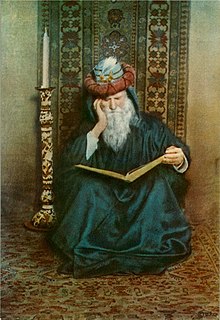
The name was borne by the second caliphe of the Muslims as well as by a 12th-century Persian poet, Umar Khayyam.

In Hebrew, the name means “speaker” and is found Genesis 36:11 as the name of the son of Eliphaz.

The name may also be possibly related to the Hebrew, Omer, which means “sheaf of wheat” but was also the name of a unit of measuring in ancient times.

Omar is a popular name in Spanish-speaking countries, whether this is a leftover from Moorish occupied Spain or in reference to the Biblical Hebrew character is unknown.

As of 2010, Omar was the 54th most popular male name in Bosnia & Herzegovina. His rankings in other countries are as follows:

  • # 4 (Arab world (2011) (BabyCenter Arabia members)
  • # 4 (Pakistan)
  • # 6 (Iraq, 2007)
  • # 7 (Israel, Muslim boys, 2009)
  • # 7 (Umar, Malaysia, 2011)
  • # 8 (United Arab Emirates)
  • # 9 (Omer, Israel, Jewish intersex names (given to both boys and girls) 2008)
  • # 77 (Catalonia, 2010)
  • # 87 (Spain, 2010)
  • # 175 (United States, 2010)
  • # 252 (Netherlands, 2010)
  • # 289 (France, 2009)

Other forms include:

  • Omeri (Albanian)
  • Omer (Amharic/Kurdish)
  • Umar عمر (Arabic)
  • Omar Ома́р (Albanian/Arabic/Bosnian/Chechen/Dagestani/Kazakh/Kyrgyz/Persian/Russian/Spanish/Tajik/Tatar/Turkmen/Uzbek)
  • Ömər (Azeri)
  • Amar (Berber)
  • Úmar (Catalan)
  • Oumar/Oumarou (Sub-Saharan African)
  • Ömer (Turkish)

In France, the designated name-day for Omer is September 9.

Other notable bearers include: Egyptian born actor Omar Sharif (b.1932); Omar al-Bashir (b.1944) the president of Sudan; and American actor, Omar Epps (b. 1973).

Source

  1. http://www.behindthename.com/php/search.php?nmd=n&terms=Omar
  2. http://www.askoxford.com/firstnames/omar