Sapphire, Safira, Sapir,

220px-Point-19_carat_diamond_cut_blue_Yogo_sapphireCROP


From the name of the blue precious gem, many etymologists believe Sapphire is derived from the Greek σαπφειρος sappheiros meaning “sapphire” or “lapis lazuli,” which is ultimately derived from the Hebrew סַפִּיר (sappir), which is connected to an older Semitic word for “beauty.” Others believe it is derived from the Sanskrit Shanipriya (favoured by Saturn), as the sapphire is believed in Vedic astrology to be protective against the ill-affects of the planet Saturn.

As a female given-name, there is enough evidence to show that this name can trace its origins to ancient Israel. In the Bible, Shiphrah, which shares the same root with סַפִּיר (sappir), is the name of one of the midwifes who refused to kill Hebrew baby boys. Shiphrah also spawned the common Ashkanazi surnames of Shifrin & Shapiro.

Among Hellenized Jews, the form Sapphira would have been in use. It is the name of a woman in the Acts, in the New Testament, who is struck down by God for lying about money to the Holy Spirit.

The Ancient Greek Sappho has also been linked with the Sapphira, but the etymological connection to the former is highly disputed.

Safira, Zaffira and its masculine form of Zaffiro, experienced sporadic use in Medieval Northern Italy.

Sapphire, Sephare appear in use as a female name in Anglo-Norman England, albeit rare.

Sapphira experienced a minor revival among the Puritans in the 18th-century due to its Biblical connotations; the Puritans didn’t seem to care about the character of some Biblical figures when choosing a baby name.

In Portugal, Safira is currently the 100th Most Popular Female Name (2018).

Sapphire is currently the 361st Most Popular Female Name in England & Wales (2018).

Other forms include:

  • Sappheire Σαπφειρη (Biblical Greek)
  • Safir (Catalan)
  • Safira (Dutch/Polish/Portuguese/Scandinavian/Spanish)
  • Saphire (French)
  • Sephirine (French)
  • Saphira (German/Scandinavian)
  • Zafira (Hungarian/Spanish)
  • Saffira (Italian/Latin)
  • Sapfeira Σαπφείρα (Modern Greek)
  • Sapirit (Modern Hebrew, literally meaning “little saphire)
  • Zaffira (Medieval Italian)
  • Sapfíra Сапфи́ра (Russian)
  • Safina (Scandinavian)
  • Zefira (Polish)
  • Zefiryna (Polish)

Masculine forms include, Saffiro (Italian), Zaffiro (Italian) & Zafiro (Spanish).

Other associations include:

  • Saphira is the name of a species of white grapes.
  • Saphira is the name of the dragon in the series of fantasy books known as The Inheritance Cycle, by Christopher Paolini
  • Opel Zafira is the name of a make of car produced by General Motors and introduced in 2011
  • American poet Sapphire, (born Ramona Lofton in 1950)
  • Sapphire is the name of a fictional superheroine in the DC Comics Universe
  • Sapphire is the name of a character on the British web series, Corner Shop Show
  • Sapphire is the name of the main character on the British sci-fi series, Sapphire & Steele
  • Princess Sapphire is the main character in the manga series, Princess Knight
  • Sapphire, a 1959 British film recounting the murder of an eponymous mixed-race girl from the West Indies in London

The name is also borne by Dutch model, Safira de Wit (b.1989).

Sources

Alfred, Alfreda

alfred


The name is derived from the Anglo-Saxon, Ælfræd, which is composed of the Anglo-Saxon elements, ælf  “elf” and ræd “counsel. A notable bearer was the 9th-century Anglo-Saxon King, Alfred the Great.

This is one of the few Anglo-Saxon male names to survive popular usage after the Norman Conquest and slowly waned in use by the end of the Middle Ages, but was revived in the 18th-century.

Though quite uncommon in the United States in this day and age, it has never completely fallen outside the U.S. Top 1000, and once reigned in the U.S. Top 100 between 1880 and 1951. Alfred peaked at # 32 in 1886.

Alfred reigns supreme in the Scandinavian charts, he is currently the 8th Most Popular Male Name in Denmark (2018), the 12th Most Popular in Sweden (2018) and the 42nd Most Popular in Norway (2018).

He ranks much lower in the U.K., coming in at #106 and even lower in France, ranking in as the 491st Most Popular Male Name (2018).

Alfie, a diminutive form which has become a much loved independent given-name in the U.K, is currently in England & Wales’ Top 100 Baby Names, ranking in at #15 (2018).

Alfred is used in Danish, Dutch, German, Polish, Norwegian & Swedish

Other forms of the name include:

  • Ælfræd (Anglo-Saxon)
  • Alfredo (Aragonese, Galician, Italian, Portuguese, Spanish)
  • Alfredu (Asturian)
  • Alperda (Basque)
  • Aofred (Breton)
  • Alfréd (Czech, Hungarian, Slovak)
  • Alfie (English)
  • Alfre (Finnish, Greenlandic)
  • Alfreeti, Alfreetti (Finnish)
  • Alfrédos Αλφρέδος (Greek)
  • Alfreð (Icelandic)
  • Alfredino (Italian)
  • Alfredus (Late Latin)
  • Alfrēds (Latvian)
  • Alfredas (Lithuanian)
  • Al’fred Альфред (Russian)
  • Alfrid, Allfrid (Scandinavian)
  • Arfredu (Sicilian)

Its feminine form of Alfreda also has an Anglo-Saxon counterpart in the form of Ælfthryth. It was borne by a 9th-century English saint.

Alfreda is used in Croatian, Czech, Danish, Dutch, English, Finnish, German, Hungarian, Italian, Latvian, Lithuanian, Norwegian, Polish, Portuguese, Spanish & Swedish.

Other forms of the female form include:

  • Alfrede (Danish)
  • Elfrida (Croatian, Italian, Spanish)
  • Alfriede, Alfrieda (German, Scandinavian)
  • Elfriede (German)
  • Alfrède (French)
  • Alfrédie (French)
  • Alfride (French)
  • Alfreðsína (Icelandic)
  • Afreda (Italian)
  • Alfredina (Italian)
  • Alfrida (Scandinavian)

Sources

Nora, Nour

1024px-Dawn._Buryatia,_Russia


This multicultural name has recently experienced a revival. In European countries, the name stems from any name ending in the -nora element, such as Honora & Eleanora. In Arabic, Nora is a variant transliteration of Nurah, which is a strictly feminine version of the unisex Arabic name, Nur (light). Nur is used as one of the 99 attributes of Allah, al-Nur (the light).

The name was used by Henrik Ibsen for his main character in his play, A Doll’s House (1878).

Outside of East Asia, there isn’t a counry where Nora is unhead of or is not in use. Nora has been in out of the U.S. Top 100 since 1880! She currently ranks in as the 30th Most Popular Female Name in the United States. Her rankings in other countries are as follows:

  • #2 (Norway, 2018)
  • #10 (Netherlands, 2018)
  • #11 (Hungary, 2018)
  • #14 (Switzerland, 2018)
  • #15 (Denmark, 2018)
  • #20 (Belgium, 2018)
  • #23 (Austria, 2018)
  • #26 (Catalonia, Spain, 2018)
  • #28 (Sweden, 2018)
  • #38 (Canada, BC, 2018)
  • #47 (Spain, 2018)
  • #64 (Norah, Netherlands, 2018)
  • #79 (Bosnia & Herzegovina, 2018)
  • #84 (Norah, Canada, BC, 2018)
  • #85 (Italy, 2018)
  • #119 (France, 2018)
  • #140 (Norah, United States, 2018)
  • #184 (Norah, France, 2018)
  • #197 (England & Wales, 2018)
  • #283 (Norah, England & Wales, 2018)

Its Dutch version of Noor also ranks high in several popularity charts. This name is also used by Muslim families as a variation of Nur. Her rankings in other countries are as follows:

  • #10 (Netherlands, 2018)
  • #25 (Belgium, 2018)
  • #279 (England & Wales, 2018)
  • #311 (France, 2018)

Noortje is another Dutch version which currently ranks in as the 203rd Most Popular Female Name in the Netherlands.

Other forms of its European version include:

  • Nora Нора Νόρα (Bulgarian, Greek)
  • Noera (Dutch)
  • Noor (Dutch)
  • Noortje (Dutch)
  • Norah (Dutch, English, French)
  • Nonie (English)
  • Noreen (English, Irish)
  • Noora (Estonian, Finnish)
  • Nóra Но́ра (Faroese, Hungarian, Irish, Russian)
  • Nuura (Finnish, Scandinavian)
  • Nóirín (Gaelic)
  • Norina (Italian, Provençal, Romansch)
  • Norá (Sami)
  • Norea (Scandinavian)
  • Norena (Scandinavian)
  • Noria (Scandinavian)
  • Norita (Spanish, Scandinavian)

The Arabic Nur is traditionally a unisex name which is popularly used in many Islamic countries. Its Maghrebi form of Nour currently ranks in the following popularity charts for girls:

  • #40 (Belgium, 2018)
  • #48 (Catalonia, Spain, 2018)
  • #48 (France, 2018)
  • #76 (Spain, 2018)
  • #137 (Italy, 2018)
  • #197 (Netherlands, 2018)

Nur is currently the 87th Most Popular Female Name in Bosnia & Herzegovina (2018).

Other forms of the Arabic version include:

  • Noora, Nura (Arabic, strictly feminine)
  • Noura (Maghrebi Arabic, strictly feminine)
  • Núria (Catalan)
  • Nor (Malay, unisex)
  • Nuru (Swahili, strictly feminine)

Sources

Albert, Alberta

Prince_Albert_-_Franz_Xaver_Winterhalter_1842


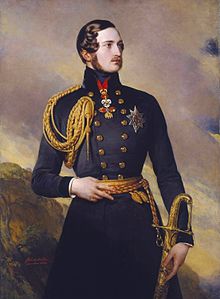
Albert is a Norman contracted form of Adalbert that was introduced into England after the Norman Conquest of 1066. Though there is an Anglo-Saxon form of Æðelberht, it was completely usurped by its Norman version.

The name fell out of use in England by the end of the 13th-century but was revived in the 19th-century when Queen Victoria of England chose a German prince by the name of Albert to be her husband. Speaking of which, Albert was a much-loved name among German royalty.

Between 1880-1967, Albert remained in the Top 100 Most Popular Male Names. He peaked at #14 in 1910. As of 2018, he currently ranks in as the 452nd Most Popular Male Name.

Albert is currently quite popular in Europe. These are his rankings in the following countries:

  • #37 (Denmark, 2018)
  • #55 (England & Wales, 2018)
  • #84 (Norway, 2018)
  • #422 (Netherlands, 2018)

Albert is used in Albanian, Catalan, Croatian, Czech, Danish, Dutch, English, Estonian, Finnish, French, German, Hungarian, Icelandic, Polish, Romanian, Russian, Slovakian, Slovenian & Ukrainian.

Other forms include:

  • Alberzh (Breton)
  • Aalt (Dutch)
  • Aalbert (Dutch)
  • Aalbertus (Dutch)
  • Aelbrecht (Dutch)
  • Albercht (Dutch)
  • Alberd (Dutch)
  • Albertus (Dutch, Late Latin)
  • Appe (Dutch)
  • Brecht (Dutch)
  • Elbert (Dutch, German)
  • Ethelbert (English)
  • Alpertti (Finnish)
  • Albertin (French)
  • Aubert (French)
  • Aubertin (French)
  • Abbe, Abe (Frisian)
  • Ailbeart (Gaelic)
  • Alberte (Galician)
  • Albertos (Galician)
  • Alberti ალბერტი (Georgian)
  • Albrecht (German)
  • Albertinello (Italian)
  • Albertino (Italian)
  • Alberto (Italian, Portuguese, Spanish)
  • Alperto (Italian)
  • Ulberto, Ulperto (Italian)
  • Albaer (Limburgish)
  • Baer, Bèr (Limburgish)
  • Alberts (Latvian)
  • Albertas (Lithuanian)
  • Albertet (Occitanian)
  • Olbracht (Polish)

Its feminine for of Alberta was borne by Princess Louise Caroline Alberta (1848-1939), daughter of Queen Victoria & Prince Albert. The Canadian province was named in her honour.

Alberta is used in Albanian, Catalan, Croatian, Czech, Danish, Dutch, English, Estonian, Finnish, French, German, Hungarian, Icelandic, Italian, Polish, Portuguese, Romanian, Russian, Slovakian, Slovenian, Spanish & Ukrainian.

Alberte is currently the 12th Most Popular Female Name in Denmark. Alberte (ahl-BARE-teh) is also used in French, but pronounced differently from its Danish counterpart (AHL-BAIRT). Other feminine forms include:

  • Alberthe, Albertha (Danish, Swedish)
  • Albertina (Dutch, German, Hungarian, Italian, Portuguese, Spanish)
  • Brechtje (Dutch)
  • Bertina (English, Hungarian, Italian)
  • Albertine (French, German, Danish, Norwegian)
  • Auberte (French)
  • Aubertine (French)
  • Bertine (French)
  • Abelke (Frisian)
  • Albertin (Hungarian)

Sources

Sixtus, Sixtine, Sistine

download (2)

Sixtus is a Latin corruption of the Greek Ξυστος (Xystos) meaning “polished.” It has often been confused with the Latin, Sextus (the sixth). The name was borne by 5 Roman Catholic Popes, (3 of whom are saints), several notable bishops and most recently in history, Prince Sixtus of Bourbon-Parma (1886-1934); Prince Sixtus Henry of Bourbon-Parma (b. 1940) also bears the name.

In 2017, British Conservative Politician, Jacob Reese-Mogg chose this name for his son.

The Sistine Chapel in the Vatican gets its name from Pope Sixtus IV (1477-1480_, who was responsible for revamping the apostolic chapel.

Its female form of Sixtine has been in the French Top 500 Most Popular Female Names since 1991, which was also the same year it peaked the highest in its popularity, coming in at #286. It currently ranks in at #376 (2018).

In 1998, actor Sylvester Stallone and his wife, Jennifer Flavin bestowed this name Sistine on their daughter, which is perhaps a watered-down version of the Italian, Sistina.

Other forms of the name include

Male

  • Sistu (Asturian/Sicialian)
  • Sixt (Catalan/German)
  • Siksto (Croatian)
  • Sixtinus (Dutch/German/Latin)
  • Sixtus (Dutch/English/German/Latin/Scandinavian)
  • Sixte (French)
  • Sixtin (French)
  • Sisto (Galician/Italian/Portuguese)
  • Xykstus (German)
  • Sixtos Σίξτος (Greek)
  • Sziktusz (Hungarian)
  • Sükösd (Hungarian)
  • Sistino (Italian)
  • Siksts (Latvian)
  • Sikstas (Lithuanian)
  • Sykstus/Sykst (Polish)
  • Sixto (Spanish)

Female forms include

  • Sixta (Dutch/German/Latin/Spanish)
  • Sixtina (Dutch/German/Latin/Spanish)
  • Sista/Sistina (Italian)
  • Szixtin/Szixtina (Hungarian)
  • Sykstyna (Polish)

Sources

Willa

Use: English, Danish, Dutch, German, Norwegian, Swedish

The name is derived from the old Germanic “will,” meaning “will, desire.” It was borne by a 10th-century Frankish queen known as Willa of Provence (d.924), also known as Guille (GHEE; GHEE-ye) or Guilla.

Another notable bearer was the Italian queen consort, Willa of Tuscany (10th-century).

It was borne by the American novelist, Willa Cather, (nee Wilella) (1873-1947).

It has been in and out of the U.S. Top 1000 since 1880. It peaked at #272 in 1932 and it is currently the 383rd most popular female name (2018).

Other forms include:

  • Wil – la (Catalan)
  • Guille (French, archaic)
  • Guilla (Italian/Spanish)
  • Villa (Italian, archaic)

Sources

Evander

Evander

Origin: Greek
Meaning: “good man”
Gender: Masculine
(ee-VAN-der)

The name is composed of the Greek elements, Greek ευ (eu) meaning “good” and ανηρ (aner, genetive) “man.” It was borne in Roman Mythology by an Arcadian hero who is credited for founding the city of Pallatium and also introducing the alphabet, the Greek religion and laws to the Italian peninsula. It was also borne by a 2nd-3rd-century BCE Greek Philosopher and 1st-Century CE Greek Sculptor.

In Scotland, Evander was adopted as the anglicized form of the Gaelic male name, Iomhair (EE-vor), though an English form (Ivor) already existed and neither Evander or Ivor are really related.

A notable contemporary bearer is American boxer, Evander Holyfield (b.1962).

In the United States, the name only made an appearance in the U.S. Top 1000 one time in 1895, coming in as the 872nd most popular male name.

Short forms include: Evan, Van, and Vandy.

Other forms include:

  • Evandre (Catalan)
  • Evànder (Catalan)
  • Evander (Danish/Dutch/German/English/Hungarian/Norwegian/Portuguese/Swedish)
  • Évandre (French)
  • Euandros (Original Greek form)
  • Evandro (Italian/Portuguese/Spanish)
  • Euander (Latin)
  • Evandrus (Latin)
  • Ewander (Polish)

A feminine form is Evandra.
Sources

Iris

IrisOrigin: Greek Ιρις
Meaning: “rainbow”
Gender: Feminine

The name is derived from the Greek “Îris (Ἶρις) Írídos (ίρίδος) “rainbow” and is borne in Greek mythology by the goddess of the rainbow and messenger of the Olympian gods. It later became associated with the body part, the flower, and a colour, all of which were named for the Greek goddess.

In recent years, the name has experienced a surge in popularity in several countries. Its rankings in other countries are as follows:

  • #21 (Iceland 2017, Íris)
  • #25 (Portugal, 2016, Íris)
  • #31 (Sweden, 2017)
  • #32 (France, Paris, 2016)
  • #56 (Catalonia, 2016)
  • #73 (Spain, 2016)
  • #84 (England/Wales, 2016)
  • #85 (Netherlands, 2017)
  • #85 (Slovenia, 2016)
  • #116 (Norway, 2016)
  • #121 (France, entire country, 2016)
  • #186 (United States, 2016)
  • #199 (Scotland, 2016)

Other forms of the name include:

  • Iris Ирис Իրիս (Armenian/Bulgarian/Catalan/Czech/Danish/Dutch/English/Estonian/Finnish/French/German/Greek/Italian/Serbo-Croatian/Norwegian/Polish/Romanian/Slovenian/Spanish/Swedish)
  • Iryda Ірыда (Belarusian/Polish)
  • Irida Ирида (Bulgarian/Croatian/Greek/Italian/Russian/Serbian)
  • Iiku (Finnish)
  • Iiri (Finnish)
  • Iiris (Finnish)
  • Írisz (Hungarian)
  • Íris (Icelandic/Portuguese/Slovak)
  • Iride (Italian)
  • Iridė (Lithuanian)
  • Yryda Ирида (Ukrainian)

Sources


Sharbel, Charbel

Sharbel, CharbelOrigin: Aramaic
Meaning: uncertain
Gender: Masculine
(shar-BEL)

A traditional Aramaic male name, many sources erroneously list this name as Arabic. Its meaning is illusive, but what is known is that the second element of the name is either from the Aramaic el (God) or Ba’al, meaning “master; lord.”

This is a very common name among Assyrian Christians as it was borne by an early Christian martyr and saint of Syria (known to Western Christians as St. Sarbelius). St. Sarbelius was martyred under the Roman Emperor Trajan.

In the 19th-century, the name was borne by a Lebanese mystic and monk, St. Charbel Makhlouf (1828-1898).

The name is sometimes transliterated as Šarbel or Šarbil.

Since this is the name of a saint venerated among Roman Catholics and Eastern Christians, there are equivalents that appear on several Christian calendars across the world, however, the following names are not necessarily in common use in said languages:

  • Xàrbel (Catalan)
  • Šarbel (Croatian/Czech)
  • Charbel (French, used among French-speakers of Lebanese or Assyrian descent)
  • Scharbel (German)
  • Sarbelius (Latin)
  • Chárbel (Spanish, used among Spanish-speakers of Lebanese descent, especially in Mexico where there is a large Lebanese-Mexican community)
  • Szarbel (Polish: not in use, but appears on the Catholic Saint calendar)

Sources

Harmonia, Harmony

HarmonyOrigin: Greek
Meaning: “harmony”
Gender: Feminine

Harmonia was the name of the Greek goddess of peace and harmony, her Roman counterpart being Concordia.

Harmonia was also the name of a minor in nymph in Greek mythology.

In history, Harmonia was the name of the daughter of Gelo, a 3rd-century Sicilian king. Their story is rather unpleasant to say the least, after her family was slaughtered by their angry subjects, a faithful girl chose to stand in Harmonia’s place and was slaughtered as a result. Harmonia felt so guilty about someone else sacrificing their life for her that she ultimately killed herself.

Harmonia is also the name of a plant species, a species of beetle and butterfly.

Its English counterpart of Harmony has been in use since the 18th-century, being popularized among the Puritans.

Harmony has been in the U.S. top 1000 since 2000 and has steadily risen since then. As of 2016, it was the 191st most popular female name. It is also currently #369 in England & Wales, 2016. Between 2005 and 2010, it was among the top 100 most popular female names in New Zealand, peaking at #70 in 2006.

Other forms of the name include:

  • Harmonia (Catalan/Czech/Dutch/Greek/Hungarian/Polish/Portuguese/Romanian)
  • Harmonie (French)
  • Harmonía/Armonía (Spanish)
  • Armonia (Italian)

Sources