Myron

Myron

Origin: Greek
Meaning: “myrrh; perfume”
Gender: Masculine
Eng. (MY-ron); GRK (MEE-rone)

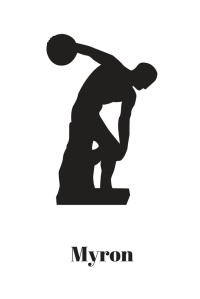
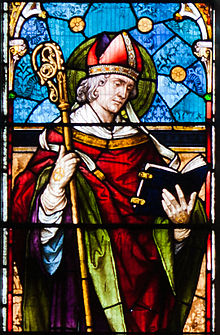
The name comes from the Greek meaning “myrrh; perfume.” It was borne by a 5th-century B.C.E Greek sculptor as well as several Christian saints.

In the United States, especially at the turn of the century, it was used among Jewish families as a form of the Hebrew Meir.

Myron is also the name of a genus of snakes.

For 100 years, between 1900-2000, it was in the U.S. Top 1000 Most popular male name. Myron peaked in 1931 when it was the 192nd most popular male name.

Other forms of the name include:

  • Mirón (Asturian/Galician/Portuguese/Spanish)
  • Miran Міран (Belarussian)
  • Miron Ми́рон (Bulgarian/Croatian/Romanian/Russian/Serbian/Slovenian/Ukrainian)
  • Miró (Catalan)
  • Myrón (Czech)
  • Myron (Dutch/English/French/German/Polish)
  • Mürón (Hungarian)
  • Mýron (Icelandic)
  • Mirone (Italian)
  • Mironi მირონი (Georgian)
  • Mironas (Lithuanian)

A feminine form is Myra.

Sources


Braulio

800px-Braulio_de_Zaragoza_e_Isidoro_de_SevillaOrigin: Spanish
Meaning: unknown
Gender: Masculine
(BROW-lee-oh)

The name can be traced to Visigothic Spain, when it was introduced by the 6th-century Spanish saint, Braulio of Zaragoza (590-651). A popular theory is that the name derives from the Germanic, Brandila, which is diminutive form of Brant (sword; fire). Another theory is that it is related to the Latin pravus (ferocious).

Through colonisation, its usage spread throughout the Spanish-speaking and Portuguese-speaking world.

In the Spanish-speaking world, a notable bearer is Canarian singer/songwriter, Braulio (born Braulio Antonio García Bautista b. 1946).

Through the Catholic Church, the name appears on the calendar in most Catholic nations in various forms, though it has not experienced much use outside of Latin-American and Iberian countries, the other forms include:

  • Brauli (Catalan)
  • Braule (French)
  • Braulione (Italian)
  • Braulion (Polish)
  • Bráulio (Portuguese)

Feminine forms are Braulia (Spanish) and Bráulia (Portuguese).

Ironically, though popularly attributed as a name of Germanic origin, there doesn’t seem to be any obscure modern Germanic forms.

Sources

Damia

DamiaOrigin: Greek
Meaning: “earth mother”
Gender: Feminine
Pronunciation: It. Grk. Fre. Eng. (DAH-mee-ah); Eng. (duh-MEE-ah).

This is the name of an obscure Greek goddess who is sometimes associated with Demeter. According to legend, Damia and Auxesia were two Cretan maidens who were stoned death in a revolt. Their persecutors felt so guilty for what they did, that they turned the two maidens into goddesses, erecting shrines in their honor and holding festivals. Other sources report that Damia (of the earth) and Auxesia (of the growth) were two goddesses who personified fertility. Damia was sometimes synchronized with Demeter, and Auxesia with her daughter Persephone.

The name itself is most likely composed of the Greek elements, da, dê, gê (earth) and maia (mother nature).

In more recent history, Damia was the stage name of French actress and singer, Marie-Louise Damien (1889-1978). During the peak of her career, the name experienced some minor use in French-speaking countries, thought it never became very popular. In France, Damia is considered third greatest singer of chansons réalistes after Édith Piaf and Barbara.

The name also appears in the Old Testament as the name of a village in Jordan also known as the City of Adam, mentioned briefly in (Joshua 3:16).

Alternately, Damià (dah-mee-AH) is the Catalan form of Damian. It is borne by Spanish football player, Damià Abella Pérez (b. 1982).

Sources


Colette

Colette.jpgOrigin: French
Meaning: a contraction of Nicolette
Gender: Feminine
Pronunciation: ko-LET

The name is a contraction of the French, Nicolette, which is a feminine form of Nicolas.

As an independent given name, it has been in use since Medieval times. A notable Medieval bearer is St. Colette of Corbie (1381-1447). According to legend, St. Colette’s mother gave birth to her at the age of 60, after praying to St. Nicolas after years of infertility. The happy parents of the saint named her Nicole, in honour of St. Nicolas and she was known as Colette thereafter.

St. Colette lived a great deal of her life as an ascetic hermit, until she was inspired to join the Poor Clares, and eventually founded her own religious order known as the Colettines.

St. Colette was known for performing miracles on women who were experiencing difficult childbirths and as a result, is venerated as the patron saint of women trying to conceive, expectant mothers, and sick infants.

A more recent famous bearer was French novelist, Colette, however, in her case, Colette was her surname, her true name being Sidonie-Gabrielle Colette (1873-1954). Colette did go on to bestow this name on her own daughter, Colette de Juvenal (1913-1981).

And it is perhaps due to the latter illustrious figure that Colette took off in the English-speaking world. Among those of non-Frankish roots, whether in the U.K. or North America, Colette did not come into use until the 1920s. Her world famous novella, Gigi however, did not come into the spotlight until the 1940s, so there may have actually been a different source that propelled its use.

Currently, Colette is 468th most popular female name in the United States (2016). It first entered the U.S. Top 1000 in 1928. Colette peaked in 1966, ranking in as the 372nd most popular female name.

In France, the name was in the top 10 between 1934-1942. She was the 6th most popular female name in France between 1936-1937. Colette fell out of the charts in 1977 and has not been seen since.

Other forms of the name include:

  • Coleta (Catalan/Spanish)
  • Koleta (Czech/Polish/Slovakian)
  • Collette (English)
  • Coletta (Italian)

Sources

Colman, Colmán, Coleman

St. Colman.jpgOrigin: Gaelic
Meaning: “dove”
Gender: masculine
Ir. (kole-MAHN); Eng. (KOLE-men)

The name comes directly from the Gaelic word colmán (dove). The name was borne by numerous early Irish saints and several Irish kings.

Colman has never appeared in the U.S Top 1000, but its English offshoot, Coleman, has. Coleman has been in the U.S. Top 1000 Most Popular Male Names since 1900. It peaked in 1903, coming in as 360th most popular male name. In 2016, it was the 963rd most popular male name.

Other forms of the name include:

  • Coleman (English)
  • Colman (French/English/Hungarian)
  • Colmano (Italian/Spanish)
  • Colomà (Catalan)
  • Coloman/Koloman (Dutch/German)
  • Colomano (Italian)
  • Kolman/Koloman (Polish)
  • Kolonat (German)

Sources

Azalea

George_Taber_azaleaFrom the name of a flowering shrub, the name itself derives from the Greek,  αζαλεος (azaleos), meaning, “dry.”

Its use as a given name can be traced as far back as 18th-century England, and it has also been used in other countries such as Greece, Hungary, France and Spanish-Speaking countries.

The name first entered the U.S. Top 1000 in 2012 and has been steadily rising since then. As of 2016, Azalea was the 585th most popular female name.

Other forms of the name include:

  • Azalija Азалия (Bulgarian/Lithuanian/Russian)
  • Azalea (Catalan/Greek/Spanish)
  • Azalée (French)
  • Azálea (Hungarian)
  • Açelya (Turkish)

Sources

Jericho

JerichoFrom the name of a city mentioned in the Bible which is now located in Palestine. The meaning of the name is debated, some sources claim the name is from a Caananite word reah meaning “fragant” or the Canaanite word for moon (yareah), as the city was once the centre of worship for the Caananite moon-god Yarikh. Yarikh’s name also appears as Jarah, Jerah and Jorah. In modern times, the name is referred to as ʼArīḥā, in Arabic, meaning “fragrant.”
It’s use as a given name can possibly be traced to the 16th-century. Records indicate a scattering of Jereachs and Jerichs in England, and Jerigos in Germany is attested to many times, though I cannot tell if these are related to Jericho or if they are a form of George or Jeorg. Jericho definitely comes up in records by the 18th-century both in England and the United States.

The name first appeared in the U.S. top 1000 in 2013 and currently ranks in as the 932nd most popular male name.

A possible short form is Jerry.

The name appears in other languages in the following manner, though keep in mind that most of these are anecdotal.

Chericó (Aragonese)
Ijeryhon/Jeryhon Іерыхон Ерыхон (Belarusian)
Jerihon Йерихон (Bulgarian/Serbo-Croatian)
Jericó (Catalan/Portuguese/Spanish)
Ierihón Иерихо́н (Chuvash)
Jericho (Czech/Dutch/English/German/Slovak)
Jeriko (Danish/Finnish/Norwegian/Swedish)
Jeeriko (Estonian)
Jéricho (French)
Xericó (Galician)
Ierikoni იერიქონი (Georgian)
Jerikó (Hungarian)
Ireachó (Irish-Gaelic)
Gerico (Italian)
Jerichò (Kashubian)
Jērika/Jerihona (Latvian)
Jerichas (Lithuanian)
Iericho Ιεριχώ (Modern Greek)
Jerico (Occitanian)
Jerycho (Polish)
Ierihon Иерихон (Romanian/Russian)
Yeriko (Swahili)
Yeryxon Єрихон (Ukrainian)

Sources

https://www.behindthename.com
https://www.ssa.gov
https://www.familysearch.org
https://en.wikipedia.org/wiki/Jericho
http://www.ccel.org/ccel/hitchcock/bible_names

Lyra

Cygnus, LyraOrigin: Greek
Meaning: “lyre.”
Gender: Feminine
Pronunciation: LIE-rah

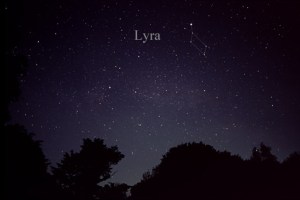
The name comes from the Greek meaning “lyre.” It is the name of a constellation which was named for the lyre of Orpheus, which was said to quell the voices of sirens.

Lyra is also the name of a type of ancient Musical instrument.

The name first came into use in the English-speaking world in the 19th-century. It first appeared in the U.S. Top 1000’s Most Popular Female names in 2015. As of 2016, it was the 932nd most popular female name. It’s recent appearance may be influenced by Philip Pullman’s popular trilogy, His Dark Materials (1995), in which it is the name of one of the main characters, Lyra Belacqua.

The lovely Breton, Lourenn (loo-RENN) would also make a wonderful alternative.

Other forms include:

Lourenn (Breton)
Lira (Catalan/Italian/Latvian/Occitanian/Romanian/Polish/Slovenian)
Lüüra (Estonian)
Lyra (English/Portuguese/Spanish)
Lyyra (Finnish)
Lyre (French)

Sources

https://www.behindthename.com/name/lyra
https://www.ssa.gov
https://www.familysearch.org
https://en.wikipedia.org/wiki/Lyra

Calliope

Origin: Greek
Meaning: beautiful voiced
Gender: Female
Pronunciation: kuh-LIE-uh-pee

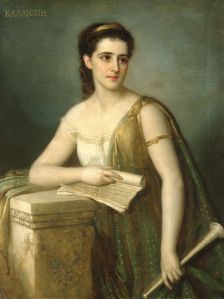
The name is composed of the Greek elements, καλλος (kallos) “beauty” and οψ (ops) “voice.” It is borne in Greek mythology by the muse of epic poetry and eloquence. She was said to be the mother of Orpheus and was said to be the chief among the muses by Hesiod and Ovid.

The name is also borne by a Catholic and Christian Orthodox saint who was tortured and martyred for refusing a suitor who wanted her hand in marriage as well as for her to renounce her faith.

It is also the name of a type of musical instrument as well as genus of hummingbird.

In recent years, it is the full name of a fictional character on the popular tv series, Grey’s Anatomy, Callie Torres, portrayed by Sara Ramirez.

In the English-speaking world, the name first came into use in the early 18th-century.

The name recently entered the U.S. Top 1000 Female Names, coming in as the 939th most popular female name.

A common short form is: Callie.

Other forms include:
Kalliope Կալլիոպե(Armenian/Danish/Dutch/Finnish/German/Estonian/Norwegian/Polish/Romanian/Swedish)
Kalіё́pa Каліё́па(Belarusian)
Kaliopa Калиопа(Bulgarian/Serbo-Croatian/Slovenian)
Cal·líope (Catalan)
Kalliopé (Czech/Hungarian/Slovak)
Calliope (French/English/Italian)
K’aliop’e კალიოპე (Georgian)
Kalliόph Καλλιόπη (Modern Greek)
Kallíópa (Icelandic)
Kaliopė (Lithuanian)
Calíope (Portuguese/Spanish)
Kalliopa Каллиопа(Russian/Ukrainian)

Sources

https://en.wikipedia.org/wiki/Calliope
https://www.behindthename.com
https://www.familysearch.org
https://www.ssa.gov
http://www.theoi.com

Hercules

Gender: Masculine
Origin: Greek Ἡρακλῆς
Meaning: “glory of Hera.”

Hercules is the Latin form of the Greek, Herakles. Herakles is composed of the Greek elements, Hera (as in the goddess) and cleos (κλεος) meaning, “glory; fame.”

The name was of course borne in Greek mythology by the divine hero, son of Zeus and Alcmene. In a rage of jealousy and to spite Zeus, Hera cursed Hercules into madness, driving him to kill his own children. In order to atone for his sins, Hercules performed twelve seemingly impossible feats, which he successfully accomplished thereafter becoming divine.

Hercules was a popular figure in Ancient Greece and later enjoyed popularity in the Roman Empire. His festival of Heraklea occurred between July and August. Thus the name may make an interesting choice for a child born during these months.

The name remained common even after the introduction of Christianity. It is especially common in Southeastern Europe and Greece.

Irakli, the Georgian form of the name, was borne by two Georgian Kings, the most notable being Irakli II (1720-1798).

As of 2011, Irakli was the 11th most popular male name in the Republic of Georgia.

In the English-speaking world, Hercules had some usage between the 16th and 19th-centuries. Notable bearers include:

  • Hercules Huncks (circ. 1600s) one of the Regicides of King Charles I of England.
  • Hercules Ross (1745-1816) a Scots tradesmen and abolitionist.
  • Hercules Brabazon Sharpe, (1821-1906) a British artist
  • Hercules Robinson, 1st Baron Rosmead, (1824-1897) the 5th governor of Hong Kong.
  • Hercules Linton (1837-1900) a famous Scottish shipbuilder and designer.

Other forms of the name include:

  • Herakliu (Albanian)
  • Gjerakl Геракл (Belarusian)
  • Herakl Херакъл (Bulgarian)
  • Hèracles (Catalan)
  • Hèrcules (Catalan)
  • Heraklo (Croatian)
  • Herkul (Croatian/Macedonian/Serbian/Slovene)
  • Héraklés (Czech)
  • Hercule (French)
  • Earcail (Gaelic)
  • Irakli ირაქლი (Georgian)
  • Herakles Ηρακλης (German/Greek/Polish/Scandinavian)
  • Eracle (Italian)
  • Ercole (Italian)
  • Hērakls (Latvian)
  • Heraklis (Lithuanian)
  • Eracles (Occitanian)
  • Éracle (Piedmontese)
  • Héracles (Portuguese)
  • Heracle (Romanian)
  • Gerakl Гера́кл (Russian)
  • Erculi (Sicilian)
  • Heraclio (Spanish)
  • Ercwlff (Welsh)