Mahé

Gender: Masculine
Origin: Breton
(MAH-ay)

The name is a Breton short form of Matthew, now used as an independent given name. Bertrand-François Mahé de La Bourdonnais (1699 –1753) gave his name to the main island of the Seychelles.

The name is borne by New Zealand Olympic rower, Mahé Drysdale (b.1978) who was named for the island.

As of 2010, Mahé was the 141st most popular male name in France.

Ambrose

Gender: Masculine
Origin: Greek
Meaning: “immortal.”
Eng (AM-broze); Fre (ahm-BWAHZ)

Ambrose is an English version of the Late Latin, Ambrosius, which is a form of the Greek male name Αμβροσιος (Ambrosios), meaning, “immortal.”

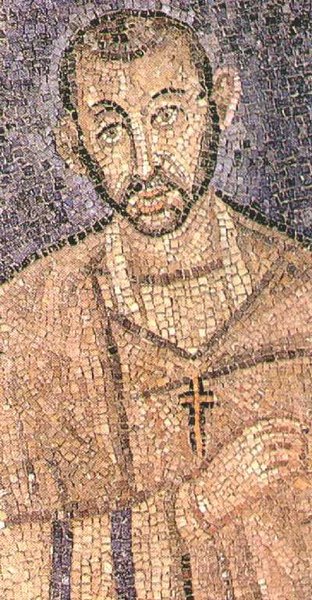
The name was borne by a 4th-century Christian saint, a contemporary of St. Augustine of Hippo. He is considered a Doctor of the Church and the patron saint of Milan.

As of 2010, its French form of Ambroise was the 391st most popular male name in France.

The designated name-day is December 7.

There is a feminine version as well, Ambrosia, and in Greek mythology, it is borne by the daughter of Atlas and Pleione. It was also the name of the food of the gods eaten on Mount Olympos.

Other forms of the name include:

  • Ambrozi (Albanian)
  • Ambrosiu (Asturian)
  • Anbortsi (Basque)
  • Ambroaz (Breton)
  • Amvrosij Амвросий (Bulgarian/Russian/Ukrainian)
  • Ambròs (Catalan)
  • Ambrosgiu (Corsican)
  • Ambrozije (Croatian)
  • Ambrož (Czech/Slovene)
  • Ambroos (Dutch)
  • Broos (Dutch/Limburgish)
  • Ambroise (French)
  • Ambros (German/Romansch)
  • Ambrosios Αμβροσιος (Greek)
  • אמברוזיוס Ambrwzyws (Hebrew)
  • Ambrus (Hungarian)
  • Ambrósíus (Icelandic)
  • Ambróis (Irish)
  • Bosone (Italian: obscure)
  • Ambrogio/Ambrogino (Italian: more common forms)
  • Ambrosino (Italian: obscure)
  • Ambrosi (Kiswahili)
  • Ambrosius (Late Latin/Danish/Dutch/Finnish/German/Estonian/Norwegian/Swedish)
  • Ambrozijs (Latvian)
  • Ambraziejus (Lithuanian)
  • Ambroeus (Lombard)
  • Ambroży (Polish)
  • Ambrósio (Portuguese)
  • Ambrozie (Romanian)
  • Ambrosi(Romansch)
  • Ambròsu (Sardinian)
  • Ambroggiu (Sicilian)
  • Ambróz (Slovakian)
  • Ambrosio (Spanish/Galician/Italian/Venetian)
  • Emrys (Welsh)

Feminine forms include:

  • Ambroisine/Ambrosine (French)
  • Ambrogia/Ambrogina (Italian)
  • Ambrosina (Italian)
  • Ambrosia (Greek/Italian)
  • Ambrozja (Polish)
  • Ambrozija (Slovene)

Gwenaëlle

Gender: Feminine
Origin: Breton
Meaning: “fair and generous”
(gweh-nye-YEL)

Derived from the Breton male name, Gwenhael, this name has recently become a trend  in France. For an English-speaker, it might be appealing due to the fact that is can be shortened to Gwen, Nelle or Elle.

Gwenhael was the name of a Breton Saint. He was an abbot and confessor and died circa 518 (C.E).

As of 2010, was the 498th most popular female name in France.

Another form is Gwenaela. A franconized masculine form is Gwenaël.

Achilles

Gender: Male
Origin: Greek
Meaning “pain.”
Eng (uh-KEELZ); (ah-KEEL-leez); Fre (ah-SHEEL); It (ah-KIL-le)

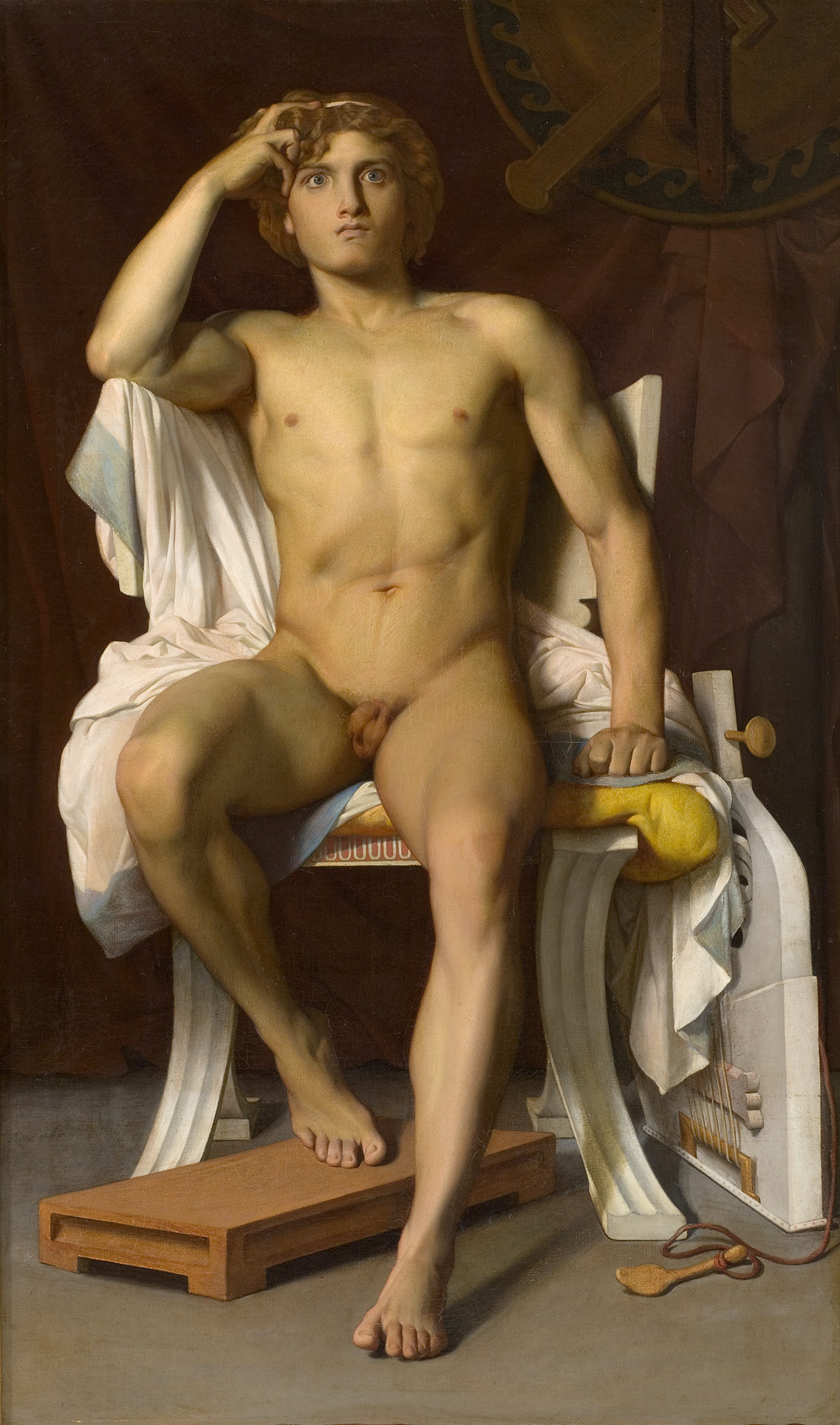
The name of the great Pythian hero of the Trojan war, Achilles was invincible save for the one spot on his heel that was vulnerable to killing him. Achilles was timelessly struck down after a poisoned arrow pierced his heel. Some legends state that his mother, Thetis, had dipped him in the river Styx to render her child immortal. However, since she was holding him by one heel, the waters were unable to pass through her hands onto the area to which she held him.

Achilles’ Heels is a term used to describe a person’s weakness. In anatomy, Achilles Tendon is used to describe a tendon of the posterior leg.

As of 2009, Achille was the 204th most popular male name in France.

Other forms of the name include:

  • Akili (Albanian)
  • Akiles (Basque)
  • Ahilej (Bosnian, Serbo-Croatian)
  • Akilles (Breton)
  • Aquil·les (Catalan)
  • Achilles (Czech/English/Polish)
  • Akhilleus (Finnish/Scandinavian: very obscure)
  • Achille (French/Italian)
  • Achilleus Αχιλλευς (Greek)
  • Akhilleusz (Hungarian: obscure)
  • Ahillejs (Latvian)
  • Achilas (Lithuanian)
  • Akille (Maltese)
  • Akilles (Danish/Norwegian/Swedish)
  • Ahile (Romanian)
  • Achilli (Sicilian)
  • Ahil (Slovene)
  • Aquiles (Spanish/Galician/Portuguese)

Elouan


Gender: Masculine
Origin: French/Breton
Meaning: “light.”

Rising in popularity in France, this trendy male name is actually of Breton origins, meaning “light”, it was the name of an Irish hermit who took up residence in 7th century Brittany. Canonized as a saint, a small chapel is dedicated to him in St-Guen where his tomb can be found. As of 2006, the name stood as 126 in the popularity charts, but has probably since risen. I can’t find statistical data from France since after 2006, but I have noticed its frequent appearance in French birth announcements. I have also noted the feminine form of Elouane. The designated name day is August 28th.

Update: Well, I guess I called that one wrong. As of 2009, Elouan dropped down to # 447.

Idris

Gender: Masculine
Origin: Arabic إدريس‎ or Welsh
Welsh Meaning: “ardent lord.”
Arabic Meaning: uncertain

Idris is of two different origins and is used in two separate cultures. In Welsh, it is composed of the elements, udd (lord; prince) and ris (ardent, enthusiastic.” In Welsh mythology it was borne by a giant who used the mountain peak of Cadair Idris (Seat of Idris) as an observatory. Legends claims that if you spend one night on the mountain peak you wake up either as a madmen or as a great poet. The name was also borne by a 7th-century Welsh prince, Idris ap Gwyddno.

In the Qu’ran, the name is borne by a prophet, traditionally ascribed to being the same as the Biblical prophet Enoch. Many modern Islamic scholars now believe that Idris was a separate person from Enoch. In this case, the name is believed to be of pre-Islamic and possibly of non-Arabic roots of undeterminate etymology, some, however have connected the name with the Arabic root d-r-s, meaning, “study.”

As of 2009, Idris was the 479th most popular male name in France. In France it is used both among the Bretons and among recent Muslim immigrants.

Other forms of the Arabic include:

  • Idris إدريس‎) Идрис (Albanian/Arabic/Baloch/Bosnian/Bulgarian/Circassian/Dagestani/Ethiopian/Indonesian/Javanese/Malaysian)
  • İdris (Azeri/Turkish)
  • Idriss (Chadian)
  • Driss (Berber/Maghrebi Arabic)
  • Ydyrys Ыдырыс (Chechen/Kazakh/Kyrgyz/Tajik/Tatar/Turkmen/Uzbek)
  • Idrîs (Kurdish)
  • Idriis (Somali)
  • Idrissa (West African)

Eleanor

Gender: Feminine
Origin: Occitanian
Meaning: “the other Aenor”
Eng (EL-e-NOR)

The name is derived from the Latin Alia Aenor, which literally means, the “other Aenor”, according to most historical sources, the most notable bearer, Eleanor of Aquitaine, was named for her mother Aenor and as a way to distinguish her from her mother, she was dubbed Alia Aenor.

The meaning of Aenor is uncertain, but may be connected to the Latin verb ienire, meaning “to heal.”

The name was borne by Eleanor of Aquitaine, known in Old French as Aliénor d’Aquitaine, (1122-1204), the daughter of William X, Duke of Aquitaine, she grew up to be one of the most powerful people in medieval Western Europe and became Queen Consort of both France and England.

Her popularity throughout France, Spain, Italy, Portugal and England. It was also borne by two other queens, Eleanor of Provence and Eleanor of Castile, the former was canonized a saint.

Eleanor has produced several other common offshoots, such as Lenore, the name of the departed love in Edgar Allan Poe’s poem, The Raven (1845); Elnora and Nora.

In modern American history, it was borne by First Lady and humanitarian, Eleanor Roosevelt (1884-1962).

It is currently the name of the crown princess Infanta of Spain, Leonor.

Currently, Eleanor is the 61st most popular female name in England/Wales, (2010). She is currently the 165th most popular female name in the United States, (2010). Her rankings in other countries are as follows:

  • # 2 (Leonor, Portugal, 2010)
  • # 125 (Eléonore, France, 2009)

Common English diminutives include: Ella, Ellie, Nell, Nellie and Nora.

Other forms include:

  • Eleanora (Breton/Norwegian
  • Elionor (Catalan)
  • Eleonora Елеонор (Belarusian/Czech/Danish/Dutch/Faroese/Icelandic/Italian/Polish/Swedish)
  • Elenora (Danish)
  • Eleanor (English/Estonian/Romanian)
  • Elnora (English)
  • Lenora (English)
  • Leonora (English/German/Italian/Portuguese/Spanish)
  • Lenore (English/German)
  • Nell (English: originally a diminutive form, now used as an independent given name)
  • Nellie (English: originally a diminutive form, now used as an independent given name)
  • Nora (English/Italian: originally a diminutive form, now used as an independent given name)
  • Eleonoora (Finnish)
  • Noora (Finnish)
  • Éléonore (French)
  • Eleonore (German)
  • Eleōnora Ελεωνόρα (Greek: Modern)
  • Eleonóra (Hungarian/Slovak)
  • Lenóra (Hungarian)
  • Elenóra (Icelandic)
  • Nóra (Irish-Gaelic)
  • Nóirín/Noreen (Irish-Gaelic)
  • Elianora/Elinora (Italian)
  • Noretta (Italian)
  • Norina (Italian)
  • Alienora (Late Latin)
  • Léionore (Norman)
  • Ellinor/Elinor (Norwegian/Swedish)
  • Alienòr (Occitanian)
  • Leonor (Portuguese/Spanish)
  • Aliénor (Provençal)
  • Alenora Альенора (Russian)
  • Eilidh (Scots-Gaelic: originally a diminutive form, now very popular as an independent given name)
  • Eilionoir (Scots-Gaelic)
  • Elna (Swedish: contracted form).

The designated name-day is February 22.

German diminutives are: Lola, Lorle, Lore, Nora and Nordel.

A Dutch diminutive is Noortje.

Hungarian diminutives include: Ella, Leonorka, Lóra, Lórácska, Lóri, Nelli, Nóra, Norcsi, Nóri and Nórici.

Sources

  1. http://www.askoxford.com/firstnames/eleanor?view=uk
  2. http://www.behindthename.com/php/find.php?name=eleanor
  3. Alison Weir, Eleanor of Aquitaine: A Life, Ballantine Books, 2001
  4. Kálmán BélaA nevek világa
  5. Marion MeadeEleanor of Aquitaine: a biography, Hawthorn Books, 1977
  6. Régine PernoudEleanor of Aquitaine, Coward-McCann, 1968

George

Gender: Masculine
Origin: Greek Γεωργιος
Meaning: “farmer.”
Eng (JORJ)

The name is an English and Romanian form of the Greek, Georgios Γεωργιος, which is derived from the Greek γεωργος (georgos) meaning, “farmer; earth worker.”

The name was borne by a 4th-century Christian saint and martyr, a Roman soldier of Greek ancestry who refused to sacrifice to pagan gods as demanded by the Roman Emperor at the time. He was popularized in the Western Christian Church after the Crusades, when soldiers brought the story back to Western Europe. The saints’ story was embellished and his story appears in the Golden Legend.

The most famous legend was that during the saint’s life, he managed to rescue a maiden who was about to be sacrificed to a dragon by slaying it with his lance. This legend has been the subject of art for centuries.

Though revered as the patron saint of England, the name itself did not catch on in until the 18th-century, following the accession of George I of England. The name has been borne by several kings throughout Europe. It was also borne by the first president of the United States, George Washington.

In Medieval times, English troops would chant “by George“, as a invocation to the saint to protect them in battle.

Between 1880 and 1937, George remained in the U.S. top 10. As of 2010, he only ranked in as the 164th most popular male name. His rankings in other countries are as follows:

  • # 1 (Georgi, Bulgaria, 2007)
  • # 1 (Georgios, Greece, 2010)
  • # 2 (Giorgi, Georgia, 2011)
  • # 5 (Yegor, Belarus, 2011)
  • # 9 (England/Wales, 2010)
  • # 12 (Yegor, Russia, 2011)
  • # 16 (Jorge, Spain, 2010)
  • # 19 (Jiří, Czech Republic, 2010)
  • # 20 (Romania, 2009)
  • # 22 (Jordi, Catalonia, 2010)
  • # 27 (Jure, Slovenia, 2010)
  • # 42 (Jorge, Chile, 2010)
  • # 53 (Juraj, Croatia, 2010)
  • # 69 (Jure, Croatia, 2010)
  • # 73 (Australia, NSW, 2010)
  • # 75 (Jurij, Slovenia, 2010)
  • # 76 (Jørgen, Norway, 2010)
  • # 78 (Jorge, Mexico, 2010)
  • # 80 (Joris, Netherlands, 2010)
  • # 82 (Jordi, Spain, 2010)
  • # 84 (Jurica, Croatia, 2010)
  • # 100 (Scotland, 2010)
  • # 168 (Jorge, United States, 2010)
  • # 233 (Joris, France, 2009)
  • # 420 (Jordi, Netherlands, 2010)

Other forms of the name include:

  • Gjergj (Albanian)
  • Jorgo (Albanian)
  • Giorgis ጊዮርጊስ (Amharic)
  • Jurj(us)  جرج  جرجس (Arabic)
  • George  جورج (Arabic/English/Romanian)
  • Khodor  خضر (Arabic)
  • Chorche (Aragonese)
  • Gev(or) Գեվ Գեվոր (Armenian)
  • Gevorg Գեվորգ (Armenian)
  • Kevork Գեւորգ (Armenian)
  • Xurde (Asturian)
  • Gorka (Basque)
  • Jury Юры (Belarusian)
  • Yegor Егор (Belarusian/Russian)
  • Jord (Breton)
  • Jorj (Breton)
  • Georgi Георги (Bulgarian)
  • Jordi (Catalan)
  • Juraj (Croatian/Slovak/Slovene)
  • Jurica (Croatian)
  • Jure (Croatian/Slovene)
  • Jiří (Czech)
  • Jørgen (Danish/Norwegian)
  • Joris (Dutch/Frisian)
  • Sjors (Dutch)
  • Georg (Faroese/Estonian/German/Icelandic/Romansch/Scandinavian)
  • Jurjen (Frisian)
  • Jüri (Estonian/Volapuk)
  • Jørundur (Faroese)
  • Jokora (Finnish)
  • Jori (Finnish)
  • Jyr(k)i (Finnish)
  • Yrjänä (Finnish)
  • Yrjö (Finnish)
  • Georges (French)
  • Xurxo (Galician)
  • Giorgi გიორგი (Georgian/Monegasque)
  • Jörgen (German/Swedish)
  • Jörg (German/Swedish)
  • Jürgen (German)
  • Jürg (German)
  • Georgios Γεώργιος (Greek)
  • Joorut (Greenlandic)
  • Juulut (Greenlandic)
  • Keoki (Hawaiian)
  • György (Hungarian)
  • Seoirse (Irish-Gaelic)
  • Giorgio (Italian/Venetian)
  • Georgius (Latin)
  • Jur(g)is (Latvian)
  • Jurgis (Lithuanian)
  • Gjoko  Ѓок (Macedonian)
  • Gjorgje Ѓорѓе (Macedonian)
  • Gjorgji  Ѓорѓи (Macedonian)
  • Gheevargees ഗീവര്‍ഗീസ് (  (Malayalam)
  • Gheevarugees ഗീവറുഗീസ് ( (Malayalam)
  • Varghees വര്‍ഗീസ്‌ (Malayalam)
  • Verghese വെര്‍ഗീസ് (Malayalam)
  • Varughese വറുഗീസ് (Malayalam)
  • Ġorġ (Maltese)
  • Jore (Norman)
  • Jørn (Norwegian)
  • Ørjan (Norwegian)
  • Jordi (Occitanian/Provençal)
  • Jerzy (Polish)
  • Jorge (Portuguese/Spanish)
  • Gheorghe (Romanian)
  • Georgy Георгий (Russian/Ukrainian)
  • Yuri Юрий (Russian)
  • Deòrsa (Scottish)
  • Seòrsa (Scottish)
  • Đorđe Ђорђе (Serbian)
  • Đorđo Ђорђо (Serbian)
  • Đurađ Ђурађ(Serbian)
  • Jurij (Slovene)
  • Göran (Swedish)
  • Örjan (Swedish)
  • Gewarges ܓܝܘܪܓܣ(Syriac)
  • Gorges ܓܪܓܣ (Syriac)
  • Yorgo (Turkish)
  • Heorhiy Георгій (Ukrainian)
  • Yur Юр (Ukrainian)
  • Sior (Welsh)
In ancient Greece, Georgos may have also been used as an epithet for Zeus.
As for its feminine forms, I shall save that for a separate post 🙂