Nathan

Gender: Masculine
Origin: Hebrew
Meaning: “give; given.”
Eng (NAY-than); Heb (NAH-TAHN); Fre (nah-TAWn)

The name is derived from the Hebrew נתן meaning, “given,” the implication is that “God has given” and as a result is sometimes considered a form of Natan’el.

In the Old Testament, the name was borne by a son of King David as well as a prophet. It is also the name of several other minor characters in the Old Testament.

The name was always popular among Jews, but did not catch on in the English-speaking world till the Protestant Reformation. In recent years, the name has become more prevalent in continental Europe.

Currently, Nathan is 28th most popular male name in the United States, (2011). His rankings in other countries are as follows:

  • # 1 (France, 2010)
  • # 2 (Belgium, 2008)
  • # 10 (Canada, BC, 2010)
  • # 27 (Northern Ireland, 2010)
  • # 27 (Scotland, 2010)
  • # 29 (Ireland, 2010)
  • # 38 (New Zealand, 2010)
  • # 48 (England/Wales, 2010)
  • # 57 (Brazil, 2010)
  • # 59 (Australia, NSW, 2011)
  • # 78 (Netherlands, 2011)
  • # 495 (Natan, France, 2010)

Other forms include:

  • Natan (Hebrew/Polish)
  • Nafan (Russian)
  • Nosson/Nussen (Yiddish)

In France, the designated name-day is March 7.

Lucas, Luke

Gender: Masculine
Origin: Greek
Meaning: “from Lucania.”
Eng (LOOK); Fre IPA (LUYK)

Both names are derived from the Greek, Λουκας (Loucas), which means, “from Lucania”, the name of a region in Italy.

The name was popularized throughout the Christian world due to the fame and renown of St. Luke, a Christian convert, gentile and doctor. He is credited as being the author of the Acts and the third Gospel in the New Testament.

In the English speaking world, Luke has been in usage since the 12th-century, he is currently the 39th most popular male name in the United States, (2011). His latinate form of Lucas is the 29th most popular male name. Their rankings in other countries are as follows:

For Luke/Luc

  • # 1 (Luke, Malta, 2010)
  • # 5 (Luuk, Netherlands, 2011)
  • # 9 (Ireland, 2010)
  • # 17 (Northern Ireland, 2010)
  • # 24 (New Zealand, 2010)
  • # 33 (Australia, NSW, 2011)
  • # 38 (England/Wales, 2010)
  • # 50 (Lluc, Catalonia, 2010)
  • # 56 (Canada, BC, 2010)
  • # 45 (Scotland, 2010)
  • # 99 (Luc, Netherlands, 2011)
  • # 249 (Netherlands, 2011)
  • # 253 (Luc, France, 2010)

For Luca(s)

  • # 1 (Luka, Croatia, 2009)
  • # 1 (Luca, Malta, 2010)
  • # 1 (Luka, Serbia, 2011)
  • # 1 (Luka, Slovenia, 2010)
  • # 2 (Australia, NSW, 2011)
  • # 2 (France, 2010)
  • # 2 (Luca, German-speaking, Switzerland, 2010)
  • # 2 (Monaco, 2009)
  • # 2 (Sweden, 2011)
  • # 3 (Belgium, 2008)
  • # 3 (Denmark, 2011)
  • # 3 (Faroe Islands, 2010)
  • # 3 (Luca, French-speaking, Switzerland, 2010)
  • # 3 (Luka, Georgia, 2011)
  • # 3 (Lucas/Lukas, Germany, 2011)
  • # 3 (Luca(s), Liechtenstein, 2010)
  • # 3 (Lukas, Lithuania, 2011)
  • # 4 (Canada, BC, 2010)
  • # 4 (Lukáš, Czech Republic, 2010)
  • # 4 (Luca, Luxembourg, 2010)
  • # 5 (Lucas, Brazil, 2011)
  • # 5 (Lucas, French-speaking, Switzerland, 2010)
  • # 5 (Lukáš, Slovakia, 2011)
  • # 6 (Netherlands, 2011)
  • # 9 (Luca, Italian-speaking, Switerland, 2010)
  • # 12 (Luca, Italy, 2009)
  • # 13 (Scotland, 2010)
  • # 17 (Norway, 2011)
  • # 19 (England/Wales, 2010)
  • # 21 (Spain, 2010)
  • # 22 (Luca, Austria, 2010)
  • # 22 (Luca, Belgium, 2008)
  • # 28 (Northern Ireland, 2010)
  • # 32 (Luca, Netherlands, 2011)
  • # 36 (Catalonia, 2010)
  • # 38 (Luka, Bosnia & Herzegovina, 2010)
  • # 38 (Łukasz, Poland, 2009)
  • # 70 (Luca, England/Wales, 2010)
  • # 79 (Luca, Australia, NSW, 2011)
  • # 79 (Ireland, 2010)
  • # 95 (Luka, Belgium, 2008)
  • # 96 (Luca, Scotland, 2010)
  • # 100 (Luca, France, 2010)
  • # 112 (Luka, France, 2010)
  • # 182 (Luka, Netherlands, 2011)
  • # 260 (Luca, United States, 2011)
  • # 743 (Luka, United States, 2011)

Other forms of the name include:

  • Luka Лука ლუკა (Albanian/Belarusian/Croatian/Georgian/Macedonian/Old Church Slavonic/Russian/Serbian/Slovene/Ukrainian)
  • GhukasՂուկաս (Armenian)
  • Lucas Лукас لوکا (Belarusian/Dutch/English/Farsi/French/German/Portuguese/Romansch/Scandinavian/Spanish)
  • Lukaz (Breton)
  • Lluc (Catalan)
  • Lukáš (Czech/Slovak)
  • Luuk (Dutch)
  • Luke (English/Dutch)
  • Luuka(s) (Finnish)
  • Luc (French/Galician)
  • Lukas (German/Latvian/Lithuanian/Scandinavian)
  • Loukas Λουκάς (Greek)
  • Lukács (Hungarian)
  • Lúkas (Icelandic)
  • Luca (Italian/Maltese/Romanian/Sardinian)
  • Lucano (Italian: obscure)
  • Luchino (Italian: obscure)
  • Luchetto (Italian: obscure)
  • Lucone (Italian: obscure)
  • Lúcás (Irish-Gaelic)
  • Luch (Piedmontese)
  • Łukasz (Polish)
  • Lücha (Romansch)
  • Łuca (Venetian)
  • Luk (Walon)

An Italian feminine form is Luchina.

In English, Lucky is occasionally used as a pet form.

Sources

  1. http://dictionary.reference.com/browse/Luke
  2. http://www.behindthename.com/php/find.php?name=luke
  3. http://www.askoxford.com/firstnames/luke?view=uk
  4. http://www.etymonline.com/index.php?term=Luke
  5. http://www.statistics.gov.uk/specials/babiesnames_boys.asp
  6. http://www.catholic.org/saints/saint.php?saint_id=76

Gabriel, Gabriella

Origin: Hebrew גַבְרִיאֵל  Γαβριηλ
Meaning: “strong man of God.”
Eng (GABE-ree-el); (gah-bree-EL-ah); Fre (gah-bree-EL); Germ (GAHP-ree-el); Pol (GAHP-ryel)

The name is derived from the Biblical Hebrew, גַבְרִיאֵל (Gavri-el) meaning, “strong man of God.”

In Judeo-Christian religions, it is the name of a powerful archangel, who is often viewed as a messenger of God. He appears several times in the Old and New Testaments.

Among Christians, one of his most important messages was relayed to the Virgin Mary that she would be the mother of Jesus. Islamic tradition also believes the same, and in Islam, it was the angel Gabriel who revealed the Qu’ran, (through God), to Mohammed.

In Mormon theology, Gabriel is believed to be the embodiment of Noah in the afterlife.

Gabriel is a fairly common name among Christians, Jews and Muslims, making him an extremely cross-cultural portable name.

Currently, in the United States, his popularity has been rising. He is the 24th most popular male name, (2011). In other countries, his rankings in all his various forms are as follows:

  • # 2 (Gabriel(e), Liechtenstein, 2010)
  • # 3 (Brazil, 2011)
  • # 4 (Romania, 2009)
  • # 6 (Gabriele, Italy, 2009)
  • # 7 (France, 2010)
  • # 9 (Quebec, Canada, 2011)
  • # 19 (Croatia, 2009)
  • # 26 (Belgium, 2008)
  • # 28 (Canada, BC, 2010)
  • # 28 (Mexico, 2010)
  • # 29 (Austria, 2010)
  • # 35 (Spain, 2010)
  • # 40 (Poland, 2009)
  • # 47 (Sweden, 2011)
  • # 48 (Norway, 2011)
  • # 52 (Catalonia, 2010)
  • # 78 (England/Wales, 2010)
  • # 95 (Australia, NSW, 2011)
  • # 124 (Scotland, 2010)
  • # 189 (Djibril, France, 2010)
  • # 313 (Jibril, France, 2010)

Other forms of the name include:

  • Jibrail/Jibrīl جبرائيل ጂብሪል (Arabic/Ethiopian)
  • Gabriel გაბრიელი ገብርኤል
    (Armenian/Catalan/Coptic/Czech/Danish/English/Ethiopian/Finnish/French/Georgian/German/Norwegian/Polish/Portuguese/Romanian/Romansch/Spanish/Swedish)
  • Gavrik (Armenian)
  • Cəbrayıl/Cibril (Azeri)
  • Gawryil Гаўрыіл (Belarusian)
  • Džibril/Džebrail (Bosnian)
  • Gavrail Гавраил (Bulgarian)
  • Zheberejil Жәбірейіл (Central Asian)
  • Gabrijel (Croatian/Maltese/Serbian)
  • Gabriël (Dutch)
  • Gaabriel (Estonian)
  • Gabrel (Ethiopian)
  • Kaapo/Kaapro (Finnish)
  • Gabriél Γαβριήλ (Greek)
  • Gavril Γαβριηλ (Greek)
  • Gavriel גַּבְרִיאֵל (Hebrew)
  • Gábriel (Hungarian)
  • Gábor (Hungarian)
  • Gabríel (Icelandic)
  • Jibril (Indonesian)
  • Gaibriéil (Irish-Gaelic)
  • Gabo/Gabbo (Italian)
  • Gabriele (Italian: more common form)
  • Gabriellino (Italian)
  • Gabriello (Italian)
  • Gabrio (Italian)
  • Cibrayîl (Kurdish)
  • Gabrielus (Latin)
  • Gabriels (Latvian)
  • Gabrielius (Lithuanian)
  • Jibrail (Malaysian)
  • Gavriilu Гаврїилъ (Old Church Slavonic)
  • Khabbriele (Puglian)
  • Gabin (Provençal)
  • Gavril Гавриил (Romanian/Russian)
  • Crabiele/Gabilele/Gabriello (Sardinian)
  • Cabbrieli (Sicilian)
  • Gabri’el ܠܒܪܝܐܝܠ (Syrian)
  • Gebrael (Syrian)
  • Cebrâîl (Turkish)
  • Gavrel גַאבְֿרֶעל (Yiddish)

English short form is Gabe.

Its feminine form of Gabriella/Gabriela is also rising in popularity. Currently, Gabriella is the 34th most popular female name in the United States, (2011). Her rankings in other countries are as follows:

  • # 3 (Gabriela, Bulgaria, 2009)
  • # 5 (Gabrielė, Lithuania, 2011)
  • # 5 (Gabrielle, Philippines, 2011)
  • # 7 (Gabriela, Columbia, 2011)
  • # 8 (Gabriela, Romania, 2009)
  • # 9 (Gabriela, Puerto Rico, 2011)
  • # 10 (Gabriela, Brazil, 2010)
  • # 13 (Gabriela, Poland, Warsaw, 2010)
  • # 19 (Gabriela, Poland, 2009)
  • # 28 (Gabrijela, Croatia, 2009)
  • # 30 (Gabriela, Mexico, 2010)
  • # 30 (Gabrielly, Brazil, 2010)
  • # 36 (Gabriela, Croatia, 2009)
  • # 38 (Gabriela, Chile, 2010)
  • # 64 (Australia, NSW, 2011)
  • # 64 (Gabriela, Spain, 2010)
  • # 67 (Gabrielle, France, 2010)
  • # 72 (Canada, BC, 2010)
  • # 94 (Gabrielle, Canada, BC, 2010)
  • # 119 (Gabrielle, United States, 2011)
  • # 466 (France, 2010)

Other feminine forms include:

  • Gebre’elwa ገብርኤሏ (Amharic/Ethiopian)
  • Gabriela (Bulgarian/Croatian/Czech/German/Polish/Portuguese/Romanian/Scandinavian/Slovak/Spanish)
  • Brielle (Cajun: abbreviated form of Gabrielle)
  • Gabrijela (Croatian/Serbian)
  • Gabriëlle (Dutch)
  • Briella/Briela (English)
  • Gabrielle (French/English)
  • Gabria (Italian)
  • Gabrielina (Italian)
  • Gabriella (Italian/English/Hungarian/Scandinavian: more common form in Italy)
  • Gabrielė (Lithuanian)
  • Gavriila Гавриила (Russian)

Czech diminutives are: Gába, Gabika, Gábina, Gabrina and Gabby.

A Polish diminutive is Gabrysia (gah-BRIH-shah).

English short forms are: Gabby and Ella.

Designated name-days are: February 10/27 (Poland), February 19 (Sweden), March 24 (Czech/Finland/Poland/Slovakia/Sweden), September 29 (France/Germany), December 12 (Hungary)
Raphael

Gender: Masculine
Origin: Hebrew רָפָאֵל Ραφαηλ
Meaning: “God is healer.”
Fre (ra-fa-EL); Eng (RAF-ee-el; RAY-fee-əl)

The name is found in Judeo-Christian and Islamic legend as the name of a major archangel. In the Bible, he is mentioned in the Book of Tobit, which is considered canonical in the Roman Catholic, Orthodox and Anglican tradition. Due to Raphael’s deliverance of Sarah from the demon Asmodeus (who killed every husband she married before consumation), Raphael has been invoked as a matchmaker by Catholics.

Raphael also appears in the non-canonical Book of Enoch in which he is responsible for binding the fallen angel Azazel

In Islamic tradition, he is known as Israfel/Israfil and it is believed that he will blow the trumpet on Judgement Day.

It is interesting to note that the modern Hebrew word for a medical doctor is  דוֹקטוֹר (rophe), compare to the first element of Raphael.

Raphael is currently a trend across Europe, in France, Raphaël is the 11th most popular male name, (2010). His rankings in his various forms are as follows:

  • # 3 (Liechtenstein, 2010)
  • # 11 (Rafael, Brazil, 2010)
  • # 17 (Austria, 2010)
  • # 40 (Rafał, Warsaw, Poland, 2010)
  • # 48 (Rafał, Poland, 2009)
  • # 50 (German-speaking, Switzerland, 2010)
  • # 54 (Raphaël, Belgium, 2008)
  • # 55 (Rafael, Spain, 2010)
  • # 56 (Rafael, Croatia, 2009)
  • # 63 (Rafael, France, 2010)
  • # 189 (Rafaël, Netherlands, 2011)
  • # 274 (Rafael, United States, 2011)
  • # 668 (United States, 2011)

Its feminine form of Rafaela is currently the 8th most popular female name in Brazil, (2010), while the French form of Raphaëlle ranked in as the 273rd most popular female name in France, (2010).

Other forms of the masculine include:

  • Rafael (Albanian/Armenian/Catalan/Croatian/Czech/Finnish/Hungarian/Portuguese/Romanian/Romansch/Scandinavian/Slovene/Spanish)
  • Raphel ሩፋኤል (Amharic/Ethiopian)
  • Rupha(e)l ራፋኤል (Amharic/Ethiopian)
  • Israfil اسرافيل, Исрафил (Arabic/Central Asian: used among Muslims)
  • Rapael რაფაელ (Armenian/Georgian)
  • Rafail Рафаил Ραφαήλ (Bulgarian/Greek/Macedonian/RomanianRussian/Serbian)
  • Rafel (Catalan)
  • Raphael (Coptic/English/German)
  • Rafaël (Dutch)
  • Raafael (Estonian)
  • Raphaël (French)
  • Raiféal (Gaelic)
  • Raffaele (Italian)
  • Raffaello (Italian)
  • Raffaelino (Italian)
  • Îsrafîl (Kurdish)
  • Rafla (Lebanese/Syrian: used among Christians)
  • Rafaelis (Lithuanian)
  • Rapolas (Lithuanian)
  • Rafel (Maltese)
  • Rafał (Polish)
  • Arrafieli (Sardinian)
  • Rafiele (Sardinian)
  • İsrafil (Turkish)
  • Rafayil Рафаї́л (Ukrainian)
Common diminiutives are: Raf (Dutch); Rafe (English); Ralph (English); Rafinha (Brazilian-Portuguese); Rafa (Spanish).
Feminine forms include:
  • Rafaela (Croatian/Macedonian/Portuguese/Romansch/Slovene/Spanish)
  • Raphaëlle (French)
  • Raphaela (German)
  • Raphaele (German)
  • Raffaella (Italian)
  • Raffaellina (Italian)
The name was also notably borne by Raphael, or Raffaello Sanzio (1483–1520), an Italian master painter.

Timaeus

Gender: Masculine
Origin: Greek Τιμαιος
Meaning: “honour.”
Eng (tie-MEE-əs); Fre (teey-MEY-oh)

Timaeus is a latinized form of the Greek, Timaios (Τιμαιος), meaning, “honour.”

The name was very popular in ancient Greece, being the name of one of Plato’s dialogues, a Pythogorean philosopher who was the inspiration of the platonic dialogue and a Roman sophist.

The name briefly occurs in the New Testament, in Mark 10:46 as the name of the father of Bartimaeus.

As of 2010, its French form of Timéo was the 16th most popular male name in France.

Other forms of the name include:

  • Timej Тимей (Bulgarian/Russian/Ukrainian)
  • Timeu (Catalan/Portuguese/Sicilian)
  • Timaj (Croatian/Serbian)
  • Timée (French)
  • Timéo (French)
  • Timaios Τιμαιος (Greek)
  • Timaiosz (Hungarian)
  • Timeo (Italian/Spanish)
  • Timeus (Late Latin)
  • Timaeus (Latin)
  • Timajos (Polish)

Berenice, Bernice

Gender: Feminine
Origin: Greek Βερενικη
Meaning: “bringer of victory.”
Eng (ber-ə-NIE-see; ber-NEES); Fre (beh-hreh-NEES); It (bey-rey-NEE-cheh)

The name is an ancient Macedonian form of the Attic Greek, Pherenikë (Φερενίκη), which is composed of the Greek elements, phero (φέρω), “to bear” and nike (νίκη), “victory.” The earliest attestation of the name is a 3rd-century priestess of Demeter.

The name has often been associated with Veronica, but there is still debate as to whether these two names are actually related.

Berenice was a common one among the Ptolomy dynasty of Egypt, being borne by at least 9 Ptolomaic women. It also seems to have been common among the late Judaean Kingdom royalty, being born by 3 Jewish princesses, one of whom appears briefly in the New Testament as the name King Herod’s sister.

It was later borne by an early Christian Greek martyr, making the name remain common after the debut of Christianity.

In the English-speaking world, she has appeared interchangeably as Berenice and Bernice. In the United States, Bernice seems to have been the more common form, the highest she ever ranked was in 1921, coming in as the 39th most popular female name.

As of 2011, neither Berenice or Bernice appear in the U.S. top 1000, but Bérénice was the 279th most popular female name in France, (2010).

Other forms of the name include:

  • Bjeranika Бераніка (Belarusian)
  • Berenice (Catalan/Dutch/English/Italian/Portuguese/Spanish)
  • Berenika Береника (Czech/Polish/Russian/Slovak)
  • Bernice (English)
  • Bérénice (French)
  • Berenike (German)
  • Bereníkē Βερενίκη (Greek: modern)
  • Bereniké (Hungarian)

Nathanael, Nathaniel

Gender: Masculine
Origin: Hebrew, Biblical
Meaning: “God has given.”
Eng (nay-THAN-yel; nah-THAN-yel)

The name is derived from the Hebrew male name, Netan’el (נְתַנְאֵל), meaning, “God has given.”

In the New Testament, the name is often attributed as being the true name of St. Bartholomew, one of the twelve Apostles.

In the English-speaking world, the name was not very common until after the Protestant Reformation, where the name seems to have been particularly common among the early Protestant settlers of North America. It was borne by famous American novelist, Nathaniel Hawthorne, (1804-1864).

Currently, Nathaniel is the 84th most popular name given to boys in the United States, (2011). His rankings in other countries are as follows:

  • # 86 (Canada, BC, 2010)
  • # 103 (Nathanaël, France, 2010)
  • # 580 (Nathanael, United States, 2011)

Other forms of the name include:

  • Natanail Натанаил (Bulgarian)
  • Natanael Натанаило (Croatian/Polish/Portuguese/Serbian/Slovak/Spanish)
  • Nathanael (Czech/Dutch/English/German/Scandinavian)
  • Nathanaël (French)
  • Natanaele/Nataniele (Italian)

An obscure French feminine form is Nathanaëlle.

Common English short forms are Nat, Nate and occasionally Thaniel.

Sources

  1. http://www.behindthename.com/php/find.php?name=nathaniel
  2. http://www.askoxford.com/firstnames/nathaniel?view=uk

Theophilus

Gender: Masculine
Origin: Greek Θεοφιλος
Meaning: “love of God.”
Eng (thee-AHF-ə-ləs); Fre (TAY-o-FEEL); Grk (THAY-oh-FEE-lose)

The name is derived from a theophoric Greek name composed of the elements, theos θεος (god) and philos φιλος (love), hence: “love of God.” It is the Greek cognate to the Latin, Amadeus.

It was a common name in pre-Christian Greece and appears in the New Testament as the name of a person that the Gospel of Luke and the Acts of the Apostles address. It is argued that this was actually a title used to refer to Christian followers in general, others argue that it was indeed the name of one actual person. As to who exactly Theophilus was is shrouded in mystery. Many different Biblical scholars have their own ideas and common theories include that he was either a Roman official, or Theophilus ben Ananus, who was the High Priest at the Temple of Jerusalem during that time, or even the lawyer of St. Paul.

The name was borne by several Byzantine personages, including an Emperor, a famous astrologer and a scientist.

In the English-speaking world, the name was used in Medieval England, it was borne by Theophilus Presbyter (1072-1125), a Benedictine monk a wrote a medieval guide to several medias of art. Theophilus also experienced a vogue among the Puritans of the 17th-century.

As of 2009, its French form of Théophile was the 343rd most popular male name.

Other forms of the name include:

  • Teofil Теофил (Bulgarian/Hungarian/Polish/Russian)
  • Theophilus (Dutch/English/Latin)
  • Théophile (French)
  • Theofil (German)
  • Theophilos (Greek)
  • Teofilo (Italian)
  • Teófilo (Portuguese)
  • Teofilus (Scandinavian)
  • Teófilo (Spanish)
  • Feófil Фео́філ (Russian/Ukrainian)
Feminine forms are Theophila and Teofila.

Jessica, Iscah

Gender: Female
Origin: Hebrew
Meaning “to behold.”
(IS-kuh); (JES-sik-kuh)

The name Jessica is an Anglicization of the Hebrew name, Iscah, which is borne in the Old Testament by a niece of Abraham.

Jessica first appeared in Shakespeare’s, the Merchant of Venice (1596), it is believed that the English author corrupted a Greek transliteration of the Hebrew Yiskah יִסְכָּה, which in the Bible of Shakespeare’s time would have been rendered as Jescha or Jesca. In the Merchant of Venice, Jessica is the name of the beautiful daughter of Shylock.

Yiskah (יסכה)  is said to come from the Hebrew root sachah (סכה), which means “to see.” Adding the yud implies future tense which makes the name imply foresight or clairvoyance.

The famous French rabbincal scholar, Rashi, claimed that Yiskah was another name for Sarah, the wife of Abraham, since she was beautiful to behold and she was known for her prophetic foresight.

The name did not get much usage until the end of the 20th-century, where it became one of the most popular female names in the United States during the 70s, 80s and 90s.

She seems to have steadily rose over a 20 year span between the 1960s and early 1970s. She jumped several places between 1969 and 1970, going from the 134th position in 1969 way up to # 98 in 1970, from thereon, the name continued to rise, peaking at # 3 in 1978. She remained in the top 10 throughout the 70s, 80s and 90s, sometimes hitting the 1st place position. In 2001, she dropped all the way down to # 11, and he has been declining since, currently, as of 2010, she is the 92nd most popular female name. In other countries, her rankings are as follows:

  • # 6 (England/Wales, 2010)
  • # 8 (Northern Ireland, 2010)
  • # 11 (Scotland, 2010)
  • # 17 (New Zealand, 2010)
  • # 20 (Australia, NSW, 2010)
  • # 29 (Ireland, 2010)
  • # 42 (Canada, B.C., 2010)
  • # 43 (German-speaking Switzerland, 2009)
  • # 71 (Mexico, 2010)
  • # 82 (Dzsesszika, Hungary, 2010)
  • # 171 (Norway, 2010)
  • # 262 (France, 2009)
  • # 304 (Netherlands, 2010)

Other forms of the name include:

  • Jèssica (Catalan)
  • Jessika/Jesika (Czech/Polish/Slovak: relatively recent in usage, and is becoming more prevalent)
  • Jessa (English: contraction of Jessica)
  • Jessica (English/Dutch/German/Finnish/French/Scandinavian/Spanish: a borrowing from the English and becoming more and more prevalent, sometimes rendered phonetically as Jessika in Germanic countries)
  • Jescha (English: archaic)
  • Iekika (Hawaiian)
  • Iscah/Yiskah יִסְכָּה (Hebrew)
  • Jiska (German: very obscure)
  • Dzsesszika (Hungarian)
  • Jiszká (Hungarian)
  • Gessica (Italian)
  • Džesika (Lithuanian)
  • Dżesika (Polish: phonetic rendition and the more popular form, becoming more common in Poland)
  • Jéssica (Portuguese-Brazilian)
  • Jesica (Spanish)

Diminutive forms are Jessie and Jessy.

The names are borne by pop singer, and actresses Jessica Tandy (b.1908), Jessica Lange (1942), Jessica Simpson (b.1980), Jessica Alba (b.1981), Jessica Biel (1982).

Bethany

Gender: Feminine
Origin: Hebrew/Aramaic
Meaning: debated
Eng (BETH-e-NEE)

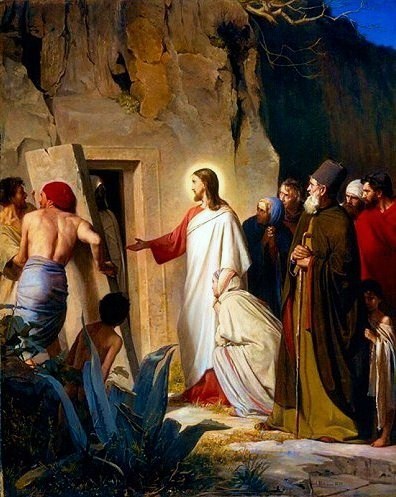
Bethany is found in the New Testament as the name of a town where Lazarus, Mary and Martha, lived. It was also here where Christ raised Lazarus from the dead.

Its origin and meaning are strongly contested, some scholars have argued it to mean “house of figs” being derived from the Hebrew elements, בֵּית־תְּאֵנָה (beit-te’enah). Others suggest that it from a Syriac source meaning, “house of misery; house of the afflicted” or “house of the poor” as in Biblical times the town was the site of a huge almshouse.

Its usage as a female given name most likely started off as a religious name taken by nuns. It was usually used in honour of Mary of Bethany. In recent years, the name has become particularly common among Evangelical Christians, especially within the United States.

Currently, Bethany is the 59th most popular female name in the United Kingdom, (2010), and she ranked as high as # 11 back in 1999. Her rankings in other countries are as follows:

  • # 65 (Northern Ireland, 2010)
  • # 79 (Scotland, 2010)
  • # 369 (United States, 2010)

Another form is the Spanish Bethania, sometimes used in conjunction with Maria.

Sources

  1. Capper, Brian J., “Essene Community Houses and Jesus’ Early Community” (2006)
  2. http://198.62.75.1/www1/ofm/mad/articles/DiSegniOnomasticon.html
  3. http://www.askoxford.com/firstnames/bethany?view=uk
  4. http://www.behindthename.com/php/find.php?name=bethany
  5. http://www.newadvent.org/cathen/02531a.htm
  6. http://bibref.hebtools.com/?book=%20John&verse=11:18&src=!