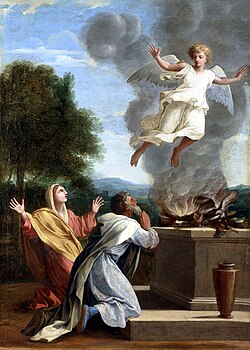
Manoah appears in Judges 13, described as a man from Zorah of the tribe of Dan. His wife is unnamed, but together they become the parents of Samson after an angelic visitation.
The name itself is derived from the Hebrew root נוּחַ (nuach) meaning “to rest, to settle, to repose, to be at ease.”
Between the 18th-century to early 20th-century, Manoah experienced some use in the U.S. and England. Common short forms were Manny, Menno and Noah.
In 2023, it appeared in the Netherlands charts for the most popular male names, though it did not rank in very high, coming in at #422.
From the Biblical Hebrew קוּםqum (to rise) and אֵל ‘el (God).
It is borne by at least three Biblical figures, including the nephew of Abraham in Genesis 22:21, a leader of the tribe of Ephraim in Numbers 34:24; and the ruler of the tribe of Levi in Book of Chronicles 27:17.
It was in use in 19th-century America among Protestant families with the short form of Kem.
The name Hephzibah (Hebrew חֶפְצִי־בָהּ, Ḥefzī-bāh) means “my delight is in her.” In the Hebrew Bible, it appears as the name of the wife of King Hezekiah and the mother of King Manasseh (2 Kings 21:1; 2 Chronicles 33:1).
In Isaiah 62:4, Hephzibah is also used symbolically as a poetic name for restored Zion, representing the renewed favor of God toward His people
The name was occasionally used among medieval Jewish communities, where it appears in apocryphal and mystical writings such as the Apocalypse of Zerubbabel and the Zohar. In these texts, a legendary warrior woman named Hephzibah fights the enemies of Israel in the messianic age, slaying wicked kings and defending Jerusalem.
Hephzibah enjoyed modest popularity among Protestant families in the 18th and 19th centuries, especially in colonial America and Puritan New England, where Old Testament names were widely favored. Common diminutives included Eppie, Hepsie, and Hepsy.
By the early 20th century, the name’s use had largely waned, surviving mainly as a literary or historical curiosity.
It was often utilized in 19th-century literature, being the name of a character in George Eliot’s Silas Marner (1861); and Nathaniel Hawthorne’s The House of the Seven Gables (c. 1851), which features Hepzibah Pyncheon, a proud but impoverished New England gentlewoman. Recently, it appears as the name of a witch in the Harry Potter series by J.K. Rowling.
An early notable bearer was American Bostonian Socialite, Hepzibah Swan (d. 1825, unknown birth date). A more recent notable bearer is American-Australian pianist, Hephzibah Menuhin (1920-1981).
It is also the name of several places in the United States.
With its mix of Biblical grace, Gothic Americana, and warrior-woman legend, Hephzibah carries both majesty and mystery. Its vintage nicknames—Eppie, Hepsie, Hepsy—soften its grandeur, making it unexpectedly wearable today.
Hephzibah, long slumbering in scripture and story, may be ready for revival.
Sources
Withycombe, E. G. The Oxford Dictionary of English Christian Names. Oxford: Clarendon Press, 1950.
A name forever haunted by legend and scripture, Ichabod carries an aura of solemnity and old-world eeriness. Though seldom used today, its deep Biblical roots and literary afterlife make it a quintessential Halloween name with legitimate historical pedigree.
The name appears in the Old Testament (Hebrew: אִי־כָבוֹד, ’I-Kavod), meaning “no glory” or “the glory has departed.” It is first recorded in 1 Samuel 4:21, where Phinehas’s wife, upon hearing of the Ark of the Covenant’s capture and her husband’s death, names her newborn son Ichabod to mark Israel’s loss of divine favor.
In the English-speaking world, the name came into use in the 17th-century, mainly among Puritan families.
In colonial America, one of the best-known bearers was Reverend Ichabod Wiswall (1637–1700) of Massachusetts.
The name’s haunting reputation was sealed by Washington Irving’s 1820 short story “The Legend of Sleepy Hollow.” Its lanky, superstitious schoolmaster, Ichabod Crane, pursued by the Headless Horseman, transformed the Biblical lament into a symbol of American Gothic folklore.
Irving is believed to have drawn the name from a real historical figure, Colonel Ichabod Bennett Crane (1787–1857), an officer in the U.S. Marine Corps whom the author reportedly met while stationed at Fort Pike, New York. The coincidence of name and temperament lent the fictional character an extra layer of realism — and ensured that Ichabod would forever echo through ghostly New England legend.
It is borne by several other famous early American personages,
Traditional short forms in the 18th-19th centuries were Cabe, Bud, and Buddy.
Variations: Panuel, Paniel, Peniel, Penuel, Fanuel, and Feniel
The name is from the Hebrew פְּנוּאֵל (Pĕnū’ēl) or פְּנִיאֵל (Pĕnī’ēl), meaning “face of God” or “presence of God.” It is composed of two elements פָּנִים (panim) – “face” or “presence” אֵל (El) – “God.”
In the Book of Genesis (32:30), Penuel is the name Jacob gives to the place where he wrestled with the angel of the Lord. Later, in 1 Kings 12:25, Penuel appears as the name of a city built by Jeroboam, located east of the Jordan River near the Jabbok. It is also the name of a character mentioned in 1 Chronicles 4:4.
Its Greek form of Phanuel is borne in the New Testament (Luke 2:36) by the father of the prophetess Anna, who recognized the infant Jesus in the Temple. It is also the name of an angel in the Apocrypha Book of Enoch.
Derived from the ancient Greek male name Πτολεμαῖος (Ptolemaios), which in turn comes from πτόλεμος (ptólemos), meaning “war” or “battle.”
The word ptólemos is an older Aeolic dialectal form of πόλεμος (pólemos), the standard Classical Greek word for “war,” sharing the same root with the English word, “polemic.”
Ptolemy I Soter (367–283 BCE) was a general of Alexander the Great and later became Pharaoh of Egypt, founding the Ptolemaic Dynasty (323–30 BCE). This dynasty ruled Egypt for nearly three centuries and ended with Cleopatra VII, the most famous bearer of the family’s legacy.
Claudius Ptolemaeus (Ptolemy) (2nd century CE) was the famed Greek astronomer, mathematician, and geographer of Alexandria, whose Almagest shaped Western astronomy for over a millennium.
According to the Book of 1 Maccabees (135/4 BC), Ptolemy of Jericho betrayed his father-in-law, Simon the High Priest, by murdering him and his two sons while they slept as guests under his roof. This act of treachery is used in Dante Alighieri’s The Inferno, in which the ninth circle of Hell is called Ptolomea after him, a frozen realm reserved for those who betray their guests.
Ptolomy is also the name of an early Christian saint.
In the English-speaking world, Ptolomy has been used on and off since the 18th-century. It appeared in the U.K’s top 500 boys’ names in 2004, ranking in at #906.
A modern bearer is American author, Ptolemy Tompkins. Celebrity couple Gretchen Mol and Tod Williams bestowed this on their son in 2007.
Common English short forms include: Tollie, Tolly, and Tal.
Rehoboth (Hebrew: רְחוֹבוֹת, Reḥovot) is a biblical place-name from the Old Testament. It is usually translated as “broad places,” being from the Hebrew root rḥb (רחב), meaning “to be wide, spacious.”
In Genesis 26:22, Isaac digs a well and names it Rehoboth. There are other towns called Rehoboth mentioned in Genesis 10:11 and 36:37.
Rehoboth, Massachusetts, founded in 1643, is one of the oldest towns in the state. Rehoboth Beach is the name of a town in Delaware, and Rehovot is the name of a town near Tel Aviv in Israel.
As a male given-name, it came into use among 18th-century American protestants due to its Biblical associations.
It’s an edgy choice with early colonial American appeal. Are you daring enough to use this name?
The name is Hebrew, either derived from צל (tsel) (shadow) or צלל (tsalal) (to ring like a bell). In Genesis 4:19, it is the name of one of the two wives of Lamech.
Though it never became a widespread Jewish name until recently, it had usage in the Protestant Anglo world since the 16th-century and experienced mild popularity in the mid to late 19th-century. It appeared in the U.S. Top 100 between 1881 and 1886, peaking at #679. It was borne by Zillah Oakes (circ. 1870s), the namesake of the city of Zillah, Washington. It was also borne by New Zealand Politician, Zillah Smith Gill (1859-1937).
In English literature, Lord Byron used it as the name of the wife of Abel in his 1821 play, Cain. It is the name of a servant in Emily Brontë’s Wuthering Heights (1847), and the name of the titular heroin in the 1865 operetta by Australian composer, William Wilkins Russell. In recent years, it is the name of a character in Madeleine L’Engle’s, A Swiftly Tilting Planet (1978).
It may have occasionally been used as a form or short form of Cecilia.
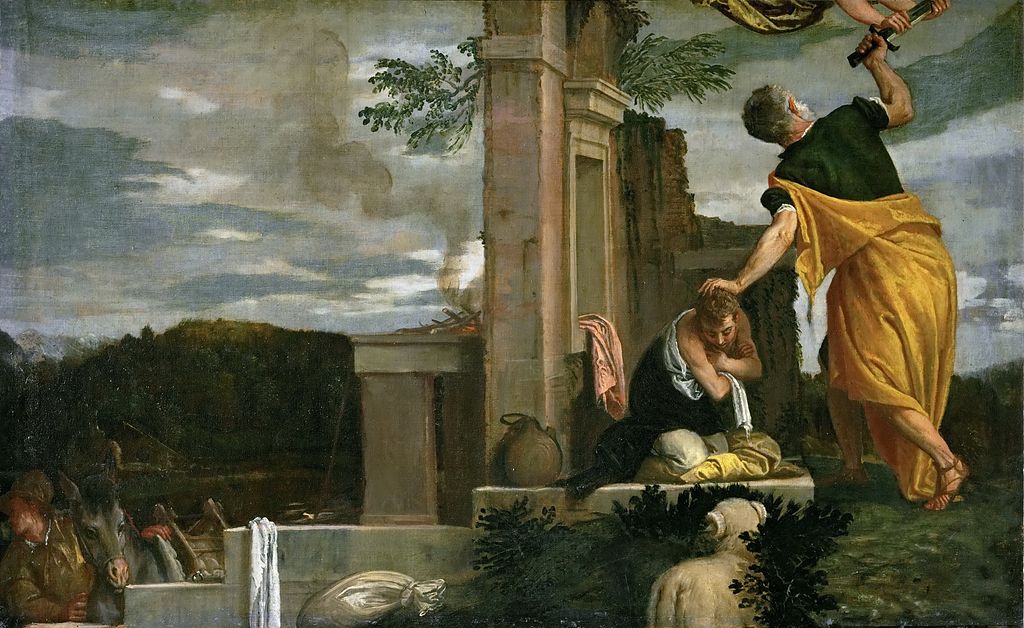
The name comes directly from the Biblical Hebrew יִרְאֶה (jireh) meaning, “to provide” or “to see.” In the Bible, it is the name of a place the where Abraham attempted to sacrifice Isaac before God intervened and provided a ram in his place. It has been in sporadic use as both a male and female given name in England and the United States since the 17th-century. It was born by a 19th-century Michigan politican, Jira Payne.
It has recently appeared in the U.S. Top 1000 Most Popular Male Names, coming in at #848 (2023). Its sudden appearance may have been popularized by the Elevation Worship and Maverick City Music song of the same name, released in 2021.
Its Spanish version of Yireh, is used as a unisex given name in Latin American countries.
The name is composed of the Hebrew elements from the Hebrew עשה (asa), “to do or make,” and אל (‘el), “God, divinity.” It is born in the Bible by 2 different characters, some allege they are the same person, a Moabite Warrior of King David and a Benjamite leader.
As of 2023, Jasiel appears in the U.S. Top 1000 Most Popular Male Names as the 939th most popular male name.