The name comes from the ancient Semitic root √W-Z-N / √ʾ-Z-N, meaning “to weigh, measure, or balance.”
Its Arabic use is from mīzān (ميزان) → “balance, scales,” appearing throughout the Qur’an as the mīzān al-ʿadl — the scales of divine justice and its Geʽez / Amharic use comes from mäzan / mizan (መዛን), meaning “measure, equilibrium, fairness.”
Compare to Hebrew moznaim (מאזניים) “the balances,” also symbolizing moral and cosmic fairness and the name of the astrological sign of Libra, though it is not used as a given-name.
In the Islamic world, Mizan represents the moral equilibrium of the universe — the balance by which every soul’s deeds are weighed.
In Ethiopian usage, Mizan retains the literal sense of “measure” but has become a spiritual and philosophical name, expressing inner balance and moral clarity. It’s also a familiar place name — as in Mizan Teferi, “Prince of Balance,” a town in southwest Ethiopia.
Makeda (also rendered Makda or Mäkēda) is a female name of Ethiopian origin, best known as the traditional name of the Queen of Sheba in Ethiopian, Eritrean, and Geʽez sources.
In the Kebra Nagast (“The Glory of Kings”), Ethiopia’s national epic written in Geʽez, Makeda is portrayed as the Queen of Sheba who visits King Solomon in Jerusalem — a story paralleling the biblical and Qurʾānic accounts. Through her union with Solomon, she becomes the ancestress of the Solomonic dynasty, which ruled Ethiopia for centuries.
While the precise etymology of the name in Geʽez or Amharic is debated, some Ethiopian scholars interpret it as meaning “greatness, prominence, power,” and according to the original legend, it means “not thus,” from when she proclaimed it was thus not right to worship the sun but the God of the Hebrew Bible. Other sources relate it to the same root as the name Magdala (tower), and others have suggested it is a corruption of Candace.
In modern Ethiopia, Makda is a variation.
This name was given to Bob Marley’s daughter in 1981, which set off a trend of use in the African-American community.
Variations: Panuel, Paniel, Peniel, Penuel, Fanuel, and Feniel
The name is from the Hebrew פְּנוּאֵל (Pĕnū’ēl) or פְּנִיאֵל (Pĕnī’ēl), meaning “face of God” or “presence of God.” It is composed of two elements פָּנִים (panim) – “face” or “presence” אֵל (El) – “God.”
In the Book of Genesis (32:30), Penuel is the name Jacob gives to the place where he wrestled with the angel of the Lord. Later, in 1 Kings 12:25, Penuel appears as the name of a city built by Jeroboam, located east of the Jordan River near the Jabbok. It is also the name of a character mentioned in 1 Chronicles 4:4.
Its Greek form of Phanuel is borne in the New Testament (Luke 2:36) by the father of the prophetess Anna, who recognized the infant Jesus in the Temple. It is also the name of an angel in the Apocrypha Book of Enoch.
The name is borne in the Bible by the son of Joseph and Asenath, who is considered a patriarch, as he is a founder of one of the 12 trubes of Israel. According Genesis 41:52, he is named thus by Joseph because “God has made me fruitful in the land of my suffering.”
The name was also borne by a few early Christian saints, including St. Ephraim of Syria (4th-century, CE).
Ephraim appeared in the U.S. Top 1000 between 1880-1914, it disappeared for 99 years and reappeared in the charts in 2013. For its first centennial cycle, it peaked at #403 in 1880. As of 2023, it was the 992nd most popular male name.
Its Spanish counterparts of Efraín and Efrén have also appeared in the U.S. Top 1000, Efraín appeared between 1950 and 2014, peaking at #469 in 1981 whilst Efrén appeared between 1966-2007, peaking at #768 in 1990.
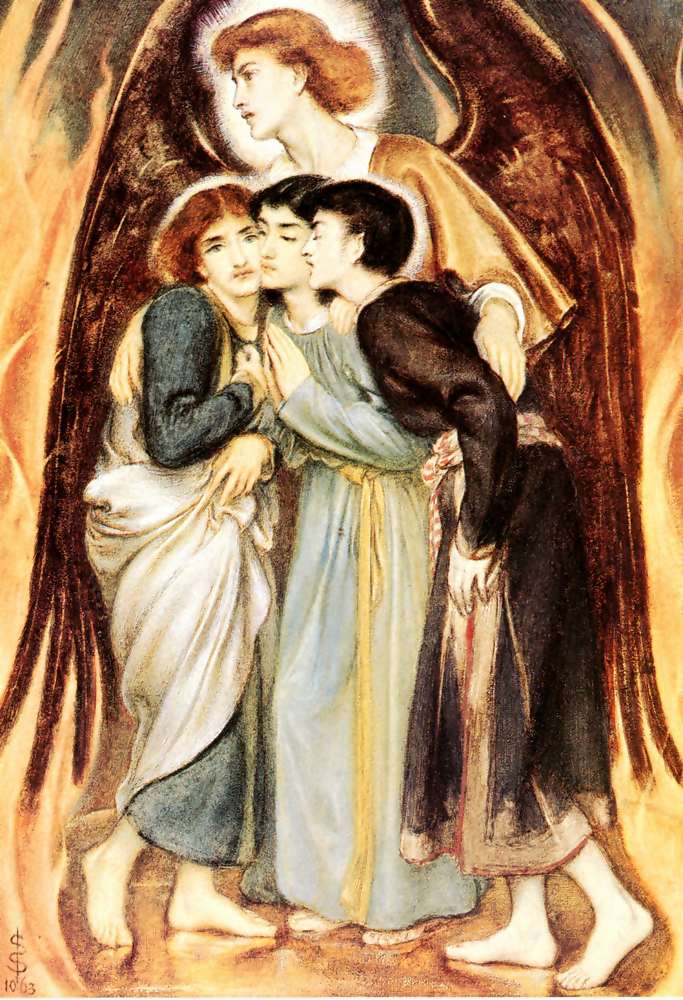
The name comes from the Hebrew meaning, “who is like God?; who is equal to God?,” “who is asked for?” and according to Hitchcock Bible names, “lent.” The name is borne by three male characters in the Bible, one mentioned in (Exodus 6:22) as one of the sons of Uzziel, the uncle of Moses and Aaron and most notably, it is the Hebrew name of Meshach (Dan. 1:11, 19) one of the three youths who refused to worship idols and were thrown in a furnace but miraculously survived.
Misael currently ranks in as the 192nd most popular male name in Mexico (2021) and the 790th most popular male name in the United States (2022).
In the Coptic Church, it is borne by St. Misael the Anchorite (7th-century CE).
Its feminine version of Mishaela is a pop song by Israeli pop singer, Achinoam Nini and has experienced sporadic usage in Israel and the English-speaking world. It is also the name of a character in Shining Force Gaiden: Final Conflict.
Both come from the Greek, θεός (theos) meaning “god” and δόσις (dosis) meaning “giving.” Both the male and female form were borne by several Christian saints and Medieval rulers. In the English-speaking world, a notable bearer was Theodosia Alston Burr (1783-1813), the daughter of Aaron Burr and an American socialite who mysteriously disappeared in a ship-wreck. Her fate has been a source of speculation for two centuries, but she most likely died in the wreck. She is also the subject of the Broadway opera song from Hamilton, My Theodosia.
It’s female version has experienced usage in the English-speaking world since the 15th-century. It has spun off several diminutive off-shoots, which later became independent names, such as Docie/Dosey, Doshie, Dosha, Docia and Theda.
Theodosia appeared in the U.S. Top 1000 Most Popular Female Names between 1880-1895, it peaked at number #547 in 1880. It’s offshoot of Doshie appeared in the U.S. Top 1000 between 1880-1905 and peaked at #640 in 1884 whereas Doshia peaked at #582 in 1881 and Docia at #317 in 1880.
Theda (THEE-dah) was the name of silent film actress, Theda Bara (born Theodosia Burr Goodman, 1885-1955). Theda appeared in the U.S. Top 1000 between 1880-1948 and peaked at #350 in 1916. Theda Bara may have helped sustain the usage of the name in the United States, but it seems to have been common enough long before she graced the silver screen.
In the 1988 movie For Keeps, starring Molly Ringwald, a teen couple are faced with an unexpected pregnancy, in which they name their daughter Theodosia, short form Thea, it is a last minute decision decided by the father who gets the name from his deceased grandmother of the same name.
It is the name of the main character of the R. L. LaFevers 2007 children’s novel, Theodosia and the Serpents of Chaos, which spun off a tv series.
Its pronunciation in the English-speaking world fluctuates depending on the region and personal preference, from THEE-oh-DOH-see-uh, to THEE-oh-DOH-shuh and THEE-oh-DOH-zhuh, the sky’s the limits.
Its masculine form has always been prevalent in eastern Christian countries but did not pick up the same momentum in the English-speaking world as its feminine counterpart did.
Female forms
Tayodosiya ታዮዶሲዮስ (Amharic)
Thudusya ثيودوسيا (Arabic, used by Arab Christians)
Latif is a masculine given-name which comes directly from the Arabic word لَطِيف (gentle; kind; benevolent). In Islam, Al-Latif لطيف, (the Kind; the Benevolent) is one of the 99 names of Allah (God). It’s feminine form is Latifa.
Latif & Latifa are commonly used throughout the Islamic world.
A notable American bearer is actress & singer, Queen Latifah.
The name comes directly from the Arabic word for heart. It is used equally among Arab- Muslims & Christians. Among Christians, particularly Palestinians, Chaldeans and Lebanese Christians who profess Roman Catholicism, it is used in reference to the Sacred Heart of Jesus or the Immaculate Heart of Mary, in the same way the Spanish name Corazónis used in the Spanish-speaking world, though in the Arabic case, the name is strictly masculine.
Among Muslims, the term fu’ad is used at least 5 times in the Quran. The name is used throughout the Islamic world.
It is even used among Non-Arab groups in the Middle East, such as Mizrachi Jews.
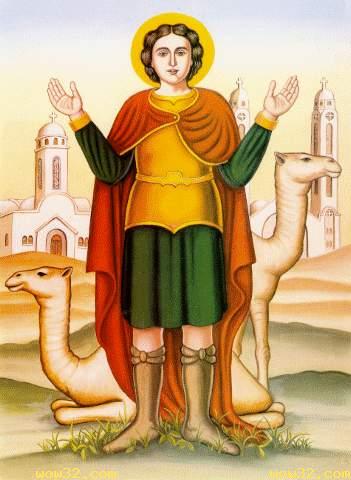
Menas is a popular male name among Eastern Christians, it is of uncertain meaning, it may derive from the Greek μήνη (mene) meaning, “moon,” or the ancient Egyptian Menes, which is the name of a 3rd-century BCE Egyptian pharaoh, in which case, the name derives from the ancient Egyptian, mnj (he who endures). It may also be related to the ancient Egyptian divinity name, Min, which is of uncertain meaning. However, according to Coptic tradition, the name means “amen.”
It is the name of a popular 2nd-century Coptic saint and martyr, known as Ⲁⲃⲃⲁ Ⲙⲏⲛⲁ (Abba Mina). According to legend, St. Menas’ parents were devout Christians who were having a hard time having children. His mother prayed to the Virgin Mary for a child, and she heard a response saying “amen,” this is where the name Menas supposedly derives from. It is speculated by some that the Western St. Christopher and the Eastern St. Menas are one and the same person. It is also borne by an Ethiopian saint of the 6th-century (CE) and a 16th-century CE Ethiopian emperor.
It was the name of 1st-century CE Roman admiral who features in Shakespeares, Antony & Cleopatra.