Awwal, Oula

Photo by Pixabay on Pexels.com
  • Origin: Arabic
  • Meaning: “first; foremost.”
  • masc (AHW-wahl); fem (OO-lah)

Awwal أوّل is an Arabic male name which comes directly from the Arabic word القائمة (first, foremost). It’s feminine form is Oula أولى. A unisex form is Awwalan أَوَّلاَن which is derived from the plural form of awwal.

In Islam, al-Awwal is one of the many names of God.

Sources

Ayman, Yamina, Yumna

Photo by Skylar Kang on Pexels.com
  • Origin: Arabic
  • Meaning: “right.”
  • masc. (I-mun); fem (yah-MEE-nah); YOOM-na

Ayman is derived from the Arabic word يمين (yamin) meaning “right,” referring to the right hand. The word is ultimately derived from a Semitic root ي م ن (right). The Arabic root word is y-m-n (ي-م-ن), which can mean “right hand,” “right side,” “favor,” “blessing,” “prosperity,” “ease,” or “success.” It shares the same root as the Hebrew מִין (yamin) meaning, “right hand; south,” which forms a basis of the name Benjamin. The country of Yemen also gets its name from the same root word.

The name was borne by a companion of the Prophet Mohammed, known as Ayman Ibn Abayd.

Ayman is a traditional male name in the Arabic-speaking world, but has been commonly used on females in Pakistan, possibly in reference to the kunya of Umm Ayman (meaning “mother of Ayman”, the mother of Ayman Ibn Abayd, or perhaps due to it sounding more feminine in the Urdu language.

Its traditional Arabic feminine form is Yamina يمينة which is a popular female name in Maghrebi countries but is used in other predominate Islamic countries. Another feminine form is Yumna يُمْنَى, which is currently the 983rd most popular female name in the United States (2021).

A more unusual feminine form is Yumnaat يُمْنَات.

Ayamin أَيامِن which is a plural form يمين (yamin) is occasionally used as a unisex name.

Ayman currently ranks as the 96th most popular male name in Catalonia, Spain (2021).

Its current rankings in other countries are as follows:

  • #407 (England & Wales, 2021).
  • #477 (France)

Its Turkish form of Eymen is the 5th most popular male name in Turkey (2021). In the Netherlands it ranks in at #344 (2022) and in France at #440 (2021).

Another transliteration of Ayman is Aiman.

Other forms include:

  • Ejmen (Albanian)
  • Yaman, Yamin يمين (Arabic)
  • Yumn يُمْن (Arabic)
  • Ayman (Arabic, Azeri, Urdu)
  • Aiman আইমান Әймән (Bengali, Kazakh, Tatar)
  • Ajman (Bosnian)
  • Aymon Аймон (Tajik)
  • Eymen (Turkish)

Feminine forms include:

  • Jamina (Albanian, Bosnian)

Sources

Azraq, Zaraq, Zarqaa

Photo by cottonbro studio on Pexels.com
  • Origin: Arabic زرقاء
  • Meaning: “blue”
  • (uz-ROCK); (zuh-ROCK); (zar-KA)
  • Usage: Arabic-Speaking countries, India and Pakistani among Muslim communities

Azraq أَزْرَق is from the masculine Arabic noun from the word for blue. The name has occasional use in Arabic-speaking North Africa and the Levant.

It’s feminine form of Zarqaa زرقاء is the Arabic feminine version of the word for blue زرقاء. It is transliterated as Zerqa or Zerka in Maghrebi Arab countries. Zerka can also be the Bosnian or Albanian form. This name has occasional use across the Islamic world.

Zaraq زرق is an Arabic unisex name derived from the neuter Arabic noun meaning “greenish-blue,” roughly translating to the color of turquoise (not the gemstone which in Arabic is Fairuz فيروز). Zaraq is mainly used as a masculine name in Southeast Asian countries such as Pakistan and India, but is considered unisex in the Arabic-Speaking world.

All three names derive from the Arabic root word z-r-q (ز-ر-ق), which means “blue.”

Other transliterations of the feminine form are Zurqa and Zurqa.’

Sources

Safin, Safana, Safina

Safin سَفِين is an Arabic male name that derives from the Arabic root, S-F-N س ف ن meaning, “ship.” Safin itself is the plural form and therefore means “ships.” The singular form of Safina سَفِينة (ship) is used as a female given-name. Another feminine form, which is Safana سَفّانة, literally meaning “boatwright” in modern Arabic derives from the same root but may have had a connotation of a precious gem or pearl in old Arabic and was also used as a term of endearment for a daughter.

The name is used in reference to “سفينة نوح” (safinat Nuh), which is Arabic for Noah’s ark.

Other forms include: Safeen (masculine), Saffanah (feminine), Safanah (feminine) & Safinah (feminine).

A Tatar form is Сәфинә” (Säfinä).

Safina is used throughout the Islamic world.

Sources

Ramz, Ramzi, Ramza, Ramzia

  • Origin: Arabic
  • Meaning: “code, sign, mark.”

Ramiz رامز , Ramz رَمْز & Ramzi رمزي are Arabic masculine names which come directly from the Arabic word (ramz) رَمْز , meaning, “code, sign, mark, symbol, gesture.” It is ultimately derived from R-M-Z root in Arabic.

Ramzi appeared in the U.S. Top 1000 Most popular male names between 1973-1990 and peaked at #320 in 1982. It’s usage in the United States may have been influenced by immigrant groups who use the name (Southeastern European Muslims, Arab immigrants & Southeastern Asian Muslims immigrants), mixed with Anglophone parents who were probably using it as an alternate spelling for the English surname/place-name, Ramsey, which means “wild garlic island.” It should also be noted that during this time period, the use of Arabic names became especially popular among African-Americans.

The name is sometimes transliteration as Ramzy and I suppose in the English-speaking world it could also be transliterated as Ramsey.

The feminine forms are Ramza and Ramzia, spelled Ramziya Рәмзия in Central Asian & Turkic languages (Bashkir, Chechen, Tatar).

Other forms include:

Male

  • Remzi Ремзи (Albanian, Bosnian, Crimean Tatar, Turkish)

Female

  • Remzije (Albanian, Bosnian)
  • Remziye (Turkish)

Sources

Duha

  • Origin: Arabic ضحى
  • Meaning: “forenoon.”
  • Gender: unisex
  • DOO-hah

The name comes directly from the Arabic word for forenoon or late morning. In Islam, it is used in reference to Salat ad-Duha صَلَاة الضحى‎‎, a voluntary prayer that is said between Fajr and Dhuhr and is used mainly for the atonement of sins.

It is also the name of the 93rd chapter in the Qu’ran, al-Ḍuḥā الضحى‎, (the Morning).

As a given-name, it is traditionally unisex, but has been more often bestowed on females.

Other forms include:

  • Duha Духа (Albanian, Arabic (standard), Bashkir, Bosnian, Chechen, Kazakh, Kurdish, Turkish)
  • Zuha ज़ुहा (Azeri, Hindi)
  • Doha, Dohaa للال چاشت (Bengali, Urdu)
  • Dhuha (Javanese, Malaysian)
  • Zoha ضحی (Persian)
  • Zuho Зуҳо (Tajik, Uzbek)

Sources

Latif, Latifa

  • Origin: Arabic لَطِيْف
  • Meaning: “gentle; kind; benevolent.”

Latif is a masculine given-name which comes directly from the Arabic word لَطِيف (gentle; kind; benevolent). In Islam, Al-Latif لطيف, (the Kind; the Benevolent) is one of the 99 names of Allah (God). It’s feminine form is Latifa.

Latif & Latifa are commonly used throughout the Islamic world.

A notable American bearer is actress & singer, Queen Latifah.

Other forms include:

  • Latıif (m), Latıifa (f) (Avar)
  • Lətif (m), Lətife (f) (Azeri)
  • Latheef, Latheefa (Dhivehi)
  • Latifah (f) (Indonesian, Malaysian)
  • Letîf (m), Letîfe (f) (Kurdish)
  • Lәtyjif (m), Lәtyjifә (f) (Tatar)
  • Letife (f) (Turkish)
  • Lateef لطیف, Lateefa(h) (Urdu)

Sources

Fuad

  • Origin: Arabic فُؤاد
  • Meaning: “heart.”
  • Gender: masculine
  • Pronunciation: foo-AD

The name comes directly from the Arabic word for heart. It is used equally among Arab- Muslims & Christians. Among Christians, particularly Palestinians, Chaldeans and Lebanese Christians who profess Roman Catholicism, it is used in reference to the Sacred Heart of Jesus or the Immaculate Heart of Mary, in the same way the Spanish name Corazón is used in the Spanish-speaking world, though in the Arabic case, the name is strictly masculine.

Among Muslims, the term fu’ad is used at least 5 times in the Quran. The name is used throughout the Islamic world.

It is even used among Non-Arab groups in the Middle East, such as Mizrachi Jews.

The name was borne by two Egyptian kings.

Other forms include:

  • Fuad (Amharic, Azeri, Bosnian, Indonesian)
  • Fouad (Maghrebi)
  • Fuat (Turkish)
  • Fawad (Urdu)

A feminine form is Fuada(h).

Sources

Shifa

  • Origin: Arabic شِفَاء
  • Meaning: “cure, remedy; healing.”
  • Gender: feminine

The name comes from the Arabic الشفاء (al-Shifaa), meaning, “cure, remedy, healing.”

Al-Shifaa bint Abdullah, nee Layla, was a companion of the prophet Muhammed. She was known as a healer, which is how she ended up with the sobriquet, Al-Shifaa, and is said to have taught literacy to the population of Medina.

A Maghrebi transliteration is Chifa.

Sources

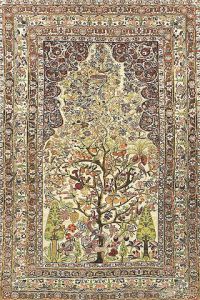
Tooba, Tuba, Tuğba

320px-Tuba_Tree_-_Carpet_Board_-_Mashhad_Museum


  • Origin: Arabic طُوْبَى
  • Meaning: “bliss; blessedness.”
  • Gender: feminine
  • (TOO-bah)

The name is derived from the Arabic root T-Y-B meaning “bliss; blessedness.” According to an Islamic hadith, this is a tree that grows in paradise.

Another form is Toba.

The city of Touba in Senegal gets its name from the legendary tree.

Other forms include:

  • Touba (Maghrebi-Arabic)
  • Tuğba (Turkish)
  • Tooba (Urdu)

Sources