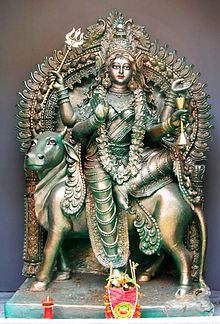
The name comes directly from the Sanskrit word meaning “fair; light-skinned; white; brilliant.” In Hinduism, this is an epithet for the goddess Parvati in her Mahagauri form.
The Kannada and Tamil form is Gowri கௌரி (Tamil) & ಗೌರಿ (Kannada).
Gauri can also be a Finnish male form of the name Gabriel.
Anila is from the Sanskrit आनिल (wind), in Hinduism it is an epithet for the wind God, Vayu. In contemporary India, both names are unisex.
Anıl is a Turkish unisex name meaning “the memory; to be remembered,” in Turkish. Anil is also a popular Albanian & Bosnian male name, while Anila is the feminine form that is exclusively used in Albania & Bosnia.
Anıl appeared in the Top 100 Most Popular Male Names in Turkey between 1990 and 2012, peaking at #51 in 1991.
Arhana is a Sanskrit female name that comes directly from the Sanskrit noun अर्हण (arhana) meaning, “honour; worship; respect.” It’s masculine form is Arhan, which is sometimes transliterated as Arhaan.
Meaning: “to perceive, observe, know, understand’ and ‘goal, aim, objective.”
Gender: feminine
LUCK-shmee
The name is derived from the Sanskrit lakṣ (लक्ष्) and lakṣa (लक्ष), meaning “to perceive, observe, know, understand’ and ‘goal, aim, objective.”
It is borne in Hinduism by the supreme goddess, wife of Vishnu, who is revered as the goddess of beauty, prosperity, luxury, contentment and among other things. She is known as Sri (the Noble One) and Akshara (imperishable), among other names. She is mentioned in the Rigveda as early as approximately 1000 BCE and is also revered in Buddhism and Jainism.
The name is mainly feminine, but is sometimes used among males in honour of the goddess in the same way that Mary, Maria, Marie has been used on males among Roman Catholics in honour of the Virgin Mary.
The name is derived from the Sanskrit प्रीति (prīti), which means, “love; joy; kindness; pleasure; favor; affection; sweetheart.” Another form is Pritika.
It is sometimes transliterations as Preeti & Preetika.
A notable bearer is British Secretary of State for the Home Department, Priti Patel (b. 1972).
Pronunciation: SID-dee; SIT-tee (depending on language & dialect)
The name comes from the Sanskrit noun सिद्धि (siddhi), meaning “perfection, attainment, accomplishment,” which is a concept that refers to the attainment of magical, paranormal or psychic abilities through meditation and yoga. It is a concept found in Yoga, Buddhism and Hinduism.
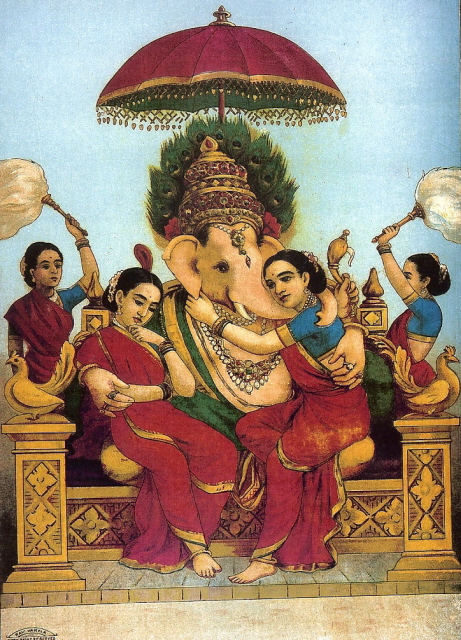
In Hinduism, it is the name of one of Lord Ganesha’s wives, the other being named Riddhi.
The name is derived from the Sanskrit तुलसी (holy basil). It is the name of a type of perennial plant in the family Lamicae and is endemic to the Indian subcontinent.
Tulsi is considered sacred plant in Hinduism, it is worshipped as an avatar for the goddess Lakshmi and the plant is traditionally planted in the center of courtyards to Hindu houses or next to Hanuman temples.
It is worshipped in Vaishnavism and holds an importance in Ayuverda traditions.
A notable bearer is American politician Tulsi Gabbard (b. 1981).
The name comes directly from the Sanskrit word अरण्य (forest), but is also used in some classical Indian literature to describe a wilderness or dessert. It is the name of the 3rd episode in the 16th-century (CE) epic poem, Rāmcaritmānas by Tulsidas.
The name is exclusively feminine in Thailand but is considered unisex in India.