- Origin: Faroese
- Meaning: “flake.”
- Gender: Female
From the Faroese word for “flake,” referring to a snowflake.
Source
From the Faroese word for “flake,” referring to a snowflake.
Source

From the Old Norse word for “embers,” in Norse Mythology, this was the daughter of the jötunn known as Logi (fire), the latter who is considered the personification of fire, a long with his wife Glöð (glowing embers). He fathered another daughter Eisa (glowing ember), both of whom were said to be stunningly beautiful.
Its status as a given-name in most Scandinavian countries is a relic from the past but may appeal to parents drawn to authentic early Nordic names.
Sources

The name comes directly from the Old Norse word meaning “glowing ember.” In Norse Mythology, this is the name of one of the beautiful daughters of Logi (fire), and Glöð (glowing embers).
Later, it came to be associated as a pet form of Elizabeth or a German form of Aise (short form of any Nordic name beginning in the Egg-, Agi– element.)
Note: the name can also be an Arabic form of Jesus.
Sources

The name comes directly from the Old Norse word for “flame; blaze,” and is also used as a poetic word for a sword. It is born in Norse Mythology by Logi, a jötunn and the personification of fire. He was the son of Fornjótr. He is known for winning a meat eating competition against Loki.
A Swedish variation is Loge
It is a cooler and fresher alternative to Logan, with a spark.
Sources

The name is either derived from the Old Norse gandr (magic wand; magic staff), or the Old Norse gǫndul meaning, “magical animal; werewolf.”
In Norse Mythology, this is the name of one of the Valkyries. She appears in several early sources, including the Heimskringla, in which it is written:
“Gǫndul and Skögul sent out / to choose among kings.”
Their presence seals Hákon’s fate, and they greet him after death — both destroyers and honour-givers.”
In the Poetic Edda, specifically Hákonarmál, she is again one of the Valkyries who welcome Hákon to Valhalla, confirming her dual role as harbinger of death and divine escort.
In the Norse sagas and Skaldic poetry, gǫndul can also function as a kenning (poetic metaphor) for “valkyrie” or “battle-witch,” used interchangeably with other names like Skögul, Hildr, and Mist.
Its rarely used these days in Nordic countries, but whose to say it won’t become popular with the rise of other Norse myth names. However, in modern Icelandic, it may sound a touch to close to the Icelandic slang term, göndull (cock, dick, penis), which yes, shares the same etymology as the name, referring to a staff or a wand, but other Nordic languages wouldn’t have the same associations.
Sources
 Gender: Feminine
Origin: Faroese/Icelandic
Meaning: “buttercup.”
(SOLE-yah); (SOO-lay).
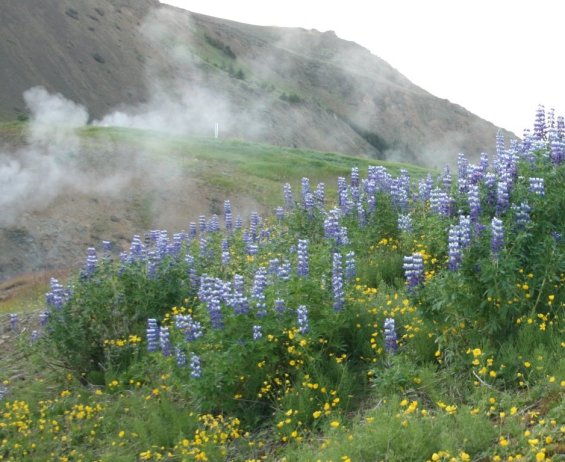
Both names are derived from the Norse word sol meaning “sun.” In modern vernacular both names are used to refer to the buttercup flower in their own respective languages. Sólja is the Faroese form and Sóley the Icelandic. Though Sóley is used as a given name in the Faroe Islands as well.
As of 2010 Sólja was the 8th most popular female name in the Faroe Islands.
Gender: Feminine
Origin: Old Norse
Meaning: “war counsel.”
Nor (RAHN-vye); Faro (RAHN-vow)
The name is composed of the Old Norse elements, rann “counsel” and vig “war”, hence “war counsel.”
As of 2010, its Faroese form of Rannvá was the 6th most popular female name in the Faroe Islands.
Other forms of the name include:
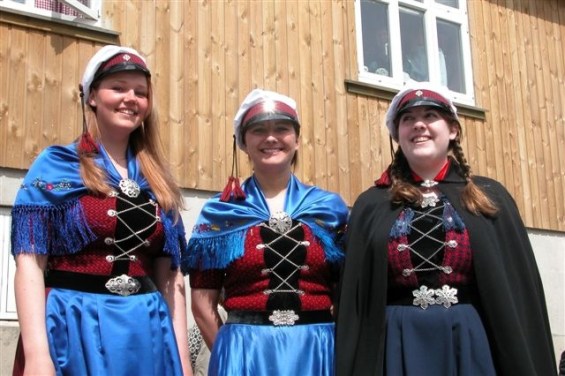
(upperleft: Faroese women in traditional dress).
 Gender: Feminine
Origin: Icelandic/Faroese
Meaning: “snow.”
There are several Icelandic feminine names that carry the snae- element which is derived from the Icelandic word for snow. These are the following:
Snæbjörg
The name is composed of the elements, snae meaning “snow” and björg meaning either “rock” or “help; aid.”
As of 2007, 11 women in Iceland bore this as a first name and 8 had it as a middle name.
The Faroese version is Snæbjørg.
Snæbjört
Composed of the elements snae meaning “snow” and björt meaning “bright; clear; shining.”
As of 2007, only five women bore this as a first name and five women had it as a middle name.
Snæborg
Composed of the elements snae meaning “snow” and borg meaning either “town; city” or “castle” or “shelter” or “rocky hill.”
As of 2007, only 3 women in Iceland had this as a first name and one had it as a middle name.
Snæbrá
Composed of the elements snae meaning “snow” and brá meaning “brow; eyebrow” or “eyelash.”
As of 2007, only one person bore this as a first name and one had it as a middle name.
Snædís
Composed of the elements snae meaning “snow” and dís meaning “goddess; fairy; nymph.”
As of 2007, 169 women bore this as a first name, while 34 had it as a middle name.
Snæfríður
The name is composed of the elements snae meaning “snow” and fríður meaning “pretty.”
The Faroese form is Snæfríð.
As of 2007, 63 women in Iceland bore this as first name and 9 had it as a middle name.
Snælaug
The name is composed of the elements snae meaning “snow” and laug meaning “hot spring; bath.”
Its Faroese form is Snæleyg.
As of 2007, nobody in Iceland had this as a first name or as a middle name.
Snærós
The name is composed of the elements snae meaning “snow” and rós meaning “rose.”
As of 2007, 5 women bore this as a first name and 2 had it as a middle name.
Snærún
The name is composed of the elements snae meaning “snow” and rún meaning “rune.”
As of 2007, 4 women had this as a first name and one had it as a middle name.
Gender: Feminine
Origin: Icelandic/Faroese
Meaning: “oak”
Ice (AKE)
The name is an Icelandic and Faroese female name and comes from the Old Norse word for “oak”. It remains the word for oak in Dutch, Norwegian, Icelandic and Faroese. However, its usage as a female given name is exclusive to both Iceland and the Faroe Islands. The Danish word for oak (eg), the Swedish word for oak (ek) and the German word for oak (eiche) share the same etymological root.
According to the Icelandic Registry, 18 women bore Eik as a first name and 110 bore it as a middle name.
Gender: Feminine
Origin: Norwegian
Meaning: “new Thor; young Thor.”
(TOH-neh).
The name is a more modern Norwegian form of then Old Norse female name Torný, which is composed of the elements Tor (Thor, which means “thunder” but in this case the name was most likely created in reference to the god) and ný meaning “new; young.” Other Norwegian forms include Todne, Todni, Torny, Tønni (a Norwegian dialectal form from Numedal in Buskerud) and Tonni. Swedish forms are Tona, Toni and Tony. Faroese forms are Tóna and Torný and the Icelandic form is Þórný.
The designated name-day in Norway is November 2.