Gwawr, Gwawrddydd

  • Origin: Welsh
  • Meaning: “dawn; daybreak.”
  • Gender: Female
  • Pronunciation: Gwawr, Gwawrdydd

Gwawr is derived from the Welsh word for “dawn,” whereas Gwawrdydd is from the Welsh meaning, “daybreak.”

In Welsh legend and early medieval hagiography, Gwawr is mentioned as one of the daughters of Brychan Brycheiniog, a 5th-century Welsh chieftain and saint reputed to have had many saintly children.

A notable bearer is Welsh concert soprano, Gwawr Edward (b. 1984).

Gwawr continues to experience quiet usage in Wales, whereas Gwawrdydd remains rare, last experiencing rare use in the mid 1800s. Another rarer variation is Gwawrwen (fair dawn; white dawn; holy dawn).

Sources

Vihana

  • Origin: Sanskrit विहाना
  • Meaning: “dawn; early morning.”
  • Gender: feminine
  • (vee-HAH-nah)

The name comes directly from the Sanskrit word विहान (vihana) meaning, “dawn; early morning.”

Sources

Zora

Gender: Feminine
Origin: Old Slavonic
Meaning: “dawn.”
(ZOH-rah).

She is exotic and mysterious, zesty and modern. Earlier, I had posted about the Slovenian name Zarja (ZAHR-yah). Zora is its original Old Slavonic counterpart, meaning “dawn” It is used in vitually every Slavic speaking country, though it has yet to catch on in Poland. It is even used in Hungary. Due to its easy pronunciation and spelling, the name is due to catch on in English speaking countries.
The name has somewhat of an ancient history, in Slavic mythology, it was borne by the three guardian goddesses known as the auroras. Their names were numerous, including, Zvezda, Zory and Danica. Included are, Zorya Utrennyaya also known as Zvezda Danica, Zvezda Zornitsa and Zwezda Dnieca. She is responsible for opening the heavenly gates so that the sun chariot can enter each morning, giving the world sunlight in the day time. She is often associated with horses and the planet venus, and is known as a great warrior woman. Zorya Vechernyaya is the goddess associated with the evening star, also known as Zwezda Wieczernica, she is responsible for closing the gates behind the sun as it leaves each evening. Then we have Zorya Polunochyaya, the goddess of the midnight star. It is in her arms that the sun curles up and dies each night and is brought back to life at dawn. She is known as the goddess of rebirth, death and mysticism. In some myths, Zorya is a chief goddess, and is considered to be the wife of the moon god Myesyats. In other legends, the zoryas are considered the protectors of the constellation Ursa Minor. If it breaks from the chain, the doomsday dog will eat it, and then the world will end. In other myths, Myesyats is a goddess and the zoryas are her virgin attendants. In this form, they are associated with marriage, exorcism and protection.
In other myths, we have Zaria or Zarja, (Old Slavonic for “sunrise”). She was known as the goddess of beauty and was named the “heavenly bride,” by her worshippers. She was often associated with the morning. She is most likely a variation of the zoryas. In Croatia and in Slovakia, the name day is July 19.

Aušra, Aušrinė

Gender: Female
Origin: Lithuanina
Meaning “dawn”
(OWSH-rah)

The name comes directly from the Lithuanian word for dawn.

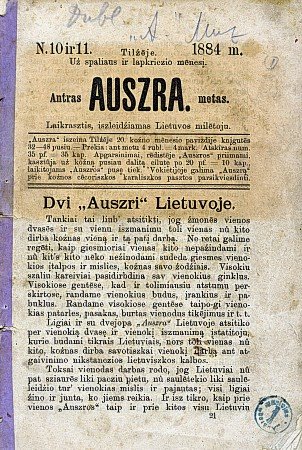
It was the name of the first ever Lithuanian language newspaper and the first national newspaper for Lithuania.

The first issue was published in 1883. It was a significant event in modern Lithuanian history and marked the rebirth of Lithuanian nationalism which eventually resulted in Lithuania’s independence. The name most likely caught on as a first name after this event.

In Poland, the name is rendered as Auszra.

ausrine-160x215Similary, there is also the ancient Lithuanian female name, Aušrinė (owsh-REE-nay).

In Lithuanian mythology, she was a goddess who personified the planet, Venus, (the morning star).

Some scholars contend that she was a goddess of beauty, youth and health and was revered as the Queen of the Stars.

It is believed that she was the daughter of the goddess Saulė (the sun), and Perkunas, (the god of the sky and lightning).

She was the sister of Jupiter, Mars, Mercury and Saturn.

Legends hold that when the moon divorced the sun, he fell madly in love with Ausrine.

He kidnapped her and in revenge, her father Perkunas, struck the oak god Azuolas with lightning, making him bleed upon Aušrinė’s lily white gown, rendering her impure.

As a result, the moon was no longer interested in marrying Aušrinė.

Both names designated name-day is April 27.

(Upper left, first issue of the Lithuanian language newspaper, Ausra.)

Masculine forms include: Aušris, Aušrinis, Aušrys, and Aušrius.

Another feminine form is Aušrė and Aušrelė.

Translations

These are potential translations of the name in other languages:

  • Aushra, Oshrelle, Ozra (English)
  • Auchra, Auchrèle, Auchrine, Auchrée (French)
  • Auszra, Auszryna (Polish)
  • Auschra, Auschrele, Auschrine (German)

Calques

Calques are names that are directly translated into the target language, the following are Calques of the above name

  • Fajr, Sahar (Arabic)
  • Alba (Catalan, Italian, Spanish)
  • Dawn (English)
  • Aube, Aurore (French)
  • Shachar (Hebrew)
  • Eos (Greek)
  • Hajnal (Hungarian)
  • Aurora (Latin)
  • Ausma (Latvian)
  • Liwen (Mapuche)
  • Zora (Old Church Slavonic)
  • Jutrzenka (Polish)
  • Usha, Ushas (Sanskrit)
  • Gwawr (Welsh)

Sources