Corentin

Gender: Masculine
Origin: Breton/French
Meaning: debated
(Pronunciation)

Corentin is a franconized form of the Breton male name, Kaourentin, which is possibly related to the Breton word, kaour, meaning, “help.” Other possibilities include kar (friend) or karent (parent), or even the Celtic, korventenn, meaning, “hurricane.”

The name was borne by one of the seven founding saints of Brittany. He is revered as the patron saint of Seafood as it is believed he subsisted on a miraculous fish that would regrow its body parts every time the saint cut off a piece.

As of 2010, Corentin was the 64th most popular male name in France.

Other forms of the name include:

  • Kaourentin (Breton)
  • Corentyn (Cornish)
  • Corentin (French)
  • Corentino (Italian)
Feminine forms include: Corentine (French) and Kaourentina (Breton).
Thibault


Gender: Masculine
Origin: German/French
Meaning: “bold people.”
Fre (tee-BO)

This classic French male name is a derivative of the Germanic, Theobald, which is comprised of the elements theud meaning “people” and bald meaning “brave; bold.”

The German form of Theobald was very popular in the Middle Ages but is now considered rather old fashioned in most German-speaking countries. The name was introduced into England by the Normans in the form of Tybalt, (TIGH-bolt), and appears in Shakespeare’s Romeo & Juliet.

In England, the name eventually fizzled out and became rather unusual, but may make an appealing choice for a parent or parents looking for an alternative to the currently popular Tyler.

Thibault is currently very common in French-speaking countries, as of 2010, he was the 68th most popular male name in France.

Other forms of the name include:

  • Theobald (Dutch/German/English)
  • Tybalt (English)
  • Thibaud/Thibaut (French)
  • Thibault (French)
  • Teobold (Hungarian/Polish)
  • Baldo (Italian)
  • Tebaldo (Italian)
  • Teobaldo (Italian/Portuguese/Spanish)
  • Tébaud (Poitvin)

A common French nickname is Titi.

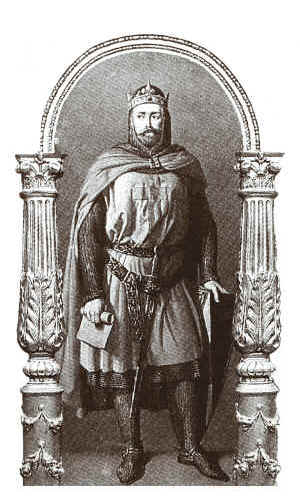
The name was borne by the husband of Blanche of Navarre, Thibault V Count of Champagne and Brie as well as by his son Thibault Postume (circ. 12 century). The designated name day is July 8.

Bertille

Gender: Feminine
Origin: French
(bair-TEEY)

The name is either a modern French form of the Frankish, Berthilde or a derivative of Bertha. Beraht is a Germanic element meaning, “bright.”

As of 2010, Bertille was the 357th most popular female name in France.

The name was borne by three early French saints.

Other forms of the name include:

  • Bertile (French)
  • Bertilla (Italian)
  • Bertila (Spanish)

Kenzo

Gender: Masculine
Origin: Japanese
(KEN-zoh)

The name could be of various different meaning depending on the Kanji. Here are the following possibilities.

  • 賢三, “wise, three”
  • 健三, “healthy, three”
  • 謙三, “humble, three”
  • 健想, “healthy, concept”
  • 建造, “build, create”
  • 健蔵, “healthy, storehouse”
  • 憲蔵, “constitution, storehouse”
  • 研造, “polish, create”

As of 2010, Kenzo was the 69th most popular male name in France. Its sudden popularity in France may be due to Kenzo, a brand of perfumes, clothes and skincare products which are very popular in France. The company was started by Japanese fashion designer, Kenzo Takada (b.1939).

The name was also borne by a Japanese Emperor who reigned around the 5th-century C.E.

Nino

Gender: Masculine
Origin: Italian
(NEE-no)

The name was originally a short form for any name ending in -nino, but is now used as an independent given name. Its usage has spread outside of Italy.

As of 2010, Nino was the 74th most popular male name in France. His rankings in other countries are as follows:

  • # 75 (Croatia, 2009)
  • # 82 (Slovenia, 2010)
  • # 465 (Netherlands, 2011)

Erwan

Gender: Masculine
Origin: Breton
Meaning: “dragon.”
(air-WAHn)

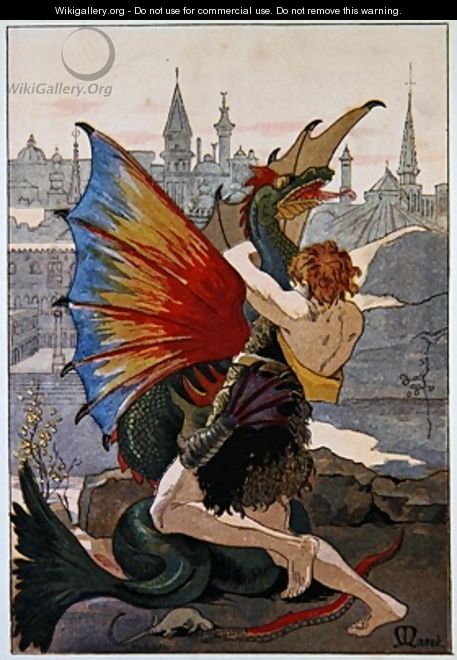
The name is derived from the Breton word, aerouant, meaning, “dragon.” The name was often translated to Yves in French, though neither name have any etymological relation.

As of 2010, Erwan was the 76th most popular male name in France.

Feminine forms are Erwana and Erwanez.

Lilian

Gender: Masculine
Origin: Latin
Meaning: “lily.”
Fre (Pronunciation)

Not to be confused with the feminine English name, Lillian, though they share the same etymology, Lilian has always been a male name in France, its feminine form being Liliane.

Lilian is derived from the Latin lilium (lily).

As of 2010, Lilian was the 78th most popular male name in France.

Qays, Kais

Gender: Masculine
Origin: Arabic قيس‎
(kah-EES)

Qays was the name of a pre-Islamic marauding Arabic tribe who were eventually converted and absorbed into the general Arab population.

The name later appears in the Arab epic romantic poem, Qays & Leila.

As of 2010, its Maghrebin form of Kaïs was the 86th most popular male name in France.

Amaury, Emery

Gender: Masculine
Origin: French
Fre (ah-moh-HREE); Eng (EM-eh-ree)

The name is essentially a French form of Emmerich.

The name was introduced into England via the Normans where it was later rendered as Emery.

As of 2010, Amaury was the 88th most popular male name in France. His rankings in the United States is as follows:

  • # 272 (Emery, United States, 2011, for girls-not recommended)
  • # 707 (Emery, United States, 2011, for boys)

Other forms include:

  • Amery (English)
  • Emery (English)
  • Emory (English)
  • Amauri (Portuguese-Brazilian)