The name comes directly from the Estonian word for battle ax. It ultimately derives from the Russian, topor. It has been in use as a given-name, though rarely, there are fewer than 5 bearers of this name in Estonia.
It has a designated name day in Estonia of May 12th.
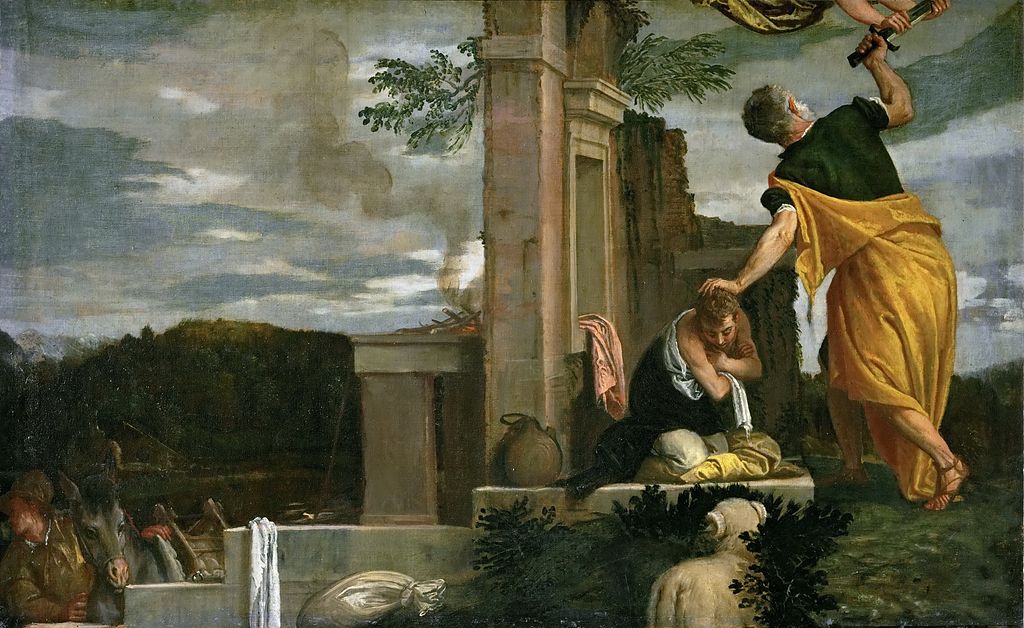
The name comes directly from the Biblical Hebrew יִרְאֶה (jireh) meaning, “to provide” or “to see.” In the Bible, it is the name of a place the where Abraham attempted to sacrifice Isaac before God intervened and provided a ram in his place. It has been in sporadic use as both a male and female given name in England and the United States since the 17th-century. It was born by a 19th-century Michigan politican, Jira Payne.
It has recently appeared in the U.S. Top 1000 Most Popular Male Names, coming in at #848 (2023). Its sudden appearance may have been popularized by the Elevation Worship and Maverick City Music song of the same name, released in 2021.
Its Spanish version of Yireh, is used as a unisex given name in Latin American countries.
The name comes directly from the Welsh word for “love; charity.” It came into use in the 19th-century when an interest in reviving Cornish became popular in Cornwall.
The name comes directly from the Arabic جبّار (jabbar), meaning “mighty; powerful.” In Islam, the term الجبّار (al-jabbar) is one of the 99 names of Allah.
Another variation is Abd-al-Jabbar (عبد الجبار), meaning “servant of the Almighty.”
Jabbar has appeared in the U.S. Top 1000 Most Popular Male Names in 1972, coming in as the 910th most popular male name. Its Swahili form of Jabari became common in the African-American community in the 1970s. It is currently the 920th most popular male name in the United States.
Pron: (HERSH; HER-shuh; HERSH-e-NEE, some dialects HERSH-nee); HERSH-ee-kuh; HERSH-ee-tuh; HERSH-VERD-the-nuh)
From the Sanskrit root हर्ष (harsa) meaning “joy; delight; excitement.” It can also refer to sexual excitement or an erection. In Hinduism, Harsha is one of the twenty-four emanations of the celestial couple, Lakshmi and Narayana. It is also the name of one of the three sons of Dharmadeva and the husband of Nandi (also meaning “joy).
Harsha itself is unisex but is more common on males. It was born by a 7th-century Emperor of Kannauj of the Pushyabhuti dynasty in Northern India, also known as Harshvardhana or Harsh-Vardhana, and several other medieval Indian Kings as well as a 12th-century C.E. Sanskrit epic poet. A strictly masculine form is Harsh (HERSH).
Harshvardhana or sometimes spelled Harsh Vardhana is a masculine double name which means “increasingly happy,” being composed of the Sanskrit words, हर्ष (harsa) and वर्धन vardhana (increase; growth).
The feminine offshoot of Harshika derives from the same root but also refers to a type of musical metre.
Another feminine form is Harshini, which derives from the Sanskrit adjective हर्षिन् (harSin) meaning “delightful; joyful.” Harshini is also the name of a type of plant. This beautiful name is not pronounced har-SHEE-nee, but more like HERSH-e-nee or HERSH-nee, like Hershey Chocolate Kisses. There is also just Harshi, pronounced like Hershey.
And another female form is Harshita, which is of the same root being from the Sanskrit हर्षित (harsita) meaning, “pleased; gladdened; joy; happy; delight; charmed” or “made to stand erect.”
The name comes directly from the Greek ἴον (ion) meaning “violet” and ἄνθος (anthos). It is borne in Greek mythology by an Oceanid nymph who was responsible for violet flowers and purple tinged clouds. It is also the name of Cretan woman in Greek mythology who marries Iphis after she is turned into a man by Aphrodite.
It was in vogue in 19th-century England, being the nickname for Lady Charlotte Harley, by Lord Byron to whom the poem, Childe Harold’s Pilgrimage is dedicated. It was also used by Percey Bysshe Shelley’s poem, Queen Mab, in which it is the name of a character. Shelley later named his daughter Ianthe. It is also the name of a character in John William Polidori’s 1819 short story, The Vampyre. It was the pen-name of American writer and poet, Emma Catherine Embury (1806-1863).
In recent literature, it is the name of a character in the Court of Thorns and Roses series by Sarah J. Maas.
In Eastern Religions, a rishi is an accomplished or enlightened person or a yogi who has composed hymns or Vedas. In the Vedas, it also refers to an inspired poem or hymn. In Buddhism, it may refer to a monk of high rank or a Buddha. The word itself may be derive from the Sanskrit root ṛṣ meaning “to move; to flow.”
Rishi is currently a common Indian male name, it is born by the current British Prime Minister, Rishi Sunak.
In the U.S., it currently ranks in as the 968th most popular male name (2023) and the 790th most popular in the U.K. and Wales (2021).