Nele

Gender: Feminine
Origin: German
(NEL-eh)

The name was originally a short form of Cornelia, now used exclusively as an independent given name.

Currently, Nele is the 18th-most popular female name in Germany, (2011).

The name is also used in the Netherlands and in Estonia.

An Estonian double form is Nele-Liis, which is borne by Estonian singer, Nele-Liis Vaiksoo (b.1984).

Luana

The name is of a few different meanings and origins.

It could come directly from the Albanian meaning, “lioness.”

The name is found in several Romanian folktales as a name of a princess/heroine. In this case, the origins of the name are not clear.

It could be an Italian contraction of Luisa and Anna.

In Hawaiian, it comes directly from the word meaning “to be at leisure; to relax.”

Currently, in German-speaking Switzerland, it is the 21st most popular female name, (2010). Its popularity in Switzerland may be due to a popular Swiss rapper known simply as Luana.


Lina

The name is of several different origins and meanings. It could be a German and Swedish short form of any name ending in –lina.

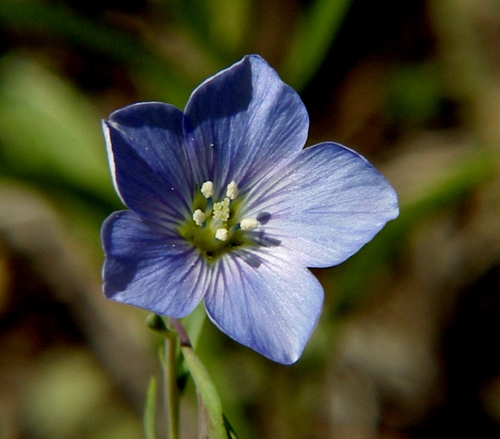
In Lithuanian, it is the feminine form of Linas, meaning, “flax.” It is also the Estonian and Finnish word for flax, and is used as a given name in both countries.

It could also be from the Arabic لينا meaning “palm tree” or “tender.”

In Sanskrit लीना it means “absorbed; united.”

The name is also used in Chinese, being a composition of the words 丽 (Li) meaning “pretty” and 娜 (Na), meaning “elegant.”

Currently, Lina is the 7th most popular female name in Germany, (2011). Her rankings in other countries are as follows:

  • # 15 (German-speaking, Switzerland, 2010)
  • # 19 (France, 2009)
  • # 20 (Slovenia, 2010)
  • # 25 (Belgium, 2009)
  • # 36 (Austria, 2010)
  • # 61 (Netherlands, 2010)
  • # 84 (Norway, 2010)
  • # 91 (Sweden, 2010)
  • # 848 (United States, 2010)

Mia

The name could be of several different meanings and origins, but its most popular usage is from the Northern Germanic diminutive form of Maria.

In the English-speaking world, the name was introduced via actress, Mia Farrow (b.1945) whose full name is Maria de Lourdes. The name did not even appear in the U.S. top 1000 the year Mia Farrow was born, but started to rise in popularity in the late 1990s. Currently, Mia is the 10th most popular female name in the United States, (2010) and her rankings in other countries are as follows:

  • # 1 (Germany, 2011)
  • # 2 (German-speaking, Switzerland, 2010)
  • # 2 (Romansch-speaking, Switzerland, 2010)
  • # 3 (Faroe Islands, 2010)
  • # 4 (Isle of Man, 2009)
  • # 4 (Liechtenstein, 2010)
  • # 5 (Luxembourg, 2010)
  • # 6 (Australia, 2010)
  • # 7 (Croatia, 2010)
  • # 13 (England/Wales, 2010)
  • # 15 (Northern Ireland, 2010)
  • # 15 (Norway, 2010)
  • # 16 (New Zealand, 2010)
  • # 17 (Austria, 2010)
  • # 18 (Scotland, 2010)
  • # 20 (Ireland, 2010)
  • # 25 (Slovenia, 2010)
  • # 27 (Canada, B.C., 2010)
  • # 37 (Chile, 2010)
  • # 38 (Bosnia & Herzegovina, 2010)
  • # 49 (Denmark, 2010)
  • # 40 (French-speaking, Switzerland, 2010)
  • # 40 (Italian-speaking, Switzerland, 2010)
  • # 206 (France, 2009)
  • # 221 (Netherlands, 2010)

In the case of its usage in Southern Slavic countries, it is most likely derived from a diminutive form of any Slavic name containing the mio element, meaning “dear.”

In English-speaking countries, it was often used as a diminutive form of Amelia, Emilia and Hermione.

In Romansch, it was originally used as a diminutive form of Anna Maria.

Coincidentally, mia is also the feminine Italian and Spanish pronoun meaning “mine”, but the name was originally never used in reference to the pronoun.


Elina

Gender: Feminine
Origin: Belarussian/Finnish
Finn (EH-lee-nah); Germ/Swe/Nor (eh-LEE-nah)

The name is possibly a Finnish and Belorussian form of Helen. It is also a common name in Central Asia, particularly in Chechnya and Uzbekistan, but in this case, the name is of uncertain meaning.

The name may have been popularized in Finland via the 15th-century ballad The Death of Elina (Elina Surma), published by Elias Lönnrot in the Kanteletar (1840). The ballad recounts the murder of Elina by her husband after he finds her with a lover.

It is also the name of a genus of butterfly.

Currently, it is the 35th most popular female name in German-speaking Switerland, (2010). Her rankings in other countries are as follows:

  • # 87 (Sweden, 2010)
  • # 114 (France, 2009)
  • # 115 (Germany, 2011)
  • # 317 (Netherlands, 2010)
Other forms of the name include:
  • Elina (Belarussian/Chechen/Danish/Dutch/Estonian/Finnish/French/German/Icelandic/Kazakh/Kyrgyz/Norwegian/Romanian/Swedish/Tatar/Turkmen/Uzbek)
  • Eliina (Finnish)
  • Elīna (Latvian)

Jael

Gender: Feminine
Origin: Hebrew יָעֵל
Meaning: “ibex.”
Eng (JAY-el); Germ/Heb/Sp (yah-EL)

The name comes directly from the Hebrew word for the Nubian Ibex. It appears in the Old Testament as the name of the wife of Heber. Jael is known for killing Sisera with a tent peg in order to deliver Israel from the troups of King Jabin.

The name has always been very popular among Jews and has only recently become more common among non-Jews.

In German-speaking Switzerland, Jaël is currently the 35th most popular female name, (2010). This may be due to the Swiss pop singer, Jaël whose real name is Rahel Krebs (b.1979). In France, Yael ranked in as the 396th most popular female name, (2009).

Other forms of the name include:

  • Jael (Catalan/English/Spanish/Portuguese)
  • Yaël (French)
  • Jaël (German)
  • Giaele (Italian)
  • Iahel (Latin)
  • ‘Iail Иаиль (Russian)

Ladina


Gender: Feminine
Origin: Romansch
Meaning: “Latin woman; Latin speaker.”
(lah-DEE-nah).

This is a name that is scarcely heard outside of Switzerland, with the pleasant nickname options of Dina or Ladi, it is a fairly common name in both the German and Italian speaking parts of Switzerland.
In 2010, she stands as the 47th  most popular female name in German-speaking Switzerland. It is somewhat of a patriotic name, as Ladin is the name of a dialect of Romansch, (a very minor Romance language said to be the closest in form and sound to Latin).
The dialect of Ladin is spoken by the inhabitants of Friuli in Northern Italy, and on the Italian-Swiss border in Switzerland. The language has an Italian sound with a Germanic rhythm. It is reminiscent in sound to Yiddish, audio can be heard here: http://en.wikipedia.org/wiki/Ladin_language.
Romansch, (including all its various dialects), is one of the 4 national languages of Switzerland, and while the language is dying off, the names survive long and well, sometimes being the preferred choice among Swiss parents. Many Romansch names, have a very pleasant, soft and Latin flavor to them.
Another Romance language, which is of completely different linguistic formations, is Ladino, the main language spoken by Sephardic Jews. It’s basically medieval Spanish mixed in with some Turkish, Arabic and Hebrew loan words. Though the female give name of Ladina has Romansch origins, the name might be an interesting choice for Sephardic Jewish parents, who might want to give a subtle nod to their heritage in their child’s name.

Lias

Gender: Masculine
Origin: German
(LEE-ahs)

The name is a contracted form of Elias

Alternately, it could also very well be from the geologic term, the German Lias, a stratigraphic term that today is used solely for lithostratigraphic units from the Lower Jurassic. In older literature, Lias was also used as a synonym for the Early Jurassic epoch of the geologic timescale

It is currently the 139th most popular male name in Germany, (2011).

Justus

Gender: Masculine
Origin: Latin
Meaning: “just.”
Eng (JUST-us); Germ (YUWS-tuws)

The name is derived from the Latin word for “just.” It was borne by at least 8 saints, one of whom was a Roman bishop sent to England to convert the Anglo-Saxons in the 7th-century.

The name was also borne by a son of the Roman Jewish Historian, Josephus, whose full name was Titus Flavius Justus (b.76 B.C.E). It was actually a common name among the early Roman/Italian Jewish community.

Another notable bearer was the 15th-century Dutch painter, known as Joos van Gent.

Currently, Justus is the 92nd most popular male name in Germany, (2011). His rankings in other countries are as follows:

  • # 68 (Jošt, Slovenia, 2010)
  • # 130 (Joost, Netherlands, 2010)
  • #848 (United States, 2010)

Other forms of the name include:

  • Joos (Dutch)
  • Joost (Dutch)
  • Justus (Dutch/English/Finnish/German/Latin/Romansch/Scandivanian)
  • Juste (French)
  • Jusztusz (Hungarian)
  • Giusto (Italian)
  • Just (Polish)
  • Güst (Romansch)
  • Jüst (Romansch)
  • Justo (Spanish)
Feminine forms include:
  • Justa (Dutch/German/Latin/Polish/Spanish)
  • Giusta (Italian)