Linus

Gender: Masculine
Origin: Greek
Meaning: debated
Eng (LIE-nus); Germ (LEE-nuws); Swe (LEE-nus)

The name is either derived from the Greek verb ailinon meaning “to whine; complain” or it could be from the Greek Λινος (linos) meaning “flax.” In the latter case, the Lithuanian male name, Linas, would share the same etymology. It was also a Roman cognomen, which may have been derived from the Greek.

In Greek mythology, the name was borne by a son of Apollo, who in some legends was accidentally killed by his own father and in other legends was the music teacher of Hercules.

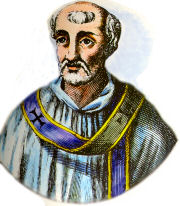
The name was also borne by the 2nd pope and saint who succeeded St. Peter.

In the English-speaking world, the name is often associated with the Charles Schulz character who appears in the Peanuts Comic strips.

The name was fairly common in 19th-century America and Britain, being borne by Linus Bacon Comins (1817-1892), a Massachusetts politician, Linus Yale, Jr. (1821-1868) a mechanical engineer, Linus Pauling (1901-1994) a famous American chemist and British actor, Linus Roache (b.1964)

Currently, Linus is the 30th most popular male name in Germany, (2011). His rankings in other countries are as follows:

  • # 44 (Sweden, 2010)
  • # 53 (Norway, 2010)

Other forms of the name include:

  • Llinu (Asturian)
  • Lin Лін Лин (Belarusian/Breton/Bulgarian/French/Piedmontese/Russian/Serbian/Slovene/Ukrainian)
  • Lli (Catalan)
  • Lino (Croatian/Galician/Italian/Portuguese/Spanish)
  • Linus (Danish/Dutch/English/Estonian/Finnish/French/German/Hungarian/Norwegian/Polish/Romanian/Swedish)
  • Líneas (Gaelic)
  • Linusi ლინუსი (Georgian)
  • Linos Λινος (Greek)
  • Línus (Icelandic)
  • Lins (Latvian)
  • Linas (Lithuanian)

Niels, Nils

Gender: Masculine
Origin: Scandinavian

The name has traditionally been attributed as being a Scandinavian form of Nicholas but has also been connected with the Celtic, Niall.

He was a very popular name in Medieval Scandinavia, being the progenitor of the surnames Nilsson, Neilson and Nilson. It was fairly common among Scandinavian royalty and nobility, being worn by King Niels of Denmark (1064-1135).

Currently, Nils and Niels are the 32nd most popular male names in Germany, (2011). Niels rankings in other countries are as follows:

  • # 37 (Netherlands, 2010)
  • # 38 (Nils, Sweden, 2010)
  • # 63 (Belgium, 2009)
  • # 276 (Nils, Netherlands, 2010)
  • # 244 (Nils, France, 2009)
  • # 489 (France, 2009)

Other forms of the name include:

  • Niels (Faroese/Danish/Dutch/German)
  • Niilo (Finnish)
  • Nils (German/Icelandic/Norwegian/Swedish)
A Danish feminine form is Nielsine.

Silvan

Gender: Masculine
Origin: Latin
Meaning: “of the forest.”
Eng (SIL-ven); Germ (SIL-vahn)

In English, the name could either be from the Latin male name, Silvanus, or come directly from the adjective. In either case, both the Latin male name and the adjective shares the same etymology.

It was borne in Roman mythology by a titular forest and fertility god, Silvanus, who was linked with the Etruscan god, Selvans.

Currently, Silvan is the 48th most popular male name in German-speaking Switzerland, (2010) and the 496th most popular in the Netherlands, (2010).

In the case of Switzerland, the name was extremely popular among Romansch-speakers and its usage was isolated in the Canton of Grisons up until recently.

Other forms of the name include:

  • Silvà (Catalan)
  • Silvan (Dutch/German/Romansch)
  • Sylvan (English)
  • Selvans (Etruscan)
  • Sylvain (French)
  • Silvano (Italian/Spanish)
  • Silvanus (Latin)
  • Sylwan (Polish)

Feminine forms include:

  • Sylvaine (French)
  • Silvana (German/Italian/Romansch/Spanish)

Yannick

Gender: Masculine
Origin: Breton
Fre (yahn-NEEK); Germ (YAHN-neek)

The name is from a Breton diminutive form of Yann, the Breton form of John. Yannick is the francanized form of the Breton, Yanig. It was an extremely common name in French-speaking countries from the 1970s all the way until the 1990s, and is currently becoming extremely trendy in German-speaking countries.

Currently, Yannick is the 27th most popular male name in Germany, tying with the German-spelled Jannik. His rankings in other countries are as follows:

  • # 57 (Austria, 2010)
  • # 208 (Netherlands, 2010)

Finn

Gender: Masculine
Origin: Old Norse or Irish
Meaning: “Finnish”, or “blonde; white; fair; bright.”
Eng/Germ/Swe (FIN)

The name could either be from the Old Norse, Finnr, meaning “Finnish” or it could be an anglicized form of the Gaelic male name, Fionn meaning, “blonde; fair; white; bright.”

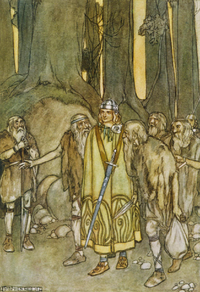
In Irish legend, the name was borne by Fionn mac Cumhail (English: Finn McCool) who became all-wise after eating a magical salmon. There are several different stories attributed to him, one of which was that his real name was Deimne but came to be known as Finn after his hair had turned prematurely white.

The name also appears in Beowulf as the name of a Frisian king.

Currently, Finn is the 4th most popular male name in Germany, (2011). His rankings in other countries are as follows:

  • # 15 (Netherlands, 2010)
  • # 35 (Fionn, Ireland, 2010)
  • # 39 (German-speaking, Switzerland, 2010)
  • # 46 (Ireland, 2010)
  • # 52 (Northern Ireland, 2010)
  • # 74 (Australia, 2010)
  • # 80 (Fionn, Northern Ireland, 2010)
  • # 81 (Scotland, 2010)
  • # 300 (United States, 2010)

Other forms of Fionn include:

  • Finnagán (Irish)
  • Finnán (Irish)
  • Fionnán (Irish)
Other forms of the Old Norse Finn, include:
  • Finn (Dutch/English/Frisian/German/Scandinavian)
  • Finnur (Faroese/Icelandic)
A feminine form is Finna.

Jonas, Jonah

Gender: Masculine
Origin: Hebrew
Meaning: “dove.”

The name is derived from the Greek, Ionas Ιωνας, a Greek form of the Hebrew name, Jonah, which is from the Hebrew יוֹנָה (Yonah) meaning, “dove.”

Jonah is found in the Old Testament in the Book of Jonah as the name of a prophet who was swallowed by a whale. His story was very popular during the Middle Ages.

Currently, its Greek translation of Jonas is one of the most popular male names in Northern Europe. He is the 5th most popular male name in Germany, (2011) and Norway (2010). His rankings in other countries are as follows:

  • # 4 (German-speaking, Switzerland, 2010)
  • # 6 (Austria, 2010)
  • # 22 (Denmark, 2010)
  • # 53 (Belgium, 2009)
  • # 154 (Netherlands, 2010)
  • # 163 (Czech Republic, 2006)
  • # 288 (France, 2009)
  • # 455 (United States, 2010)

While its original Biblical form of Jonah is far more rare, his rankings are as follows:

  • # 144 (United States, 2010)
  • # 301 (Netherlands, 2010)

Other forms of the name include:

  • Yunus يونس (Arabic/Turkish)
  • Jonàs (Catalan)
  • Jona (Croatian/Serbian)
  • Jonáš (Czech/Slovak)
  • Jonas (Dutch/English/French/German/Lithuanian/Scandinavian)
  • Joona (Finnish)
  • Joonas (Finnish)
  • Jonne (Finnish)
  • Jona (German)
  • Ionas (Greek)
  • Yonah יוֹנָה (Hebrew)
  • Jónás (Hungarian)
  • Jónas (Icelandic)
  • Giona (Italian)
  • Jonasz (Polish)
  • Iona (Romanian/Russian)
  • Jonás (Spanish)
In the Lithuanian case, this name is the Lithuanian form of John.

Max

Gender: Masculine
Origin: German

The name is a short form of any name beginning with the Max element. It has been used as an independent given name in German-speaking countries and its usage has spread elsewhere.

Its usage as an independent given name may have been popularized by the German-language tale as written by Wilhelm Busch,  Max and Moritz (1865).

Currently, Max is the 14th most popular male name in Germany, (2011). His rankings in other countries are as follows:

  • # 6 (Kazakhstan, 2010)
  • # 17 (Australia, 2010)
  • # 20 (Netherlands, 2010)
  • # 23 (England/Wales, 2010)
  • # 27 (Sweden, 2010)
  • # 32 (Scotland, 2010)
  • # 41 (Catalonia, 2010)
  • # 45 (Northern Ireland, 2010)
  • # 49 (Ireland, 2010)
  • # 51 (Austria, 2010)
  • # 70 (Norway, 2010)
  • # 71 (Canada, B.C., 2010)
  • # 98 (United States, 2010)
  • # 240 (France, 2009)

Hannes

Gender: Masculine
Origin: German/Swedish
(HAHN-nes)

The name is a contracted form of Johannes and is exclusively used as an independent given name.

It is currently the 41st most popular male name in Germany, (2011) and the 86th most popular in Sweden, (2010).

It is also used in Finland, the Netherlands and Estonia.

Ronja

Gender: Feminine
Origin: Swedish
Swe/Germ (RONE-yah); Eng (RAHN-yah)

The name can either be a transliteration of the Russian diminutive form of Veronica or it could be from the Hebrew רוֹן (ron) meaning “happiness; joy.”

The name was recently popularized in Northern Europe via the the 1981 Astrid Lindgren childrens’ novel Ronja Rövardotter, known in English as Ronia the Robber’s Daughter. The novel recounts the adventures of a Sami-like Medieval heroine who lives in the forest. Lindgren based the novel on Sami folktales and got many of the names by looking at a map of Lapland. For the name Ronja, she was supposedly inspired by Lake Jaronjaraure.

Currently, its Faroese form of Ranja is the 4th most popular female name on the Faroe Islands, (2010). Her rankings in other countries are as follows:

  • # 25 (Finland, 2010)
  • # 44 (German-speaking, Switzerland, 2010)
  • # 62 (Norway, 2010)
  • # 77 (Germany, 2011)
  • # 78 (Sweden, 2010)
  • # 246 (Netherlands, 2010)

Other forms include the English Ronia and the Faroese, Ranja.

Jana

The name could be of several different origins and meanings.

It is a German short form of Johanna, now commonly used as an independent given name. It is the Czech and Slovak feminine form of Jan (John) and a South Slavic form of Anne. It is also a Catalan contraction of Joana.

In Roman mythology, it was used as another name for the goddess, Diana. In this case, the actual origins are uncertain, but may have been a pre-Italic, Etruscan appellation.

The name could also be from the Arabic meaning, “paradise” or “garden” and sometimes transliterated as Jannah/Janna.

Currently, Jana is the 13th most popular female name in German-speaking, Switzerland (2010). Her rankings in other countries are as follows:

  • # 14 (Catalonia, 2010)
  • # 20 (Austria, 2010)
  • # 33 (Germany, 2011)
  • # 49 (Croatia, 2010)
  • # 68 (Belgium, 2009)
  • # 85 (Spain, 2010)
  • # 97 (Slovenia, 2010)
  • # 400 (Netherlands, 2010)