 Gender: Masculine
Origin: Romansch
(AHN-dreen)
The name is a Romansch form of Henry and is currently the 27th most popular male name in German-speaking Switzerland, (2010).
Another form is Andri.
A feminine form is Andrina.
Gender: Masculine
Origin: Romansch
(AHN-dreen)
The name is a Romansch form of Henry and is currently the 27th most popular male name in German-speaking Switzerland, (2010).
Another form is Andri.
A feminine form is Andrina.
 Gender: Masculine
Origin: Latvian
Meaning: “returner; walker.”
The name is most likely derived from the Latvian male name Jānis, which is used a the official Latvian cognate of John, but is actually of pre-Christian origins, being derived from the Latvian element jāt (to ride). The meaning of the name is in reference to the cosmic movement.
In Latvian mythology, it was borne by a major Latvian god, who was later syncrenized with St. John the Baptist. The major holiday of Jāņi (the Latvian Midsummer festival) usually takes place on June 24.
Currently, Janis is rather trendy in German-speaking countries. It is a mystery as to its recent popularity outside of Latvia. Its Franconized variant, Yanis, is currently the most popular male name in Luxembourg, (2010). Janis’ rankings in other countries are as follows:
 Gender: Masculine
Origin: Biblical Hebrew נוֹחַ
Meaning: “rest; comfort.”
Eng (NOH-ah)
The name is derived from the Hebrew male name נוֹחַ (Noach) which can either be from the Hebrew (nāḥam) meaning “comfort” or (nûaḥ) meaning, “rest.”
It borne in the Old Testament (Genesis) by the builder of the Ark that allowed him, his family and the animal species to survive the Great Flood. The same story also appears in the Qu’ran. In Islam, Nuh (Noah) is revered as a prophet.
The story of Noah’s Ark was extremely popular in Medieval Europe and he was even revered as a saint by the Catholic Church, but Noah itself never caught on as a given name until after the Protestant Reformation, when it became extremely popular among the Puritans. It fell out of usage between the 19th-century up until recently, where it is now one of the most popular male names in the Western World.
Its recent boom in popularity is a mystery. It is currently the most popular male name in German-speaking Switzerland (2010) and Belgium (2009), and his rankings in other countries are as follows:
Other forms of the name include:
 Gender: Masculine
Origin: Italian
It (LOH-rees); Fre (LOH-HREES)
The name was originally an Italian diminutive form of Lorenzo, now widely used as an independent given name, especially in German and French-speaking countries.
As of 2010, it was the 42nd most popular male name in German-speaking, Switzerland, (2010). His rankings in other countries are as follows:
The name may have been popularized in the German-speaking world via Austrian Poet and Dramatist, Hugo von Hofmannsthal (1874-1929), he often used Loris as a pen-name.
In the French-speaking world, it may have been introduced via the Italian-French fashion designer, Loris Azzaro (1933-2003).
 Coincidentally, it is also the name of a genus strepsirrhine primates, and thus, may also be used as a sort of nature name.
 Gender: Masculine
Origin: Hebrew אִילָן
Meaning: “tree.”
(EE-lahn)
The name is derived from the modern Hebrew word for tree.
It is currently the 43rd most popular male name in French-speaking Switzerland, (2010) and the 71st most popular in France, (2009).
Its sudden popularity outside of Israel, and furthermore, outside the Jewish community is a mystery. Perhaps it was brought to attention via French cinematographer, Ilan Duran Cohen (b.1963).
The name may also be used in reference to the Welsh male name. In this case, the name is of uncertain origin but was borne by an obscure Welsh saint.
A feminine form is Ilana.
 Gender: Masculine
Origin: Spanish
Sp (ES-tey-BAHN); Fre (EST-teh-BAHN)
The name is a Spanish form of Stephen.
It was borne by the first person of African descent to enter the New World, also known as Estevanico (1500-1539).
This form is currently extremely popular in French-speaking countries, perhaps popularized by French poet, Claude Esteban (b.1935) and in the Swiss case, it is the surname of Swiss-Romande soccor player, Julian Esteban. It is also the stage name of famous French disk jockey and singer, DJ Esteban.
The name is currently the 49th most popular male name in French-speaking Switzerland, (2010). His rankings in other countries are as follows:
 Gender: Feminine
Origin: Provençal
(ah-nah-EEZ)
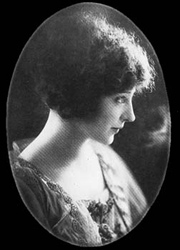
The name is a Provençal form of Anne and was popularized by French writer, Anaïs Nin (1903-1977), a perfume by Cacherel Anaïs Anaïs released in 1978, was named for the French author.
Currently, Anaïs is the 7th most popular female name in French-speaking, Switzerland, her rankings in other countries are as follows:
The name is also used in Spanish-speaking countries, in which case it is often spelled Anaís.
 Gender: Feminine
Origin: English/Italian/Latin/Scandinavian
Meaning: “violet.”
Eng (VIE-ə-lə; vee-OH-luh); It (VYOLE-lah)
The name is derived from the Latin word for violet and has been used throughout Europe since Medieval times. In the English-speaking world, it was introduced via the Shakespeare play Twelfth Night (1602). It was extremely popular in both Britain and the United States during the turn of the 20th-century, coming in as the 42nd most popular female name in 1908, (United States).
Currently, Viola is the 31st most popular name in Italian-speaking, Switzerland, (2010).
Other forms of the name include:
Gender: Feminine
Origin: Italian
Meaning: “amber.”
(AHM-brah)
The name comes directly from the Italian word for amber and has been used as a given name since Medieval times. It went out of usage after the 16th-century and was revived in the 20th-century.
It is currently the 32nd most popular female name in Italian-speaking, Switzerland, (2010).
 Gender: Feminine
Origin: Scandinavian
The name is derived from a Scandinavian short form of Margaret and has been used as an independent given name since at least the 19th-century.
It is also the name of a river in England and in the English-speaking world, especially within Britain, the name may have been bestowed in reference to the river.
It is also the name of a genus of butterfly.
It was introduced to the English-speaking world, (specifically the United States) via Scandinavian immigrants of the 19th-century. It was further popularized in the 1930s by Swedish actress, Greta Garbo. In fact, the highest Greta ever ranked in the U.S. was in 1932 coming in as the 318th most popular female name. As of 2010, it was the 666th most popular female name in the United States, (2010)
It is the 12th most popular female name in Italian-speaking Switzerland, (2010) and her rankings in other countries are as follows:
Other forms of the name include:
The name is also borne by famed lawyer and TV host, Greta van Susteran (b.1954)