Arnbjørn

Gender: Masculine
Origin: Old Norse
Meaning: “eagle-bear.”
(ARN-byern)

The name is composed of the Nordic elements, arn (eagle) and bjørn (bear).

As of 2010, this was the 8th most popular male name in the Faroe Islands.

Other forms include:

  • Ambjørn (Danish/Norwegian)
  • An(n)bjørn (Danish/Norwegian)
  • Arnbjørn (Danish/Faroese/Norwegian/Old Norse)
  • Arnbernus (Danish)
  • Hambe (English: archaic)
  • Arinbjørn (Faroese/Old Norse)
  • Arinbjörn (Icelandic)
  • Arnbjörn (Icelandic/Swedish)
  • Árbjörn (Icelandic)
  • Ambjörn (Swedish)

Annfinn

Gender: Masculine
Origin: Danish/Faroese/Norwegian
Meaning: “Finnish eagle.”
(AHN-fin)

The name is a modern form of the Old Norse male name, Arnfinnr, which is composed of the elements, arn (eagle) and finn (Finn; Sami). In ancient Nordic culture, the people Finnic people were believed to possess magical powers, due to their shamanic associations. Hence, the finn element of a name was believed to bring luck and protection to the bearer.

As of 2010, Annfinn was the 8th most popular male name in the Faroe Islands.

Other forms of the name include:

  • Annfinn (Danish/Faroese/Norwegian)
  • Arnfinn (Danish/Norwegian/Swedish)
  • Arnfinnur (Icelandic)
  • Amfinn (Norwegian)
  • Arfinn (Norwegian)
  • Årfinn (Norwegian)
  • Arnfinnr (Old Norse)

Feminine forms include the Icelandic, Arnfinna and the Norwegian, Anfine.

Aegir

Gender: Masculine
Origin: Old Norse
Meaning: “to frighten; sea; ocean.”
(I-geer)

The name may be related to the Old Norse verb aegja, meaning, “to frighten.” In modern Icelandic, it is used as a poetic term for the ocean.
In Norse mythology, he was a minor sea god and husband to Rán. He was feared by sailors because if angered, Aegir was the one responsible for horrific sea storms. He was believed to have pre-dated the Aesir and the Vanir and was indestructible, (unlike the other gods), being able to survive the prophetic days of Ragnarok.
He shared his hall with his wife Ran on the Isle of Hlesey where he brewed ale for the gods. It was in his hall where Loki had murdered the beautiful god Baldur.
Aegir was known by other names such as, Oegis (EW-gees); Hler and; Gymir (the Blinder).
He was often depicted as a skinny old man with long white hair and crab claws for fingers.
The name is not used as a name in Iceland, (it is not on the approved list), probably due to its close sound to the word aegja. However, the female spin off name of Aegileif is a very common name. In Old Norse Aegileif meant “life of Aegir” however in modern Icelandic it literally means, “the fear of leaving food uneaten.” Aegir, however, is usable in other Scandinavian countries, but is rare. It is possible that he may catch on with the revival of other pre-Christian Nordic such names as Viking, Loki, Frejr and Odin.
Update: As of 2010, Ægir was the 8th most popular male name in the Faroe Islands. Contrary to what was written a few years back, my research has shown that the name is used in Iceland, and it is fairly common.
Other forms of the name include:
  • Ægir (Danish/Faroese/Icelandic/Old Norse)
  • Æge (Norwegian)
  • Egir (Norwegian)
  • Aegir (Swedish)
  • Ägir (Swedish)

Teitur

Gender: Masculine
Origin: Old Norse
Meaning: “merry; cheerful.”

The name is derived from the Old Norse, teitr, meaning, “cheerful; merry.”

As of 2010, Teitur was the 8th most popular male name in the Faroe Islands.

Other forms of the name include:

  • Teitur (Faroese/Icelandic)
  • Teiti (Old Norse)
  • Teitr (Old Norse)

Billa

Gender: Feminine
Origin: Dutch/German/Scandinavian
(BIL-lah)

The name could be of a few different sources, it could be a Dutch and Limburgish short form of Sibilla. In Scandinavia, it is often viewed as either a short form of Ilsebill, Berit or even just a feminine form of Billy.

As of 2010, Billa was the 8th most popular female name in the Faroe Islands.

Other forms of the name include:

  • Billan (Swedish)
  • Bille (Swedish)

Annfrid

Gender: Feminine
Origin: Old Norse
Meaning: “beautiful eagle.”
Nor/Swe (AHN-freed); Far/Ice (ARN-freeth)

The name is a modern Norwegian and Swedish form of the Old Norse female name, Arnfríðr, which is composed of the Nordic elements, arn (eagle) and fríðr (beautiful; fair; beloved).

As of 2010, its Faroese form of Arnfríð was the 8th most popular name in the Faroe Islands.

Other forms of the name include:

  • Arnfríð (Faroese)
  • Arnfríður (Icelandic)
  • An(n)frid (Norwegian)
  • Arnfrid (Norwegian)
  • Årfrid (Norwegian)
  • Årfryd (Norwegian)
  • Arnfríðr (Old Norse)
  • Emfre (Swedish)
  • Emfred (Swedish)
  • Emfrid (Swedish)
  • Emfrö (Swedish)
  • Ärnfrid (Swedish)
A common Norwegian short form is Andi.
A famous bearer is Anni-Frid Lyngstad (b.1945), Norwegian-born Swedish pop singer of ABBA fame.

Aura

The name could be of a few different etymologies.

In Greek, it is derived from the word for “breeze”, and is borne by several characters in Greek myth. One was a Titan goddess who was the personification of the fresh breezes and the cool air that accompanies early mornings.

According to one legend, Aura was so proud of her virginity that she mocked the virgin goddess Artemis, claiming that Artemis was not as pure as she, since Artemis was too “womanly.” In revenge, Artemis had Dionysus rape Aura. As a result, the Titaness went mad, becoming a slayer of men. When her twin sons were born, Aura ate one twin, while Artemis rescued the other. Zeus eventually transformed her into a breeze. Other legends state that she was transformed into a stream.

The aurai (the breezes) were a type of nymph, fathered by the sea god Oceanus.

Aura appears in the English lexicon describing a glow or metaphysical halo that is given off by a person’s or object’s energy.

The name has also experienced usage in Scandinavia. Its earliest attestation is in Sweden in 1818. In this case, the name may be a borrowing from the Greek, or it could be a contracted form of Aurora or AureliaHowever, it has been popularly attributed as being derived from a Norse element, aurr, meaning, “clay.”

In Finland, the name is a somewhat of a patriotic name as this was given as a name to the Maiden of Finland, the personification of Finland. In this case, her name is taken from the name of a river. The river name is believed to be related to an archaic Swedish word, aathra, meaning, (waterway), but in Finnish could be translated as meaning, “plow.”

As of 2010, Aura was the 8th most popular female name in the Faroe Islands.

Other forms of the name include:

  • Aura (English/Faroese/Finnish/Latin/Portuguese/Scandinavian/Spanish)
  • Ára (Faroese)
  • Aure (French)
  • Avra (Greek)
  • Aula (Italian)
  • Ávrá (Sami)

Björk, Bjørk

Gender: feminine
Origin: Icelandic/Faroese
Meaning: “birch, birch tree.”
(BYERK) Pronunciation can be heard here: http://www.forvo.com/word/björk/

Indie rock star, Björk Guðmundsdóttir (b.1965), made this one a household name, though it is now a recognized name outside of Iceland, it will probably always be associated with the singer to non-Icelanders.

Björk is the Icelandic word for birch tree, when spelled Bjørk, it has the same meaning in both Faroese and Norwegian. It is interesting to note that björk is the modern Swedish word for birch tree, though neither nouns are used as a given names in Swedish or Norwegian. However, it is a very common and ordinary female name in both Iceland and the Faroe Islands.

As of 2010, Bjørk was the 8th most popular female name in the Faroe Islands.

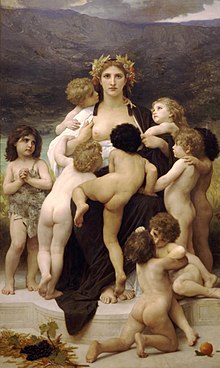
Alma

The name has several different origins and meanings. Its usage as a name in Britain skyrocketed around 1854, after the victorious Battle of Alma, which took place near the Alma River in the Crimea.

In this case, the name is derived from the Tatar word for, “apple.” It is interesting to note that Alma, till this day, is a traditional and common female name across Central Asia, especially among Russian-Tatars, Kazakhs and Uzbeks. In Uzbek, it appears in the form of Olma. Alma is also the word for apple in Hungarian, where it is also occasionally used as a female given name.

The name also appears in Edmund Spenser’s The Faerie Queen as the name of a minor character, the head of the House of Temperance in Book 2. In this case, the name is most likely taken from the Portuguese and Spanish word for “soul.”

Alma appears sparingly as a female given name in Renaissance Italy, in this case, it is most likely derived from the Latin, almus, meaning, “nourishing”; hence the term, alma mater (fostering mother). This usage of the name also appears as an epithet for a few Roman goddess, particularly Venus and Ceres.

It is the name of a book in The Book of Mormon, but in this case, it is masculine, being the name of two prophets, a father and son; Alma the Younger being the Chief Judge among the Nephites.

Other etymologies which have been suggested, include:

  • It is from the Greek, αλμη (salt water)
  • It is from an Arabic source, al-ma, meaning, (the water).
  • It is a contracted form of Amalia and Amalberga.

The name is used in virtually every European country, including Scandinavia, where it is currently very trendy.

As of 2010, Alma was the 8th most popular female in the Faroe Islands. Her rankings in other countries are as follows:

  • # 23 (Sweden, 2010)
  • # 24 (Denmark, 2010)
  • # 48 (Norway, 2010)
  • # 49 (Bosnia & Herzegovina, 2010)
  • # 80 (Spain, 2010)
  • # 849 (United States, 2010)


Vivia

Gender: Feminine
Origin: Latin
(VIV-ee-ah)

The name may be a contracted form of the Latin female name, Viviana.

It seems to have first appeared in both Scandinavia and the United States around the 19th-century. Its earliest records in the Nordic countries can be traced to 1842 in Finland. In the United States, it appears in American folklore as the name of a scorned woman who disguised herself as a soldier in order to seek revenge on her lover.

According to legend, Vivia Thomas was a Bostonian socialite who had been jilted by her fiance, an army officer who decided to go out West to the Indian Territories. Her lover eventually ended up stationed at Fort Gibson, Oklahoma. In order to seek revenge, Vivia decided to disguise herself as a man and set out to enlist herself in the Army at Fort Gibson. She passed herself off as a soldier at the fort for several months, while spying on her former fiance, whom she soon found out was courting a local Indian woman. One evening, while her ex-fiance went out on his horse to meet his new girlfriend, Vivia took her rifle, hid behind a rock as he rode by and shot him dead in the chest. Vivia soon came to regret her actions and was so distraught over what she did that she spent her nights, in the cold, weeping over his grave. Before she died, the chaplain found the “soldier” distraught upon the dead Army Officer’s grave. Vivia confessed her entire story to the Chaplain, revealing herself as a woman. Her gravestone can be found at Fort Gibson National Cemetary, simply marked as, “Vivia Thomas, January 7, 1870.”

The earliest the name appears in the U.S. top 1000 is in 1880, when she came in as the 679th most popular female name in the United States. She remained within the top 1000 until 1930.

As of 2010, Vivia was the 7th most popular female name in the Faroe Islands.