Barnabas, Barnaby, Barney

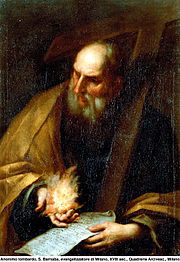
180px-San_Barnaba


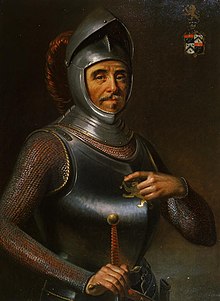
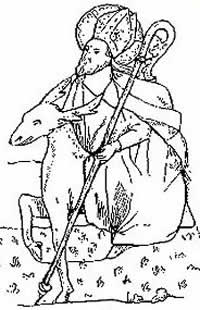
The name is borne by St. Barnabas, a companion of St. Paul who was instrumental in converting gentiles to the new Christian faith. St. Barnabas was believed to be a Cypriot Jew whose true name was Joseph but he is referred to as Barnabas in Acts 4:36, which describes the name to mean “son of consolation,” possibly being linked with the Aramaic בר נחמה, bar neḥmā of the same meaning. Many linguists contradict this meaning and claim that the latter part of the name might actually be derived from the Hebrew nabī נביא meaning “prophet.”

St. Barnabas is considered an early apostle and the founder of the Christian Church in Cyprus who was eventually stoned to death by an angry mob in Syria. He is considered the patron saint of Cyprus and his feast day is June 11th.

As a given-name, Barnaby has been the preferred form in England since medieval times. Its usage spread to the rest of the English-speaking world through colonialism. It spawned the diminutive off-shoot of Barney, which has been used as an independent given-name in its own right.

To millennials, Barney is often associated with the beloved purple dinosaur of their childhood. However, he appeared in the U.S. Top 1000 between 1880-1976. Never a huge hit, the highest he ever ranked in the U.S. Charts was #201 in 1887. He hasn’t been seen in the charts since 1976, but in England & Wales he currently ranks in as the #492nd Most Popular Males Name (2018).

Barnaby is currently the 251st Most Popular Male Name in England & Wales (2018). Whereas Barnabás is currently the 32nd Most Popular Male Name in Hungary (2018).


Other forms include:

  • Barnabana برنابا (Arabic, Persian)
  • Barnabas Բառնաբաս ബർണബാസ് (Armenian, Coptic, Dutch, English, Finnish, Frisian, German, Greek, Icelandic, Latvian, Lithuanian, Malayalam, Scandinavian, Syriac, Welsh)
  • Bernaba (Basque)
  • Varnáva Варна́ва (Bulgarian)
  • Bernabé (Catalan, Portuguese, Spanish)
  • Barnaba ბარნაბა (Croatian, Georgian, Italian, Polish, Romanian, Slovenian)
  • Barnabáš (Czech/Slovak)
  • Barnaby (English, Plattdeutsch)
  • Barnabé (French)
  • Balló (Hungarian)
  • Barna (Hungarian)
  • Barnabás (Hungarian)
  • Barnabà (Lombard)
  • Varnava Варнава (Macedonian, Serbian, Russian, Ukrainian)

An obscure Spanish feminine form is Bernabea.

Sources

Marcus, Mark

Il_Pordenone_-_San_Marco_-_Budapest


From one of the most common Roman praenomen, its origin and meaning is uncertain. A popular etymology is that it relates to Mars, others suggest it may be from the Etruscan Marce, which may come from mar (to harvest). It is said the name was originally bestowed on those who were born in March.

Marcellus and the name of the month of March likely shares the same etymological root.

It was borne by several notable Romans, including Mark Antony, Marcus Aurelius & Cicero.

It was the name of one of the Evangelists who authored the eponymous Gospel, known as St. Mark in the Christian world, he is revered as the founder of Christianity in Africa and is traditionally believed to have founded the Church in Alexandria. Coptic Christians hold him in high regard. His bones were smuggled out of Egypt in a barrel of pork fat by Venetian merchants from Alexandria when Egypt fell under Islamic rule and were transported back to Venice where they were eventually installed and dedicated in the Basilica of San Marco.

The name was borne by a 2nd-century pope as well.


Marcus, Mark and Marc have been quite popular in several countries. Marcus was in the U.S. Top 100 between 1970-2000, Sweden’s between 1998-2008, New Zealand’s between 2008-2014, England & Wales between 1996-2003, and in Denmark’s between 1994-2006. Currently, his rankings in other countries are as follows:

  • #54 (Canada, BC, 2018)
  • #87 (Australia, 2018)
  • #100 (Norway, 2018)
  • #209 (United States, 2018)
  • #213 (France, 2018)
  • #236 (England & Wales, 2018)
  • #406 (Netherlands, 2018)

Its latinate form of Marco, which started off as a mainly Italian form, became widespread across the continent. His rankings in the following countries are as follows:

  • #11 (Galicia, Spain, 2018)
  • #16 (Spain, 2018_
  • #23 (Italy, 2018)
  • #65 (Catalonia, Spain, 2018)
  • #81 (Portugal, 2018)
  • #358 (United States, 2018)
  • #436 (England & Wales, 2018)
  • #446 (France, 2018)

It’s English form of Mark appears in the legend of Tristan & Isolde as the name of the King of Cornwall, supposedly the name was not common in the English-speaking world until the 19th-century, but became a hit by the Mid-1900s. Mark appeared in the U.S. Top 100 between 1944-2002, which is quite a long stretch. Mark peaked the highest in popularity between 1955-1970, peaking at #6, six years in a row between 1959-1964.  Marks’s rankings in other countries are as follows:

  • #5 (Slovenia, 2018)
  • #6 (Moscow, Russia, 2018)
  • #21 (Hungary, 2018)
  • #83 (Ireland, 2018)
  • #210 (U.S., 2018)
  • #253 (England & Wales, 2018)
  • #298 (the Netherlands, 2018)

Marc is the French, Catalan & Welsh form and has been popularly used in the English-speaking world, it is currently the most popular male name in Catalonia, 2018 and between 1968-1976 it was in the U.S. Top 100. Marc’s rankings in the popularity charts are as follows

  • #26 (Spain, 2018)
  • #313 (France, 2018)
  • #825 (US, 2018)

Other forms of the name include:

  • Mark Марк (Albanian, Belarusian, Breton, Dutch, English, Maltese, Russian, Ukrainian)
  • Marḳos ማርቆስ (Amharic)
  • Marqus مَرْقُس‎ (Arabic, mainly used among Arab-Christians)
  • Marghos (Armenian)
  • Marko (Basque)
  • Marko Марко (Bosnian, Bulgarian, Croatian, Finnish, Macedonian, Serbian, Slovene, Ukrainian)
  • Markos Μαρκος Ⲙⲁⲣⲕⲟⲥ (Coptic, Greek)
  • Margh (Cornish)
  • Marcu (Corsican, Romanian)
  • Mokus (Croatian, Serbian)
  • Marek (Czech, Polish, Slovak)
  • Marco (Catalan, Dutch, Galician, German, Italian, Portuguese, Spanish)
  • Marc (Catalan, French, Occitanian, Welsh)
  • Marcus (Dutch, English, German, French, Scandinavian)
  • Markus (Dutch, Estonian, Faroese, Finnish, Frisian, German, Scandinavian)
  • Marghus (Estonian)
  • Markko, Markku (Finnish)
  • Marke (Finnish)
  • Marcas (Gaelic)
  • Marx (German, archaic)
  • Maleko (Hawaiian)
  • Márk (Hungarian)
  • Markús (Icelandic)
  • Marchino (Italian)
  • Marcolino (Italian)
  • Marcuccio (Italian)
  • Mareks (Latvian)
  • Marks (Latvian)
  • Markuss (Latvian)
  • Markas, Morkus (Lithuanian)
  • March (Lombard)
  • Markys (Manx)
  • Marquét (Poitvin, diminutive form)
  • Marcos (Portuguese, Spanish)
  • Kusi (Swiss-German diminutive form)
  • Marqōs ܡܪܩܘܣ‎ (Syriac)
  • Mår (Walloon)

It’s feminine forms include Marca but and sometimes Marcia was used as a feminine form, though it is more the feminine equivalent of Marcius.

Other feminine forms include:

  • Markusine (German, obscure)
  • Marchina (Italian)
  • Marcolina (Italian)
  • Marcuccia (Italian)

Sources

Rhys

220px-Rice_ap_Gryffydd,_Prince_of_Wales

Rhys ap Gruffydd


A classic masculine Welsh name, it was borne by 2 early Welsh rulers, Rhys ap Tewdwr who died in the battle of Brecon (1040-1093) and his grandson Rhys ap Gruffydd (1132-1197), who fought against the invading Normans.

The name is derived from the Old Welsh rīs which means “passion, ardor, fiery, enthusiasm.”

The name is borne by several other historical Welsh personages and has spun the surnames of Price (son of Rhys) and Rice. It is sometimes anglicized as Reece or Reese.

Rhys is currently the 464th Most Popular Male Name in the United States (2018) and the 196th Most Popular in England & Wales (2018).

Its anglicized offshoot of Reece currently ranks in as the 599th Most Popular Male Name in the United States (2018) and the 326th Most Popular Male Name in England & Wales (2018), whereas Reese is the 659th Most Popular Male Name.

The name is currently borne by British actor, Rhys Ifans.

Sources

Ciarán, Kieran, Ciar


Ciaran


  • Origin: Gaelic
  • Meaning: “black”
  • Gender: masculine
  • Pronunciation: KEER-an; KYAIR-en, KEER

Ciarán is a diminutive form of Ciar, which comes directly from the Gaelic word for black.

In Irish legend, Ciar mac Fergus was the son of Fergus mac Róich. He was legendary progenitor of the Ciarraid people who gave their name to County Kerry in Ireland.

The name is borne by two Irish saints who are considered 2 of the 12 Apostles of Ireland, Ciarán the Elder & Ciarán the Younger (5th-century C.E.).

St. Ciarán the Elder was believed to be a contemporary of St. Patrick and he is often lauded as the first native born Irish saint. According to legend, his mother Liadán swallowed a star while pregnant with him and was told by the Druid priests that it meant her child would grow up to be an important man. Scholars debated whether he preceded Patrick in converting to Christianity or even met him or if he was converted by St. Patrick himself and was considered one of his helpers; the latter hypothesis seems to be the most popular.

St. Ciarán the Younger was the founder of the monastery in Clonmacnoise, one of the most important Christian centres in Medieval Ireland.

Other forms include:

  • Kenerin (Breton)
  • Kerne (Breton)
  • Kerrier (Breton)
  • Kyran (Breton)
  • Piran (Cornish)
  • Queranus (Dutch, Latin, German)
  • Keiran (English)
  • Kieran (English, French, Scots)
  • Kieron (English)
  • Queran (English, French, German)
  • Chiarain (French)
  • Kiéran (French)
  • Cirán (Galician)
  • Kiaran (German, Polish)
  • Ciarano (Italian, chyah-RAH-no, Spanish, syah-RAH-no, thyah-RAH-no)
  • Chierano (Italian, kyeh-RAH-no)
  • Ciaranus, Kyaranus (Late Latin)
  • Cieran (Welsh)

In the British Isles, Ciarán was quite popular in the early 2000s. In Northern Ireland, he peaked at #28 in 2000, #58 in 2004 in Scotland and #127 in England & Wales in 1997. In Ireland, it was the same case, peaking at #28 in 2002 and fell off the charts in 2017. Its anglicized form of Kieran currently ranks in the following countries:

  • #380 (England & Wales, 2018)
  • #496 (USA, 2018)

Its feminine form is Ciara

Sources

Teilo, Thélio, Télio

Saint_Teilo

Pronunciation: (Tay-lo; Tay-lee-o)

The name is most likely a diminutive form of the Welsh name Eliudd.

It was borne by a 6th-century Welsh Catholic Saint who founded the first Church in Llandreff. He is considered the patron saint of Cardiff, Wales.

Several places in Wales and France, especially Brittany, bear his name.

Its modern French offshoot of Thélio recently appeared in the French top 500 in 2018, coming in as the 496th most popular male name.

Other forms include

  • Teliau (Breton)
  • Telo (Breton)
  • Télo (French)
  • Théleau (French)
  • Teliavo (Italian)
  • Teliaus (Late Latin)
  • Teliarus (Late Latin)
  • Teliavus (Late Latin)
  • Teliaw (Polish)

Sources

Gareth

GarethOrigin: debated
Meaning: debated
Gender: Masculine
(GARE-eth)

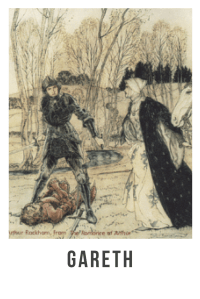
The name first makes an appearance in Sir. Thomas Le Mort D’Arthur (c.1485) as the name of one of the knights of the Round Table. Malory is said to have based the name on Gahariet, which is the name of a knight in the French version of the King Arthur mythos. It is believed by most sources that the name has a Welsh origin and might be related to Geraint (a Welsh form of the Greek Gerontius meaning “old man); or the Welsh word gwaredd (gentleness; kindness). Other sources have connected it with the Welsh word gwyhrt (worth; value), and it has also been suggested to be Franconized form of the Welsh male name, Gwoerydd (Lord of grass; Lord of Hay). The name may not have any Welsh origins at all, the name Garret/Garet have appeared in use in France and Spain since the 7th-century, both names are an early diminutive form of Gerald or Gerard.

In England and Wales, the name appeared in the Top 500 between 1996 and 2005, peaking at #117 in 1996. In Northern Ireland, Gareth cracked into the Top 100 between 2001 and 2003, peaking at #87 in 2001.

Short forms are Gary and Gaz.

Sources

Winifred, Winnie, Gwenffrewi

Hollywell.jpgOrigin: Welsh
Meaning: uncertain
Gender: Feminine
(WIN-e-fred; WIN-nee; gwen-VROO-wee)

Winifred is an anglicized from of the Welsh female name, Gwenfrewi, the first element, gwen meaning “white; holy,” while the second element is uncertain but is suggested to mean “reconciliation” or “peace.” Many sources have confused this with the Anglo-Saxon male name, Winfred which actually means “friend of peace” or “peaceful friend,” but the names are actually unrelated.

In Medieval England, the name was popularized by the cult of a 7th-century Welsh saint. According to legend, Winifred wanted to be a nun, which enraged a jealous suitor by the name of Caradog who decapitated her. Her uncle, St. Beuno, was able to place her head back on her shoulders and she was miraculously restored back to life. St. Winifred was able to live the rest of her life in holiness and died at a ripe old age, while her brother killed Caradog in revenge for her decapitation. A spring miraculously rose up from the site of her decapitation and for centuries, this was a site of pilgrimage for healing. While her story of being decapitated and brought back to life cannot be verified, historians do believe St. Winifred was a real person and that something definitely happened to her neck at some point in her life, as old Latin records always refer to a strange scar. Who knows….

To this day, Winifred’s Well in Holywell in Shrewsbury, England remains a popular site of pilgrimage, despite Henry VIII’s destruction of the shrine in the 16th-century, it seems to have been rebuilt.

St. Winifred has been referenced in English literature throughout the centuries. Her well is mentioned in the Medieval poem, Sir Gawain and the Green Knight. Her life story was dramatized as a play by William Rowley in A Shoemaker a Gentleman (1637), which was based on an earlier work by Thomas Deloney, The Gentle Craft (1584). In the 19th-century, St Winifred’s Well was written by Gerard Manley Hopkins.

Winifred was in the U.S. Top 1000 Female names between 1900 and 1965. The name was never too popular however, the highest Winifred ever ranked was at #141 in 1917.

Its diminutive offshoot of Winnie established itself as an independent given name by the 16th-century. There are a few records of “just Winnies” going as far back as the 1500s. Other interesting variations that appear in old English records include Wenefrett, Wenneffred, Winefrute, and Winnifruite.

Winnie appeared in the U.S. Top 1000 between 1900 and 1957 and peaked at #190 between 1900 and 1901.

Its original Welsh form doesn’t seem to have ever been in popular use outside of Wales, and while other Welsh names have established themselves in regular use across the anglosphere, Gwenffrewi was never one of them.

Other forms of the name include:

  • Gwenfrewi (Breton, Welsh)
  • Winefride (French)
  • Vinfreda (Italian/Latin)
  • Wenefryda (Polish)
  • Wenfryda (Polish)
  • Winifreda (Polish)
  • Wenifreda (Polish)
  • Winfryda (Polish)
  • Gwenffrwd (Welsh)

Sources

Finnian

St. Finian.jpgOrigin: Irish, Gaelic
Meaning: “white”
Gender: masculine
(FIN-nee-en)

Finnian is an anglicized form of the Gaelic, Fionán or Fionnán, which is derived from the Celtic element, fionn (white).

The name is borne by 2 early Irish saints:

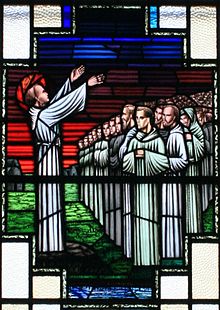
  • St. Finnian of Clonard, an Irish saint who is considered one of the founders of Irish monasticism and tutor of many his contemporary saints (470-549).
  • St. Finnian of Moville, another Irish monastic who brought back St. Jerome’s Vulgate from Rome to Ireland, started a monastary and eventually became the tutor of St. Columba (495-589).

Other forms of the name include:

  • Finnien (French)
  • Finnan/Finnén (Irish)
  • Fionán/Fionnán (Irish)
  • Vennianus (Latin)
  • Vinniaus (Latin)
  • Finian (Polish, appears on the Polish name-day calendar, but is seldom used)
  • Ffinan (Welsh)

A short form is Finn or Finny.

Sources

January Names

JanuaryI thought at the beginning of each month, I would post a list of names associated with the that particular month. Below is a list of names I have previously written about associated with January


Agnes: January 21st is the feast of St. Agnes and according to folklore, on January 20th, which John Keats’ was inspired to write a poem about, unmarried girls are supposed to see a future glimpse of their husband in their dreams the night before, provided they do not eat that day.

Frost: January is often associated with cold temperatures and frosty weather. Here are some name associated with frost

Sarma, Sarmite: These 2 Latvian lovelies come directly from the Latvian word for hoarfrost. The latter is pronounced sar-MEE-teh.

Kirsi: This Finnish female name is associated with the cherry fruit but also means “frost” in Finnish.

Other names that mean “frost” or words for frost from other languages include:

Male

  • Antizgar (Basque)
  • Dér (Hungarian)
  • Hall (Estonian)
  • Reif (German)
  • Rijp (Dutch)
  • Rio (Manx)
  • Šerkšnas (Lithuanian)
  • Sioc (Gaelic)
  • Szron (Polish, SHRONE)
  • Barrug (Welsh)

Female

  • Blancada (Occitanian)
  • Brina (Italian)
  • Bryma (Albanian)
  • Chelata (Aragonese)
  • Geada (Portuguese)
  • Gelada (Catalan)
  • Eláda (Guarani)
  • Escarcha (Spanish)
  • Jinovatka (Czech)
  • Pruina (Latin)
  • Salna (Latvian)
  • Slana (Slovenian)

Snow: Also one of the snowiest months of the year, some names that mean “snow.”

Other names meaning snow that I have yet to write about include

Male

  • Erc’h (Breton)
  • Jur (Chuvash)
  • Kar (Turkish)
  • Lov (Erzya)
  • Nix (Latin)
  • Yas (Navajo)

Female

  • Dëbora (Albanian)
  • Fiòca (Piedmontese)
  • Kavi (Faroese)
  • Neige (French)
  • Neva (Neapolitan)
  • Neve (Galician/Italian)
  • Parsla (Latvian)

Ice, the following are names that mean “ice”

Male

  • Buz (Turkish)
  • Izotz (Basque)
  • Jég (Hungarian)
  • Led (Czech, Serbo-Croatian)
  • Păr (Chuvash)
  • Siku (Inupiak)
  • Ledas (Lithuanian)
  • Ledus (Latvian)
  • Tin (Navajo)
  • Xeo (Galician)
  • Ysbran

Female

  • Cetl (Nahuatl)
  • (Welsh)
  • Ma’ome (Cheyenne)

Epiphany: January 6th officially marks the end of the Christmas season, when the Magi finally were able to locate the Christ child and bestow gifts upon him.

Garnet is the birthstone of January. Below is a list of words from other languages that mean “garnet” and would make awesome names

  • Gernete (Anglo-Norman)
  • Granate (Asturian/Basque/Spanish)
  • Grenat (French)
  • Gairnéad (Gaelic)
  • Granato (Italian)
  • Granatas (Lithuanian)
  • Granada (Portuguese)

Likewise, Carnation is the birthflower, its Latin name is Dianthus, which was a name before it was a flower. Below is a list of words from other languages that mean “carnation” and would make awesome names. Also mixed in are some names with the meaning of “carnation” or just have carnation associations

  • Diantha
  • Clavel (Asturian/Spanish)
  • Krabelin (Basque)
  • Clavellina (Catalan)
  • Havenellike (Danish)
  • Caraveleira (Galician)
  • Landnelke (German)
  • Nellika (Icelandic)
  • Caxtillān (Nahuatl)
  • Penigan (Welsh)

And for boys, other than Dianthus, there is the Italian Garafano

The Chinese plum is the flower emblam for Spring, in Chinese it is called Meihua and its Japanese name is Ume. In Korean it is called Maesil and Vietnamese it is called Mai.

In Japan, the flower emblem for January is the Camellia

Another January birthflower is the snowdrop

  1. Çeçpĕl (Chuvash)
  2. Sněženka (Czech)
  3. Perce-Neige (French)
  4. Endzela (Georgian)
  5. Bucaneve (Italian)
  6. Snieguole (Lithuanian)
  7. Śnieżyczka (Polish)
  8. Sněgulka (Sorbian)
  9. Kardelen (Turkish)
  10. Eirlys (Welsh)

The Zodiac signs associated with January are Capricorn and Aquarius. Capricorn means goat and Aquarius waterbearer. Some names that mean both

The ruling planet of Capricorn and Aquarius is Saturn, so Saturnina or Saturnin/Saturnino are also names to consider.

Finally, here are names that mean “January,” some come directly from words, others are a translation of the Latin male name Januarius.

Male

  • Chinero (Aragonese)
  • Xineru (Asturian)
  • Urtarril (Basque)
  • Genver (Breton/Cornish)
  • Gener (Catalan)
  • Kărlach (Chuvash)
  • Ghjennaghju (Corsican)
  • Leden (Czech)
  • Znêr (Emiliano-Romagnolo)
  • Janvier (French)
  • Zenâr (Friulian)
  • Xaneiro (Galician)
  • Gennaro (Italian)
  • Jenero (Ladino)
  • Januarius (Latin)
  • Sausis (Latvian)
  • Jannar (Maltese)
  • Genièr (Occitanian)
  • Yenner (Pennsylviana German)
  • Janeiro (Portuguese)
  • Bennàlzu (Sardinian)
  • Enero (Spanish)
  • Ocak (Turkish)
  • Lonawr (Welsh)

Female

  • Jenna (Bavarian)
  • January (English)
  • Tammikuu (Finnish)
  • Janvière (French)
  • Gennara (Italian)
  • Januaria (Latin)
  • Zennâ (Ligurian)

Tegan

TTegan_and_Sara_@_NIB_Stadium_(4_12_2010)_(5252473341)he name most likely comes directly from the Welsh word for a “toy; trinket.” Its Welsh pronunciation should be (TEG-en), which rhymes with Megan, but it has been popularly pronounced and known as (TEE-gen) in most of the Anglophone world.

The name has also been linked with the Cornish word teg (beautiful).

Its use as a male name is due to its confusion with the Irish surname Teagan (son of Tadhg), but Tegan has always traditionally been a feminine name.

The name first came into use in the 19th-century.

The name is most popularly associated with the Canadian folk duo, Tegan & Sara.

Tegan has been in the U.S. Top 1000 since 2010. It is currently the 906th most popular female name in the United States.

In England/Wales, it was in the top 500 between 2002 and 2012 and peaked at #259 in 2006.

Sources