Leila, Layla

Gender: Feminine
Origin: Arabic לילה‎ ليلى
Meaning: “night.”
(LAY-la)

The name is derived from the Arabic and has a variety of different meanings depending on its spelling, the most popular etymology is that it is from a Semitic root, l-y-l, meaning, “night” and shares the same etymology as the name Lilith.

The name has always been popular in the Middle East and is found in the 7th-century romantic poem, Qays & Layla also known as Layla & Majnun (written by Persian poet, Nizami Ganjavi). The legend trickled down to throughout the Middle East, Near East, Central Asia and South Eastern Europe, making the name a long time classic in all those regions.

It was introduced into the English-speaking world via Lord Byron in which the name appears in two of his works, The Gaiour (1813) and Don Juan (1819). It was further popularized in the 1970s when the name was the subject of two songs, one being the famous Eric Clapton song and the other being “Layla” by Derek and the Dominos.

Her Bosnian form of Lejla is the 7th most popular female name in Bosnia & Herzegovina, (2010). Her rankings in other countries are as follows:

  • # 3 (Leyla, Azerbaijan, 2010)
  • # 36 (Layla, Australia, 2010)
  • # 37 (Layla, United States, 2010)
  • # 44 (Layla, England/Wales, 2010)
  • # 50 (Layla, Ireland, 2010)
  • # 50 (Layla, Scotland, 2010)
  • # 71 (Leila, Hungary, 2010)
  • # 76 (Layla, Canada, BC, 2010)
  • # 95 (Laila, England/Wales, 2010)
  • # 138 (Laila, United States, 2010)
  • # 143 (Leila, France, 2009)
  • # 204 (Leila, United States, 2010)
  • # 304 (Layla, Netherlands, 2010)
  • # 478 (Laila, Netherlands, 2010)
  • # 747 (Leyla, United States, 2010)

The name is also common in Iran, Israel, the Balkans and in the Turkic world.

In the Middle East, the name was popularized by a 7th-century poet by the name of Qays, whose lady love was named Layla. His story became a popular Medieval Arabic romance.

Other forms of the name include:

  • Lejla Лейла (Albanian/Bosnian/Dagestani/Kazakh/Maltese/Tatar)
  • Laïla (Algerian/Moroccan/Tunisian)
  • Leïla (Algerian/Moroccan/Tunisian)
  • Leyli Լեյլի (Armenian)
  • Leyla (Azeri/English/Kurdish/Turkish)
  • Lajla Лайла (Chechen)
  • Leila ლეილა (Circassian/English/Ethiopian/French/Georgian/Hungarian)
  • Laila (Dutch/English/Estonian/Finnish/Hindi/German/Latvian/Scandinavian/Urdu)
  • Layla (English/Italian/Uzbek)
  • Lejli Лейли (Kazakh)
  • Ljajlim Ляйлим (Kazakh)
Laila can also be a Sami form of Helga.

Azra

Gender: Feminine
Origin: Arabic
Meaning: “virgin.”
(AHZ-rah)

The name is derived from the Arabic, ‘adra, meaning, “virgin; maiden.”

As of 2010, Azra was the 22nd most popular female name in Bosnia & Herzegovina.

Amna

Gender: Feminine
Origin: Arabic  أمنة
Meaning: “safety.”
(AHM-nah)

The name is derived from the Arabic أمان (amn) meaning, “safety.”

As of 2010, Amna was the 16th most popular female name in Bosnia & Herzegovina.

Asma

Gender: Feminine
Origin: Arabic أسمى
Meaning: “supreme.”
(AHS-mah)

The name comes directly from the Arabic, أشد (asma), meaning, “supreme.”

The name is of pre-Islamic origins and was borne by a legendary 7th-century female poetess, Asma bint Marwan. According to legend, she tried to incite the populous of Medina to rebel against the Prophet Mohammed in which she was summarily killed by the Prophet. Her existence and story has been questioned and debated by scholars.

Another notable bearers include Asma al-Assad, First Lady of Syria (b.1975). Its Turkish form of Esma was borne by two Turkish sultanas.

As of 2010, Esma was the 18th most popular female name in Bosnia & Herzegovina. Other Bosnian forms include: Esmana, Esmina and Esminka.

Baqir

Gender: Masculine
Origin: Arabic باقر
Meaning: “to rip apart; to dissect.”
(BAH-KEER)

The name is taken from an epithet of Mohammed ibn ‘Alī, known as Al-Baqir (676-733 C.E.) He was the fifth Imam to the Twelver Shi’a and the fourth Imam to the Ismaili Shi’a. He was later nicknamed Al-Baqir due to his analyzation of different topics.

As of 2010, its Balkan form of Bakir was the 31st most popular male name in Bosnia & Herzegovina.


Amram

Gender: Masculine
Origin: Biblical Hebrew  עַמְרָם
Meaning: “exalted one.”

The name is found in the Old Testament as the name of the husband of Jochebed and the father of Moses, Aaron and Miriam. In the Qu’ran, the name appears in its Arabic form of Imran عمران as the name of both the father of Moses and the father of the Virgin Mary, (analogous to the Catholic Joachim).

As of 2010, Imran was the 17th most popular male name in Bosnia & Herzegovina. His rankings in other countries are as follows:

  • # 243 (Netherlands, 2010)
  • # 365 (France, 2009)

Other forms of the name include:

  • Imram عمرام (Arabic)
  • Ambram Αμβραμ (Greek)
  • ‘Îmran (Kurdish)
A Bosnian feminine form is Amra, which is currently the 27th most popular female name in Bosnia & Herzegovina, (2010).

Aladdin

Gender: Masculine
Origin: Arabic علاء الدين
Meaning: “glory to religion.”

The name is composed of the Arabic words  علاء (‘ala) “glory, praise; excellence” and  دين (din) “religion.”

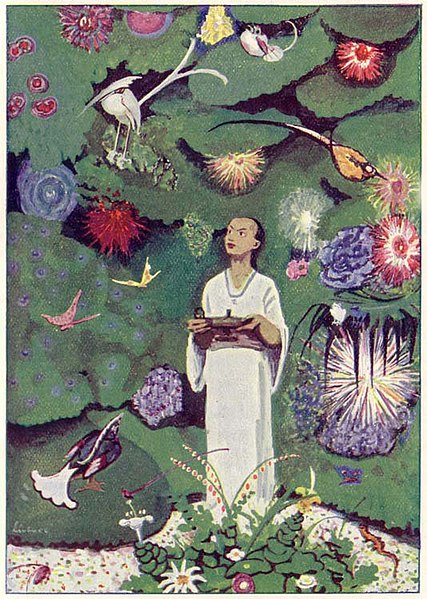
The name was borne by several Delhi Sultans, but came was introduced into the Western World via the Middle Eastern folktale as written in 1001 Nights. It is the name of the impoverished Chinese hero who is kidnapped and forced into slavery by an evil and powerful North African sorcerer. The tale recounts the Aladdin’s obtainment of a genie and his eventual rise to prestige.

As of 2010, its Bosnian modified form of Aldin, was the 23rd most popular male name in Bosnia & Herzegovina, while its female form of Aldina was the 97th most popular female name in Bosnia & Herzegovina.

Other Balkan forms include Aladin and Alaudin.

Adnan

Gender: Masculine
Origin: Arabic  عدنان‎
Meaning: “settler.”
(AHD-nahn)

The name is derived from the Semitic root ‘adn meaning, “to stay; to abide.”

This is the traditional name of the progenitor of the Adnani Arabs, they are believed to be the direct descendants of Ismael and this is the tribe from which the Prophet Mohammed came.

As of 2010, Adnan was the 18th most popular male name in Bosnia & Herzegovina.

The name is used throughout the Islamic world.

Bosnian feminine forms include Adna and Adnana.

Nadim

Gender: Masculine
Origin: Arabic  نديم
Meaning: “drinking companion.”
(NAH-DEEM)

The name is derived from the Arabic ندم (nadima), meaning, “to drink together.”

This is a popular name among both Muslims and Christians across the Middle East. It is borne by Nadim Gemayel, son of former Lebanese president-elect Bachir Gemayel, (b.1981). It was also borne by a famous Turkish poet of the 17th-century, known simply as Nedîm.

Its Balkan form of Nedim is currently 20th most popular male name in Bosnia & Herzegovina, (2010). A Bosnian feminine form is Nedima.

An Urdu transliterated form is Nadeem.

Iman

Gender: Feminine
Origin: Arabic  إيمان Иман
Meaning: “faith.”
(ee-MAHN)

The name comes directly from the Arabic word for faith.

The name is used throughout the Islamic world and as of 2010, it was the 30th most popular female name in Bosnia & Herzegovina, (2010).

Its North African form of Imane is currently the 80th most popular female name in Belgium, (2009), the 163rd most popular in France, (2009) and the 411th most popular in the Netherlands, (2010).

Iman was brought to attention in the Western World by Somali-born model, Iman (b.1955)

The name is also borne by two Jordanian princesses and Persian Princess Iman Pahlavi, daughter of Reza Pahlavi, the deposed Crown Prince of Iran.

Other forms include:

  • Imane (Algerian/Moroccan/Tunisian)
  • İman (Azeri/Turkish)
  • Îmân (Kurdish)
  • Imaan (Somali)
  • Imani (Swahili)