Giselher is an early Old High German masculine name formed from two classic Germanic elements, gisel (pledge) and hari (army).
The best-known figure is King Giselher of Burgundy, a 5th-century ruler who appears in both history and legend. He is immortalized as a character in the Nibelungenlied, the great Middle High German epic, alongside his brothers Gunther and Gernot.
It was also the name of an 11th-century Bishop of Madgeburg who succeeded St. Adalbert.
It is found in records as the name of Teutonic Knights in Estonia, Latvia and Poland. It experienced a minor revival in the early 20th-century but is quite rare in contemporary German-speaking countries.
Its Anglo-Saxon version of Gislhere was borne by an 8th-century Bishop of Selsey.
A more recent bearer was German composer, Giselher Klebe (1925-2009).
Its designated name-day in Austria is September 28th.
S.L. Uckelman. “Giselhar”. In S.L. Uckelman, ed. The Dictionary of Medieval Names from European Sources, Edition 2023, no. 1. http://dmnes.org/2023/1/name/Giselhar.
The name comes directly from the Spanish word for “magpie,” ultimately derived from the Latin furax (thievish).
The name was popular in the early Middle Ages among the Christian kingdoms of the Iberian Peninsula.
Several medieval queens and princesses bore the name, including Queen Urraca of León and Castile (1079–1126), the powerful daughter of Alfonso VI, who ruled as queen regnant and Infanta Urraca of Portugal (11th century), daughter of King Afonso I.
It’s French form is Urraque. Early records also yield, Hurraca, Hurraqua, Urraka (Basque), Urraqua and Urraquoa.
Its softer Galician form is Orraca.
This beautiful Medieval gem deserves a comeback, especially with the nickname, Rocky.
S.L. Uckelman. “Urraca”. In S.L. Uckelman, ed. The Dictionary of Medieval Names from European Sources, Edition 2023, no. 1. http://dmnes.org/2023/1/name/Urraca.
Tarquin the Elder consulting Attus Nevius the Augur by Sebastiano Ricci
Origin: Etruscan
Meaning: Unknown
Gender: Male
Tarquin is the English form of Tarquinius, the Latin family name of a powerful Etruscan dynasty that ruled early Rome. The name’s exact Etruscan root is uncertain, but it may derive from the ancient city of Tarquinii (modern Tarquinia) in central Italy, itself probably from an older Etruscan personal or place name.
Two Roman kings bore this name: Lucius Tarquinius Priscus, the fifth king of Rome, and Lucius Tarquinius Superbus, the seventh and last king, whose overthrow in 509 BCE led to the founding of the Roman Republic.
While rare, Tarquin appears in English records from the Renaissance onward, often chosen for its aristocratic and classical resonance. Italian retains Tarquino as a given name. The name has also been used in literature and drama —Shakespeare famously tells the story of “The Rape of Lucrece” by Tarquin. It was recently used as the name of Tarquin Blackwood in Anne Rice’s The Vampire Chronicles.
Modern bearers include British journalist Tarquin Hall (b. 1969), the middle name of American actor, Timothy Tarquin Hutton (b. 1960).
Today Tarquin feels distinctive and slightly theatrical, blending ancient Roman history with a sleek, modern sound. If you are looking for a fuller name for Quinn, this may be the perfect choice for you.
International variations include:
Tarkinio (Basque)
Tarquini, Tarquí (Catalan)
Tarkvinije Тарквиније (Croatian, Serbian)
Tarquinius (Dutch, Latin)
Tarquin (English, French)
Tarquinio, Tarquino (Italian, Spanish)
Tarkvinijus (Lithuanian)
Tarkwiniusz(Polish)
Tarquínio, Tarquino, Tarquim (Portuguese)
Tarkvinij(Slovene)
Female Forms
Its Italian feminine form of Tarquinia was borne by Italian Renaissance singer, Tarquinia Molza (1542-1617). This would also make a fabulous fuller version for the nickname Quinn. Another Italian female form is Tarquina.
The name ultimately comes from Greek Νεῖλος (Neílos), the ancient Greek name of the River Nile.
In Ancient Egyptian, the river was called jtr-w (Iteru, “Great River”). The Greek form Neílos may reflect a Semitic root n-h-r, meaning “river,” which is also the source of Hebrew nahar and related words.
In Greek mythology, Neilos was personified as the river-god of the Nile, one of the Potamoi (river deities).
The Latinized form Nilus became a well-known monastic name and is borne by several Christian saints, including St. Nilus the Syrian, a disciple of St. John Chrysostom, and St. Nilus of Sinai.
Nil is the Slavic form used for males. In Turkey, the same name arose independently as a female given name of the same etymology.
In Italian, it may also be used as a short form ofDanilo.
An Italian feminine form is Nila.
Nile is an English name that was often used in reference to the surname. It may make an interesting modern adaptation for parents looking for a cool but modern saints name.
Hiltrud is a feminine Old High German name formed from hild, “battle,” and drud/þrūð, “strength.”
It was borne by two prominent eighth-century figures: Princess Hiltrud of the Franks, daughter of Charles Martel, who married Duke Odilo of Bavaria and later served as regent for their son Duke Tassilo III, and Saint Hiltrude of Liessies, a Frankish noblewoman venerated in northern France and Belgium.
The name remained in use throughout the medieval German-speaking world and saw a modest revival in the late nineteenth and early twentieth centuries, though it is now rare and considered old-fashioned.
In Austria, the designated name-day is September 27th.
Traditional German diminutives and familiar forms include: Hilde, Hildi, Trude, Trudi, and Trudel.
Hiltrud has also occasionally been used in Scandinavian Countries.
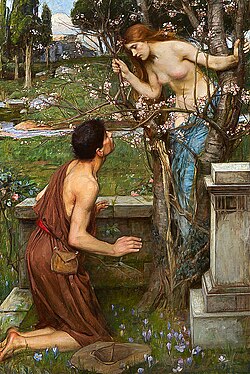
The name appears in Greek mythology. It is connected to a woman who killed herself when her love for Demophon was not returned. She was transformed into an almond or hazelnut tree, depending on the legend. It comes directly from the Greek word, Φυλλίς, meaning, “leaves, foliage,” which shares a root with the words chlorophyll and phyllotaxis. Its Turkish form of Filiz comes from the same root but the meaning slightly changes to “sprout; root.”
It also appears as the name of a minor river god of Bithynia.
It came into widespread use in England in the 16th-century and later spread to the rest of the Anglosphere.
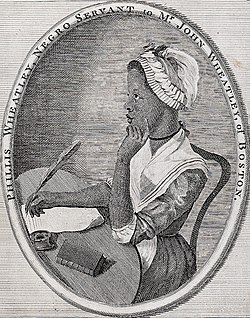
Early Puritan records occasionally include Phyllis/Phillis, reflecting classical learning even among settlers. Phillis Wheatley (1753-1784), the first published African-American female poet, is a striking historical bearer.
An 18th-century English short form was Lissie or Lissy.
It frequently appears in Elizabethan and Restoration poetry and drama. Poets such as Ben Jonson and Andrew Marvell used “Phyllis” as a stock name for a beloved in pastoral verse. Later modernists like Ezra Pound continued this tradition. This usage helped keep it familiar to English speakers for centuries.
It marked its presence in baroque operas (e.g., Handel’s Acis and Galatea includes a character named Phyllis) and in folk songs of the British Isles.
Victorian painters of the Pre-Raphaelite school sometimes chose the Phyllis and Demophon story for mythological canvases.
In the United States, it appeared in the Top 100 Female Names between 1915-1958, peaking at #24 in 1929. In the U.K., it came in at #14 in 1914, #4 in New Zealand in 1911, and #29 in 1922 in Canada.
Its Turkish offshoot of Filiz appeared in the Turkish Top 100 between 1980-1996, peaking at #11 between 1980-1982.
Today, the name is considered dated in the English-speaking world.
Phillyda, pronounced /ˈfɪl.ɪ.də/ in English is an alternate form.
Pacificus is a Late Latin name derived from pax, meaning “peace,” or “peaceful” more specifically.
It’s Italian form of Pacifico was borne by a follower of Saint Francis of Assisi and an 18th-century Italian saint. The designated name-day for the latter is September 24th.
Its feminine form of Pacifica has been in use in Italy since at least the 16th-century.
Its French form of Pacifique is a unisex name and experienced some usage in France at the turn of the 20th-century. It appeared in the French Top 1000 Most Popular Male Names between 1901-1909, peaking at #446 in 1909. Today, the name is an obsolete gem.
Today, Pacific, with the nickname Pace, may make an unusual place and nature name for a boy. Though rare, it is the legit English translation of this name.
S.L. Uckelman. “Pacifica”. In S.L. Uckelman, ed. The Dictionary of Medieval Names from European Sources, Edition 2023, no. 1. http://dmnes.org/2023/1/name/Pacifica.
The name is of uncertain origin or meaning, it is more than likely derived from the Latin, elitus (elite).
It has been used across Europe for centuries. It appears in records in France and Strasbourg during the 16th-century, and was not unheard of in 18th-century America. In the latter case, it may have been used among Calvinist families.
The name is also used in Latvia, likely introduced in the mid 18th-century and experienced popularity in the 1960s, peaking at #27 in 1965.
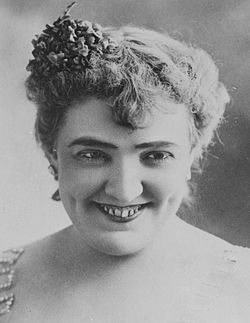
It was borne by American actress, Elita Proctor Otis (1861-1927); Latvian actress, Elita Kļaviņa (b. 1956); Latvian politician, Elita Krūmiņa (b. 1965) and Latvian journalist, Elita Veidemane (b. 1955).
Early French vernacular forms are Élita and Élite.
The name is borne in history by Numa Pompilius (circ 8th-century C.E), the second King of Rome. Since he was of Sabine origin, it has been suggested his name was Sabine. However, its meaning has been lost to time. Others have linked it with the Oscan, Nium, also of unknown meaning. It has also been linked with the Greek nomos (νόμος), meaning, “custom; law.”
The name experienced usage in France in the late 19th-century. It appeared among the top 1000 Most Popular Males Names in France between 1900 and 1925. The name peaked at #266 in 1909. It also experienced a revival in Italy around the same time. It was used sporadically in England and the United States.
Notable bearers include French artist, Numa Ayrinhac (1881-1951) and French football player, Numa Andoire (1908-1994).