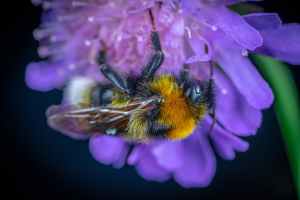
Nectar, Nectaire, Nectarius, Nectaria

  • Origin: Greek
  • Meaning: “nectar.”

Nectar is the English form of the Greek Nektarios Νεκτάριος, which is derived from νέκταρ (nektar), meaning “nectar, the drink of the gods. Nectar is not a name that has ever been in common use in the English-speaking world, but since it is the name of several Eastern and Western Christian saints, the proper English male translation of the name would be Nectar; or it would have appeared thus in the calendar.

It was borne by St. Nectaire of Auvergne, a 4th-century Christian missionary to the Gauls in what is now the Massif Central region of France. According to Gregory of Tours, he was sent by Pope Fabian, along with his brothers, where he transformed a temple that was dedicated to Apollo on Mont Cornadore into a cathedral that still stands, and was subsequently beheaded by the local Gaulic chieftain. The commune of Saint-Nectaire in the Puy-de-Dôme department of France gets its name from him, as does the cheese of the same name; or the latter technically comes from the Marshal of Senneterre, which is a linguistic corruption of Saint-Nectaire.

Male forms include:

  • Nektarij, Nektary Нектарий (Bulgarian, Russian, Ukrainian)
  • Nectari (Catalan)
  • Nektarious (Coptic)
  • Nectarije (Croatian-Serbian)
  • Nectar (English)
  • Nectaire (French)
  • Nektari ნეკტარი (Georgian)
  • Nektarios Νεκτάριος (Greek)
  • Nettario (Italian)
  • Nectareus, Nectarius (Late Latin)
  • Nektārijs (Latvian)
  • Nektariusz (Polish)
  • Nectário (Portuguese)
  • Nectarie (Romanian)
  • Nectario (Spanish)

Feminine forms include

  • Nektaria, Nektarija Νεκταρία Nექთარიჯა Нектария (Coptic, Bulgarian, Georgian, Greek, Polish, Russian, Serbo-Croatian, Ukrainian)
  • Nectarie (French)
  • Nettaria (Italian)
  • Nectaria (Latin, Romanian, Spanish)
  • Nectária (Portuguese)

A modern male Greek diminutive form is Nektary and the Russian diminutive form for both the male and female form is Nechka.

Sources

Coraline

Coraline.jpgOrigin: French
Meaning: uncertain
Gender: Feminine
Fr. (KOH-hrah-LEEN); Eng. (CORE-e-LINE)

The name is most likely a French diminutive form of Cora, (Grk. maiden), or Coralie that eventually spun off as an independent given name.

In both France and England, the name has been in use since the early 19th-century.

The French opera by Adolphe Adam Le toréador, ou L’accord parfait (1849) probably helped put this name on the map.

It is also the name of a French genus of apple that was bred for the first time in 2002.

In the Mediterranean, coraline is the name of a type of felucca used to hunt coral.

Its recent usage in the English-speaking world was no doubt brought back to life by Neil Gaiman’s 2002 novel Coraline, which was adapted into a film in 2009. Gaiman claimed that the character’s name was originally meant to be Caroline, but Coraline was a typo that just stuck.

Alternately, if spelled Coralline it is the name of a genus of red algae.

Another form is the Italian Coralina and the Russian and Polish form, albeit rare, is Koralina Коралина.

The name has also been in use in the Netherlands since the 19th-century.

Coraline has been in the U.S. Top 1000 Most Popular Female Names since 2012 and is currently the 602nd most popular female name in the United States (2016).

Sources


Jericho

JerichoFrom the name of a city mentioned in the Bible which is now located in Palestine. The meaning of the name is debated, some sources claim the name is from a Caananite word reah meaning “fragant” or the Canaanite word for moon (yareah), as the city was once the centre of worship for the Caananite moon-god Yarikh. Yarikh’s name also appears as Jarah, Jerah and Jorah. In modern times, the name is referred to as ʼArīḥā, in Arabic, meaning “fragrant.”

It’s use as a given name can possibly be traced to the 16th-century. Records indicate a scattering of Jereachs and Jerichs in England, and Jerigos in Germany is attested to many times, though I cannot tell if these are related to Jericho or if they are a form of George or Jeorg. Jericho definitely comes up in records by the 18th-century both in England and the United States.

The name first appeared in the U.S. top 1000 in 2013 and currently ranks in as the 932nd most popular male name.

A possible short form is Jerry.

The name appears in other languages in the following manner, though keep in mind that most of these are anecdotal.

Chericó (Aragonese)
Ijeryhon/Jeryhon Іерыхон Ерыхон (Belarusian)
Jerihon Йерихон (Bulgarian/Serbo-Croatian)
Jericó (Catalan/Portuguese/Spanish)
Ierihón Иерихо́н (Chuvash)
Jericho (Czech/Dutch/English/German/Slovak)
Jeriko (Danish/Finnish/Norwegian/Swedish)
Jeeriko (Estonian)
Jéricho (French)
Xericó (Galician)
Ierikoni იერიქონი (Georgian)
Jerikó (Hungarian)
Ireachó (Irish-Gaelic)
Gerico (Italian)
Jerichò (Kashubian)
Jērika/Jerihona (Latvian)
Jerichas (Lithuanian)
Iericho Ιεριχώ (Modern Greek)
Jerico (Occitanian)
Jerycho (Polish)
Ierihon Иерихон (Romanian/Russian)
Yeriko (Swahili)
Yeryxon Єрихон (Ukrainian)

Sources

https://www.behindthename.com
https://www.ssa.gov
https://www.familysearch.org
https://en.wikipedia.org/wiki/Jericho
http://www.ccel.org/ccel/hitchcock/bible_names

Medieval Polish Names

wawelToday I am going to provide a list of Medieval Polish names. You won’t see these anymore, but some of these are just lovely gems. What do you think?


Male

  • Chleb (bread; HLEB)
  • Dalibor (far from conflict)
  • Dobron (good)
  • Doman
  • Jutrowuj (uncle dawn, YOO-tro-VOY)
  • Kazuch (KAH-zook, KAH-zooh)
  • Kochan (beloved, KOH-han)
  • Milon (love)
  • Mir (peace, MEER)
  • Modlisz (pray, MODE-leesz)
  • Rasz (RAHSH)
  • Trojan (TROI-yahn)
  • Warsz (VARSH)
  • Zasz (ZAHSH)

Female

  • Abramka (a feminine form of Abraham)
  • Astreta (perhaps a form of Astrid, ah-STREH-tah)
  • Burneta
  • Częstobrona (constant defense, CHEN-sto-BRO-nah)
  • Damroka
  • Dajmira (give me peace, dye-MEE-rah)
  • Druzjana (drooz-YAH-nah)
  • Krasnuroda (beautiful and attractive)
  • Piechna (either from the Polish piekna (beautiful) or Petronela, PYEK-nah)
  • Jafra (YAH-frah)
  • Jagienka (little lamb, yah-GYEN-kah)
  • Ładana (pretty, wah-DAH-nah)
  • Marusza (mah-ROO-shah)
  • Maszota (mah-SHOH-tah)
  • Mirołada (peace; pretty; MEE-ro-WAH-dah)
  • Morzena (sea; maw-JEH-nah)
  • Pachna (scent, PAHK-nah)
  • Najmiła (most pleasant, nye-MEE-wah)
  • Niebiana (heavenly, nyeh-BYAH-nah)
  • Rzepicha/Rzepka (turnip, jeh-PEE-hah, JEP-kah)
  • Samboja (sam-BOY-ah)
  • Skarbimira (treasure of peace)
  • Tomira

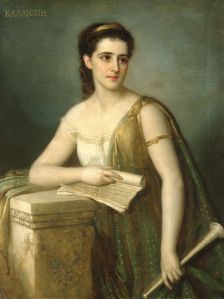
Calliope

Origin: Greek
Meaning: beautiful voiced
Gender: Female
Pronunciation: kuh-LIE-uh-pee

The name is composed of the Greek elements, καλλος (kallos) “beauty” and οψ (ops) “voice.” It is borne in Greek mythology by the muse of epic poetry and eloquence. She was said to be the mother of Orpheus and was said to be the chief among the muses by Hesiod and Ovid.

The name is also borne by a Catholic and Christian Orthodox saint who was tortured and martyred for refusing a suitor who wanted her hand in marriage as well as for her to renounce her faith.

It is also the name of a type of musical instrument as well as genus of hummingbird.

In recent years, it is the full name of a fictional character on the popular tv series, Grey’s Anatomy, Callie Torres, portrayed by Sara Ramirez.

In the English-speaking world, the name first came into use in the early 18th-century.

The name recently entered the U.S. Top 1000 Female Names, coming in as the 939th most popular female name.

A common short form is: Callie.

Other forms include:
Kalliope Կալլիոպե(Armenian/Danish/Dutch/Finnish/German/Estonian/Norwegian/Polish/Romanian/Swedish)
Kalіё́pa Каліё́па(Belarusian)
Kaliopa Калиопа(Bulgarian/Serbo-Croatian/Slovenian)
Cal·líope (Catalan)
Kalliopé (Czech/Hungarian/Slovak)
Calliope (French/English/Italian)
K’aliop’e კალიოპე (Georgian)
Kalliόph Καλλιόπη (Modern Greek)
Kallíópa (Icelandic)
Kaliopė (Lithuanian)
Calíope (Portuguese/Spanish)
Kalliopa Каллиопа(Russian/Ukrainian)

Sources

https://en.wikipedia.org/wiki/Calliope
https://www.behindthename.com
https://www.familysearch.org
https://www.ssa.gov
http://www.theoi.com

Polish & French Nature Names


Lithuanian ForestHere is my second list of Polish and French nature names. Please keep in mind that many of these are hypothetical. I would be honored if someone actually found inspirations and used these on their children. What do you think? Hypothetical names will have an asterisk. Names with no asterisk actually have a history of use. Also be advised that names whose meanings are obvious will not have their meaning in parenthesis.

French
Female

  • Abeille (bee, a-BAY)
  • Achillée (yarrow)
  • Adansonie** (baobob)
  • Adiante** (maidenhair)
  • Amarelle** (type of cherry)
  • Amèrise** (wild cherry)
  • Anagallis** (pimpernel)
  • Aralie (aralia)
  • Ardoise** (slate)
  • Armérie/Statice  ** (sea-pink)
  • Aronde** (swallow)
  • Aube (dawn)
  • Aubépine (hawthorn)
  • Balsamine (balsam/balm)
  • Belladone
  • Bergamote
  • Bluette (blueberry)
  • Brebis** (ewe)
  • Brume/Brumeuse** (mist/misty)
  • Bruyère (heather)
  • Cannelle (cinnamon)
  • Capucine (nasturtium)
  • Cardamome ** (cardamom)
  • Cascade**
  • Cascavelle** (jequirity)
  • Cenelle** (hawthorn berry)
  • Chanson** (song)
  • Chênette** (white dryad)
  • Cinabre** (cinnabar)
  • Colibrie** (hummingbird)
  • Cornaline** (carnelian)
  • Coquille** (seashell)
  • Crécerelle** (kestrel)
  • Dauphine (dolphin)
  • Dune
  • Éclaire** (lightning)
  • Épicéa/Épinette** (spruce)
  • Élodée ** (pondweed)
  • Ensoleillée** (sunny)
  • Érable** (maple)
  • Étoile (star)
  • Faune (fauna)
  • Galaxie**
  • Galène** (galena)
  • Ganteline ** (dane’s blood)
  • Garance (madder)
  • Gazanie** (gazania)
  • Gelée** (frost)
  • Glaïeule** (gladiolus)
  • Guirlande** (garland)
  • Glycine** (wisteria)
  • Griotte** (sour cherry)
  • Hottonie** (water-violet)
  • Ipomée** (morning glory)
  • Isatis (artic fox, EE-zah-TEEZ)
  • Ivoire** (ivory)
  • Jaspe** (jasper)
  • Lavande (lavender)
  • Lilas (lilac)
  • Linaigrette** (cottongrass)
  • Linotte** (linnet)
  • Liseron (morning glory)
  • Luciole (firefly)
  • Marasque** (maraschino cherry)
  • Marée** (tide)
  • Mélèze** (larch)
  • Menthe (mint)
  • Mirabelle (mirabelle plum)
  • Mûre ** (blackberry)
  • Myrrhe**
  • Myrtille (bilberry)
  • Nachi** (asian pear)
  • Narthécie** (bog bean)
  • Neige (snow)
  • Nerprune** (buckthorn)
  • Nivéole**(lily-of-the-valley)
  • Noisette (hazelnut)
  • Obsidienne** (obsidian)
  • Orchidée (orchid)
  • Oseille** (sorrel)
  • Perce-neige** (snowdrop)
  • Pervenche (periwinkle)
  • Péridot/Péridotte **
  • Pétale**
  • Phalène** (moth)
  • Pivoine (peony)
  • Plume (feather)
  • Poème** (poem)
  • Poésie** (poetry)
  • Pruche ** (spruce tree; PREUSH; Cajun French)
  • Prune (plum)
  • Raiponce (rampion)
  • Réglisse (licorice)
  • Renarde (vixen)
  • Renoncule** (buttercup)
  • Roncière (bramble)
  • Rossignole** (nightingale)
  • Rue**
  • Sable** (sand)
  • Sabline** (sandwort)
  • Sagittaire** (katniss)
  • Sainfoine ** (french honeysuckle)
  • Saison** (season)
  • Sansonnette** (starling)
  • Soirée** (evening)
  • Soleirole** (angel’s tears)
  • Solstice**
  • Térébinthe** (terebinth)
  • Terre ** (land, earth)
  • Trésore** (treasure)
  • Tulipe (tulip)
  • Umé ** (asian plum)
  • Vague** (wave)
  • Valériane
  • Vanille (vanilla)
  • Vergerette** (fleabane)
  • Viorne** (viburnum)
  • Vipérine ** (viper’s bugloss)
  • Zibeline** (sable)

Male

  • Acier** (steel)
  • Blaireau** (badger)
  • Brin ** (blade of grass)
  • Champ ** (field)
  • Charbon** (coal)
  • Chardon** (thistle)
  • Corbeau** (crow, raven)
  • Coton** (cotton)
  • Daim** (buck)
  • Dard** (sting)
  • Glouton** (wolverine)
  • Gui** (mistletoe)
  • Gryf** (griffin)
  • Houblon** (hop)
  • Houx** (holly; HOO)
  • Jais** (jet, ZHAY)
  • Macis ** (mace)
  • Mercure (mercury)
  • Milan (kite)
  • Moisson** (harvest)
  • Nord** (north)
  • Ours (bear)
  • Pin** (pine)
  • Pré ** (field)
  • Récif** (reef)
  • Renard (fox)
  • Requin** (shark)
  • Saumon ** (salmon)
  • Terrain** (field, terrain)
  • Turquoise**
  • Vallon** (glen)

Unisex

  • Coriandre** (coriander)
  • Piaf ** (sparrow)

Polish
Female

  • Alstremeria** (inca lily)
  • Ałycza** (cherry plum (ah-WITCH-chah)
  • Bąbela** (honeycomb, BONE-beh-lah)
  • Bawełna** (cotton, bah-VEU-nah)
  • Bergamota**
  • Biała (white; BYOW-wah; medieval name)
  • Borówka (blueberry)
  • Bryza ** (breeze)
  • Czapla** (heron, CHAP-lah)
  • Czeremcha** (bird cherry, cheh-REM-hah)
  • Cynia** (zinnia)
  • Dąbrówka (bugle flower, dome-BROOF-kah)
  • Delfina (dolphin)
  • Dolina** (valley; glen)
  • Fala (wave)
  • Firtletka** (flower of Bristol)
  • Fuksja ** (fuchsia)
  • Glicynia** (wisteria)
  • Glina ** (clay)
  • Grusza** (pear, GROO-shah)
  • Jara (poetic word for the month of spring, YAH-rah)
  • Jasna (clear, YAHS-nah)
  • Jemioła** (mistletoe)
  • Jeziora** (shore)
  • Jeżyna (bramble, yeh-ZHIH-nah)
  • Jutrzenka (aurora, morning star, venus, yoot-JANE-kah)
  • Kalina (viburnum)
  • Kaskada ** (cascade)
  • Kolendra** (coriander)
  • Kolibra** (hummingbird_
  • Koniczyna** (clover, KOH-nich-CHIN-nah)
  • Ketmia ** (hibiscus)
  • Konwalia ** (lily-of-the-valley).
  • Łąka** (meadow, WONE-kah)
  • Łania** (doe, WAHN-yah)
  • Lawenda** (lavender)
  • Lepnica** (notthingham catchfly)
  • Lilak** (lilac)
  • Lonicera** (honeysuckle)
  • Malina (raspberry)
  • Marzanna (madder; mar-ZHAHN-neh-nah)
  • Mięta** (mint)
  • Moczarka** (pondweed, mo-CHAR-kah)
  • Morela (abricot)
  • Muszla** (seashell, MOOSH-lah)
  • Niezapominajka** (forget-me-not; NYEZ-ah-PO-mee-NYE-kah)
  • Olsza ** (alder tree, OLE-shah)
  • Ostróżka** (larkspur, o-STROOSH-kah)
  • Ożyna** (blackberry, oh-ZHIN-nah)
  • Pietruszka** (parsley)
  • Piosenka** (song)
  • Piwonia** (peony)
  • Poezja** (poetry)
  • Pola (fields, meadows)
  • Pszczoła (bee; PSHCHOH-wah; medieval name, used as a vernacular form of Deborah)
  • Przyroda** (wildlife, pshih-ROH-dah)
  • Rafa (reef)
  • Rana ** (morning)
  • Rosiczka ** (sundew)
  • Roślina** (plant; roshe-LEE-nah)
  • Różana** (pink, roo-ZHAH-nah)
  • Ruta (rue)
  • Sasanka** (pasque-flower; anemone)
  • Solanka** (brine)
  • Sosna ** (pine)
  • Ślęzawa ** (mallow wart, shlen-ZAH-vah)
  • Śliwka (plum, SHLEEF-kah)
  • Śnieguła ** (snow bunting, snowflake, shnyeh-GOO-wah)
  • Śnieżyca** (lily-of-the-valley, shnyeh-JIT-sah)
  • Świrzepa** (bastard cabbage, shvee-ZHE-pah)
  • Sójka** (blue jay, SOY-kah)
  • Szarówka** (dusk; shah-ROOF-kah)
  • Tęcza** (rainbow, TEN-chah)
  • Ulewa ** (downpour, oo-LEH-vah)
  • Walerianna (valerian; VAH-lare-ee-AHN-neh-nah)
  • Wichura** (gale, vee-HOO-rah)
  • Wełnianka** (cottongrass)
  • Werbena**
  • Wilga** (oriole; VEEL-ga)
  • Wydma** (dune, VID-mah)
  • Zarośla** (thicket; zah-ROSHE-lah)
  • Zerwa** (rampion, ZARE-vah)
  • Ziemia** (land, earth; ZYEH-myah)
  • Żniwa** (ZHNEE-vah)
  • Żurawka** (alumroot, zhoo-RAHF-kah)
  • Życica** (rye-grass, zhi-TSEET-sah)

Male

  • Bagno** (fen)
  • Baran** (ram)
  • Borsuk** (badger)
  • Buk** (beech)
  • Chmiel** (hop)
  • Dąb** (oak, DOMP)
  • Drzewko** (sapling, JEF-ko)
  • Gagat** (jet)
  • Grom (thunderclap; medieval name)
  • Huk** (thunder)
  • Jawor ** (sycamore)
  • Karneol** (carnelian)
  • Kobalt**
  • Klon** (maple)
  • Kruk (crow) – medieval name
  • Kwarc** (quartz)
  • Lasek** (grove)
  • Las** (forest)
  • Len** (flax)
  • Lew (lion; LEV)
  • Lis** (fox)
  • Łupek ** (slate, WOO-pek)
  • Miedź** (copper, MYEDGE)
  • Miki** (mica)
  • Modrzew** (larch, MODE-jev)
  • Mróz** (frost, MROOZ)
  • Niedźwiedź (bear; NYEDGE-vyedge) -this was used in Medieval Times, now obsolete
  • Nikiel** (nickel)
  • Obsydian** (obsidian)
  • Piolun (absinthe tree)
  • Piorun (lightning; PYO-roon; name of a Slavic god, medieval name)
  • Potok** (stream)
  • Rekin** (shark)
  • Rosomak** (wolverine)
  • Rtęć** (mercury, rTENCH)
  • Turkus** (turquoise)
  • Skarb (treasure)
  • Skowronek** (skylark, sko-VRONE-nek)
  • Słowik ** (nightengale)
  • Świt** (dawn; SHVEET)
  • Szron** (hoarfrost, SHRONE)
  • Wieczór** (evening; VYET-choor)
  • Wróbel ** (sparrow, VROO-bel)
  • Żar ** (flame, ZHAR)

Polish & French Nature names

Here is a list of French and Polish nature names. Some of these are hypothetical, some of them are actually used. Hypothetical names are italicized. Note: many of the legit nature names are very archaic.

French

Females

  • Acacie
  • Améthyste
  • Argentine (silver)
  • Automne
  • Azalée
  • Azure
  • Baie (bay)
  • Bijou (jewel)
  • Bleue
  • Branche
  • Capucine (nasturtium)
  • Cèdre (cedar)
  • Ciel (sky)
  • Chênaie (oak grove)
  • Colombe (dove)
  • Chrysanthème (mum)
  • Diamante
  • Émeraude
  • Épine (thorn)
  • Érine (alpine flower)
  • Étoile (star)
  • Falaise (cliff)
  • Fauve (fawn colour)
  • Fée (fairy)
  • Flambée (blaze)
  • Garance (hawthorn)
  • Gingembre (ginger)
  • Hiver (winter)
  • Joyau (jewel)
  • Lauréole (daphne laurel)
  • Lierre (ivy)
  • Lune (moon)
  • Miel (honey)
  • Muguette (lily-of-the-valley)
  • Nuage (cloud)
  • Océane (ocean)
  • Opale
  • Ombre (shadow)
  • Onagre (evening primrose)
  • Pavotte (poppy)
  • Perle
  • Pluie (rain)
  • Primevère (primrose)
  • Primerose (hollyhock)
  • Printemps (spring)
  • Rivière (river)
  • Rubine (ruby)
  • Safrane (saffron)
  • Saphire
  • Sarcelle (teal-duck)
  • Sauge (sage)
  • Saule (willow)
  • Serre (talon)
  • Soleil (sun)
  • Tempête (tempest)
  • Topaze (topaz)
  • Tonnelle (arbor)

Males

  • Bleu
  • Éclat (blaze)
  • Faucon (falcon)
  • Faon (fawn-animal)
  • Foin (hay)
  • Bouleau (birch)
  • Laurier (laurel)
  • Loup (wolf)
  • Pierre (stone, rock)
  • Silex (flint)
  • Tremble (aspen)

Polish

Female

  • Akacja
  • Ametysta 
  • Azalia (azalea)
  • Bazylia
  • Burza (storm)
  • Brzoza (birch: BJOH-zah)
  • Chryzantema (mum)
  • Chmura (cloud, HMOO-rah)
  • Cyranka (teal-duck)
  • Gwiazda (star)
  • Jagoda (berry)
  • Jagna (lamb, YAHG-nah)
  • Klejnota (jewel)
  • Koralia (coral)
  • Kwiata (flower, KFYAH-tah)
  • Jesienna (autumn, yeh-SHYEN-nah, yeh-SHYANE-nah)
  • Łabędz (Swan, WA-benj, pre-Christian name)
  • Nasturcja (nasturtium)
  • Nefryta (jade)
  • Niebiana (heavenly)
  • Niebieska (blue)
  • Osika (aspen, ah-SHEE-kah)
  • Pergola (arbor)
  • Perła (pearl)
  • Pogoda (weather)
  • Poziomka (strawberry, paw-ZHOME-kah)
  • Rubina (ruby)
  • Rzeka (river, ZHEH-kah)
  • Sekwoja (sequoia)
  • Skarpa (cliff)
  • Slońce (sun, SWOINs-TSEH)
  • Szafrana (saffron)
  • Szafira (sapphire)
  • Szałwia (sage)
  • Szmaragda (emerald)
  • Stokrotka (daisy)
  • Wierzba (willow, VYEZH-bah)
  • Wisenna/Wiosenna (spring, vi-SEN-nah and vyoh-SEN-nah)
  • Wróżka (fairy, VROOSH-kah)
  • Wyprawa (journey, VIP-prah-vah)
  • Zima (winter, ZHEE-mah)

Male

  • Cień (shadow, Chang)
  • Dereń (dogwood, DEH-reng)
  • Deszcz (rain)
  • Gałąź (branch; GAH-wonshe)
  • Imbir (ginger)
  • Jelonek (fawn animal)
  • Jesion (ash-tree, YEH-shone)
  • Kamień (stone, rock)
  • Kanion (canyon)
  • Kolec (thorn)
  • Kwiatostan (blossom)
  • Płomień (blaze, PWOH-myang)
  • Lasek (grove)
  • Lesota (forest)
  • Mak (poppy)
  • Niebo (heaven)
  • Orzeł (eagle, Aw-jeu)
  • Popiół (ash from a fire, POPE-pyeu)
  • Rudzik (robin)
  • Siano (hay, SHAH-no)
  • Sokół (falcon, SO-keu)
  • Srebro (silver)
  • Sztorm (storm)
  • Żegota (blaze)
  • Źebrak (colt, ZHEH-brahk)
  • Wawrzyn (laurel, VAHF-zhin)
  • Wilk (wolf)

Polish & French Equivalents of the U.S. Top 1000 from 1880 and Beyond

There are some interesting names from the U.S. Top 1000 from yesteryear. Here are hypothetical Polish and French equivalents. Note, any name that is not listed that you know of is exactly because it exists. I focused on names that have no equivalents. What do you think? Can you think of better translations? This time I put the original forms in parenthesis for the least obvious translations.

French

  • Avice
  • Dochie
  • Elmine
  • Elnore
  • Érie
  • Étèle
  • Éthéline
  • Léotie
  • Louëlle
  • Lilise
  • Loulou
  • Madore
  • Mentholée (Minty)
  • Nacrée (Pearlie)
  • Paralie
  • Parthénie
  • Permélie
  • Rosâtre (Pinkey)
  • Sabre
  • Vérone

Polish

  • Ailina
  • Awisa
  • Dosja
  • Dikcja (Dixie)
  • Beryla
  • Delfia
  • Dicja
  • Eria
  • Estela
  • Etela
  • Etelina
  • Feja/Faja
  • Ineza
  • Kadja (Caddie)
  • Klarencja
  • Klarynda
  • Klasja
  • Klejnota (Jewel)
  • Kordia
  • Lilisa
  • Luela
  • Lueta
  • Mabela
  • Marieta
  • Merla
  • Mirta
  • Mozela
  • Muriela
  • Ocja
  • Opala (Opal)
  • Oryla
  • Paralia
  • Partenia
  • Różowawa (Pinkey)
  • Rozela
  • Rozeta
  • Rozyna
  • Szirla
  • Tela
  • Tresja
  • Tursa
  • Werona
  • Wiśnia (Cherry)
  • Zylfia/Zylfa