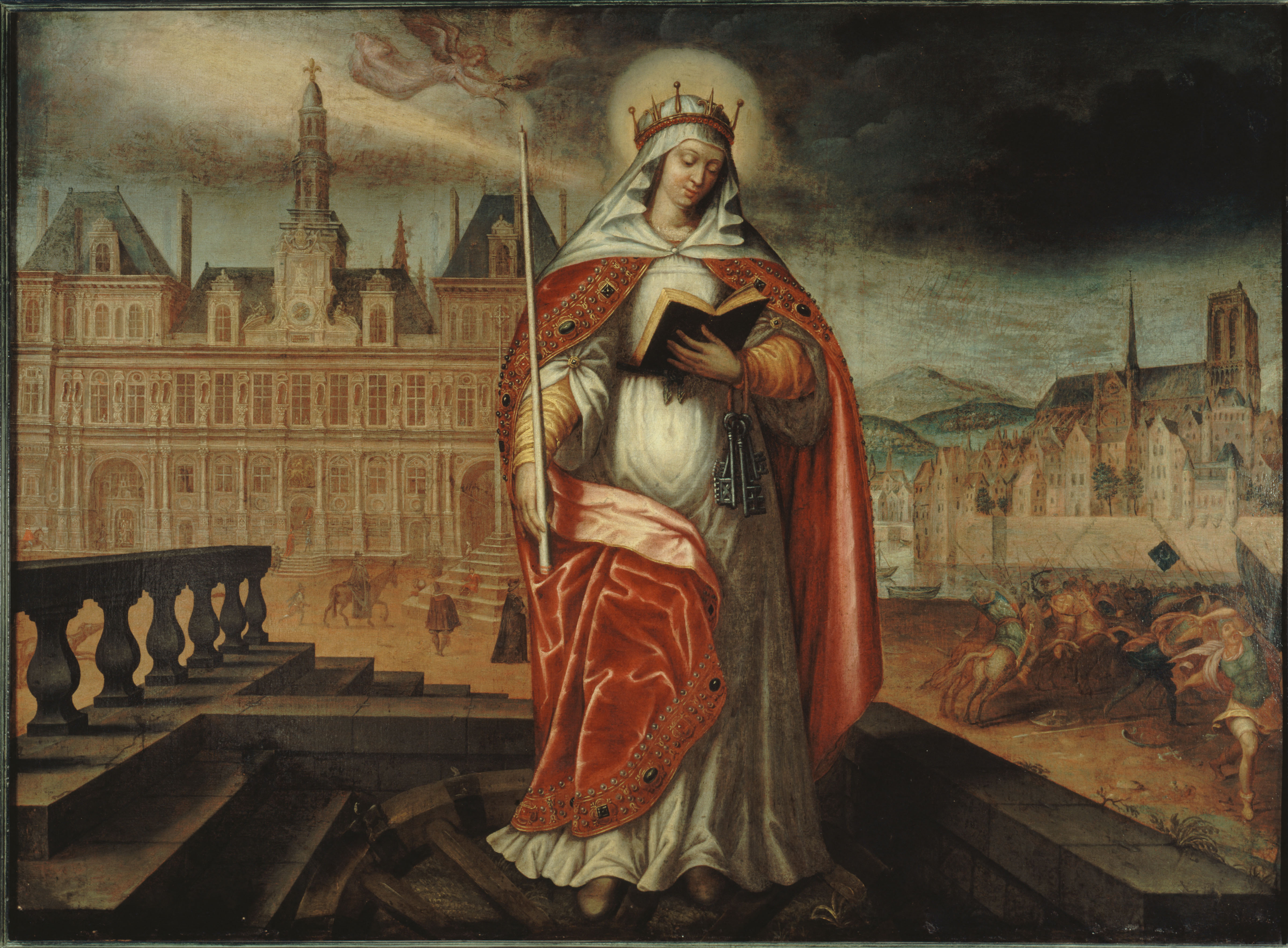
Genevieve

Gender: Feminine
Origin: French
Meaning: debated
Eng (JEN-e-VEEV); Fre (zhe-nə-VYEV, zhawn-VYEV )

The name is of debated origin and meaning, some sources relate it to the Celtic Guinevere, which is composed of the Welsh elements gwyn meaning “white, fair” and hwyfar meaning “smooth.”

However, this theory has been strongly conjectured against, and it is more than likely related to a Frankish source, believed to be an early latinization of the Frankish feminine compound name Kenowefa or Kenuwefa, which is composed of the elements ken meaning “race; tribe” and wefa meaning “woman.”

The name was popularized by an early medieval French saint who is said to have rescued Paris from the invading Huns, a pious woman in life, she is now considered the patron saint of Paris.

Her feast day, and consequently, Genevieve’s name-day, is January 3rd.

As of 2008, Genevieve ranked in as the 324 most popular female name in the United States.

Common English diminutives are Gennie and Vivi.

In French, Ginette was the most common diminutive form, breaking off as an independent given name, now considered dated in the French-speaking world.

In Spanish the nicknames are often Veva and Beba

Other forms of the name include:

  • Xenoveva (Asturian)
  • Genevisa/Bièva (Bearnais)
  • Genoveva (Catalan/Croatian/Dutch/German/Limburgish/Portuguese/Spanish)
  • Ghjenuveffa (Corsican)
  • Jenovéfa/Jenůfa (Czech: the latter is a more archaic form)
  • Geneviève (French: this form has also been used as a borrowing in Scandinavian countries as well as in German-speaking countries)
  • Genevote (French: an archaic form seldom in usage)
  • Genofeva (German)
  • Genovéva (Hungarian/Slovak)
  • Zsinett (Hungarian: corruption of Ginette)
  • Genoveffa (Italian)
  • Genoeffa (Italian: very obscure form)
  • Genovaitė (Lithuanian)
  • Genowefa (Polish: Gienia/Gienka are the common nicknames)
  • Genevivo (Provençal)
  • Genovefa (Slovene, diminutives include: Gena, Geni, Genica, Genija, Genka, Fefa and Fefi)
  • Genova (Spanish)

An obscure masculine Italian form is Genoveffo.

Basil

Gender: Masculine

The name, coincidentally, has two different origins and meanings.

It could either be from the Greek, Vassilios, which in itself is derived from the Greek Βασιλειος (Basileos), meaning “king.” The words: basilica, basilisk and the name of the herb, Basil, share the same etymology.

The name was borne by Saint Basil the Great, a 4th-century bishop of Caesarea. He is considered the father of the early Christian Church among both Eastern Orthodox and Roman Catholics.

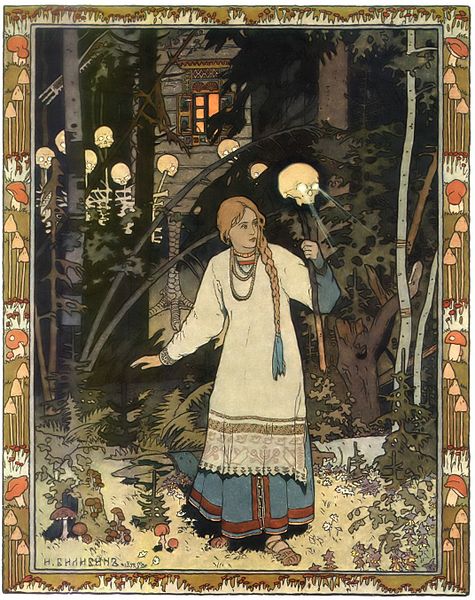
In Russian Folklore, its feminine version of Vasilisa appears in a popular Russian fairytale, entitled Vasilisa the Beautiful, the tale shares similar features to the Western European Cinderella Story.

The designated name-day is often January 2.

Another etymology of the name is the Arabic باسل (Basil), which means “valiant” or “brave.”

Other forms of the first form, include:

  • Vasil (Bulgarian/Albanian)
  • Veselin (Bulgarian)
  • Bazilije (Croatian)
  • Basil/Bazil (Czech/Slovak)
  • Vasilij (Czech)
  • Pasi (Finnish)
  • Basile (French)
  • Breasal (Gaelic/Irish)
  • Basil/Basilius (German/Dutch)
  • Wassili (German)
  • Basileios Βασιλειος (Greek Ancient)
  • Vasílios Βασίλειος/Vasílis Βασίλης (Greek Modern)
  • Bazil (Hungarian)
  • Vászoly (Hungarian)
  • Vazul (Hungarian)
  • Basile/Basileo (Italian)
  • Basilio (Italian: most common form)
  • Basilius (Latin)
  • Basilijus/Bazilijus (Lithuanian)
  • Vasilii Василии (Old Church Slavonic)
  • Bazyli (Polish)
  • Bazylid/Bazylis (Polish)
  • Bazyliusz (Polish)
  • Wasyl/Wasyli (Polish: archaic forms)
  • Basílio (Portuguese)
  • Vasile (Romanian: Vasilica is a diminutive)
  • Baseli (Romansch)
  • Vasily Василий (Russian: Vaska and Vasya are usually the diminutives)
  • Basili (Sardinian)
  • Vasilije Василије (Serbian)
  • Vasil (Slovak)
  • Bazilij (Slovene)
  • Basilio/Basiléo (Spanish)
  • Vasyl Василь (Ukrainian)

Feminine forms include:

  • Vasilka Василка (Bulgarian)
  • Vasilena/Veselina (Bulgarian)
  • Vesela (Bulgarian)
  • Veliki (Croatian)
  • Basilissa (Greek Ancient/Romansch)
  • Vasiliki Βασιλικη (Greek Modern)
  • Basilia (Italian)
  • Basilea/Basiliola (Italian)
  • Bazilė (Lithuanian)
  • Bazyla/Bazylia/Bazylisa (Polish)
  • Vasilisa Василиса (Russian)
  • Vasylyna Василина (Ukrainian)

Mieczysław

Gender: Masculine
Origin: Polish
Meaning: debated
(mye-chih-SWAHF)

The name is of debated meanings, it is obviously composed of the Slavonic element slav meaning “glory” but the prefix of mieczy has always been a subject of debate.

Some theories that have interpreted the first element are:

  • miecz from the Polish meaning “sword”
  • mieć from the Polish verb meaning “to have.”
  • miecić from the Polish verb meaning “to fling; to throw.”

The third is most likely, since Mieczysław is believed to be an erroneous corruption of the earlier Miecisław.

The designated name-day in Poland is January 1st.

Common diminutive forms are Miecio, Mieczyś, Mieteczek and Mietek.

Historically, the name was often anglicized to Mitchell by first generation Polish Americans. Mitchell has no etymological relation to Mieczysław other than sharing similar sonority.

Other, more archaic, Polish forms are MasławMiecławMiecisławMiecysław and Miesław.

Other forms of the name include:

  • Mečislav (Czech)
  • Miecislas (French: very rare)
  • Miecsiszláv/Miciszsláv (Hungarian)
  • Menceslao (Italian: very rare)
  • Mecislaus (Latin)
  • Mecislavas/Mecislovas (Lithuanian)
  • Mechyslav (Russian/Ukrainian)

A feminine forms are Masława and Mieczysława.

Mieszko

Gender: Masculine
Origin: Polish
Meaning: debated
(MYESH-ko)

The name is often believed to be a contraction of the Slavic, Mieczysław, but other sources tend to disagree and claim that it may be related to an archaic Polish source, being a derivative of mieżka which means “blind”, related to the Polish verb mżeć meaning “to keep one’s eyes closed” or meaning “to be blind.”

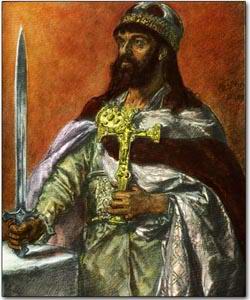
The name was borne by a legendary Polish king, Mieszko I (920-942), he is credited as being the first historical ruler of Poland and is also considered the creator of the Polish State.

His adoption of Christianity in 966 is also considered the date when Poland officially became a Christian nation.

The name was borne by several other Polish kings, particularly ones from the Piast Dynesty.

In Poland, its designated name-day is January 1.

Another masculine form is Mieszka.

Other forms of the name:

  • Mješko (Croatian)
  • Měšek (Czech)
  • Mesco (Latinized version: archaic)
  • Mieško (Lithuanian)
  • Meško (Slovak)

Abel

Gender: Masculine
Origin: Hebrew
Meaning: “breath.”
Eng (AY-bl)

The name is derived from the Biblical Hebrew הֶבֶל (Hevel) which means “breath.”

In the Old Testament, it was borne by one of the eldest sons of Adam and Eve. Abel is usually linked with his brother, Cain.

In the Biblical tradition, Cain is considered to be the first murderer as he had murdered his brother, Abel, out of jealousy.

The name is used among Christians, Muslims and Jews.

In the English speaking world, the name has gone in and out of usage since the Middle Ages. It was in usage before the Reformation but seems to have become especially popular among 17th-century Puritans.

The name was borne by several early Christian saints and was therefore rather prevalent in continental Europe, especially in Spain, during the Middle Ages.

The Abel form is used in Basque, Catalan, Danish, Dutch, English, Galician, German, Finnish, French, Icelandic, Norwegian, Polish, Portuguese, Romanian, Spanish and Swedish.

Other forms of the name include:

  • Hābīl هابيل (Arabic)
  • Ábel (Czech/Hungarian/Slovak)
  • Aabel (Estonian)
  • Aapeli (Finnish)
  • Abel Άβελ (Greek)
  • Hevel הבל (Hebrew)
  • Habel (Indonesian)
  • Abele/Abelino (Italian)
  • Abels (Latvian)
  • Abelis (Lithuanian)
  • Habil (Turkish)

An obscure feminine German and Italian form is Abelina and a Spanish and Italian feminine form is Abela.

The designated name-day is January 2nd in most countries.

Sylvester/Silvester

Gender: Masculine
Origin: Latin
Meaning: “wooded, wild.”

Sylvester is an English corruption of the Latin name Silvester, which is derived from the Latin word silvestis meaning “wooded” or “wild.”

The name is borne by several saints and popes, “Silvester” became synonymous with the name for New Years Eve in some countries, since December 31st is the feast of St. Silvester.

Silvester is used in Danish, German, English, Slovene and Slovak.

Before the Reformation, Sylvester was a fairly common male name in England, but went out of usage due to its strong papal associations at the time.

Other forms of the name include:

  • Silvestre (Catalan/Spanish)
  • Silivestru (Corsican)
  • Silvestar (Croatian)
  • Silvestr/Sylvestr (Czech)
  • Sylvester (English/Finnish/Swedish/Ukrainian)
  • Silvar/Silver (Estonian)
  • Sylvestre (French)
  • Fester (Frisian/Limburgish)
  • Szilveszter (Hungarian)
  • Silvestro (Italian)
  • Silvester (Latin/Estonian)
  • Silvestrs (Latvian)
  • Vester (Limburgish)
  • Silvestras (Lithuanian)
  • Sylfest/Sølfest (Norwegian)
  • Sylwester (Polish: diminutive forms are: Syc, Syczek, Syczko, Sych, Sychno, Sychta, Sysz, Syszek, Syszka and Syszko)

An Italian and Slovene feminine form is Silvestra.

The name is currently borne by American actor, Sylvester Stallone (b.1946).

In American popular culture, it was borne by the animated cat named for the the felis silvestris catus, a subspecies of wildcat that was believed to be related to the domesticated cat, at the time. Later scientific evidence established them as two separate species..

A common English nickname is Sly.

David

Gender: Masculine
Origin: Hebrew
Meaning: “beloved.”

The name is derived from the Hebrew דָּוִד (Dawid), which is derived from the Hebrew word דוד (dwd) meaning “beloved.”

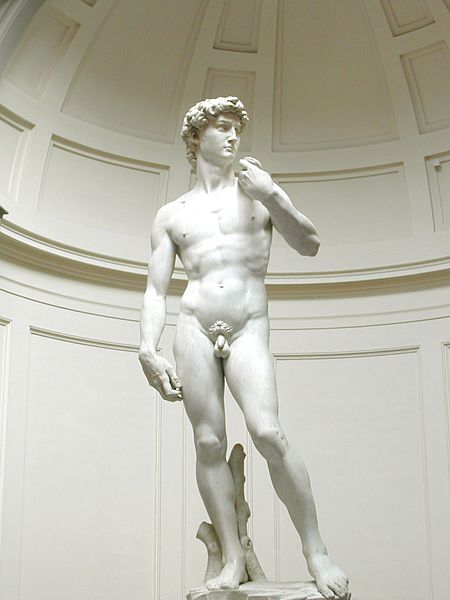
The name is borne in the Old Testament by King David, he is considered to be the greatest Jewish king in history, he is famous for defeating the evil Philistine, Goliath and several other endeavors mentioned in the Bible. He also plays a part in the Qu’ran and in Christian tradition, is considered an ancestor of Jesus.

In the English speaking world, the name has been in usage since the Middle Ages, it was borne by two Scottish Kings and St. Dewi (known as St. David in English) is considered the patron saint of Wales.

In the United States, the name currently ranks in as the 14th most popular male name, actually, David has been in the U.S. top 20 since 1880, and he peaked in 1960, coming in at # 1. In other countries, his popularity is as follows:

  • # 2 Davit (Armenia, 2008)
  • # 74 (Australia, 2007)
  • # 6 (Austria, 2008)
  • # 7 (Catalonia, Spain, 2008)
  • # 87 (Belgium, 2006)
  • # 53 (Canada, B.C. 2008)
  • # 31 (Chile, 2006)
  • # 64 (England/Wales, 2008)
  • # 1 (Faroe Islands, 2008)
  • # 96 (France, 2006)
  • # 6 (Hungary, 2008)
  • # 16 (Ireland, 2007)
  • # 4 (Israel, among Jewish boys, 2008)
  • #  9 Davide (Italy, 2007)
  • # 1 (Liechtenstein)
  • # 4 Dovydas (Lithuanian)
  • # 41 (the Netherlands, 2008)
  • # 51 (Norway, 2007)
  • # 8 Dawid (Poland, 2008)
  • # 4 (Romania, 2008)
  • # 27 (Scotland, 2008)
  • # 9 (Slovenia, 2005)
  • # 4 (Spain, 2008)
  • # 40 (Sweden 2007)
  • # 4 (Switzerland, among German-speakers, 2008)
  • # 6 (Switzerland, among French-speakers, 2008)
  • # 5 Davide (Switzerland, among Italian-speakers, 2008)

The David form is used in Albanian, Catalan, Croatian, Czech, Danish, Dutch, French, Galician, German, Norwegian, Portuguese, Romanian, Spanish and Swedish.

Other forms of the name are:

  • Davidi (Albanian)
  • Da’ud/Da’oud/Da’wud/Da’wood داؤود (Arabic)
  • Davit Դավիթ (Armenian)
  • Davud (Azeri)
  • Davud/Daud/Daut (Bosnian)
  • Daveth (Cornish)
  • Taavet/Taave/Taavi/Taavo/Tavo (Estonian)
  • Daavid (Finnish)
  • Taavetti/Taavi (Finnish)
  • Dáibhead/Dáibheid/Daithí/Davy (Gaelic/Irish)
  • Dawit/Dato დავით (Georgian)
  • David Δαβίδ (Greek)
  • Dávid (Hungarian/Faroese/Slovak)
  • Davíð (Icelandic)
  • Daud (Indonesian)
  • Davide (Italian: Davidino and Daviduccio are obscure diminutive forms that were occasionally used as independent given names)
  • Daudi (Kiswahili)
  • Dawid (Kurdish)
  • Dāvids/Dāvis (Latvian)
  • Dovydas (Lithuanian)
  • Davidu Давідъ(Old Church Slavonic)
  • Davud داوود (Persian)
  • Dawid (Polish: DAH-veed)
  • David Давид (Russian/Belarusian)
  • Davíd (Spanish)
  • Dàibheid/Dàibhidh/Daividh (Scottish)
  • Davud/Dâvud (Turkish)
  • Davyd (Ukrainian)
  • Dai (Welsh: a Welsh diminutive form of David, occasionally used as an independent given name)
  • Dafydd/Dewi (Welsh)
  • Dewydd (Welsh: archaic)
  • Dovid (Yiddish)
  • Dudel (Yiddish)
  • Tavel (Yiddish)

Feminine forms are:

  • Davida (English/Scottish)
  • Davina/Davinia (English/Scottish)

Designated name-days are December 29 and December 30.

Stephen

Gender: Masculine
Origin: Greek
Meaning: ” wreath; garland.”
Eng (STEE-ven); (STEF-en)

The name is derived from the Greek, Στεφανος, (Stephanos), which refers to a wreath or garland worn upon the head, hence, the name is sometimes interpreted to mean “crown.”

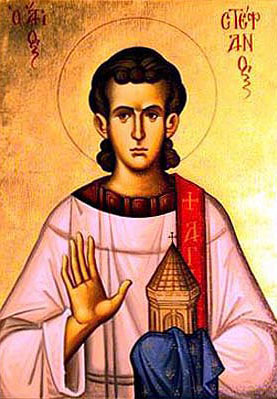
As written in the New Testament, it was the name of a deacon who was stoned to death for his beliefs and is regarded as the first Christian martyr.

The designated name-day is December 26.

In the United States, Stephen currently comes in as the 192nd most popular male name, while Steven is the 104th most popular, (2008).

Other forms of the name include:

  • Stefan/Stefaan/Stëven/Stephan (Afrikaans)
  • Shtjefën/Stefan (Albanian)
  • Istfan, إصتفان, ستيف, ستيفن (Arabic)
  • Stepanos/Stepan Ստեփանոս, Ստեփան (Armenian)
  • Tcheunne (Arpetan)
  • İstfan/Stepan (Azeri)
  • Estebe/Eztebe (Basque)
  • Esteve (Bearnais/Catalan/Occitanian/Provençal)
  • Steven (Breton)
  • Stefan Стефан (Bulgarian: Stefcho Стефчо is a diminutive form)
  • Stjepan (Croatian/Serbian: diminutive forms are Stipe and Stipo).
  • Štěpán/Štefan (Czech)
  • Stephen/Stefan/Stephan (Danish)
  • Steven/Stefaan/Stefanus/Stefan/Stephan (Dutch: Stef is a common Dutch diminutive form)
  • Tehvan (Estonian)
  • Sitiveni (Fijian)
  • Tahvo/Teppo (Finnish)
  • Tapani (Finnish)
  • Étienne (French: classic form)
  • Éstienne (French: medieval form)
  • Stéphane (French: more modern form)
  • Steffen (Frisian: used in Germany, Holland, Norway and Denmark)
  • Estevo (Galician)
  • Stefan/Stephan (German)
  • Stephanos Στέφανος (Greek)
  • Kepano/Kiwini (Hawaiian)
  • István (Hungarian: Pisti, Pisto and Isti. 30th most popular male in Hungary, 2008)
  • Stefán (Icelandic)
  • Steephan (Indian)
  • Steafán/Stiofán (Irish: Gaelic)
  • Stefano (Italian)
  • Stefanino/Stefanio/Stenio/Steno (Italian: obscure forms)
  • Stefanus/Stephanus (Latin)
  • Stefans/Stepans/Stepons (Latvian)
  • Steponas/Stepas (Lithuanian)
  • Stefan/Stevan Стефан, Стеван (Macedonian)
  • Stiefnu (Maltese)
  • Tipene (Maori)
  • Šćepan Шћепан (Montenegrin)
  • Stefanu Стефанъ (Old Church Slavonic)
  • Stefan/Szczepan (Polish)
  • Estêvão (Portuguese)
  • Ştefan (Romanian: Fane is a diminutive form)
  • Steivan/Stiafan (Romansch)
  • Stefan/Stiven/Stepan Стефан, Стивен, Степан (Russian)
  • Istevene (Sardinian)
  • Stìobhan/Stìophan/Stèaphan (Scottish: Steenie is a Scotch diminutive form)
  • Stevan Стеван (Serbian)
  • Štefan (Slovak/Slovene)
  • Esteban (Spanish)
  • Stefan/Staffan/Stephan (Swedish: Steffo is a diminutive form)
  • Êtiên (Vietnamese)
  • Stepan ஸ்டீபன் (Tamil)
  • İstefanos (Turkish)
  • Stefan/Stepan Степан, Стефан (Ukrainian)
  • Steffan (Welsh)

Stephanie is a common feminine form, in the United States, she was one of the most popular feminine names between 1972 and 1994. She ranked in at # 6, four years in a row, between the years 1984 and 1987.

As of 2008, she ranked in as the 105th most popular female name. In other countries, her rankings are as follows:

  • # 84 (Australia, 2007)
  • # 488 (the Netherlands, 2008)

Estefanía was the 77th most popular female name in Chile in 2006.

Other feminine forms include:

  • Esteveneta (Bearnais/Occitanian)
  • Štěpánka (Czech)
  • Stefana (Dutch)
  • Etiennette (French: archaic)
  • Stéphanie (French)
  • Stefanie (German/Danish/Dutch: was a very popular name in Germany during the 1980s and 90s. Germ: SHTEH-fah-nee; Dutch (STAY-fah-nee. Steffi is a common German diminutive form.)
  • Kekepania (Hawaiian)
  • Stefánia (Hungarian)
  • Stefania (Italian/Polish/Romanian: Polish diminutive forms are Stefcia and Stefa)
  • Stefanina (Italian: obscure)
  • Stefanella (Italian: obscure)
  • Stenia/Stena (Italian: obscure)
  • Szczepana (Polish)
  • Estèva (Occitanian/Provençal)
  • Štefánia (Slovak)
  • Estefanía (Spanish)

Stevie, Steff, and Steffie are the preferred English diminutives.

Emmanuel

Gender: Masculine
Origin: Hebrew
Meaning: “God is with us.”
עִמָּנוּאֵל

The name is composed of the Hebrew elements, אֵל (‘EL), meaning “God” and עִמָּנוּ (ʻImmānū), meaning “with us”. The name is a theophoric name, mentioned in Isaiah 7:14 and Isaiah 8:8. It subsequently appears again, in the New Testament, in Matthew, which is actually a quotation of Isaiah.

In Christian tradition, the reference to Emmanuel by Isaiah is believed to be a prophesy of the coming Messiah or Christ, many Jewish scholars disagree and believe that “Emmanuel” in Isaiah is in reference to either the son of Ahaz, Isaiah or Hezekiah. Regardless, the name has been common among both communities, and among Christians, the name is often enough bestowed upon a child borne around the Christmas season.

The name came into usage in the English speaking world the 16th-century, and has always been popular in the Latin speaking countries, especially in Spain and Portugal, and to a lesser extent, France and Italy.

In 2008, the name came in as the # 146th most popular male name, while Manuel stood in as the 186th most popular. Manuel was also the 40th most popular male name in Chile, and the 15th most popular in Spain during 2006.

The above form is used in French and English. Other forms include the following:

  • Amanuel (Aramaic)
  • Imanol (Basque)
  • Manel (Catalan/Portuguese)
  • Manuel (French/German/Italian/Portuguese/Romanian/Scandinavian/Spanish)
  • Emanuel (German/Czech/Dutch/Polish/Romanian/Scandinavian/Serbo-Croatian/Slovene)
  • Immanuel עִמָּנוּאֵל (German/Finnish/Hebrew)
  • Emmanouil Εμμανουηλ/Manouel Μανουηλ (Greek: Modern)
  • Manolis / Μανόλης (Greek: Modern)
  • Emánuel/Immánuel (Hungarian)
  • Emmanúel (Icelandic)
  • Imanuel (Indonesian)
  • Emanuele (Italian)
  • Emanuello (Italian: obscure)
  • Manuele (Italian)
  • Emmanuhel (Latin)
  • Emanuelis (Lithuanian)
  • Manwel (Maltese)
  • Manoel (Portuguese: Brazilian)
  • Enmanuèl (Provencal)
  • Manuèl (Provencal)
  • Immanuil Иммануил (Russian/Ukrainian)
  • Manolo (Spanish)

Feminine forms are:

  • Emmanuelle (French)
  • Manuela (German/Italian/Portuguese/Romanian/Spanish)
  • Emanuela/Emanuella (Italian)
  • Manwela (Maltese)
  • Manoela (Portuguese: Brazilian)
  • Emanuela (Spanish/Polish/Portuguese)
  • Emanuelita/Manuelita (Spanish/Portuguese: initially diminutives forms, used as independent given names)
  • Manola (Spanish/Portuguese)

Its designated name-days are March 26 (Finland/Italy/Sweden) and on December 25 (France)

Popular French diminutives are Manu (for both male and females) and Émane (Female), the English is usually Manny.

Adam

Gender: Masculine
Origin: Hebrew
Meaning: “man”

The name is found in the Old Testament as the name of the first man created by God. Whether Adam is used as a personal name or in a generic sense is up to debate, many Biblical scholars agree that the authors of Genesis were not using Adam as a personal name, but more of a generic term.

Though in modern Semitic languages, the modern word for man is many times Adam, or Ben-Adam (son of Adam), its actual etymology is also debated. Some believe it is ultimately derived from the Hebrew אדם (‘adam) meaning “red” referring either to human skin tone, or to the colour of earth, which in the Bible, is what God created Adam from. Other sources suggest that it may be related to an Akkadian source, Adamu, meaning “to make.”

The name is a popular choice among Christians, Jews and Muslims alike. In Europe, it has been in use since the early Middle Ages. Among Christians, Christ is often given the title of the “New Adam.”

Its designated name-day, along with Eve, is usually December 24.

Currently, Adam is the # 78th most popular male name in the United States. In other countries, his rankings are as follows:

  • # 35 (Australia, 2007)
  • # 28 (Belgium, 2006)
  • # 47 (Canada, BC, 2008)
  • # 8 (Czech Republic, 2008)
  • #32 (England/Wales, 2008)
  • # 34 (France, 2006)
  • # 7 (Hungary, 2008)
  • # 7 (Ireland, 2008)
  • # 10 (Israel, among Muslim boys, 2004)
  • # 1 (Israel, among Druze boys, 2004)
  • # 76 (the Netherlands, 2008)
  • # 6 (Northern Ireland, 2009)
  • # 19 (Scotland, 2008)
  • # 75 (Spain, 2006)
  • # 28 (Sweden, 2007)

In addition, the Adam form is also used in Armenian, Bulgarian, Catalan, Croatian/Serbian, Czech, Danish, Dutch, German, Icelandic, Polish, Romanian, Slovakian and Slovenian.

Other forms of the name include:

  • Adami (Albanian)
  • Ādam آدم (Arabic)
  • Adəm (Azeri)
  • Adame (Basque)
  • Adem (Bosnian/Kurdish)
  • Aadam (Estonian)
  • Ádam (Faroese)
  • Aadam/Aatami (Finnish)
  • Adám Αδάμ (Greek)
  • Akamu (Hawaiian)
  • ʼĀḏām אָדָם (Hebrew: Modern)
  • Ádám (Hungarian)
  • Ádhamh/Ádam (Irish)
  • Adamo (Italian)
  • Adamus (Latin)
  • Ādams (Latvian)
  • Adomas (Lithuanian)
  • Adamu (Old Church Slavonic)
  • Adão (Portuguese)
  • Aden/Adom (Romansch)
  • Adam Адам (Russian/Ukrainian)
  • Adàmu (Sardinian)
  • Addamu (Sicilian)
  • Aadam (Somalian)
  • Adán (Spanish, ah-DAHN)
  • Adan (Tagalog)
  • Âdem (Turkish)
  • Odam (Uzbek)
  • Adda (Welsh)

A feminine version is the Spanish and Scotch, Adamina.

A Polish diminutive form is Adaš