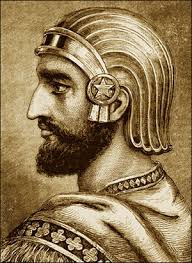
Donald

Gender: Masculine
Origin: Scottish
Meaning: “world ruler.”

The name is composed of the Scots Gaelic elements dumno (world) and val (ruler). The name has always been very popular in Scotland and was borne by two different Medieval Scottish kings.

It is currently the 377th most popular male name in the United States, (2010).

Other forms of the name include:

  • Donald (Breton/French/German/Polish)
  • Donal/Donál (Irish)
  • Domhnall (Irish)
  • Domnall (Irish)
  • Domnall/Domnhall (Scottish)

Common nicknames are Don, Donnie and Dolly.

Scottish feminine forms are Donaldina, Donella and Dolina.

Source

  1. http://www.behindthename.com/name/donald


Lawrence

Gender: Masculine
Origin: Latin
Meaning: “from Laurentum.”
Eng (LAW-rents)

The name is derived from the Latin cognomen Laurentius meaning “from Laurentum.” It was popularized by an early Roman deacon, martyr and saint who was roasted alive when he refused to turn over church property to the Roman authorities. According to legend, he is the patron saint of comedians because when he was being roasted he told his torturers “turn me over, I am done on this side.”

It was borne by several other saints.

Lawrence has been a popular given name since Medieval times and it consistently appeared in the U.S. top 100 from 1880-1971. By 1972 it mysteriously and suddenly fell completely out of popularity and it has been so since. It is currently only the 457th most popular male name, (2010).

Other forms include:

  • Nadja/Nadjeh (Arabic: used among Arab Christians)
  • Toufiq  لورنس (Arabic: used among Arab Christians)
  • Loren (Aragonese)
  • Lorient (Aragonese)
  • Lari (Basque)
  • Lawrencij Лаўрэнцій (Belarusian)
  • Laorañs (Breton)
  • Llorenç (Catalan)
  • Larenzu (Corsican)
  • Lovrenco (Croatian)
  • Lovre (Croatian. Currently the 58th most popular name in Croatia, 2010)
  • Lovro (Croatian)
  • Vavřinec (Czech/Slovak: literally from the Czech word for laurel, it has been used as the proper cognate for Lawrence since Christianity was introduced to the area)
  • Laurits/Lauritz (Danish/Estonian/Icelandic/Norwegian)
  • Lasse (Dutch/Norwegian/Swedish. LAHS-se)
  • Laurens (Dutch)
  • Loris (Dutch/French/German/Italian. Currently the 100th most popular male name in France, 2009)
  • Rens (Dutch. Currently the 79th most popular male name in the Netherlands)
  • Larkin (English: a Medieval diminutive form of Lawrence)
  • Lauri (Estonian/Finnish)
  • Lars (Finnish/Norwegian/Swedish. Currently the 14th most popular male name in the Netherlands, the 23rd most popular in Belgium and the 57th most popular in Norway)
  • Lassi (Finnish)
  • Laurent (French)
  • Laurentin (French)
  • Lourens (Frisian)
  • Labhrás (Gaelic) 
  • Loenso (Genovese)
  • Laurenzius (German: archaic)
  • Lenz (German)
  • Lorenz (German)
  • Lavrentios Λαυρεντιος (Greek)
  • Lőrinc (Hungarian)
  • Lárus (Icelandic)
  • Lorenzo (Italian/Spanish. Currently the 5th most popular male name in Italy and 52nd most popular in France (2009). It is also the 187th most popular in the Netherlands and the 322nd most popular in the United States, 2010)
  • Laurentius (Latin)
  • Lau (Limburgish)
  • Lor (Limburgish)
  • Laurynas (Lithuanian)
  • Lawrenz (Maltese)
  • Laurys (Manx)
  • Louothains (Norman)
  • Lavrans (Norwegian)
  • Laurenç (Occitanian)
  • Lleurant (Occitanian)
  • Laurencjusz (Polish)
  • Laurenty (Polish)
  • Wawrzyniec (Polish: literally from the Polish word for laurel, it has been used as the proper cognate for Lawrence since Christianity was introduced to the area)
  • Lourenço (Portuguese)
  • Laurențiu (Romanian)
  • Lavrentie (Romanian)
  • Lurintg (Romansch)
  • Lavrenti Лаврентий ლავრენტი (Russian/Georgian)
  • Larentu (Sardinian)
  • Labhrainn (Scottish)
  • Lovrenc (Slovene)
  • Laurisch (Sorbian)
  • Lorencio (Spanish: Medieval)
  • Lorens (Swedish)
  • Lavrentij Лаврентій (Ukrainian)
  • Lorenso (Venetian)
A common English diminutive is Larry a less common one Laurie
  • Toufiqia (Arabic)
  • Laurendia (Basque)
  • Laurenza (Corsican)
  • Laurenzia (Corsican)
  • Laurentien (Dutch)
  • Renske (Dutch)
  • Laurence (French)
  • Laurentine (French)
  • Lavrentia Λαυρεντία (Greek)
  • Lorentina (Italian)
  • Lorenza (Italian/Spanish)
  • Lorenzina (Italian)
  • Larentia (Latin)
  • Laurentina (Latin)
  • Laurencja (Polish)
  • Laurentyna (Polish)
Source

Cynthia

Gender: Feminine
Origin: Greek Κυνθια
Meaning: “of mount Cynthos.”
(SIN-thee-ə)

The name was used in ancient Greece as an epithet for the goddess Artemis as she was said to be born on Mount Cynthos in Greece. In the English-speaking world, this was not used as a given name until after the Renaissance when many Greek mythological names were brought to the forefront as proper English given names.

Currently, Cynthia is the 380th most popular female name in the United States, (2010).

Other forms of the name include:

  • Cynthia (Dutch/English/French/German)
  • Cynthie (French)
  • Kynthia Κυνθία (Greek)
  • Cinzia (Italian)
  • Zinta (Latvian)
  • Cyntia (Polish)
  • Cíntia (Portuguese)
  • Ciniza (Slovene)
  • Cintija (Slovene)
  • Cintia (Spanish/Italian)

In English, Dutch and German, Cindy or Cindi are the default nicknames.

Source

  1. http://www.behindthename.com/name/cynthia

Salvador

Gender: Masculine
Origin: Spanish
Meaning: “savior.”

The name is derived from the Spanish word for Savior and is used in honour of Christ. It is currently the 457th most popular male name in the United States, (2010). Its Italian cognate of Salvatore is the 895th most popular male name in the United States, (2010).

Other forms of the name include:

  • Sotir (Albanian)
  • Gaizka (Basque)
  • Salbatore (Basque)
  • Xalbador/Xalba (Basque)
  • Salvador (Catalan/Spanish)
  • Saveur (French: archaic)
  • Salvatore (Italian)
  • Salvator (German/Latin)
  • Sotirios  Σωτήριος (Greek)
  • Sauvaire (Occitanian)
  • Salwator (Polish)
  • Sarbadore (Sardinian)
  • Sarbaturi (Sicilian)
Common diminutives used especially among Italian-Americans are: Sal and Tory.

Feminine forms include:

  • Salvatrice (Italian)
  • Salvatorica (Italian)
  • Salvatorina (Italian)
  • Torella (Italian)
  • Torina (Italian)
  • Salvatrix (Latin)
  • Salvadora (Spanish)
Source


Orion

Gender: Masculine
Origin: Greek Ωριων
Meaning: “boundary; limit.”
Eng (o-RIE-ən)

The name is believed to be derived from the Greek, ‘οριον (horion) meaning, “boundary; limit.” In Greek mythology, it was borne by a great huntsman and a favorite companion of Artemis. Zeus turned him into a constellation.

Currently, Orion was the 466th most popular male name in the United States, (2010). Other forms of the name include:

  • Orioni ორიონი (Albanian/Georgian)
  • Orió (Catalan)
  • Orion Ωρίων (English/Greek/Polish)
  • Órión (Hungarian)
  • Orione (Italian)
  • Orions (Latvian)
  • Orionas (Lithuanian)
  • Órion (Portuguese)
  • Orionte (Portuguese)
  • Orión (Spanish)
The name was borne by an early Christian Greek martyr and in recent history it was borne by Orion Clemens (1825-1897), the first and only Secretary of Nevada Territory and the brother of Mark Twain.
The designated name-day is May 16 (Poland).
Source

Gideon

Gender: Masculine
Origin: Hebrew גִּדְעוֹן

The name name could either be Hebrew for “destroyer” or “tree feller.” It is borne in the Old Testament by one of the Hebrew Judges, (Judges 6–8). He is also mentioned in Epistle to the Hebrews: Chapter 11 as an example of a man of faith.

In the Book of Mormon, it is borne by a powerful Nephite leader.

Regarded as a saint in the Catholic Church, it was occasionally used as a given name in Medieval England, but exploded in popularity after the Protestant Reformation, especially in Germany and the Netherlands.

Currently, Gideon is the 461st most popular male name in the United States and the 496th most popular in the Netherlands, (2010).

Other forms of the name include:

  • Gideon Гидеон (Afrikaans/Dutch/English/Estonian/German/Scandinavian/Serbian)
  • Gedeó (Catalan)
  • Gédéon (French)
  • Gid’on גִּדְעוֹן (Hebrew)
  • Gedeon Гедео́н (Hungarian/Polish/Russian)
  • Gedeone (Italian)
  • Gideonas (Lithuanian)
  • Gideão (Portuguese)
  • Gedeón (Spanish)
The name was borne by the first discoverer of the dinosaur, Gideon Mantell (1790-1852).
Common English diminutives are Gid and Giddy.
Source


Solomon

Gender: Masculine
Origin: Hebrew שְׁלֹמֹה
Meaning: “peace.”

The name is borne in the Old Testament by son of David and the King of Israel. He is credited as being the author of Proverbs, the Song of Solomon and Ecclesiastes. In the Talmud he is considered one of the 48 prophets. In Jewish and Christian tradition he is viewed as a wise and holy king but had fallen from grace due to his ego and his marriage to hundreds of foreign wives who led him astray from God. In the Qu’ran, Solomon is a prophet and a messenger from Allah, he is the only one who was ever able to control the djinn with his magical incantations.

The name has always been a popular one among Jews, Muslims and Eastern Orthodox Christians, but has never really been common in the English-speaking world, even after the Protestant Reformation. Currently, Solomon is the 467th most popular male name in the United States, (2010).

Other forms include:

  • Salomo (Afrikaans/Dutch/Finnish/German/Scandinavian)
  • Salomon (Albanian/Croatian/Finnish/French/Polish/Scandinavian/Ukrainian)
  • Sulayman  سليمان (Arabic)
  • Salamon Саламон (Belarusian)
  • Sulejman (Bosnian)
  • Suljo (Bosnian)
  • Solomon Саламон (Bulgarian/English/Macedonian/Romanian/Russian/Serbian)
  • Salomó (Catalan)
  • Šalomoun (Croatian)
  • Saalomon (Estonian)
  • Sálomon (Faroese)
  • Solamh (Gaelic)
  • Solomoni სოლომონი (Georgian)
  • Shlomo שְׁלֹמֹה (Hebrew)
  • Salamon (Hungarian/Occitanian)
  • Silêman (Kurdish)
  • Salomone (Italian)
  • Shelomo (Ladino)
  • Salamans (Latvian)
  • Zālamans (Latvian)
  • Saliamonas (Lithuanian)
  • Sjelomo (Norwegian: archaic)
  • Szlomo (Polish-Yiddish)
  • Salomão (Portuguese)
  • Šalamún (Slovak)
  • Suleymaan (Somalian)
  • Salomón (Spanish)
  • Sөlәjman Сөләйман (Tatar)
  • Süleyman (Turkish)
  • Selyf (Welsh)
  • Zalman (Yiddish)

Common English diminutives are Sol and Solly.

A Russian feminine form which was common among Russian royalty is Solomonia.

Source

  1. http://www.behindthename.com/name/solomon

Adelaide

Gender: Feminine
Origin: Old German
Meaning: “noble kind; noble sort.”
Eng (AD-ə-layd)

An English form of the German name, Adelheid, it is composed of the Germanic elements, adel (noble) and heid (kind, sort, type). It was borne by a 10th-century saint and wife of Otto the Great.

Its popularity in the English-speaking world was sparked in the 19th-century when William IV took Adelaide of Saxe-Meiningen as his wife. As a result, several places throughout the former British Empire were named in her honour, including Adelaide, Australia.

In addition, the name has been borne by several other royal personages throughout history.

Currently, Adelaide is the 434th most popular name in the United States, (2010).

Other forms of the name include:

  • Adelgjejda Адэльгейда (Belarusian)
  • Adeljajda АдэлЯйда (Belarusian)
  • Adelaid (Breton)
  • Adelaida Аделаида (Catalan/Czech/Hungarian/Russian/Slovene/Spanish)
  • Adléta (Czech)
  • Adelaide (Danish/English/Italian/Portuguese/Swedish)
  • Alhed (Danish)
  • Adelheid (Dutch/Finnish/German/Norwegian)
  • Adelheidis (Dutch)
  • Aleida (Dutch/German)
  • Alida (Dutch/Hungarian/Latvian)
  • Aadelheide (Estonian)
  • Alide (Estonian)
  • Adélaïde (French)
  • Alette (French/Norwegian)
  • Aleit (Frisian)
  • Elke (Frisian)
  • Talea (Frisian)
  • Tale (Frisian)
  • Talia/Thalia (Frisian)
  • Talisa (Frisian)
  • Talke/Thalke (Frisian)
  • Adelaira (Galician)
  • Delaira (Galician)
  • Alheit (German)
  • Alke (German)
  • Heide (German)
  • Heidi (German)
  • Adina (Hungarian)
  • Aletta (Hungarian/Italian)
  • Alett (Hungarian)
  • Alitta (Hungarian)
  • Adelasia (Italian: archaic)
  • Aalis (Medieval French)
  • Alides (Norwegian: archaic)
  • Adalais (Occitanian)
  • Asalais or Azalaïs (Occitanian)
  • Ahlheid (Plattdeutsch)
  • Ahlheit (Plattdeutsch)
  • Adelajda (Polish)

Common English diminutives are: Addie, Del and Lady.

The designated name-days are: January 30 (Poland), February 5 (Poland), December 12 (Poland), December 16 (Estonia/Germany/Poland), December 17 (France).

Source

  1. http://www.behindthename.com/name/adelaide

Sarai

Gender: Feminine
Origin: Hebrew
The name is found in the Old Testament (Genesis 17:15) as the original name of Sarah before it was changed by God. It is believed to be derived from a Hebrew source meaning “contentious.”
Currently, Sarai is the 422nd most popular female name in the United States, (2010). It is rather popular among the Hispanic-American community.
Other forms of the name include:
  • Saraj (Czech/Polish. sah-RYE)
  • Saarai (Finnish)
  • Saraï (French. SAH-HRAH-EE)
  • Sárai (Hungarian. SHAH-rye)
  • Szárai (Hungarian. SAH-rye)
Source

Cyrus

Gender: Masculine
Origin: Persian

The name is found in History and in the Old Testament as the name of one of the most powerful leaders who ever lived, Cyrus the Great (c. 600 BC or 576 BC–530 BC). He was a conqueror of the Babylonians and who, according to the Bible, freed the captive Jews, allowing them to return to their homeland. It is also borne by several other Persian kings.

Cyrus, in its Persian form, has always been a popular male name in Iran. In the English-speaking world, it did not catch on until after the Protestant Reformation. Currently, Cyrus is the 488th most popular male name in the United States, (2010). The name is commonly used among Iranian-Americans, due to it being such a classic name in Iran and the fact that it is easily translatable to English.

As for its etymology, general consensus agrees that it may derive from the ancient Persian elements khor (sun) and vash (likeness). However, the noted linguist, Karl Hoffman (1915-1996), argued that it is based on an Indo-European root meaning “to humiliate.”

Other forms of the name include:

  • Kores (Afrikaans)
  • Kyowros Կյուրոս (Armenian)
  • Ciru (Asturian)
  • Kir Кир (Azeri/Belarusian/Bosnian/Bulgarian/Croatian/Kyrgyz/Polish/Russian/Rusyn/SerbianUkrainian)
  • Kuir (Basque)
  • Ziro (Basque)
  • Kirus (Breton)
  • Cir (Catalan/Occitanian)
  • Kýros (Czech/Icelandic/Slovak/Slovene)
  • Cyrus (Dutch/English/French/Latin/Polish/Romanian)
  • Kyros Κυρος (Estonian/German/Greek/Scandinavian)
  • Kyyros (Finnish)
  • Cyr (French)
  • Syrus (Frisian)
  • Cíoras (Gaelic)
  • K’iros კიროს (Georgian)
  • Koresh כּוֹרֶשׁ (Hebrew)
  • Círus/Cýrus (Hungarian)
  • Kurus (Hungarian)
  • Cirino (Italian)
  • Ciro (Italian. CHEE-ro)
  • Cirotto (Italian)
  • Kurushi Куруши (Kyrgyz)
  • Kûruşê (Kurdish)
  • Kīrs (Latvian)
  • Kyras (Lithuanian)
  • Kurusy (Malay)
  • Kurush/Kourosh کوروش‎ (Persian)
  • Ciro (Spanish/Portuguese. SEE-ro; THEE-ro)
  • Kiros (Turkish)
The designated name-days are: January 31 (Poland) and September 12 (Poland).
The name has several feminine offshoots, including Cyra, (Eng. SY-rah), which was a popular female name during the Byzantine empire and the Russian, Kira (KEER-ah). Kira  is currently the 90th most popular female name in Hungary, (2010) and the 308th most popular in the United States, (2010). Other feminine forms include:
  • Kira Кира (Bulgarian/German/Hungarian/Latvian/Polish/Russian/Ukrainian)
  • Cyra (English/Latin/Polish)
  • Kiira (Estonian/Finnish)
  • Kyra (Greek/English)
  • Kíra (Hungarian)
  • Cira (Italian/Spanish)
  • Cirina (Italian)
The designated name-days for Kira are: March 10 (Latvia), March 12 (Russia), July 7 (Poland), October 12 (Latvia). November 7 (Estonia).
Source