Elisha

Gender: Masculine
Origin: Hebrew אֱלִישַׁע
Meaning: “my God is salvation”
Eng (ee-LIE-shah)

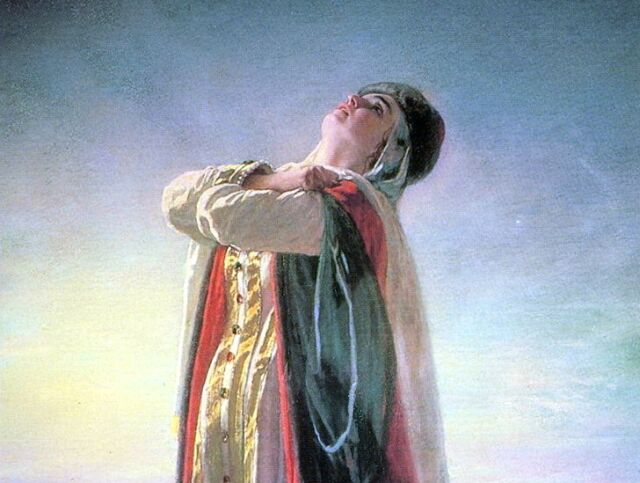
The name comes from the Hebrew (Elishu’a)  אֱלִישׁוּעַ and is found in the Old Testament and in the Quran as the name of a prophet and successor to Elijah.

In the English-speaking world, the name did not become common until after the Protestant Reformation.

Currently, Elisha is the 656th most popular male name in the United States, (2010).

Other forms of the name include:

Elyasa  الْيَسَع‎ (Arabic)
Eliseu (Catalan/Portuguese)
Elíša (Czech)
Elisa (Dutch/Finnish/Swedish: obscure)
Élisée (French)
Elise ელისე (Georgian)
Elischa (German)
Elisäus (German)
Elisaίos Ελισαίος (Greek: modern)
Eliseo (Italian/Spanish)
Eliseus (Latin)
Eliziejus (Lithuanian)
Elisie Елисие (Macedonian)
Elisja (Norwegian)
Elizeusz (Polish)
Elisei (Romanian)
Elisej Елисей (Russian)
Elizeus (Slovene)
Jelisej Јелисеј (Serbian)
Elyesa (Turkish)
Yelyséj Єлисе́й (Ukrainian)

The designated name day is June 14.

Source

  1. http://www.behindthename.com/name/elisha

Sylvia

Gender: Feminine
Origin: Latin
Meaning: “wood; forest.”
(SIL-vee-ah)

The name is a feminine form of Silvius, which is derived from the Latin silva meaning, “wood; forest.”

In Roman legend it was borne by the mother of Romulus and Remus (the founders of Rome), Rhea Silvia. It has been suggested that at one time she have been worshipped as a minor forest diety.

It was also borne by a 6th-century Italian saint credited as being the mother of St. Gregory the Great.

Before the 16th-century, Silvia’s usage was relegated to continental Europe, it gained notoriety in England after being used by Shakespeare in his 1594 play, The Two Gentleman of Verona. 

The spelling of Sylvia has been the standard in the English-speaking world since the 19th-century.

Currently, it is the 554th most popular female name in the United States, (2010). Her rankings in other countries are as follows:

# 61 (Spain, 2010)
# 282 (the Netherlands, 2010)

Other forms of the name include:

Sylviya Сыльвія (Belarusian)
Silviya Силвия (Bulgarian)
Sílvia (Catalan/Portuguese)
Silvija (Croatian/Lithuanian/Slovene)
Lesana (literally meaning “woods; forest” it is sometimes used as a Czech and Slovakian equivalent of Sylvia)
Silvie (Czech)
Silvia (Estonian/Italian/Romanian/Slovak/Spanish)
Sylvia (Finnish/English/German/Scandinavian)
Sylphide (French)
Sylvaine (French)
Sylviane (French)
Sylvie (French)
Szilvia (Hungarian)
Sylvía (Icelandic)
Silva (Italian/Slovene)
Silvestra (Italian)
Silvana (Italian/Hungarian/Slovene)
Silvania (Italian)
Silviana (Italian)
Silvina (Italian)
Silvietta (Italian)
Sylvi (Norwegian)
Sylwia (Polish)
Sil’vija Сильвия(Russian)
Silvena (Slovene)
Silvenka (Slovene)
Silverija (Slovene)
Silvica (Slovene)
Zülfiye (Turkish)
Síl”viya Сі́львія(Ukrainian)

Common diminutives include:

Silva/Silvinka (Czech)
Sylvette (French)
Silviuccia (Italian)
Lyya or Lyka (Russian)
Syl”va or Sylya (Russian)
Ylya (Russian) 

It is the name of a classical French ballet, Sylvia, ou La nymphe de Diane, (1876).

Sylvia is also the name of a species of warbler.

In recent years the name has been borne by American poet, Sylvia Plath (1932-1963), Queen Silvia of Sweden (b.1943)

Masculine forms include:

Silvije (Croatian)
Silvijo (Croatian/Slovene)
Silvio (Croatian/Italian/Portuguese/Spanish)
Sylvain (French)
Silvius (Latin)
Sylwiusz (Polish)
Silviu (Romanian)

Source

  1. http://www.behindthename.com/name/silvia

Rosemary, Romy

Rosemary seems to have been coined in the 19th-century, either being taken from the name of the herb or used as a combination of both Rose and Mary.

In the case of the herb, it is derived from the Latin ros marinus which literally means “dew from the sea.”

The name seems to have been especially common among Irish-Catholic families as the rose is a symbol for the Virgin Mary.

Its popularity peaked in 1946 when it was the 75th most popular female name in the United States. As of 2010, it was 720th most popular female name.

Its Germanic form of Rosemarie has spawned the diminutive of Romy, now commonly used as an independent given name in the Netherlands. As of 2010, Romy was the 55th most popular female name in the Netherlands and the 202nd most popular in France (2008).

Source

  1. http://www.behindthename.com/name/rosemary

Hezekiah

Gender: Masculine
Origin: Hebrew  חִזְקִיָהוּ
Meaning: “Yahweh strengthens”
Eng (hez-eh-KYE-ah)

The name is a transliteration of the Hebrew masculine name Chizqiyahu which is found in the Old Testament as the name of one of the kings of Judah.

The name was in usage among the Puritans and is currently the 930th most popular name in the United States (2010).

Other forms of the name include:

Ezequies (Catalan)
Ezekija (Croatian)
Hizkia (Dutch)
Hiskia (Finnish/Norwegian/Swedish)
Ézéchias (French)
Eze’kia  ეზეკია (Georgian)
Ezekias Εζεκίας (Greek)
Hiskija (German)
Chizqiyahu (Hebrew)
Ezékiás (Hungarian)
Hiszkija (Hungarian)
Ezechia (Italian/Romanian)
Ezechiasz (Polish)
Ezequias (Portuguese)
Ezekíja  Езеки́я (Russian)
Jezekija (Serbian)
Ezequías (Spanish)

Source

  1. http://www.behindthename.com/name/hezekiah

Conrad, Cord, Kurt & Koen

It sounds like it could be the name of a law firm, but all of the above are derivatives of the Germanic name Conrad.

Conrad is composed of the Germanic elements, kuoni (brave) and rad (counsel). It was borne by a 10th-century Bavarian saint, and his name has left its mark on Catholic Germany since. In fact, it was a very popular name in Medieval Germany and Konrad has seemed to have been so common that the proverb Hinz und Kunz (the equivalent of the English, Every Tom, Dick & Harry) was created.

It was also borne by several illustrious German kings and dukes.

Conrad is still a fairly common name  modern Germany and is currently rising in popularity in the United States. As of 2010, it was the 772nd most popular male name. Its Dutch diminutive form of Koen has recently appeared in the U.S. top 1000, coming in as the 940th most popular male name (2010). In the Netherlands, Koen ranks significantly higher, he is the 39th most popular male name (2010). In English, it is pronounced (KOH-en) like the common Jewish surname, while in Dutch it is pronounced (KOON).

In 2009, Konrad was the 44th most popular male name in Poland.

The once popular Kurt and the newly introduced Cord are also Germanic contractions.

Other forms of the name include the following:

Conráu (Asturian)
Korrada (Basque)
Konrad Конрад (Belarusian/Bulgarian/Estonian/Finnish/Polish/Scandinavian/Slovene/Ukrainian/Russian)
Conradí (Catalan)
Conradu (Corsican)
Konrád (Czech/Hungarian/Slovak)
Coenraad (Dutch)
Kiefer (Dutch)
Koenraad (Dutch)
Konradijn/Conradijn (Dutch)
Kuber (Dutch)
Conrad (English/French/German/Swedish)
Konradin (German: archaic)
Kunó (Hungarian)
Konráður (Icelandic)
Corrado (Italian)
Corradino (Italian: archaic)
Konrads (Latvian)
Konradas (Lithuanian)
Kondrat (Polish: archaic)
Conrado (Portuguese/Spanish)
Corràdu (Sardinian)
Currado (Sicilian)
Curradino (Sicilian)

In German, Conrad/Konrad has a plethora of diminutives such as: Cohen, Conni, Conz, Curd, Keno, Koni, Konni, Konz, Kord, Kuno and Kuntz.

Feminine forms include:

Conradine/Konradine (German/Norwegian)
Corrada (Italian)
Corradina (Italian)
Konradyna (Polish)

The designated name-days are: February 14 (Poland), February 19 (Poland), April 21 (Hungary & Poland), June 1 (Poland), August 1 (Poland), October 4 (Poland), November 12 (Estonia & Poland), November 21 (Poland) and November 26 (Poland & Germany).

Source

  1. http://www.behindthename.com/name/conrad


Mina

The name has several origins, meanings and derivatives depending on where in the world you find the bearer of the name. In the Western world, it is a female name, a contracted form of Wilhelmina and Hermina. It was always common in Germanic and Scandinavian countries, but was first introduced into the English-speaking world through Bram Stoker’s Dracula (1897).

It is also an Indian name, derived from the Sanskrit word for fish मीना , it is sometimes transliterated as Meena. In Hinduism, it is the name of the daughter of the Goddess Usha and the God Kubera.

It is also a common Persian female name, being derived from the Farsi word for “blue glass; enamel; lapis lazuli.” It also coincides with the name of a valley near Mecca, and is therefore found as feminine given name in the Arabic-speaking world. In Arabic it means “port; harbor.”

Among Coptic Christians, it is a very popular male name. It is borne by a renowned early Christian Egyptian martyr and saint, known in the Western world as St. Menas. Mīna  مينا‎‎ is its original Coptic version and according to legend, the saint’s mother heard a voice saying “amen” while praying for a pregnancy.

Currently, Mina is 41st most popular female name in Norway (2010), the 314th most popular in France (2009) and the 961st most popular in the United States (2010).

The designated name-days are: November 24 (Poland) and December 23 (Lithuania/Poland).

Other forms its masculine Egyptian counterpart include:

Menna (Catalan)
Ménas (French)
Menas (Greek)
Mena (Italian: RARE)

Source

  1. http://www.behindthename.com/name/mina-1
  2. http://www.behindthename.com/name/mina-2


Neil, Nigel

Gender: Masculine
Origin: Gaelic
Meaning: debated
Eng (NEEL)

An anglicized form of the Gaelic Niall, the name is of debated meaning, it could either mean “cloud”, “champion” or “passion.”

It was borne by Niall of the Nine Hostages, a 6th-century Irish king and eponymous ancestor of the Uí Néill clan who ruled Ireland from the 6th-century to the 10th-century.

The name caught on among Viking settlers in the form of Njal and it was brought back to Iceland and became popular in other areas of Europe with large viking settlements. It was through the Normans, (descendants of Viking settlers), that the name was first introduced to England and it came to be Latinized as Nigellus later evolving into the common British  name, Nigel.

Nigellus is actually derived from the Latin word niger (black) but was only ever used as a form of Niel. It was incorrectly believed by the early Norman clerics that the Norman form of Néel was from the Norman word for black. The common Middle English spelling was Neal.

Currently Neil is the 683rd most popular male name in the United States, (2010). Its original Gaelic form of Niall (NIE-all) is the 91st most popular male name in Ireland (2010) and the 95th most popular in Northern Ireland (2010). Meanwhile, its late Latin equivalent of Nigel is the 932nd most popular male name in the United States and the 239th most popular in the Netherlands (2010).

A feminine offshoot is the floral, Nigella, borne by British TV chef, Nigella Lawson. It is also the scientific name for the plant known as Love-in-the-Mist.

Other feminine forms include the Scottish Neilina, the Icelandic Njála and the continental Scandinavian Nilsine.

Other masculine forms include:

Nils (Danish/Swedish)
Nigel (English)
Njáll (Icelandic)
Néel (Norman)
Njål (Norwegian)

Source

  1. http://www.behindthename.com/name/neil

Carina

The name can either be a derivative of the Latin word for a ship keel, or from the Latin word carus meaning (dear), or it may be from the Italian adjective carina (nice; pretty; sweet). Or it can be a contraction of the name Catharina. It has also been suggested to be a feminine form of the Greek male name, Carinos, one of the many epithets of the God, Apollo.

A common Russian hypothesis is that it derived from the ancient Slavic name, Karna (to cry). Karna also known as Karina was the Slavic goddess of mourning and funeral rites

It is the name of a constellation in the southern sky as well as an early Greek Christian martyr. As of 2010, it was the 60th most popular female name in Austria. While in the United States, it only ranked in at #948.

Karina ranks higher in the United States, coming in at # 288 (2010).

Other forms of the name include:

Carine/Karine Կարինե (Armenian/Dutch/French)
Karina Кари́на (Bulgarian/Czech/German/Greek/Latvian/Lithuanian/Polish/Scandinavian/Ukrainian/Russian/Slovak)
Carina (Estonian/English/German/Italian/Portuguese/Romanian/Scandinavian/Spanish)
Kaarina (Finnish)
Karīna (Latvian)
Karine (Norwegian)
Karyna (Polish)

Designated name-days are: January 2 (Czech Republic), March 17 (Latvia), March 24 (Hungary), May 7 (Sweden), August 2 (Poland), November 7 (Lithuania).

Sources

  1. http://www.behindthename.com/name/karina
  2. http://www.behindthename.com/name/carina-1

Hugh, Hugo

Gender: Masculine
Origin: German
Meaning: “heart; mind; spirit
(HYOO); (HYOO-go)

The name is derived from the Germanic element, hug, meaning “heart; mind; spirit” or even “memory.” The original meaning of the name seems to refer to abstract consciousness.

It appears in Norse mythology in the form of Hugin(n), (thought), the name of one of Odin’s messenger ravens who would fly around Midgård and bring Odin messages. The other raven’s name was Muninn (memory).

It was a very popular name among the Franks and was introduced into England after the Norman invasion. It was borne by an early British saint, Hugh of Lincoln. The name’s popularity spread across the British Isles, often being Gaelicized in Ireland as Aodh and in Scotland as Ùisdean.

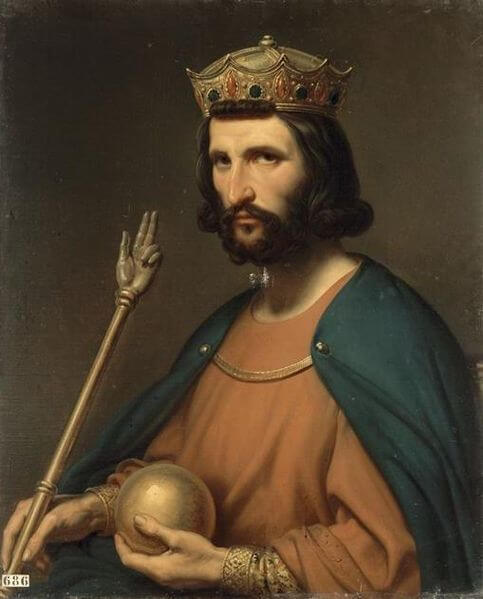
It was borne by a 10th-century French monarch, Hugh Capet, founder of the Capetian dynasty.

Hugh is currently the 963rd most popular male name in the United States, while it’s Latin cognate of Hugo ranks significantly higher at # 441. Hugo is currently a very trendy name across Europe. Its rankings in other countries are as follows:

#4 (Spain, 2010)
#6 (Sweden, 2010)
#8 (France, 2008)
# 12 (Catalonia, Spain, 2009)
#13 (Belgium, 2008)
#50 (the Netherlands, 2o1o)
#86 (Australia, NSW, 2010)

Other forms of the name include:

Hugo (Catalan/Czech/Dutch/English/Estonian/Finnish/French/German/Hungarian/Icelandic/Latvian/Polish/Portuguese/Romanian/Scandinavian/Slovak/Slovene/Spanish)
Hugh (English)
Hugues (French)
Hauke (Frisian)
Huguo (German)
Ughetto (Italian)
Ughino (Italian)
Ugo (Italian)
Ugolino (Italian)
Ugone (Italian)
Uguccione (Italian)
Hugas (Lithuanian)
Hudde/Hud (Middle English)
Huginn (Old Norse/Icelandic)
Hugon (Polish)
Ugu (Sardinian)
Shug (Scottish)
Hugolín (Slovak)
Huw (Welsh)

Common English diminutives are: Hewie and Hughie.

Feminine forms include, Huguette (French), Uga (Italian), Ughetta (Italian), Ugolina (Italian).

The designated name-days are: Febuary 3 (Estonia), April 1 (Estonia/Hungary/Poland/Slovakia), April 29 (Germany/Poland), November 3 (Sweden), November 17 (Latvia/Poland).

The rest of its bearers are too numerous to list.

Sources

  1. http://www.behindthename.com/name/hugo
  2. Ernst Förstemann, Altdeutsches namenbuch (1900), page 923

Ralph

Gender: Masculine
Origin: Old Norse
Meaning: wolf counselor
British English (RAFE); American English (RELF)

The name is derived from the Norse male name, Raðulfr, which is composed of the elements, rað (counsel) and ulfr (wolf). The name has been in usage in England since Anglo-Saxon times, due to viking settlers and remained common even after the Norman conquest. Throughout the centuries, the name has gone through an evolution. In Medieval times it was often rendered as Ralf, then by the 17th-century it was commonly spelled Rafe to reflect the proper pronunciation and by the turn of the century Ralph became a household name (pronounced RELF) in the United States. Within the United States, it was also commonly used as a diminutive form of Raphael or at least as an English equivalent by various immigrants.

The highest the name has ever ranked in U.S. naming history was between 1914 and 1917, consecutively ranking in at # 21. As of 2010, it was the 968th most popular male name. It is currently the 447th most popular male name in the Netherlands (2010).

Its Latin equivalent of Raul ranked in significantly higher, it was the 336th most popular male name in the United States (2010), the 48th most popular in Catalonia (2009) and the 32nd most popular in Spain (2010)

Other forms of the name include:

Raül (Catalan)
Rafe (English)
Ralf (English/German/Scandinavian)
Raul (Estonian/Italian/Portuguese)
Raoul (French)
Radulf (German)
Raulo (Italian)
Rault (Old French)
Raoult (Old French)
Roul (Old French)
Raðulfr (Old Norse)
Raou (Occitanian)

Raúl (Spanish)

Ralphie is a common diminutive form in the English-speaking world.

The name was borne by a 12th-century male saint. It is also borne by Ralph Waldo Emerson.

Designated name-days are: March 7 (Estonia), March 27 (Sweden) July 7 (France), August 27 (Sweden)

Raul is also the name of a volcanic island in the Kermadec archipelago.

Sources

  1. Ernst Förstemann, Altdeutsches namenbuch (1900), page 1219
  2. http://www.behindthename.com/name/ralph