Viola

Gender: Feminine
Origin: English/Italian/Latin/Scandinavian
Meaning: “violet.”
Eng (VIE-ə-lə; vee-OH-luh); It (VYOLE-lah)

The name is derived from the Latin word for violet and has been used throughout Europe since Medieval times. In the English-speaking world, it was introduced via the Shakespeare play Twelfth Night (1602). It was extremely popular in both Britain and the United States during the turn of the 20th-century, coming in as the 42nd most popular female name in 1908, (United States).

Currently, Viola is the 31st most popular name in Italian-speaking, Switzerland, (2010).

Other forms of the name include:

  • Viola (Czech/English/Finnish/German/Hungarian/Italian/Latin/Portuguese/Russian/Scandinavian/Spanish)
  • Viole (French)
  • Wiola (Polish)

Greta

Gender: Feminine
Origin: Scandinavian

The name is derived from a Scandinavian short form of Margaret and has been used as an independent given name since at least the 19th-century.

It is also the name of a river in England and in the English-speaking world, especially within Britain, the name may have been bestowed in reference to the river.

It is also the name of a genus of butterfly.

It was introduced to the English-speaking world, (specifically the United States) via Scandinavian immigrants of the 19th-century. It was further popularized in the 1930s by Swedish actress, Greta Garbo. In fact, the highest Greta ever ranked in the U.S. was in 1932 coming in as the 318th most popular female name. As of 2010, it was the 666th most popular female name in the United States, (2010)

It is the 12th most popular female name in Italian-speaking Switzerland, (2010) and her rankings in other countries are as follows:

  • # 22 (Hungary, 2010)
  • # 24 (Italy, 2010)
  • # 39 (Germany, 2011)
  • # 88 (Sweden, 2010)

Other forms of the name include:

  • Grete (Danish/German/Norwegian)
  • Grethe (Danish)
  • Greet (Dutch/Luxembourgish)
  • Greetje (Dutch)
  • Griet (Dutch)
  • Greta (English/Estonian/Faroese/Finnish/German/Icelandic/Italian/Polish/Romansch/Scandinavian)
  • Gretta (English/Romansch)
  • Gretchen (German)
  • Gretel (German)
  • Gréta (Hungarian)
  • Gryte (Lithuanian)
  • Greata (Romansch)
  • Grettina (Romansch)

The name is also borne by famed lawyer and TV host, Greta van Susteran (b.1954)

Michelle

Gender: Feminine
Origin: French

The name is derived from the French female name, Michèle, a feminine form of Michel.

The name was popularized outside of France from the 1965 Beatles ballad, Michelle. Between 1968 and 1969 the name entered the U.S. top 10, ranking in as the 2nd most popular female name in the United States. As of 2010, Michelle came in as the 125th most popular female name in America.

Michelle’s usage has spread to Scandinavia, the Netherlands, South America and German-speaking countries. She is the 26th most popular female name in Italian-speaking, Switzerland, (2010)

Her rankings in other countries are as follows:

  • # 151 (Netherlands, 2010)


Paul

Gender: Masculine
Origin: Latin
Meaning: “short; small; humble; few.”
Eng (PAWL)

The name is derived from the Latin Roman family name, Paulus, which could translate as meaning, “small, short; humble; few.”

Paul and his various forms has to be one of the most common male names used throughout the Christian world. It has been used equally among Orthodox Christians, Roman Catholics and Protestants.

Its most famous bearer was Paul of Tarsus, whose real name was Saul. St. Paul, as referred to by the Roman Catholic and Eastern Orthodox Churches, is attributed as being the author of much of the New Testament.

The name was borne by several popes, royals and saints thereafter.

Currently, its Germanic form of Paul is the 8th most popular male name in Germany, (2011). His rankings in other countries are as follows:

  • # 13 (Austria, 2010)
  • # 22 (France, 2009)
  • # 41 (Romania, 2009)
  • # 90 (Ireland, 2010)
  • # 130 (Scotland, 2010)
  • # 178 (United States, 2010)
  • # 485 (Netherlands, 2010)
His foreign equivalents rankings are as follows:
  • # 3 (Pablo, Spain, 2010)
  • # 4 (Páll, Faroe Island, 2010)
  • # 4 (Pau, Catalonia, 2010)
  • # 17 (Paweł, Poland, 2010)
  • # 26 (Pablo, Chile, 2010)
  • # 29 (Pavel, Czech Republic, 2010)
  • # 31 (Pablo, Catalonia, 2010)
  • # 44 (Pau, Spain, 2010)
  • # 91 (Pál, Hungary, 2010)
  • # 144 (Pablo, France, 2009)
  • # 202 (Paolo, France, 2009)
  • # 361 (Pablo, United States, 2010)

Other forms of the name include:

  • Pali (Albanian)
  • Paulë (Albanian)
  • Boulos/Bulos بولس (Arabic)
  • Faulus (Aramaic)
  • Boghos Պողոս (Armenian)
  • Poghos Պողոս (Armenian)
  • Paul (Basque/Dutch/English/Estonian/German/French/Romanian/Scandinavian/Silesian)
  • Paweł Павeл (Belarusian/Polish)
  • Polus (Berber)
  • Paol (Breton)
  • Pavel Павел (Bulgarian/Czech/Russian/Slovene)
  • Pavolo (Calabrian)
  • Pavulu (Calabrian)
  • Pau (Catalan/Occitanian)
  • Pawl (Cornish/Welsh)
  • Paulu (Corsican/Sardinian/Sicilian)
  • Pavao (Croatian)
  • Pavle პავლე Павле (Croatian/Georgian/Macedonian/Serbian)
  • Pavo (Croatian)
  • Palle (Danish)
  • Poul (Danish)
  • Pauwel (Dutch)
  • Paavel (Estonian)
  • Paavo (Estonian/Finnish)
  • Páll (Faroese/Icelandic)
  • Paavali (Finnish)
  • Pauli (Finnish)
  • Pol (Flemmish/Romansch)
  • Paale (Frisian)
  • Pals (Frisian)
  • Paulus पौलुस (Frisian/Hindi/Latin)
  • Pay (Frisian)
  • Powles (Frisian)
  • Pouw (Frisian)
  • Pauli (Fruilian)
  • Pódhl (Gaelic)
  • Pól (Gaelic)
  • Paulo (Galician)
  • Pavlos Παυλος (Greek)
  • Pāl पॉल (Hindi)
  • Pál (Hungarian)
  • Pósa (Hungarian)
  • Paolo (Italian/Portuguese)
  • Paolino (Italian/Portuguese)
  • Paulinus (Latin)
  • Pāvils (Latvian)
  • Paulius (Lithuanian)
  • Povilas (Lithuanian)
  • Paol (Lombard)
  • Paulose (Malayalam)
  • Pawl (Maltese)
  • Pawlu (Maltese)
  • Payl (Manx)
  • Paora (Maori)
  • Pål (Norwegian/Swedish)
  • Pavel (Romanian)
  • Paulin (Romansch)
  • Polet (Romansch)
  • Polin (Romansch)
  • Pulegn (Romansch)
  • Pàl (Scots-Gaelic)
  • Pawůł (Silesian)
  • Pavol (Slovak)
  • Pawoł (Sorbian)
  • Pablo (Spanish)
  • Paoro (Tahitian)
  • Pàul (Tuscan)
  • Pavlo Павло (Ukrainian)

For a Reference a Female forms See Paula and Paulina (soon to come)

Linus

Gender: Masculine
Origin: Greek
Meaning: debated
Eng (LIE-nus); Germ (LEE-nuws); Swe (LEE-nus)

The name is either derived from the Greek verb ailinon meaning “to whine; complain” or it could be from the Greek Λινος (linos) meaning “flax.” In the latter case, the Lithuanian male name, Linas, would share the same etymology. It was also a Roman cognomen, which may have been derived from the Greek.

In Greek mythology, the name was borne by a son of Apollo, who in some legends was accidentally killed by his own father and in other legends was the music teacher of Hercules.

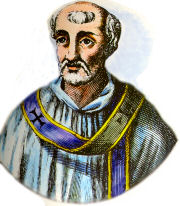
The name was also borne by the 2nd pope and saint who succeeded St. Peter.

In the English-speaking world, the name is often associated with the Charles Schulz character who appears in the Peanuts Comic strips.

The name was fairly common in 19th-century America and Britain, being borne by Linus Bacon Comins (1817-1892), a Massachusetts politician, Linus Yale, Jr. (1821-1868) a mechanical engineer, Linus Pauling (1901-1994) a famous American chemist and British actor, Linus Roache (b.1964)

Currently, Linus is the 30th most popular male name in Germany, (2011). His rankings in other countries are as follows:

  • # 44 (Sweden, 2010)
  • # 53 (Norway, 2010)

Other forms of the name include:

  • Llinu (Asturian)
  • Lin Лін Лин (Belarusian/Breton/Bulgarian/French/Piedmontese/Russian/Serbian/Slovene/Ukrainian)
  • Lli (Catalan)
  • Lino (Croatian/Galician/Italian/Portuguese/Spanish)
  • Linus (Danish/Dutch/English/Estonian/Finnish/French/German/Hungarian/Norwegian/Polish/Romanian/Swedish)
  • Líneas (Gaelic)
  • Linusi ლინუსი (Georgian)
  • Linos Λινος (Greek)
  • Línus (Icelandic)
  • Lins (Latvian)
  • Linas (Lithuanian)

Niels, Nils

Gender: Masculine
Origin: Scandinavian

The name has traditionally been attributed as being a Scandinavian form of Nicholas but has also been connected with the Celtic, Niall.

He was a very popular name in Medieval Scandinavia, being the progenitor of the surnames Nilsson, Neilson and Nilson. It was fairly common among Scandinavian royalty and nobility, being worn by King Niels of Denmark (1064-1135).

Currently, Nils and Niels are the 32nd most popular male names in Germany, (2011). Niels rankings in other countries are as follows:

  • # 37 (Netherlands, 2010)
  • # 38 (Nils, Sweden, 2010)
  • # 63 (Belgium, 2009)
  • # 276 (Nils, Netherlands, 2010)
  • # 244 (Nils, France, 2009)
  • # 489 (France, 2009)

Other forms of the name include:

  • Niels (Faroese/Danish/Dutch/German)
  • Niilo (Finnish)
  • Nils (German/Icelandic/Norwegian/Swedish)
A Danish feminine form is Nielsine.

Finn

Gender: Masculine
Origin: Old Norse or Irish
Meaning: “Finnish”, or “blonde; white; fair; bright.”
Eng/Germ/Swe (FIN)

The name could either be from the Old Norse, Finnr, meaning “Finnish” or it could be an anglicized form of the Gaelic male name, Fionn meaning, “blonde; fair; white; bright.”

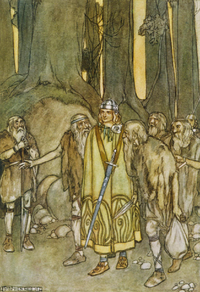
In Irish legend, the name was borne by Fionn mac Cumhail (English: Finn McCool) who became all-wise after eating a magical salmon. There are several different stories attributed to him, one of which was that his real name was Deimne but came to be known as Finn after his hair had turned prematurely white.

The name also appears in Beowulf as the name of a Frisian king.

Currently, Finn is the 4th most popular male name in Germany, (2011). His rankings in other countries are as follows:

  • # 15 (Netherlands, 2010)
  • # 35 (Fionn, Ireland, 2010)
  • # 39 (German-speaking, Switzerland, 2010)
  • # 46 (Ireland, 2010)
  • # 52 (Northern Ireland, 2010)
  • # 74 (Australia, 2010)
  • # 80 (Fionn, Northern Ireland, 2010)
  • # 81 (Scotland, 2010)
  • # 300 (United States, 2010)

Other forms of Fionn include:

  • Finnagán (Irish)
  • Finnán (Irish)
  • Fionnán (Irish)
Other forms of the Old Norse Finn, include:
  • Finn (Dutch/English/Frisian/German/Scandinavian)
  • Finnur (Faroese/Icelandic)
A feminine form is Finna.

Jonas, Jonah

Gender: Masculine
Origin: Hebrew
Meaning: “dove.”

The name is derived from the Greek, Ionas Ιωνας, a Greek form of the Hebrew name, Jonah, which is from the Hebrew יוֹנָה (Yonah) meaning, “dove.”

Jonah is found in the Old Testament in the Book of Jonah as the name of a prophet who was swallowed by a whale. His story was very popular during the Middle Ages.

Currently, its Greek translation of Jonas is one of the most popular male names in Northern Europe. He is the 5th most popular male name in Germany, (2011) and Norway (2010). His rankings in other countries are as follows:

  • # 4 (German-speaking, Switzerland, 2010)
  • # 6 (Austria, 2010)
  • # 22 (Denmark, 2010)
  • # 53 (Belgium, 2009)
  • # 154 (Netherlands, 2010)
  • # 163 (Czech Republic, 2006)
  • # 288 (France, 2009)
  • # 455 (United States, 2010)

While its original Biblical form of Jonah is far more rare, his rankings are as follows:

  • # 144 (United States, 2010)
  • # 301 (Netherlands, 2010)

Other forms of the name include:

  • Yunus يونس (Arabic/Turkish)
  • Jonàs (Catalan)
  • Jona (Croatian/Serbian)
  • Jonáš (Czech/Slovak)
  • Jonas (Dutch/English/French/German/Lithuanian/Scandinavian)
  • Joona (Finnish)
  • Joonas (Finnish)
  • Jonne (Finnish)
  • Jona (German)
  • Ionas (Greek)
  • Yonah יוֹנָה (Hebrew)
  • Jónás (Hungarian)
  • Jónas (Icelandic)
  • Giona (Italian)
  • Jonasz (Polish)
  • Iona (Romanian/Russian)
  • Jonás (Spanish)
In the Lithuanian case, this name is the Lithuanian form of John.

Max

Gender: Masculine
Origin: German

The name is a short form of any name beginning with the Max element. It has been used as an independent given name in German-speaking countries and its usage has spread elsewhere.

Its usage as an independent given name may have been popularized by the German-language tale as written by Wilhelm Busch,  Max and Moritz (1865).

Currently, Max is the 14th most popular male name in Germany, (2011). His rankings in other countries are as follows:

  • # 6 (Kazakhstan, 2010)
  • # 17 (Australia, 2010)
  • # 20 (Netherlands, 2010)
  • # 23 (England/Wales, 2010)
  • # 27 (Sweden, 2010)
  • # 32 (Scotland, 2010)
  • # 41 (Catalonia, 2010)
  • # 45 (Northern Ireland, 2010)
  • # 49 (Ireland, 2010)
  • # 51 (Austria, 2010)
  • # 70 (Norway, 2010)
  • # 71 (Canada, B.C., 2010)
  • # 98 (United States, 2010)
  • # 240 (France, 2009)

Hannes

Gender: Masculine
Origin: German/Swedish
(HAHN-nes)

The name is a contracted form of Johannes and is exclusively used as an independent given name.

It is currently the 41st most popular male name in Germany, (2011) and the 86th most popular in Sweden, (2010).

It is also used in Finland, the Netherlands and Estonia.