Basque Names….just a Subcategory of Spanish Names?

This weeks International Name Over View will focus on Basque Names.

The Basque are an ethnic group that inhabit the Pyrenees of Northwestern Spain and the bordering region of Southern France. Their language has yet to be categorized, often a topic of hot debate among Linguists. While some theorists have connected Basque from Georgian to Etruscan, the most widely accepted consensus is that Basque is closely related to the now extinct Aquitanian (spoken in France). It is in fact an indigenous European language. That is, it is not related to any of the Indo-European languages. It is considered an Isolate Language and it was most likely spoken in Europe long before the mass migration of the Indos.

Though either French or Spanish citizens, the Basque are fiercely proud of their language and culture. In the last century, there has been a strong push for autonomy. The Basque have fought hard to keep their language alive, most recently fighting oppression during the Franco regime, and are currently experiencing a revival. The Basque language is spoken by approximately 665,800 people. Not a lot, but believe it or not, the Basque and their language have actually left an impact in Spanish and even English.

Some of the more common Spanish surnames seen among Spanish-speakers are actually of Basque and not of Spanish origin. For example: Aldana, Loyola and Zuñiga.

Since the Basque were valuable in shepherding, fishing and mercantilism, a vast population of them immigrated to the Americas, leaving their imprint on modern Hispanic culture.

The country of Chile boasts Basque as their largest European ethnic group. The largest Basque-American population resides in Boise, Idaho. A fair amount of the Mexican population can claim Basque heritage to some extent.

As a result, several place names throughout the Americas are Basque, like Durango (Mexico), Nuevo Santander, (Mexico), Jalapa (Guatemala) and it is even argued that Arizona is derived from the Basque elements, aritz ona meaning “good oak.”

Our very own Xavier, which appears in the U.S. top 100 most popular male names was inspired by a Basque surname. Its usage as a given name was popularized by the notoriety of the Basque saint, Francis Xavier. Another notable Basque Saint is Ignatius of Loyola, founder of the Society of Jesus.

One of the ways that the Basque people have expressed their culture is through their first names. The Basque have a unique array of names, one feature that seems unique among them is their usage of place names. Unlike Anglo-phone parents who tend to use place names because of “cuteness”  or sonority, the Basque use place names due to religious significance. Basque culture has a strong emphasis on Catholicism, so any place or thing associated with the Virgin Mary is often used as a given name.

For a good idea of what the Basque in Spain are currently naming their children, check out the Top 10 listed below:

Top 10 Male Names in Basque Country, Spain 2008

Mikel

Pablo

Iker

Aimar

Asier

Unai

Iñigo

Javier

Aitor

Adrián

Top 10 Female Names in the Basque Country, Spain 2008

Lucía

Paula

Irati

Nahia

Uxue

Leyre

Sara

María

Ane

Ainhoa/Aitana

Mikel, Pablo, Adrián, Iñaki, Sara, María, Ane, Lucía and Paula are all derived from Biblical or saints names.

Aitor (good fathers) is a name taken from Basque folklore, he is believed to have been the first man and the progenitor of the Basque people.

Iker is the vernacular form of Visitación, an unusual Spanish name used in reference to the Virgin Mary (Our Lady of the Visitation). This is the same case with the female Irati, which is a place-name associated with a shrine to the Virgin Mary, which literally means “fern field”; and Uxue taken from the name of a Catholic shrine, but is also associated with the Basque word for dove. Ainhoa is a religious place-name name and even appears in the Spanish Top 100, coming in as the 31st most popular female name in all of Spain. Aitana is a Spanish place-name of unknown meaning. Leyre is the Spanish form of Leire, the name of a place in the Basque country associated with a Catholic monastery.

Nahia is from a Basque word meaning, “wish; desire.”

Unai is an indigenous Basque name with no Spanish or English equivalent, meaning “cowherd.”

Asier is from the Basque hasiera meaning “beginning.”

I have yet to find any information on Aimar, but subsequent searches led me to several notable Basque bearers, so I am assuming that he is Basque too. If anyone has anymore info on him, please step forward 🙂

You might be one of the many Latinas or Americans who claim Basque heritage, or perhaps you are just looking for a cool and different name that is actually legitimate. Below are a list of names I have compiled for the Anglo-phone parent. Basque names that would be easy for an English-speaking child to wear. Enjoy 🙂

Easy to say Basque alternatives to common English names

Instead of Caitlin try Catalin

Instead of Emma try out Ama

Instead of Madison or Madelyn, you might like Maialen or Malen

Like Olivia, try Olaria

Loving Ella, then you might like Elaia (swallow)

Considering Hannah well you just might like Oihana (forest)

Like Nevaeh check out Nerea

Here is a selection of Basque names compatible with English:

Female

  • Alaia (joyful; happy)
  • Amaia (end)
  • Elixane (Elise)
  • Esti (Sweet; honey)
  • Garden (transparent; clear)
  • Julene (Juliana)
  • Katerin (Catherine)
  • Lilura (enchantment)
  • Lorea (flower)
  • Maia (Maddie)
  • Miren (Mary)
  • Naiara
  • Nora
  • Oria
  • Pauli
  • Semera
  • Zerran
  • Zilia

Male

  • Adon
  • Bingen (Vincent)
  • Denis (Dennis)
  • Eder (beautiful)
  • Erroman (Raymond)
  • Gabon (Christmas)
  • Harri (rock)
  • Hartz (Bear)
  • Igon (Ascension)
  • Jurdan (Jordan)
  • Kelemen (Clement)
  • Kemen (Strength)
  • Lain
  • Luken (Luke)
  • Manex (John)
  • Zorion (happy)

Basque Equivalents to Common English Given Names

Female

  • Alize (Alice)
  • Ane (Anna)
  • Elixabete (Elizabeth)
  • Estebeni (Stephanie)
  • Fede (Faith)
  • Gartxene (Grace)
  • Itxaro (Hope)
  • Kalare (Claire)
  • Lili (Lily)
  • Mikele (Michaela)
  • Mixtoleta (Poppy)
  • Nikole (Nicole)
  • Hirune/Irune (Trinity)
  • Udane (Summer)
  • Udazken (Autumn)

Male

  • Adame (Adam)
  • Alesander (Alexander)
  • Danel (Daniel)
  • Edorta (Edward)
  • Eli (Elias)
  • Gabirel (Gabriel)
  • Gilen (William)
  • Handi (Max)
  • Ixaka (Isaac)
  • Jakes (Jacob)
  • Jon (John)
  • Marz (Mark)
  • Nikola (Nicholas)
  • Txomin (Dominic)
  • Xabier (Xavier)
  • Xarles (Charles)

What are your favorite Basque names? Would you use any of the above?

Sources

  1. http://www.behindthename.com/
  2. http://www.people.fas.harvard.edu/~witzel/mt26s.html
  3. http://www.ei.ehu.es/p056-12532/eu/contenidos/informacion/grammar_euskara/en_doc/index.html
  4. http://www1.euskadi.net/morris/resultado.asp
  5. http://www.euskarakultur.org/
  6. http://www.eke.org/euskara/
  7. http://basque.unr.edu/

Philip

Gender: Masculine
Origin: Greek
Meaning: “lover of horses.”
ENG (FIL-ip)

The name is derived from the Greek Philippos (Φίλιππος), which is composed of the Greek elements φιλος (philos) meaning “friend; lover” and ‘ιππος (hippos) meaning “horse.”

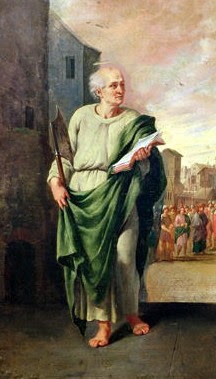
The name was borne by several illustrious characters throughout history, including Philip of Macedon (the father of Alexander the Great), an apostle of Jesus, several early saints and several French monarchs.

The name has been popular in England since the Middle Ages and never really went out of fashion, even after the Reformation. Though in the United States, he ranks rather low, coming in as the # 378th most popular male name, his rankings in other countries are as follows:

  • # 3 Filip (Croatia, 2009)
  • # 5 Filip (Czech Republic, 2009)
  • # 44 Philip (Denmark, 2009)
  • # 4 Filip (Faroe Islands, 2009)
  • # 18 Philip/Philipp (Germany, 2009)
  • # 95 Filip (Ireland, 2008)
  • # 18 Filippo (Italy, 2007)
  • # 42 Filip (Norway, 2009)
  • # 80 Philip (Norway, 2009)
  • # 7 Filip (Poland, 2008)
  • # 10 Filip (Serbia, 2009)
  • # 26 Filip (Slovenia, 2005)
  • # 24 Filippo (Switzerland, among Italian-speakers, 2008)
  • # 11 Filip (Sweden, 2009)

Other forms of the name include:

  • Philippus (Afrikaans/Latin)
  • Philip Філіп (Belarusian/English/Scandinavian)
  • Fulub/Fulup (Breton)
  • Filip ФилипBulgarian/Croatian/Czech/Dutch/Finnish/Hungarian/Macedonian/Polish/Russian/Romanian/Romansch/Scandinavian/Slovak/Slovene
  • Felip (Catalan)
  • Filippus (Dutch)
  • Philipp (Estonian/German)
  • Vilpas (Finnish)
  • Vilppi/Vilppo/Vilppu (Finnish)
  • Philippe (French)
  • Filipe (Galician/Portuguese)
  • P’ilip’e ფილიპე (Georgian)
  • Filippos Φιλιππος (Greek: Modern)
  • Philippos Φίλιππος (Greek: Ancient)
  • Fülöp (Hungarian)
  • Pilib (Irish-Gaelic)
  • Filippino (Italian: obscure)
  • Filippo (Italian)
  • Filips (Latvian)
  • Pilypas (Lithuanian)
  • Piripi (Maori)
  • Felip (Occitanian)
  • Filippu Фїліппъ (Old Church Slavonic)
  • Felipe (Portuguese/Spanish)
  • Flep (Romansch)
  • Filipp Филипп (Romansch/Russian)
  • Filib (Scottish-Gaelic)
  • Pylyp Пилип (Ukrainian)
  • Fiłipo (Venetian)
  • Ffilip (Welsh)

Dutch diminutives are Flip and Flupke
English short forms are Pip and Phil
French diminutives include: Flit, Flitou, Phil, Philou and Pip
German short forms are Phil and Lips
Italian short forms are: Filo, Firpo, Lippo and Pippo
Polish diminutive is Filipek

Feminine versions include:

  • Filipa Филипа (Breton/Croatian/Polish/Portuguese/Serbian/Slovene)
  • Filippa Филиппа Φιλιππα (Danish/Finnish/Greek/Hungarian/Icelandic/Italian/Russian/Norwegian/Swedish)
  • Philippa (English/German)
  • Pippa (English: originally a diminutive form now occasionally used as an independent given name)
  • Philippina (German: obscure)
  • Hilppa (Finnish)
  • Philippine (French)
  • Filippina (Italian)
  • Filipina (Polish)
  • Felipa (Spanish)

Filippa is the 51st most popular female name in Sweden, (2009)

The name is currently borne by British Monarch, Prince Philip, Duke of Edinburgh (b.1921).

The designated name-day is May 3rd.

Sources

  1. http://www.askoxford.com/firstnames/philip?view=uk
  2. http://www.behindthename.com/php/find.php?name=philipp

Matthias, Mathias

Gender: Masculine
Origin: Hebrew
Meaning: “gift of yahweh.”
Eng (muh-THIGH-us); Germ/Scand (mah-TEE-ahs)

Matthias is a form of Matthew, but has been treated as a different name for centuries. He has been a staple in Central and Northern Europe, especially in Germany, the Netherlands and Scandinavia.

In the New Testament, the name was borne by the replacement of Judas Iscariot. Matthias was considered an apostle and according to legend, he went on to convert the Georgians where he died a martyr by crucifixion.

He is currently one of the most popular male names in all of Europe, his rankings are as follows:

  • # 8 Mathis (Belgium, 2008)
  • # 13 Matyáš (Czech Republic, 2009)
  • # 10 Mathias (Denmark, 2009)
  • # 8 Mattias/Mathias (Estonia, 2008)
  • # 60 Mathias (France, 2006)
  • # 71 Matthis/Mathis/Mattis/Matis (Germany, 2009)
  • # 131 Matthias (Germany, 2009)
  • # 54 Mátyás (Hungary, 2008)
  • # 31 Matthías (Iceland, 2008)
  • # 7 Mattia (Italy, 2007)
  • # 5 Mathias (Liechtenstein, 2008)
  • # 1 Matas (Lithuania, 2009)
  • # 1 Matthias (Malta, 2008)
  • # 6 Thijs (the Netherlands, 2009)
  • # 52 Ties (the Netherlands, 2009)
  • # 92 Matthijs (the Netherlands, 2009)
  • # 5 Mathias/Matias (Norway, 2009)
  • # 11 Maciej (Poland, 2008)
  • # 35 Matija (Slovenia, 2005)
  • # 90 Matjaz (Slovenia, 20o5)
  • # 97 Mattias (Sweden)
  • # 33 Mathis (Switzerland, among French-speakers, 2008)
  • # 4 Mattia (Switzerland, among Italian-speakers, 2008)
  • # 4 Mattia (Switzerland, among Romansch-speakers, 2008)

Other forms of the name include:

  • Matthias Ματθιας Матті́й (Afrikaans/English/French/German/Greek/Maltese/Scandinavian/Ukrainian)
  • Matthes (Afrikaans)
  • Mattheis (Afrikaans)
  • Matthies (Afrikaans)
  • Matta متى (Arabic)
  • Matai (Aramaic)
  • Matta/Mətta (Azeri)
  • Matia (Basque)
  • Maciej Maceй (Belarusian/Polish: MAHT-chay)
  • Matties (Catalan)
  • Matija Матија (Croatian/Serbian/Slovene)
  • Matyáš (Czech)
  • Matthijs (Dutch)
  • Thijs (Dutch: originally a diminutive form, now a very popular independent given name. TIES)
  • Ties (Dutch: originally a diminutive form, now a very popular independent given name. TEES)
  • Madis (Estonian)
  • Matias (Finnish/Portuguese)
  • Mat’at”a მატათა (Georgian)
  • Mathias (French/German/Scandinavian)
  • Mathis (French/German)
  • Matis (German)
  • Mattias (German/Swedish)
  • This (German)
  • Mathaios Ματθαιος (Greek: Biblical)
  • Makaio (Hawaiian)
  • Mattithyahu מַתִּתְיָהוּ (Hebrew)
  • Mátyás (Hungarian)
  • Maitiú (Irish-Gaelic)
  • Mattia (Italian)
  • Mathia (Kiswahili)
  • Matiass (Latvian)
  • Matas (Lithuanian)
  • Motiejus (Lithuanian)
  • Mathai (Malayalam)
  • Matius (Malay)
  • Matthia Матѳіа (Old Church Slavonic)
  • Täis (Plattdeutsch)
  • Matia (Romanian)
  • Mateias/Matteias (Romansch)
  • Teias (Romansch)
  • Tia (Romansch)
  • Tias (Romansch)
  • Maitias (Scottish-Gaelic)
  • Matia (Sardinian)
  • Maćij (Sorbian)
  • Matías (Spanish)

An obscure Feminine form is the Polish: Macieja

In France, the designated name-day is May 14.

The name has been borne by several Hungarian kings.

Sources

  1. http://www.behindthename.com/php/find.php?name=matthias
  2. http://www.askoxford.com/firstnames/matthias?view=uk
  3. http://www.newadvent.org/cathen/10066a.htm

Lithuanian Names

Each weekend I will do an installation of names from different categories. I would have liked to preferably do Saturday, but I was running late this week 😉

Lithuania  is a country that lies in Northeast Europe, bordering Poland, Latvia, Belarus and Kaliningrad.

Once the largest country in Europe (during the 17th-century), she now only consists of 3.3 million people, the majority of whom are Lithuanian by ethnicity.

I will not bore you with intricate details of Lithuania’s rich history, but to make a long story short, Lithuania has been occupied by Poland and Russia and has resisted German occupation several times. She was one of the last countries in Europe to accept Christianity as their official religion (circ. 1385) and in the Middle Ages, she formed a powerful commonwealth with Poland.

One of the most interesting features of Lithuania is their language. Lithuanian is considered one of the oldest and one of the most pure derivations of Indo-European. Famous French linguist, Antoine Meillet, once said that “anyone wishing to hear how Indo-Europeans spoke should come and listen to a Lithuanian peasant” (Antoine Meillet)

Since Lithuanian is thought to be the closest form of Proto-Indo-European in modern linguistics, linguists are able to compare modern Lithuanian words with Sanskrit. Some words are identical in both languages, for instance, sunus (son) >(Sanskrit; Lithuanian). Words that are almost identical but slightly different include: (LIT stands for Lithuanian while SKT stands for Sanskrit).

  • LIT dūmas; SKT dhumas  (smoke)
  • LIT vyras; SKT vira (man; hero)
  • LIT dantys; SKT dantas (teeth)
  • LIT naktys; SKT nakt (night)

Lithuanian masculine names are usually formed by ending in the suffix-as; -ys; -is while feminine names usually end in -a or

It is interesting to note that if one studies the top 10 most popular female names in Lithuania, there seems to be a strong preference for names that end in , compare that to the top 10 of a previous generation, where all the names had a tendency to end in an -a.

Top 10 Most Popular Female Names (Total Population, 2008)

Ona

Irena

Janina

Kristina

Danutė

Lina

Regina

Aldona

Rasa

Daiva

Top 10 Most Popular Female Names (babies, 2009)

Emilija

Gabija

Urtė

Ugnė

Gabrielė

Kamilė

Austėja

Goda

Ieva

Viltė

Janina is a definite Polish borrowing, something which is often seen in Lithuanian names. Irena, Ona, Kristina and Regina are all saints names, which would not be surprising to see in Catholic Lithuania, even during Soviet times. Names like Danutė, Lina, Aldona, Rasa and Daiva, are all native Lithuanian names with no English equivalents.

Danutė in particular is a classic that has been used at least since the 14th-century. It is a name of uncertain derivation, but is also found in Poland in the form of Danuta.

Aldona is another choice that has been in usage for centuries which is of uncertain meaning or origin. Some sources contend that it is an archaic Belarusian form of Eudocia.

Lina is the feminine form of Linas which comes directly from the Lithuanian word for “flax.” Rasa (dew) and Daiva (deity) are also Lithuanian word names.

Names from nature and Lithuanian mythology seem to be popular choices. Gabija and Austėja both reflect this (see the earlier entries for Gabija and Austėja-soon to come). Ugnė is pulled from nature, meaning “fire”, Viltė is from the Lithuanian word for hope and Goda seems to be a name related to an action, possibly derived from the Lithuanian verb godyti meaning “to anticipate.”

Emilija (Emily), Kamilė (Camilla), Ieva (Eve), Urtė (Dorothy) and Gabrielė (Gabriella) are all Lithuanian equivalents to a saint’s name or a Biblical name.

Since Lithuanians are fiercely proud of their language and culture, it is no wonder that they have a tendency to choose names that are distinctively Lithuanian, unlike other EU members who currently have a tendency to pick names that do not reflect a particular language of origin, as can be reflected in the Top Names of other countries.

Some of the most popular masculine names include, (when possible, equivalents are in parenthesis):

Top 10 Male Names (total population, 2008)

Jonas (John)

Vytautas

Antanas (Anthony)

Tomas (Thomas)

Juozas (Joseph)

Mindaugas

Kęstutis

Darius

Andrius (Andrew)

Saulius

Top Ten Male Names (for babies, 2009)

Matas (Mathias)

Lukas (Lucas)

Nojus

Kajus (Caius)

Dovydas (David)

Dominykas (Dominic)

Mantas

Rokas (Rock)

Jokūbas

Augustas

Catholic saints names are definitely more preferred for males, still, names like Vytautas, Mantas, Nojus, Mindaugas and Kęstutis are very ancient Lithuanian names with no equivalents in any other language.

Since I am most likely writing to an Anglo-phone audience, you must be wondering if there are any authentic Lithuanian names compatible with the English language. Many parents are often on the look out for unique and unusual names, and Lithuanian names definitely have hundreds of possibilities to offer, some however, might be a pain in the neck for English speakers to pronounce, others, on the other hand, should be given consideration.

I have compiled a list of cool but similar alternatives of very popular names in North American and the United Kingdom

Instead of Madison/Madeleine go with Medeina

Instead of Ava go with Aiva (I-vah)

Instead of Chloe try Chloja (KLOY-a)

Instead of Samantha you might like Mantė (MAHN-tay; MAHN-te)

Instead of Grace you might like Gražina (grah-ZHIH-nah)

Instead of Gabriella try Gabija.

Instead of Audrey try Audra.

Instead of Miley try Meilė

Instead of Esme try Esmilė

Instead of Lily you might like Lelija (LEH-lee-yah)

Instead of Maximilian try Maksas

Finally, if you are one who is infatuated with Nevaeh and are daring enough to constantly correct people, then you might like the Lithuanian Danguolė (heaven; sky).

In the United Kingdom and the States, nature names seem to be on the rise, some parents may like the idea of using a word name, but are not daring enough to choose an obvious one. Choosing a word name from another language is a good way to hide the obviousness of a name from nature. Here is a selection of Lithuanian nature names that should not pose a problem with English-speakers:

Female

Indrė (name of a type of rush)

Lina (flax)

Mėta (mint)

Rasa (dew)

Svalia (name of a river)

Vaiva (rainbow)

Vėtra (tempest)


Male

Aras (eagle)

Joris (foliage green)

Tauras (Ox)

Vėjas (wind)

Names compatible with English:

Female

Dalia

Galia

Katrė

Milnora

Naura

Skaidra

Tulė

Vaida

Male

Danas

Grantas

Kastas

Mintas

Rimas

Vilnius

And finally, here are some Lithuanian equivalents to common English given names:

Female

Amber=Gintarė

Anna=Ona

Elizabeth=Elzbieta

Emma=Ema

Emily=Emilija

Jane=Joana

Katherine-Kotryna

Mary=Marija

Natalie=Natalija

Olivia=Olivija

Rose=Rozė

Summer=Vasarė

Male

Alexander=Aleksandras

Anthony=Antanas

Christopher=Kristofas

Daniel=Danielis

Jacob=Jokūbas

John=Jonas

Michael=Michaelas

Paul=Paulius

Thomas=Tomas

William=Vilimas

What are your favorite Lithuanian names? Would you use any in the above list?

Stay tuned for next weeks International Name Overview


Sources

Susan, Susannah

Gender: Feminine
Origin: Hebrew
Meaning: “lily; rose.”

Susannah is the anglicized form of the Biblical Greek Sousanna (Σουσαννα) which in turn, is a translation of the Biblical Hebrew שׁוֹשַׁנָּה (Shoshannah). Shoshannah is derived from the Hebrew word ששון (shoshan) which means “lily” in ancient Hebrew, but in modern Hebrew has evolved to mean “rose.”

The Hebrew word of shoshan has been traced to the ancient Egyptian element, sšn meaning “lotus” and is also believed to be linked with the Hebrew word ששון (sasson) meaning, “joy”.

It is also interesting to note that in modern Farsi, the word for lily is sausan compare to shoshan.

The ancient place name of Susa is also believed to be related to the Semitic botanical word, due to the so-called abundance of lilies that used to thrive in the area.

In the Old Testament (or Apocrypha) the name is borne by a woman falsely accused of adultery. She is rescued by the prophet Daniel who tricks her accusers and reverses the accusations against them.

It is also borne in the New Testament by a companion of Mary and a disciple of Christ. She is revered as a saint in the Catholic and Eastern Orthodox Churches.

Susan is a Middle English knock off, most likely influenced by the French Suzanne, which might have been introduced by the Norman conquerors in the 11th-century.

Currently, Susannah does not appear in the U.S. top 1000, (2008), but she has become especially trendy in many Central and Eastern European countries (in her various vernacular forms of course).

Her rankings in other countries are as follows:

  • # 22 Zuzana (Czech Republic, 2009)
  • # 96 Zsuzsanna (Hungary, 2009)
  • # 8 Suzana (Macedonia, 2006)
  • # 3 Zuzanna (Poland, 2008)
  • # 3 Zuzana (Slovakia, 2004)

In the English-speaking world, Susan was especially popular after World War II. In the United States, it is often considered dated and is usually associated with someone in their early 60s to late 50s. In fact, she remained a staple among the Baby-Boom Generation all the way to the early beginnings of the Generation Xers. She remained strong in the top 10 for over 20 years. The highest she peaked was between 1957 and 1960, coming in as the second most popular female name. Currently, she stands at a meagre #711.

Other forms of the name include:

  • Sawsan (Arabic)
  • Shushan (Armenian)
  • Sjusanna (Bulgarian)
  • Zulisja (Bulgarian)
  • Susanna (Catalan/Estonian/Finnish/German/Italian/Romansch/Swedish/Ukrainian)
  • Suzana (Croatian/Macedonian/Romanian/Serbian/Slovene)
  • Zuzana (Czech/Slovak/Lithuanian)
  • Sanna/Sanne (Danish/Dutch/Finnish/Norwegian/Swedish)
  • Susanne (Dutch/German/Norwegian/Swedish)
  • Susan (English)
  • Soosan سوسـن (Farsi)
  • Suzanne (French)
  • Suzette (French: originally a diminutive, but long regarded as an independent given name)
  • Šušanik შუშანიკ (Georgian)
  • Sousanna Σουσαννα (Greek)
  • Susann (German/Scandinavian)
  • Shoshana שושנה (Hebrew: Modern)
  • Zsuzsanna (Hungarian: ZHOO-zhawn-naw)
  • Zane (Latvian)
  • Zuzanna (Latvian/Polish: zoo-ZAHN-nah; zoo-ZAHN-ne-nah)
  • Sosamma (Malayalam)
  • Huhana (Maori)
  • Żużanna (Polish: archaic, possibly based off the Hungarian form. zhoo-ZHAHN-ne-nah)
  • Susana (Portuguese/Spanish)
  • Sana (Romansch)
  • Susauna (Romansch)
  • Sjusanna Сюзанна (Russian)
  • Suzan (Turkish)

Bulgarian diminutives include: Susa, Suzanka and Susak
Czech/Slovak short for is Zuza
English short forms are: Sue, Suzie and occasionally, Sukie/Sookie.
French affectionate forms include: Suzelle/Suzel, Suzette, Suzie and Suzon
Hungarian short forms are: Zsazsa, Zsuzsa and Zsuzsi.
Lithuanian diminutives are: Zune and Zuze
Polish diminutives include: Zanna, Żanna, Zanka, Zańka, Zuchna, Zula, Zuzia and Zużka
Spanish diminutives are: Susanita & Susi

The designated name-day is August 11 in (Estonia, Finland and Sweden).

Sources

Dominic

Gender: Masculine
Origin: Latin
Meaning: “of the Lord; Sunday”
Eng (DOM-ih-nic)

The name is derived from the Late Latin, Dominicus, meaning “of the Lord.” In Medieval Europe, it was often given to children born on sunday. The Spanish form of this name, Domingo is also the Spanish word for sunday, while in modern Italian, the feminine version, Domenica, is the Italian word for sunday.

The name was borne by a 12th-century Catholic saint who is attributed as being the founder of the Dominican Friars (1170-1221). The name has been borne by several other saints since then.

The name was occasionally used in Medieval England, but completely fell out of usage after the Reformation.

In the United States, Dominic is the 93rd most popular male name, (2008). His rankings in other countries are as follows:

  • # 91 (Australia, 2008)
  • # 75 (Canada, B.C., 2008)
  • # 6 Dominik (Croatia, 2009)
  • # 12 Dominik (Czech Republic, 2009)
  • # 45 Dominik/Dominic (Germany, 2009)
  • # 74 Domonkos (Hungary, 2008)
  • # 7 Dominykas (Lithuania, 2008)
  • # 18 Dominik (Poland, 2008)
  • # 24 Domen (Slovenia, 2005)
  • # 5 Men (Switzerland, among Romansch-speakers, 2008)

Other forms of the name include:

  • Dominik Домінік (Albanian/Croatian/Czech/German/Hungarian/Polish/Slovak/Slovene/Ukrainian)
  • Domingu (Asturian)
  • Txomin (Basque)
  • Daminik Дамінік (Belorusian)
  • Domènec (Catalan)
  • Dominicus (Dutch/Latin Latin)
  • Dominic (English/German/Romanian)
  • Dominique (French)
  • Dominikus (German)
  • Doménikos Δομήνικος (Greek: Modern)
  • Dóminik (Icelandic)
  • Domhlaic (Irish-Gaelic)
  • Doiminic (Irish-Gaelic)
  • Domenico (Italian)
  • Domenichino (Italian: obscure)
  • Domenicuccio (Italian: obscure)
  • Mimmo (Italian: originally a diminutive form, now used as an independent given name)
  • Domán (Hungarian)
  • Domonkos (Hungarian)
  • Domos (Hungarian)
  • Dominiks (Latvian)
  • Domeneg(h)/Dumeneg(h) (Lombard)
  • Dominykas (Lithuanian)
  • Duminku (Maltese)
  • Dumini (Piedmontese)
  • Domingos (Portuguese)
  • Domeni/Dumeni (Romansch)
  • Dumeng (Romansch)
  • Dumenic (Romansch)
  • Men (Romansch: originally a diminutive form, now used as an independent given name)
  • Dominigu (Sardinian)
  • Domenicu/Dumènicu/Duminicu/Dumìnicu (Sicilian)
  • Mimmu (Sicilian)
  • Domen (Slovene)
  • Domingo (Spanish)

Croatian diminutive is Dinko
An English diminutive is Dom and occasionally Nick
French pet forms are: Do, Dodo, Dom, Domi, Doum, Doumé and Mingo.
Italian diminutives include: Menico, Micuccio, Mico, Micu, Micuzzu, Mimmo, Mingo, Minguccio, Mimì and Minicu.
Polish short form is Domek
Romansch diminutives are: Maini, Mang, Mec, Menisch and Mic.

Feminine forms include:

  • Dominika (Croatian/Czech/German/Hungarian/Polish/Slovene)
  • Domenika (German)
  • Dominica (German/Late Latin)
  • Domenica (Italian)
  • Domia (Italian)
  • Dominica (Italian)
  • Dominichella (Italian: obscure)
  • Mimma (Italian)
  • Domnika Домника (Macedonian)
  • Duminka (Maltese)
  • Domingas (Portuguese)
  • Dumengia (Romansch)
  • Dumenia (Romansch)
  • Dumina (Romansch)
  • Memma (Romansch)
  • Menga (Romansch: originally a diminutive, now used as an independent given name)
  • Mengia (Romansch: originally a diminutive, now used as an independent given name)
  • Fidula (Sardinian)
  • Dominga (Spanish)

Italian diminutives are: Menica, Micuccia, Mimma and Mimì
Romansch diminutives are: Meca, Mena and Mica

Sources

  1. http://www.behindthename.com/name/dominic
  2. http://www.askoxford.com/firstnames/dominic?view=uk

Brian

Gender: Masculine
Origin: Celtic
Meaning: debated
Eng (BRI-en)

Brian of is of debated meaning, but is most definitely Celtic in origin. It is borne by a few characters in Irish folklore, the most notable being the legendary 10th-century king, Brian Boru. It is also borne by one of the sons of Tuireann in Irish mythology.

The name seems to have had some in usage in certain parts of Britain during the Middle Ages. In North-west England for example, the name was introduced by Breton settlers.

In recent history, the name has experienced widespread popularity throughout the English speaking world. Currently, Brian is the 87th most popular male name in the United States, (2008). He has peaked as high as # 8 between 1970 and 1977. In other countries, his rankings are as follows:

  • # 51 (Ireland, 2008)
  • # 197 (the Netherlands, 2009)

The name has been linked to the Celtic root bre meaning “hill” which was often used in Celtic names as a euphemism for nobility or eminence.

The name is occasionally used in German-speaking, French-speaking and Spanish-speaking countries.

Briana is often linked as a feminine form of Brian, but was actually an invention by Edmund Spencer for his Faerie Queen.

The name was borne by Beach Boy member, Brian Wilson (b. 1942)

Sources

  1. http://www.askoxford.com/firstnames/brian?view=uk
  2. http://www.behindthename.com/name/brian
  3. http://www.cso.ie/releasespublications/documents/births_d_m/current/babynames.pdf

Eric, Erica

Gender: Masculine
Origin: Old Norse
Meaning: “ever ruler; always ruler.”
Eng (AIR-ic)

The name is derived from the Old Norse elements, ei meaning, “ever, always, one, only” and rikr meaning “ruler.”

The last element of rikr shares a root that can be traced back to Indo-European. Compare the Celtic rix (king), the Latin rex (King) and the Sanskrit raja (King).

The oldest record of the name can be traced to a rune stone in Sweden, dated from around the 1st century C.E. It reads: “Erik and suir and Tonna erected this stone for their father, Gudmund.”

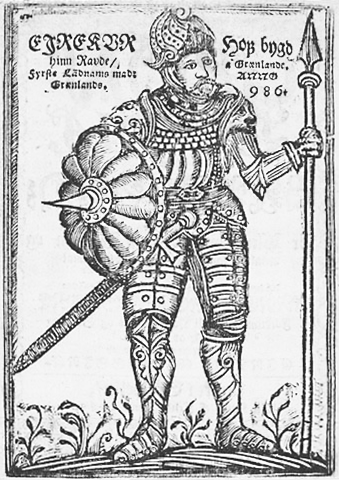
In Scandinavia, Erik has been used among nobility and royalty since Viking times. It was borne by several Danish, Norwegian and Swedish kings and rulers.  It was also the appellation of Eric the Red, (Eiríkr inn Rauda), a 10th-century Norse explorer who is credited for his discovery of Greenland.

The name was introduced into the English speaking world by Danish settlers during pre-Norman times, however, the name was never common in Medieval England. It was revived in 19th-century Britain, thanks in part to the novel Eric, Little by Little (1858) by Frederic William Farrar.

In the United States, its early popularity is more likely due to the sudden influx of Scandinavian immigrants during the late 19th-century. Ever a classic in Scandinavia and among the Scandinavian diaspora, Eric was continually given to the descendants of the first bearers who settled the North American shores.

In 1880, Eric appears as the 600th most popular male name, by 1896, when Swedish immigration was at its peak, he had jumped several hundred spaces, coming in as the 388th most popular male name in the United States.

The highest Eric has ever peaked in U.S. naming history was between 1973 and 1976 coming in as the 13th most popular male.

Currently, he stands as the 86th most popular male name, (2008).

In other countries, his rankings are as follows:

  • # 80 (Canada, B.C., 2008)
  • # 48 Erik (Hungary, 2008)
  • # 32 Erik (Norway, 2009)
  • # 50 Erik (Sl0venia, 2005)
  • # 9 (Sweden, 2009)

Other forms of the name include:

  • Aric (Anglo-Saxon: original English spelling)
  • Eryk Эрык (Belarusian/Polish)
  • Erig (Breton)
  • Erik ЭрикDanish/Dutch/Czech/Estonian/Finnish/German/Hungarian/Norwegian/Russian/Spanish/Swedish/Ukrainian
  • Eric (Danish/English/Norwegian/Slovene/Swedish)
  • Erick (Danish/English/German)
  • Jerik/Jerrik (Danish)
  • Jerk (Danish/Swedish: dialectical form)
  • Eerik (Estonian/Finnish)
  • Eirikur (Faroese)
  • Eerikki (Finnish: dialectical form found in Karelia)
  • Ertto (Finnish: dialectical form from East Finland)
  • Erkka/Erkki/Erkko/Erkku (Finnish)
  • Jerkka (Finnish)
  • Éric (French)
  • Erich (German)
  • Eiríkur (Icelandic)
  • Jórekr/Jórekur (Icelandic)
  • Erico (Italian/Spanish)
  • Ericus (Late Latin)
  • Eiríkr (Old Norse)
  • Eirik (Norwegian: Nynorsk)
  • Érico (Portuguese)
  • Erke (Sami)
  • Erk (Swedish: obscure dialectical form)
  • Erker (Swedish: obscure dialectical form)
  • Jerker (Swedish: dialectical form)

Finnish diminutives are: Eera, Eeri, Eiro, Eppo, Eppu, Era and Ero.

Its feminine form of Erica has also left an impression on the English-speaking world. The fact that it also coincides with the the Latin name for heather, may have also boosted the name’s popularity.

Currently, Erica ranked in as the 293rd most popular female name in the United States, (2008). The highest she ranked was between 1986-1988, coming in as the 31st most popular female name.

Other variations include:

  • Aricca (Anglo-Saxon: obscure Medieval form)
  • Erika Эрика (Czech/Danish/Dutch/German/Hungarian/Icelandic/Norwegian/Russian/Slovak/Slovene/Swedish)
  • Erica (Danish/Dutch/English/Italian/German/Norwegian/Romansch/Spanish/Swedish)
  • Erikka (Danish/Finnish)
  • Erikke (Danish)
  • Jerika (Danish)
  • Ericka (German)
  • Eirika (Faroese)
  • Eerika/Eerikka/Eriikka (Finnish)
  • Eryka (Polish)
  • Érica (Portuguese)

A feminine Finnish pet form is Eekku.

The designated name-day is May 18.

Sources

  1. http://www.nordicnames.de/wiki/Erik
  2. http://www.behindthename.com/name/eric
  3. http://www.askoxford.com/firstnames/eric?view=uk

Richard

Gender: Masculine
Origin: German
Meaning: “brave power.”
Eng (RICH-erd)

The name was first introduced into the English speaking world by the Norman Conquerors, and the name has been a long standing classic since.

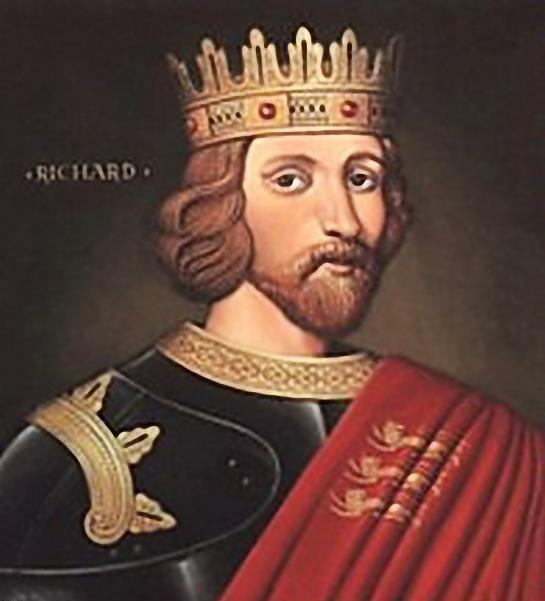
It was most notably borne by Richard I the Lionhearted of England, who has remained a sort of national folk hero in Britain.

Richard has been declining somewhat in the U.S. popularity charts, coming in as the 107th most popular male name (2008), in 2007, he was the 100th most popular male name.

The name is composed of the Germanic elements ric meaning “power; rule” and hard meaning “brave; hardy.”

His rankings in other countries are as follows:

  • # 53 Ricardo (Chile, 2006)
  • # 39 Richárd (Hungary, 2008)
  • # 328 Ricardo (the Netherlands, 2009)
  • # 480 (the Netherlands, 2009)

Other forms of the name include:

  • Rikard Рычард (Basque/Belarusian/Bosnian/Bulgarian)
  • Richarzh (Breton)
  • Ricard Ричард (Catalan/Occitanian/Serbian)
  • Ričard (Croatian)
  • Rikard (Croatian/Danish/Finnish/Norwegian/Swedish)
  • Richard Ричард (Czech/Dutch/English/French/German/Romanian/Russian/Slovak/Ukrainian)
  • Rijkert (Dutch: RYE-kairt)
  • Riho (Estonian)
  • Rikhard (Finnish)
  • Rickert (Frisian)
  • Ricohard (German: very rare and archaic)
  • Richárdos Ριχάρδος (Greek: Modern)
  • Richárd/Rikárd (Hungarian)
  • Ríkarður (Icelandic)
  • Risteárd (Irish-Gaelic: RISH-taird)
  • Riccadetto (Italian)
  • Riccardino (Italian)
  • Riccardo (Italian: common form)
  • Ricciardo (Italian)
  • Ricco (Italian)
  • Rizzardo (Italian)
  • Rîşarê (Kurdish)
  • Richardus (Late Latin)
  • Ričards (Latvian)
  • Rihards (Latvian)
  • Ričardas (Lithuanian)
  • Ryszard (Polish: RIH-shard)
  • Ricardo (Portuguese/Romanian/Spanish)
  • Rico (Romansch)
  • Rikkar (Saami)
  • Ruiseart (Scottish-Gaelic)
  • Riccardu (Sicilian)
  • Rihard (Slovene)
  • Rhisiart (Welsh)

Diminutives include the Medieval English Hudde (HUD) the inspiration of such surnames as Hudson. Others include Dick, Dicky, Rich, Richie, Rick and Ricky.
Czech diminutive: Ríša
Finnish diminutive: Riku
Polish: RysiekRysioRysiu and Rychu
Slovak diminutives: Rišo, Riško
Spanish: Caíto, Cayo (Guatemala), Ricardito, Rico, Ricky, Riqui

Feminine forms are include:

  • Richardine (French)
  • Ricarda (German/Spanish)
  • Riccarda (Italian)
  • Riccardina (Italian)
  • Ricca (Italian)
  • Ricciarda (Italian)
  • Rizzarda (Italian)

The designated name-days are: April 3 (Czech Republic, France, Hungary and Slovakia), February 7 (Estonia).

Sources

  1. http://www.behindthename.com/php/find.php?name=richard
  2. http://www.askoxford.com/firstnames/richard?view=uk

Jeremiah, Jeremy

Gender: Masculine
Origin: Hebrew, Biblical
Meaning: “Yahweh exhalts.”
Eng (JARE-e-MEE); (JARE-e-MY-ah)

The name is derived from the Hebrew Yirmĭyahu (יִרְמְיָה) meaning, “yahweh exhalts.”

In the Old Testament, Jeremiah was a prophet and author of the Book of Jeremiah and the Book of Lamentations. He warned the Israelites of God’s impending destruction upon them and lived to see the Babylonian Exile.

Jeremy has been attested to have been used as early as the 13th-century but the name Jeremiah did not catch on in the English-speaking world until well after the Protestant Reformation.

In the English lexicon, jeremiah is used to describe somebody who is chronically complaining and lamenting, in reference to the Biblical prophet.

Currently, Jeremiah is the 69th most popular male name in the United States, (2008).

Other forms of the name include:

  • Jeremies (Catalan)
  • Jeremija Јеремија (Croatian/Serbian/Slovene)
  • Jeremjáš (Czech)
  • Jeremia (Danish/Dutch/Finnish/German/Norwegian/Swedish)
  • Jeremias (Finnish/German/Portuguese)
  • Jorma (Finnish)
  • Jérémie/Jérémy (French)
  • Ieremias Ιερεμιας (Greek: Biblical)
  • Yirmiyahu יִרְמְיָהוּ (Hebrew: Biblical)
  • Jeremiás (Hungarian)
  • Hieremias (Latin: Biblical)
  • Jarema (Polish)
  • Jeremi/Jeremiasz (Polish)
  • Jeremiáš (Slovak)
  • Jeremías (Spanish)

A common English short form is Jerry.

A German and Finnish pet form is Jere.

Sources

  1. Jeremiah, New Bible Dictionary, Second Edition, Tyndale Press, Wheaton, IL, USA 1987.
  2. The New Bible Dictionary, Second Edition, 1982 p. 563; See also Jeremiah 31
  3. ‘Introduction to Jeremiah’, The Jewish Study Bible, Oxford University Press, 2004, p. 917
  4. ‘Jeremiah’, New Bible Dictionary, Second Edition, Tyndale Press, 1987 pp. 559-560
  5. Jeremiah 1:1
  6. http://www.behindthename.com/name/jeremiah
  7. http://www.askoxford.com/firstnames/jeremiah?view=uk
  8. http://www.askoxford.com/concise_oed/jeremiah?view=uk
  9. http://en.wikisource.org/wiki/Catholic_Encyclopedia_(1913)/Jeremias_(2)