Radegonde

Gender: Feminine
Origin: Germanic
Meaning: “war counsel.”

The name is composed of the Germanic elements, rad meaning “counsel” and gund meaning “war.”

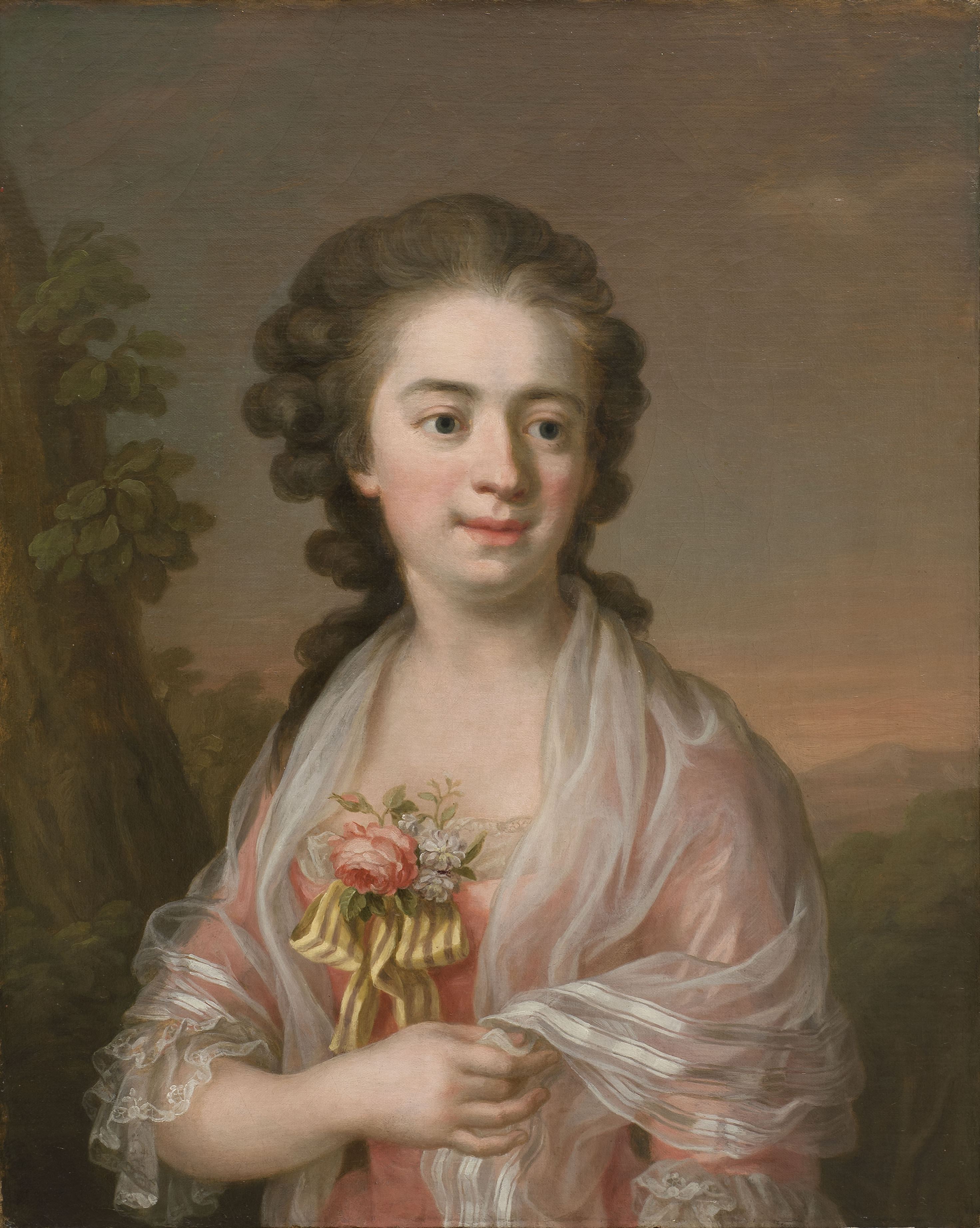
The name was borne by a 6th-century French saint who is particularly venerated in the city of Poitiers in France.

St. Radegonde was a Thuringian Princess, the fourth wife of the Frankish king Clotaire I, she founded the monastery of St. Croix in Poitiers.

St. Radegonde was known for her piety and tried to live a life of humility, chastity and poverty while queen.

Many legends and miracles were attributed to her.

In the city of Poitiers, she is considered the patron saint of university students and till this day, students from the University of Poitiers will often visit her tomb before an exam in hopes that the saint will intervene on their behalf.

The designated name-day is August 12.

Other forms of the name include:

Radegunda (Catalan/Lithuanian/Polish/Portuguese/Spanish)
Radegundis (Dutch/German/Old French)
Radegund (English/German)
Rhadegund (English: archaic)
Radegonde (French)
Radegunde (German)
Radegonda (Italian)

Source

  1. http://fr.wikipedia.org/wiki/Radegonde_de_Poitiers

Przybywoj

Gender: Masculine
Origin: Polish
Meaning: “arrived warrior”
(PSHI-bih-VOY)

The name is composed of the Old Slavonic elements, przyby meaning “arrived” and woj meaning “warrior.”

In Polish history, the name was borne by one of the leaders for the battle over Mieszko’s empty throne (circ. 992-995).

Another form of the name is Przybywój.

In Poland, the designated name-day is July 5.

Sources

  1. http://www.behindthename.com/namedays/lists/7.php
  2. http://pl.wikipedia.org/wiki/Przybywoj

Ulrich

Gender: Masculine
Origin: German
Meaning: “power and prosperity.”
Germ (OOL-hreeh); Eng (UL-rick); Swe (OOL-reek)

The name is derived from the Germanic elements, uodal, meaning “heritage” and ric meaning, “power.”

Both the feminine and masculine form have been fairly common in Germanic countries for centuries. It was borne by two German saints and it was also the name of the Swiss Protestant Reformor, Ulrich Zwingli (1484-1431).

Other forms of the name include:

Ulric (Catalan/French)
Oldřich (Czech)
Ulrik (Danish/Dutch/Hungarian/Norwegian/Swedish)
Oldrik (Dutch)
Olerik (Dutch)
Ulric (English)
Ulrich (French/German/Icelandic)
Huldrych/Huldreich (German)
Ódor (Hungarian)
Olderico/Olderigi/Olderigo (Italian)
Udalrico/Udalrigo (Italian)
Uldarico/Ulderico (Italian)
Ulderigo (Italian)
Ullrico (Italian)
Uldis (Latvian)
Ulriks (Latvian)
Odalrich (Old High German)
Ulryk (Polish)
Ulrico (Portuguese/Spanish)
Oldrich (Slovak)
Urh (Slovene)
Uldarico (Spanish)

Uli is a common diminutive form used in Germany, while Ueli is the preferred form used in Switzerland.

Feminine forms include:

Ulrika (Czech/German/Norwegian/Slovak/Swedish)
Ulrike (Danish/German/Norwegian)
Ulrikke (Danish/Norwegian)
Ulla (Finnish/German)
Ulrique (French)
Ulrieke (German)
Ulrira (German)
Ulschke (German)
Ulrica (Italian/Romansch/Spanish)
Ulryka (Polish)

Common German feminine diminutive forms include: Ike, Rieke, Rika, Rike, Riken, Rikerl, Riki, Ule, Uli, Ulla, Ulle, Ulli, Ullie, Ully and Uri.

Its feminine counterpart has been borne by at least one Swedish princess, a fictional character in Walter Scott’s 1819 novel, Ivanhoe and Ulrika Pasch, an 18th-century female Swedish painter.

The designated name-day July 4 in most countries and July 10 in France.

Sources

  1. http://www.behindthename.com/name/ulrich
  2. http://www.behindthename.com/namedays/lists/7.php

Urban

Gender: Masculine
Origin: Latin
Meaning: “city-dweller.”
Eng (ER-ben)

The name is derived from the Latin name, Urbanus, which means “city-dweller.”

The name is mentioned briefly in one of St. Paul Epistles in the New Testament and was also borne by several popes.

In 2005, Urban was the 33rd most popular male name in Slovenia.

Other forms of the name include:

Urbà (Catalan)
Urban (Czech/Danish/Dutch/English/Estonian/German/Slovakian/Slovene/Norwegian/Polish/Russian/Swedish)
Urbas/Urbo (Finnish)
Urpa/Urpo (Finnish)
Urbain (French)
Ourbanos (Greek: Biblical)
Orbán/Orbó/Urbán (Hungarian)
Urbano (Italian/Portuguese/Spanish)
Urbanus (Latin)
Urvan (Russian)

An Italian feminine form is Urbana.

The designated name-days are: April 2/16 (Poland), May 25 (Estonia/Slovakia/Sweden), July 2/29 (Poland), September 27 (Poland), October 31 (Poland) and December 19 (Poland).

Source

  1. http://www.behindthename.com/name/urban


Niegosław

Gender: Masculine
Origin: Polish
Meaning: “to delight in glory”
(NYE-go-SWAHF); (nye-GO-swahf)

The name is a very old and seldom used Polish name. The name is first recorded in Polish documents of 1192.

It is composed of the Old Slavonic elements, niego meaning “delight” and slav meaning “glory.” Hence the name would roughly translate to mean “to delight in glory.”

Diminutives include: Niega, Niegan, Niego, Niegoł, Niegost, Niegosz, Nieguta, Niegusz, Niesz, Nieżęta, Nieżka and Nieszka.

Other forms include the Bulgarian Něgoslav and the Serbo-Croatian, Njegoslav, Negislav and Negoslav.

The Polish feminine form is Niegosława.

In Poland the designated name-days are July 1 and August 8.

Sources

  1. http://pl.wikipedia.org/wiki/Niegosław
  2. http://www.behindthename.com/namedays/lists/7.php

Bjorn

Gender: Masculine
Origin: Danish/Norwegian/Swedish/Old Norse
Meaning: “bear.”
(BYAWRN)

The name is derived from an Old Norse by name meaning “bear.” In modern Scandinavian languages, the modern word for bear is still björn (Swedish) and bjørn (Danish/Norwegian).

Other forms of the name include:

Besse (Danish)
Bjarke (Danish)
Bjarne (Danish/Norwegian/Swedish)
Bjarno (Danish)
Bjerne (Danish)
Bjørn (Danish/Faroese/Norwegian)
Bjørn0 (Danish)
Bersi (Faroese/Icelandic/Old Norse)
Bessi (Faroese/Icelandic)
Birni (Faroese)
Bjarki (Faroese/Icelandic)
Bjarni (Faroese/Icelandic)
Björn (Icelandic/Swedish)
Bjønne (Norwegian)
Bjørne (Norwegian)
Björne (Swedish)
Björner (Swedish)

A few feminine forms include the Iceland and Faroese Bera, Birna and Bersa.

Bjorn is also used in German-speaking countries and in the Netherlands.

The designated name-day in Sweden is June 18.

Sources

  1. http://www.behindthename.com/name/bjo12rne
  2. http://www.nordicnames.de/wiki/Biǫrn

Germain, Germaine

Origin: French/Latin
Meaning: “seed”

The names are derived from the Roman cognomen, Germanus, which is derived from the Latin, germen, meaning “seed.” The meaning may have been synonymous with “brother; relative” or “blood relation.”

Germain is the French masculine form while Germaine (jer-MANE) Eng; (zhare-MEHN) Fre, is the feminine form.

St. Germaine Cousin was a 16th-century French saint and shepherdess. She was said to have suffered from a debilitating form of Tuberculosis, which crippled her, and she was also physically abused by her stepmother. She was renowned for her piety.

After her death, several miracles were attributed to the saint, and she has been venerated ever since, being canonized by the Catholic Church in 1867.

In France, the designated name-day is June 15.

Other forms of the name include:

    Germana (Italian/Polish/Portuguese/Spanish)
    Zermena (Latvian)

Another masculine form is the Italian/Spanish/Portuguese, Germano. A Polish masculine form is German.

Sources

  1. http://en.wikipedia.org/wiki/Catholic_Encyclopedia
  2. http://www.behindthename.com/name/germanus

Eskil

Gender: Masculine
Origin: Danish/Norwegian/Swedish
Meaning: “god’s helmet.”
(ES-kil)

The name is derived from the Old Norse male name, Ásketill, which is composed of the Norse elements, áss (god) and ketill (kettle; cauldron; helmet).

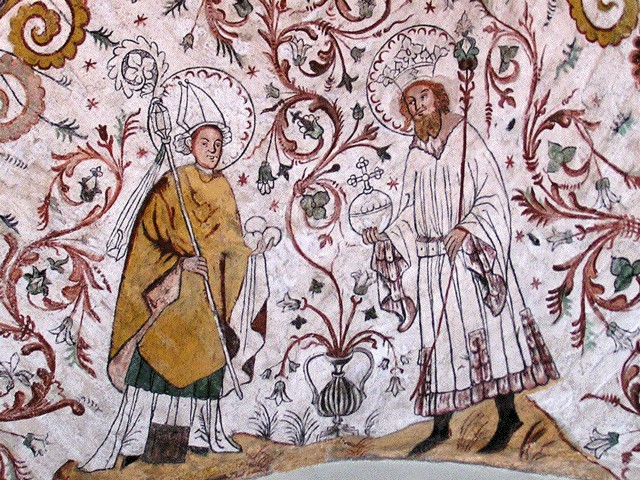
The name was borne by a 11th-century Swedish saint and martyr, whose veneration was especially popular in medieval England, as a result, the name was occasionally used in England up until the Reformation, when the name went out of fashion.

The designated name-day in Sweden is June 12.

Other forms of the name include:

  • Askel/Askil (Danish/Norwegian)
  • Askild (Danish/Norwegian)
  • Eskild (Danish)
  • Eskil (Danish/Faroese/Norwegian/Swedish)
  • Áskil (Faroese)
  • Eskel (Finnish/Swedish)
  • Eskeli (Finnish)
  • Esko (Finnish/German)
  • Áskæll/Áskell (Old Norse)
  • Ásketill (Old Norse)
  • Askjell (Norwegian)

Female forms include the Icelandic Áskatla and the Danish/Norwegian, Askeline.

Sources

  1. http://www.nordicnames.de/wiki/Ásketill
  2. http://en.wikipedia.org/wiki/Saint_Eskil

Guy

Gender: Masculine
Origin: French
Meaning: “wood; wide.”
Eng (GIE); Fre (GEE)

The name is derived from the early Germanic name Wido which is possibly derived from the Germanic element, widu, either meaning, “wood” or “wide.”

The name was introduced into England after the Norman Conquest, but after the infamy of 16th-century Guy Fawkes the name went out fashion. It was, however, always a very common name among French-Americans, especially among the French Acadians of Louisiana.

The Italian form is Guido, which has been a fairly common name among Italian-Americans but is now associated with a controversial term describing a middle class Italian-American from the East Coast of the United States. This was especially brought to attention after the 2009 reality tv show, Jersey Shore. However, it is uncertain if the term used to describe a particular class of people within the Italian community is related to the given name or to a different etymological source.

The name was borne by a Sicilian saint and martyr.

The designated name-day in France is June 12.

Other forms of the name include:

  • Guiu (Catalan)
  • Vid (Croatian/Hungarian/Slovene)
  • Vít (Czech/Slovak)
  • Vitus (Danish/Dutch/German/Hungarian)
  • Gwijde (Dutch)
  • Guy (English/French)
  • Guidon (French)
  • Gui (French)
  • Wide (Frisian)
  • Guido (German/Italian)
  • Veit (German)
  • Wido/Wito (German)
  • Cino (Italian)
  • Guidarello (Italian)
  • Guidino (Italian)
  • Guidolino (Italian)
  • Guidone/Guittone (Italian)
  • Guidotto (Italian)
  • Guiduccio (Italian)
  • Guittoncino (Italian)
  • Gvidas/Gvidonas (Lithuanian)
  • Gwido (Polish)
  • Wit (Polish)
  • Guidas (Romansch)
  • Guidi (Slovene)
  • Gvido/Gvidon (Slovene)
  • Vito (Spanish)

French masculine diminutives include: Guitou, Guiton, GuiGui & Guy-Guy

Feminine offshoots include:

  • Vita (Danish)
  • Guyenne (French)
  • Guyette (French)
  • Guyonne (French)
  • Vida (Hungarian/Slovene)
  • Guida (Italian/Romansch)
  • Guidetta (Italian)
  • Gvida (Slovene)
  • Gvidica (Slovene)

Sources

  1. http://www.behindthename.com/php/related.php?name=guy
  2. http://www.askoxford.com/firstnames/guy?view=uk

Kolbjørn

Gender: Masculine
Origin: Norwegian/Old Norse
Meaning: “black bear; coal bear.”
(KOLE-byern)

The name is composed of the Old Norse elements, kol (coal) possibly referring to blackness and bjorn meaning “bear.”

Other forms include the Norwegian Kolbeinn and the Swedish Kolbjörn.

The designated name-day in Norway is June 9.

Sources

  1. http://www.nordicnames.de/wiki/Norwegian_Name_Days