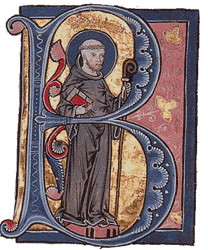
Dragoslav

Gender: Masculine
Origin: Slavic
Meaning: “precious glory.”
Драгослав

The name is composed of the Old Slavonic element, dorgu, meaning, “precious” and slav, meaning, “glory.”

The feminine form is Dragoslava (Southern Slavic, i.e. Bulgarian, Croatian, Macedonian, Serbian and Slovene) and Drahoslava (Czech/Slovak).

A Czech/Slovak masculine form is Drahoslav.

Name-days are January 4 (Slovakia) and January 17 (Czech Republic).

The designated name-days for the feminine version are: July 9 (Czech Republic) and September 1 (Slovakia)

Source

  1. http://www.behindthename.com/name/dragoslav

Aegidius, Giles

Gender: Masculine
Origin: Greek
Meaning: “kid, young goat.”
Eng (JILES); FRE (ZHEEL)

Aegidius is a Late Latin name derived from the Greek (αιγιδιον) aigidion, meaning, “kid, young goat.”

Other sources have suggested that it may also come from the Latin aigis, a type of goatskin shield which ultimately derives from the above Greek source.

The name was borne by an 8th-century Christian saint of Greek origin, who ended up settling in what is now the South of France. He was renowned for his miracles and was revered as the patron saint of the crippled during the Middle Ages.

In Old French, the name was rendered as Aegidie, which eventually was contracted to Gidie ultimately becoming Gilles. The name was introduced into England after the Norman Conquest in this form and hence its English derivative became Giles.

Other forms of the name include:

Jilji (Czech)
Egidius (Dutch)
Gillis (Dutch)
Giles (English)
Gidie (French)
Gilles (French)
Ägidius/Ägydius (German)
Egyd (German)
Gilg/Gilgian (German)
Ilg (German)
Egyed (Hungarian)
Egidio (Italian/Spanish)
Egilio (Italian)
Gidio (Italian)
Gilio (Italian)
Gillo (Italian)
Zilio (Italian)
Egidijus (Lithuanian)
Gèli (Occitanian)
Egidiusz (Polish)
Idzi (Polish)
Egídio (Portuguese)
Gil (Portuguese/Spanish)
Egidi/Egidij (Slovene)
Egi (Slovene)
Ilgo (Slovene)
Ilj (Slovene)
Iljko (Slovene)
Tilen (Slovene)
Tilj (Slovene)
Tilih (Slovene)

Feminine forms include

Egida (Italian/Slovene)
Egide (Italian)
Egidia (Italian/Spanish)
Egidija (Slovene)
Egilia (Italian)
Gilia /Gilla (Italian)
Tilka (Slovene)
Zilia/Zilla (Italian)

The designated name-day is September 1.

Source

  1. http://www.behindthename.com/php/related.php?name=giles

Egon

Gender: Masculine
Origin: German
Meaning: “sword.”
Eng (EE-gahn); Germ (EH-gone)

The name is derived from the Old Germanic, ekka, meaning “sword.” Some sources list the name as a Hungarian form of Eugene, or as a German contraction of the Old German name, Eckhard, which would mean, “sword strength” or “strong as a sword.”

In German-speaking countries, the name is considered old fashioned. In the Anglo-phone world, it is associated with 1980 films and TV series, Ghostbusters, Ghostbusters II and The Real Ghostbusters, in which one of the main characters was named Egon Spengler.

The name was also borne by the early 20th-century Austrian painter, Egon Schiele (1890-1918).

Another form of the name is Egino (German).

The designated name-days are: March 11 (Sweden); July 15 (Germany, Poland); September 1 (Hungary); November 17 (Estonia)

Sources

  1. http://de.wikipedia.org/wiki/Egon
  2. http://www.behindthename.com/php/find.php?name=egon

Ülo

Gender: Masculine
Origin: Estonian
Meaning: “joy.”

The name is derived from the Livonian element, ilo, meaning “joy.” The name appears in the Chronicle of Henry of Livonia, in the form of the latinized, Ylo. The name was derived in the 19th-century.

It can also be associated with the modern Estonian words, ülev (exalted) and üllas (noble).

Other forms of the name include:

Ülar
Ülari
Ülev
Üllar
Üllart
Üllas
Üllo

The designated name-day is September 1.

Sources

  1. http://en.wiktionary.org/wiki/Ülo
  2. http://www.behindthename.com/namedays/lists/9.php

Bernard, Bernadette

Gender: Masculine
Origin: Old German
Meaning: “brave as a bear; hardy as a bear.”
(Am. Eng) (ber-NARD); (Brit. Eng) (BER-nerd)

The name is composed of the Old High Germanic elements, bern (bear) and hard (brave; hardy).

The name was introduced into England by the conquering Normans in the 10th-century, replacing the more Anglo-Saxon version of Beornheard.

It became quite prevalent throughout Western Europe during the middle ages due to the associations with St. Bernard of Menthon, a Swiss monastic credited to building hospices in the Alps, (it is from him that the breed of dog, the St. Bernard, takes its name) and St. Bernard of Clairvaux, an influential 12th-century French theologian who is revered as both a saint and Doctor of the Church by the Catholic Church.

As of 2009, the name fell out of the U.S. top 1000 most popular male names. The highest he ever ranked in U.S. naming history was at # 45 in 1919 and again in 1921.

Its more popular feminine version of Bernadette became prevalent, especially among Catholics throughout the Western World, after the Canonization of St. Bernadette Soubirous (née Marie-Bernarde Soubirous). St. Bernadette was a 19th-century French peasant girl credited to seeing visions of the Virgin Mary in Lourdes, France.

Before her recognition throughout the world, Bernadette was primarily a diminutive, used as an affectionate form of the French feminine name, Bernarde.
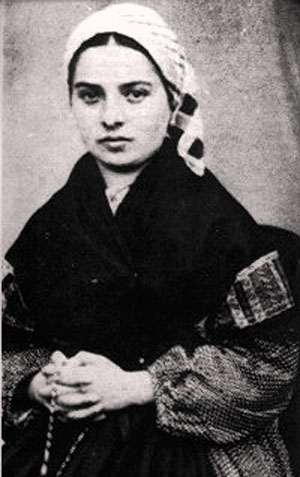
The last time Bernadette ranked in the U.S. top 1000 was in 1993, coming in at # 891. The highest she ever ranked in U.S. naming history was in 1946, coming in as the 188th most popular female name. Its Hungarian cognate of Bernadett currently ranks in as the 76th most popular female name in Hungary (2009).

Variations

Bernard

Bernardi (Albanian)
Bernal (Aragonese/Galician)
Beñat (Basque)
Bernarta (Basque)
Bernez (Breton)
Bernat (Catalan)
Bernardu (Corsican/Sardinian)
Bernard (Croatian/Czech/English/French/German/Polish/Romanian/Romansch/Slovenian/Swedish)
Bernhardt/Bernhart (Danish/Finnish/German/Norwegian/Swedish)
Berend (Dutch)
Bernaard (Dutch)
Bernhard (Dutch/Estonian/German)
Päärn/Pärn/Pärno (Estonian)
Pääro (Estonian)
Pearn/Pearu (Estonian)
Bernardin (French/Romansch)
Bent (Frisian)
Bernaldo (Galician)
Bernaldino (Galician)
Berendt (German)
Berinhard (German: archaic)
Bernd/Berndt (German/Swedish)
Bernárd (Hungarian)
Bernát (Hungarian)
Bennardo/Bennardino (Italian)
Berardo (Italian)
Bernadetto (Italian)
Bernardino (Italian)
Bernardo (Italian/Portuguese/Spanish)
Bernoardo (Italian)
Bearnárd (Irish-Gaelic)
Bernardus (Late Latin)
Bernards (Latvian)
Bierants (Latvian)
Biernis (Latvian)
Bernardas (Lithuanian)
Beurnard (Poitevin)

Bernadette

Bernardete (Albanian/Portuguese)
Bernada (Catalan/Occitanian)
Bernadeta (Catalan/Occitanian/Polish)
Bernarda (Croatian/German/Italian/Slovene/Spanish/Polish/Portuguese)
Bernadette (English/French)
Bernarde (French)
Bernardine (French)
Bernadett (Hungarian)
Bernadetta/Bernardetta (Italian)
Bernardina (Italian)
Bernadetė (Lithuanian)
Bernardka (Slovenian)
Bernardita (Spanish)

Common English diminutives for both names are Bernie & Benny.

In French it is Bébère, Nanard and Bernie for males.

A Polish female diminutive is Bernardetka.

The designated name-day is August 20.

Source

  1. http://www.behindthename.com/name/bernard
Zawisza

Gender: Masculine
Origin: Polish
Meaning: “jealous for fame.”
(zah-VEE-shah)

The name is derived from an ancient Slavic element that would roughly translate to mean “jealous for fame.”

The designated name-day is August 17.

Other forms include the Czech Záviš and the German form is Zawisch.

Sources

  1. http://www.behindthename.com/namedays/lists/8.php
  2. http://pl.wikipedia.org/wiki/Zawisza_(imię

Bogdan

Gender: Masculine
Origin: Slavic
Meaning: “God given”

The name is composed of the Old Slavonic elements, bog meaning god and dan meaning “given.”

Since this is one of the very few names to include the element of dan, it is sometimes suggested to be a Scythian remnant, of whom the name Bagadata (same meaning) was frequent.

In the Southern Slavic countries, the name was often used as a vernacular translation of the Greek, Theodosios (given by God)”

The name is very common in just about all the Slavic countries.

Among Eastern European Jews, the name was often used as an equivalent for Nathaniel or Jonathan.

Other forms of the name include:

Bogdan (Bulgarian/Croatian/Polish/Romanian/Ukrainian)
Bohdan Богдан (Czech/Slovene/Serbian/Ukrainian)
Bogdán (Hungarian/Slovak)
Bodan (Polish: archaic)
Bogodan/Bogudan (Polish: archaic)

A Croatian/Serbian diminutive is: Boško.

Czech diminutives are: Bohdánek, Bóža, Dan, Boja, Bodik, Boďa and Bohdy.

Slovene diminutives include: Bogo, Dan, Danče, Danček, Dančo, Dane and Dani.

Bogdana is the feminine form used in all of the above listed countries.

Bohdana is the Ukrainian feminine form.

Bogdan was borne by several Moldovian rulers.

The designated name-days are: January 6 (Bulgaria); March 19 (Poland); July 17 (Poland); August 10 (Poland) and October 9 (Poland).

Sources

  1. http://en.wikipedia.org/wiki/Bogdan
  2. http://pl.wikipedia.org/wiki/Bogdan
  3. http://www.behindthename.com/name/bogdan

Mironieg

Gender: Masculine
Origin: Polish
Meaning: debated
(MEE-roh-NYEG)

The name is of debated origin and meaning, some scholar suggest that it may be a corrupted form of the Polish diminutive, Mironek, which is a short form of the Greek, Myron. The most popular theory, however, is that it is composed of the Old Polish elements, miro meaning “peace” and nieg meaning “delight.”

The name is currently out of usage in Poland.

The designated name-day is August 4.

Sources

  1. http://pl.wikipedia.org/wiki/Mironieg
  2. http://www.behindthename.com/namedays/lists/8.php

Sława

Gender: Feminine
Origin: Polish
Meaning: “fame; glory.”
(SWAH-vah)

The name is a contracted form of ancient Polish names such as Stanisława, Bronisława and Wiesława.

The name also coincides with the modern Polish word for “fame” which has its roots in the ancient Slavic word, slav which can either mean “fame” “prestige” or “glory.”

The Slovakian form is Sláva (SLAH-vah).

The designated name-day in Poland is August 5.

Sources

  1. http://pl.wikipedia.org/wiki/Sława_(imię)
  2. http://sk.wikipedia.org/wiki/Sláva
  3. http://www.behindthename.com/namedays/lists/8.php

Krzywosąd

Gender: Masculine
Origin: Polish
Meaning: “crooked judge.”
(KZHIH-voh-SOND)

The name is an ancient Polish name composed of the elements, krzywo, meaning “bended; crooked” and sąd meaning “judge.”

The name is currently out of usage in Poland.

The designated name-day is August 3rd.

Sources

  1. http://pl.wikipedia.org/wiki/Krzywosąd
  2. http://www.behindthename.com/namedays/lists/8.php