Theodore

Gender: Masculine
Origin: Greek
Meaning: “god’s gift.”

The name is derived from the Greek Theodoros (Θεοδωρος) which is composed of the elements θεος (theos) meaning “god” and δωρον (doron) “gift.” The name was borne by several early saints, two popes and three tsars of Russia.

In recent American history the name was borne by President Theodore Roosevelt (1858-1919) of whom the Teddy Bear was named for.

It is currently the 263rd most popular male name in the United States, (2010).

An interesting fact: Dorothy is derived from the same Greek roots but in reverse order.

Other forms of the name include:

  • Tewodros ተውዶሮስ (Amharic)
  • Tadros تادرس (Arabic: used among Arab Christians)
  • Todos ܛܘܕܘܫ (Aramaic: used among Assyrian and Chaldean Christians)
  • Hvejdar Хведар (Belarusian)
  • Teodor Теодор (Bulgarian/Catalan/Croatian/Czech/Danish/Estonian/Finnish/Hungarian/Polish/Romanian/Scandinavian/Slovakian/Slovene/Ukrainian)
  • Todor (Bulgarian/Serbiab/Northern Greek)
  • Theirn (Cajun)
  • Theodoor (Dutch)
  • Theodorus (Dutch/Latin)
  • Theodore თევდორე (English/Georgian)
  • Tuudor (Estonian)
  • Teuvo (Finnish)
  • Théodore (French)
  • Theodor (German)
  • Theodoros Θεόδωρος (Greek)
  • Thodoros Θόδωρος (Greek)
  • Fedor (Hungarian)
  • Tivadar (Hungarian)
  • Tódor (Hungarian)
  • Téodóir (Irish)
  • Teodoro (Italian/Portuguese/Spanish)
  • Todaro (Italian)
  • Teodors (Latvian)
  • Thei (Limburgish)
  • Teodoras (Lithuanian)
  • Toše Тоше (Macedonian)
  • Tiodore (Occitanian)
  • Toader (Romanian)
  • Tudor (Romanian/Welsh)
  • Fedor Федор (Russian/Slovene)
  • Fjodor Фёдор (Russian)
  • Teodoru (Sicilian)
  • Fedja (Slovene)
  • Todor (Slovene)
  • Fedir Федір (Ukrainian)
  • Tewdwr/Tudur (Welsh)
Common diminutives include:
  • Tosho Тошо (Bulgarian)
  • Toshko Тошко(Bulgarian)
  • Ted/Teddy (English)
  • Tedo თედო (Georgian)
  • Fedja Федя (Russian)

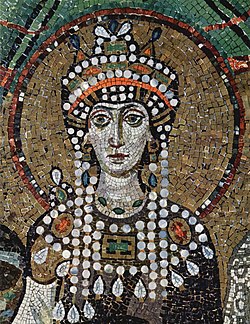
Its feminine form of Theodora was very popular in Byzantium, it was borne by at least five Byzantine Empresses including Empress Theodora who is also revered as a saint.

Other feminine forms include:

  • Teodora Теодора თეოდორა (Bulgarian/Catalan/Crotian/Georgian/Italian/Macedonian/Polish/Portuguese/Romanian/Serbian/Slovene/Spanish/Swedish)
  • Todorka Тодорка (Bulgarian/Macedonian)
  • Theodora Θεοδώρα (Czech/English/German/Greek)
  • Theda (English/German)
  • Théodora (French)
  • Teodóra (Hungarian)
  • Fedora Федора (Russian/Slovene)
  • Feodora Феодора (Russian)

Lawrence

Gender: Masculine
Origin: Latin
Meaning: “from Laurentum.”
Eng (LAW-rents)

The name is derived from the Latin cognomen Laurentius meaning “from Laurentum.” It was popularized by an early Roman deacon, martyr and saint who was roasted alive when he refused to turn over church property to the Roman authorities. According to legend, he is the patron saint of comedians because when he was being roasted he told his torturers “turn me over, I am done on this side.”

It was borne by several other saints.

Lawrence has been a popular given name since Medieval times and it consistently appeared in the U.S. top 100 from 1880-1971. By 1972 it mysteriously and suddenly fell completely out of popularity and it has been so since. It is currently only the 457th most popular male name, (2010).

Other forms include:

  • Nadja/Nadjeh (Arabic: used among Arab Christians)
  • Toufiq  لورنس (Arabic: used among Arab Christians)
  • Loren (Aragonese)
  • Lorient (Aragonese)
  • Lari (Basque)
  • Lawrencij Лаўрэнцій (Belarusian)
  • Laorañs (Breton)
  • Llorenç (Catalan)
  • Larenzu (Corsican)
  • Lovrenco (Croatian)
  • Lovre (Croatian. Currently the 58th most popular name in Croatia, 2010)
  • Lovro (Croatian)
  • Vavřinec (Czech/Slovak: literally from the Czech word for laurel, it has been used as the proper cognate for Lawrence since Christianity was introduced to the area)
  • Laurits/Lauritz (Danish/Estonian/Icelandic/Norwegian)
  • Lasse (Dutch/Norwegian/Swedish. LAHS-se)
  • Laurens (Dutch)
  • Loris (Dutch/French/German/Italian. Currently the 100th most popular male name in France, 2009)
  • Rens (Dutch. Currently the 79th most popular male name in the Netherlands)
  • Larkin (English: a Medieval diminutive form of Lawrence)
  • Lauri (Estonian/Finnish)
  • Lars (Finnish/Norwegian/Swedish. Currently the 14th most popular male name in the Netherlands, the 23rd most popular in Belgium and the 57th most popular in Norway)
  • Lassi (Finnish)
  • Laurent (French)
  • Laurentin (French)
  • Lourens (Frisian)
  • Labhrás (Gaelic) 
  • Loenso (Genovese)
  • Laurenzius (German: archaic)
  • Lenz (German)
  • Lorenz (German)
  • Lavrentios Λαυρεντιος (Greek)
  • Lőrinc (Hungarian)
  • Lárus (Icelandic)
  • Lorenzo (Italian/Spanish. Currently the 5th most popular male name in Italy and 52nd most popular in France (2009). It is also the 187th most popular in the Netherlands and the 322nd most popular in the United States, 2010)
  • Laurentius (Latin)
  • Lau (Limburgish)
  • Lor (Limburgish)
  • Laurynas (Lithuanian)
  • Lawrenz (Maltese)
  • Laurys (Manx)
  • Louothains (Norman)
  • Lavrans (Norwegian)
  • Laurenç (Occitanian)
  • Lleurant (Occitanian)
  • Laurencjusz (Polish)
  • Laurenty (Polish)
  • Wawrzyniec (Polish: literally from the Polish word for laurel, it has been used as the proper cognate for Lawrence since Christianity was introduced to the area)
  • Lourenço (Portuguese)
  • Laurențiu (Romanian)
  • Lavrentie (Romanian)
  • Lurintg (Romansch)
  • Lavrenti Лаврентий ლავრენტი (Russian/Georgian)
  • Larentu (Sardinian)
  • Labhrainn (Scottish)
  • Lovrenc (Slovene)
  • Laurisch (Sorbian)
  • Lorencio (Spanish: Medieval)
  • Lorens (Swedish)
  • Lavrentij Лаврентій (Ukrainian)
  • Lorenso (Venetian)
A common English diminutive is Larry a less common one Laurie
  • Toufiqia (Arabic)
  • Laurendia (Basque)
  • Laurenza (Corsican)
  • Laurenzia (Corsican)
  • Laurentien (Dutch)
  • Renske (Dutch)
  • Laurence (French)
  • Laurentine (French)
  • Lavrentia Λαυρεντία (Greek)
  • Lorentina (Italian)
  • Lorenza (Italian/Spanish)
  • Lorenzina (Italian)
  • Larentia (Latin)
  • Laurentina (Latin)
  • Laurencja (Polish)
  • Laurentyna (Polish)
Source

Mina

The name has several origins, meanings and derivatives depending on where in the world you find the bearer of the name. In the Western world, it is a female name, a contracted form of Wilhelmina and Hermina. It was always common in Germanic and Scandinavian countries, but was first introduced into the English-speaking world through Bram Stoker’s Dracula (1897).

It is also an Indian name, derived from the Sanskrit word for fish मीना , it is sometimes transliterated as Meena. In Hinduism, it is the name of the daughter of the Goddess Usha and the God Kubera.

It is also a common Persian female name, being derived from the Farsi word for “blue glass; enamel; lapis lazuli.” It also coincides with the name of a valley near Mecca, and is therefore found as feminine given name in the Arabic-speaking world. In Arabic it means “port; harbor.”

Among Coptic Christians, it is a very popular male name. It is borne by a renowned early Christian Egyptian martyr and saint, known in the Western world as St. Menas. Mīna  مينا‎‎ is its original Coptic version and according to legend, the saint’s mother heard a voice saying “amen” while praying for a pregnancy.

Currently, Mina is 41st most popular female name in Norway (2010), the 314th most popular in France (2009) and the 961st most popular in the United States (2010).

The designated name-days are: November 24 (Poland) and December 23 (Lithuania/Poland).

Other forms its masculine Egyptian counterpart include:

Menna (Catalan)
Ménas (French)
Menas (Greek)
Mena (Italian: RARE)

Source

  1. http://www.behindthename.com/name/mina-1
  2. http://www.behindthename.com/name/mina-2


Daniel, Danielle

Gender: Masculine
Origin: Biblical Hebrew
Meaning: “God is my Judge.”

If you are like me, you probably think Daniel is dull and overused. Then there is the other camp who might think this is a wonderful classic. It has the youthful nickname options of Dan and Danny and its used in just about every European country with such variants as the Italian Daniele and the Czech and Polish diminutive forms of Danek. Another plus is that, while the name has religious connotations, its doesn’t adhere to a specific denomination. It is fair game for both Jewish and Christian parents alike, Catholic and Protestant. It is even used among Muslims.

The name Daniel is found in the Old Testament, (it has its own book), composed of the Hebrew elements dan meaning “judge” and the 1st person possessive singular suffix of i plus El which was a reference to God.

As for the Biblical Daniel himself, according to the Bible, he was a Jewish boy who was captured by the Babylonians and employed as a sort of dream-reader, (sounds like a pretty cool job). Daniel was so good at his job that he eventually became famous, even among his Persian and Babylonian captives. Due to his prestige and influence, Daniel was also able to persuade his captors to release the Jews back to their homeland. There is far more to the Biblical Daniel’s story than I will write here, but he is probably most noted for his steadfast loyalty to his faith and people as well as his miraculous survival after being thrown in a den of lions.

In the United States, Daniel has been steadfast in its popularity. He currently comes in at # 5. Meanwhile, in the United Kingdom, he comes in at # 7. In Scotland at # 3. In Ireland # 4. While in Spain he comes in at a whopping # 2.

This forms is also used in the Czech Republic, Finland, French-speaking countries, German-speaking countries, Poland, Portuguese-speaking countries, Romania,  Scandinavia, Slovakia and Spanish-speaking countries

Other forms include :

  • Dana (Afrikaans)
  • Danieli (Albanian)
  • Danyal دانيال (Arabic)
  • Taniel (Armenian)
  • Danel (Basque)
  • Danilo (Bosnian/Croatian/Serbian)
  • Deniel (Breton)
  • Danail Данаил (Bulgarian)
  • Danelu (Corsican/Sardinian/Sicilian)
  • Daan (Dutch/Limburgish)
  • Daniël (Dutch)
  • Daaniel/Taaniel (Estonian)
  • Tanel/Tani (Estonian)
  • Taano/Tanno (Estonian)
  • Taneli/Tatu (Finnish)
  • Dāniyyêl דָּנִיֵּאל (Hebrew: Modern)
  • Dániel (Hungarian)
  • Daniló (Hungarian)
  • Dános (Hungarian)
  • Daniele (Italian: dahn-YAY-lay)
  • Daniello (Italian: an archaic version which died out in the 17th-century)
  • Danilo/Danilio (Italian: obscure)
  • Danielius (Lithuanian)
  • Daniilu Данїилъ (Old Church Slavonic)
  • Dani داني (Persian)
  • Daniyal دانيال (Persian)
  • Danil/Dănuṭ (Romanian: duh-NOOTS)
  • Daniil Даниил (Russian)
  • Daniele/Danijel (Slovene)
  • Dani/Däne/Dänu/Danü (Swiss-German: Bern dialect)
  • Danyal/Danyel(Turkish)
  • Deiniol (Welsh)

Czech diminutives are: Dan, Daník, Daneček, Danoušek, Danny, Dandýsek, Dady, Danda, Dáda, Danda, Dannys, Danušík and Dandýsek, Italian diminutive forms are: Nilo, Danio, Danino and Nilio.

Danya Даня is a common Russian and Ukrainian diminutive form.

Let us not forget its feminine versions of Daniella, Daniela and Danielle. As of 2010, its Spanish and Slavic diminutive form of Dania reached the top 1000, coming in as the 999th most popular female name in the United States.

The French Danielle, does not have the same staying power as its masculine counterpart. Though always more common as a middle name, Danielle is one of the quintessential names of the 1980s. In 1987, she came close to reaching the top 10 by hitting # 14. In the last popularity census, Danielle still comes in rather high at # 144.  Its Latinate counterpart of Daniela comes in a tad bit higher at # 121, while the Italian Daniella is all the way down at # 303.

Other forms are:

  • Danijela (Bosnian/Croatian/Serbian/Slovene)
  • Danaila (Bulgarian)
  • Daniela (Czech/German/Polish/Portuguese/Romanian/Scandinavian/Slovene/Spanish)
  • Danielle (English)
  • Danièle (French)
  • Danelia (Italian: obscure)
  • Daniella (Italian)
  • Danila/Danilla (Italian: obscure)

Italian feminine diminutives are : Dana, Dania and Nila.

Designated name-days are: July 21 (Germany/Hungary/Slovakia), December 10 (Poland/Lithuanian), December 11 (Denmark, Estonia, Finland, France, Norway, Sweden), December 17 (Greec/Czech Republic)

Edmund

Gender: Masculine
Origin: English
Meaning: “rich protector.”
Eng (ED-mund)

The name is composed of the Anglo-Saxon elements, ead (wealth; riches) and mund (protector).

The name was quite common in Medieval England, both before and after the Norman conquest, and remained common all the way up until this century.

It was borne by two English kings and by two saints.

The highest the name has ranked in U.S. naming history was in 1913, when Edmund was the 130th most popular male name. As of 2009, he does not even rank in the U.S. top 1000.

Other forms of the name include:

Eadmund (Anglo-Saxon)
Edmund (Czech/English/Estonian/German/Polish/Slovak/Slovene)
Edmundur (Faroese)
Edmé (French: archaic)
Edmond (French)
Emond (German)
Ödön (Hungarian)
Játmundur (Icelandic)
Jetmund (Icelandic)
Eamon/Éamonn (Irish-Gaelic)
Edmeo (Italian)
Edmo (Italian)
Edmondo (Italian)
Edno (Italian)
Edmao (Limburgish)
Mao (Limburgish)
Edmundo (Portuguese/Spanish)

Feminine forms include:

Edmonia (English)
Edmée (French)
Edma (Italian)
Edmea (Italian)
Edmonda (Italian)

Nicknames include:

Ed, Eddie, Ned (Dutch/English)
Edi/Edo (Czech/Slovak)
Ödi (Hungarian)

Notable bearers include: English poet Edmund Spenser (1552-1599); Czech philosopher, Edmund Husserl (1859-1938) and New Zealand mountaineer Sir Edmund Hillary (1919-2008)

The designated name-days are:

October 6 (Estonia); October 16 (Poland); October 30 (Poland); November 20 (Poland); December 1 (Poland/Slovakia); March 18 (Sweden).

Source

  1. http://www.behindthename.com/name/edmund

Rayner, Rainer, Rainier

Gender: Masculine
Origin: German
Meaning: “army advice.”

The name is the English form of the Old Germanic, Raganhar, which is composed of the elements, ragin, meaning “advice” and har, meaning “army.”

The name was introduced into England via the Normans and subsequently fell out of usage by the High Middle Ages.

Other forms of the name include:

Ragnar (Danish/Estonian/Icelandic/Norwegian/Swedish)
Regner (Danish)
Reinier (Dutch)
Rain (Estonian)
Raino (Estonian/Finnish)
Rauno (Estonian/Finnish)
Raknar/Raknari/Raknu (Finnish)
Rainier (French)
Rainer/Reiner (German/Estonian)
Nero (Italian)
Raniero (Italian)
Riniero (Italian)
Neer (Limburgish)
Reneer (Limburgish)
Ragnarr (Old Norse)
Rajner (Polish)
Rávdnár (Sami)
Rainerio (Spanish)

Nicknames include:

Rein (Dutch)
Raik and Reik (German)
Ranuccio, Nero (Italian)
Ragge (Swedish)

Feminine forms are:

Raina (German/Estonian)
Raniera/Rainera (Italian)

The name is a common one in the Grimaldi house of Monaco, it was borne by Prince Rainier I Grimaldi (1267-1314); Rainier II Grimaldi (1350-1407) and the late Prince of Monaco, Prince Rainier III (1923-2005)

The designated name-day is October 1 (Estonia/Finland/Sweden).

Source

  1. http://www.behindthename.com/php/find.php?name=ragnar

Herman

Gender: Masculine
Origin: German
Meaning: “army man.”
(HER-men)

The name is composed of the Germanic elements, hari meaning “army” and man, meaning “man.”

The name was introduced into England in the 11th-century via the Norman invasion. It subsequently died out by the late Middle Ages and was revived in the 19th-century.

As of 2009, Herman did not rank in the U.S. top 1000, the highest he ranked in U.S. naming history was in 1904, when he was the 47th most popular male name.

In 2009, Herman was the 56th most popular male name in Norway.

Other forms of the name include:

Heřman (Czech)
Herman (Danish/Dutch/English/Estonian/Finnish/German/Hungarian/Polish/Russian/Scandinavian)
Harm (Dutch)
Hermanus (Dutch/Late Latin)
Mannes (Dutch)
Hermanni (Finnish)
Armand (French)
Armin (German)
Hariman (German: archaic)
Hermann (German)
Armando (Italian/Portuguese/Spanish)
Armano (Italian)
Arminio (Italian)
Ermanno (Italian)
Arminius (Late Latin)
Maan (Limburgish)
German/Gierman Герман (Russian)

Feminine forms include:

Armande (French)
Hermine (French/German)
Armanda (Italian/Portuguese/Spanish)
Arminia (Italian)
Ermanna (Italian)

Notable bearers include: Herman III the Long of Brandenburg (1275-1308) and St. Herman of Alaska, a Russian Orthodox saint known for his evanglization of Alaska.

The designated name-days are: July 12 (Estonia); September 25 (France)

Source

  1. http://www.behindthename.com/name/hermann

Lambert

Gender: Masculine
Origin: German
Meaning: “bright land.”

The name is derived from the Germanic elements, land meaning “land” and beraht meaning “bright.”

The name was borne by several medieval saints and personages.

Other forms of the name include:

Lambert (Dutch/French/English/German/Polish)
Lambrecht (Dutch/German)
Lammert (Dutch/German)
Lamberto (Italian)
Lambaer (Limburgish)

A feminine form is Lamberta.

The designated name-days are April 16 (Poland) and September 17 (France).

Source

  1. http://www.behindthename.com

    Charles, Caroline

    Gender: Masculine
    Origin: German
    Meaning: “man; free man”

    The name is derived from a Germanic root word describing someone who is of the farm or peasant class. It corresponds with the Anglo-Saxon term ceorl (churl) and the Old German word karl. Both words were used to describe a male member of society who came from the lowest ranks but was not considered a servant or thrall. It is believed that its Old High German counterpart, karal, was originally used to describe any man. Interestingly enough, in the Poetic Edda, the progenitor of the peasant class is named Karl.

    Its usage as a given name seems to have begun with the Frankish King and Holy Roman Emperor, Charles the Great also known as Charlemagne. As a result, the name became extremely common among French royalty and was later introduced to the British Royal Line when Mary Queen of Scots named her son Charles, later known as Charles I Stuart. Since Mary of Scots grew up in France, it is believed that her naming choices may have been influenced by her early habitation among French royalty.

    The name was also extremely common among Swedish, German and Spanish Royalty.

    It has also been borne by several saints.

    Charles remains a fairly prevalent name throughout the Western World. In the English-speaking world, Charles’ rankings are as follows (vernacular forms are italicized):

    • # 72 (Australia, 2008)
    • # 85 (Canada, B.C., 2008)
    • # 2 Karlo (Croatia, 2009)
    • # 56 (England/Wales, 2008)
    • # 21 Carlos (Spain, 2008)
    • #63 (United States, 2008)

    Its diminutive form of Charlie is often used as an independent given name, sometimes ranking even higher on the charts than its formal counterpart. His rankings are as follows:

    • # 26 (Australia, 2008)
    • # 7 (England/Wales, 2008)
    • #29 (Ireland, 2008)
    • # 1 (Isle of Man, 2009)
    • # 8 (Northern Ireland, 2009)
    • # 22 (Scotland, 2009)
    • # 42 (Sweden, 2009)
    • # 307 (United States, 2008)

    Other forms of the name include:

    • Karlo (Albanian/Croatian/Finnish/Serbian)
    • Kirollis كيرولوس(Arabic: used primarily among Arab Christians if used at all)
    • Carllos (Asturian)
    • Carlos (Asturian/Galician/Portuguese/Spanish)
    • Karla/Karlos (Basque)
    • Karol (Basque/Polish/Slovak)
    • Xarles (Basque)
    • Charlez (Breton)
    • Carl/Karl Карл (Bulgarian/Finnish/German/Russian/Scandinavian/Ukrainian)
    • Carles (Catalan)
    • Charlys (Cornish)
    • Carlu (Corsican/Sicilian)
    • Karel (Czech/Dutch/Limburgish/Slovene)
    • Karelius (Danish/Norwegian: archaic)
    • Carolus (Dutch/Latin)
    • Kaarel (Estonian)
    • Kaarle/Kaarlo (Finnish)
    • Charles (French/English)
    • Charlot (French: originally a diminutive form, now completely out of usage. SHAR-lo)
    • Keerl/Kerll (German: rare form)
    • Karolos Κάρολος (Greek: Modern)
    • Kale (Hawaiian)
    • Károly (Hungarian: Kah-roi)
    • Séarlas (Irish-Gaelic)
    • Carlino/Carolino (Italian)
    • Carlo (Italian/Welsh)
    • Kārlis (Latvian)
    • Charel (Lexumbourgish: KAH-rel)
    • Sjarel (Limburgish. SHAH-rel)
    • Karolis (Lithuanian. kah-roh-lis)
    • Karlu (Maltese)
    • Carol (Romanian)
    • Carli (Romansch)
    • Carule/Carlus (Sardinian)
    • Tèarlach (Scottish-Gaelic)
    • Korla (Sorbian)
    • Kalle (Swedish: a diminutive form commonly used as an independent name. KAHL-le)
    • Siarl (Welsh: SHARL)

    Czech diminutives: Karlík, Karlíček.
    English diminutives: Charlie, Chas, Chaz, Chip, Chuck, Chuckie
    French diminutives: Charlie, Charlot
    Hungarian diminutives: Karcsi
    Italian diminutives: Carletto, Carluccio
    Polish diminutives: Karolek, Lolek
    Portuguese/Spanish diminutives: Carlito, Carlitos

    Its feminine offshoot of Caroline is a French borrowing. Pronounced (kare-uh-LINE) in English, it has always been a common name. She is currently the 94th most popular female name in the United States, (2008), her rankings in other countries are as follows: (vernacular forms are italicized)

    • #5  (Denmark 2009)
    • # 6 Carolin/Caroline (Estonia, 2007)
    • # 9 (Luxembourg, 2008)
    • # 74 (Norway, 2009)

    Its more elaborate versions of Carolina/Karolina are also fairly prevalent in other countries. Carolina has had a history of usage among English-speakers as well, but among Americans, the name is usually associated with the States, both of which were named in honour of Charles I.

    Currently, Carolina is the 355th most popular female name in the United States, (2008). Her rankings in other countries are as follows:

    • # 33 (Chile, 2006)
    • # 4 Karolína (Czech Republic, 2009)
    • # 14 Karolina (Poland, 2009)
    • # 54 (Spain, 2008)

    Charlotte (see Charlotte entry for more info)

    • Carlota/Carlotta (Liechtenstein, 2008)
    • Carlota # 41 (Spain, 2008)

    Carla/Karla

    • Carla (Catalonia Spain, 2008)
    • # 39 (Chile, 2006)
    • Karla # 7 (Croatia, 2009)
    • # 42 (France, 2006)

    Other feminine forms include:

    • Carolina (Catalan/English/Italian/Portuguese/Spanish/Swedish)
    • Karla (Croatian/Czech/Dutch/German/Scandinavian)
    • Karola (Croatian/Czech/German/Hungarian)
    • Karolina (Croatian/German/Hungarian/Latvian/Lithuanian/Polish/Scandinavian/Slovak/Slovene)
    • Karolína (Czech)
    • Karoline (Danish/German/Norwegian/Swedish)
    • Carla (Dutch/English/German/Italian/Portuguese/Spanish)
    • Carola (Dutch/German/Italian/Scandinavian)
    • Carolien (Dutch: cah-ro-LEEN)
    • Caroline (Dutch/English/French/German/Scandinavian)
    • Charlotte (Dutch/English/French/German/Scandinavian)
    • Carly (English: originally a diminutive form, now used as an independent given name)
    • Carolyn (English)
    • Charla (English: contraction of Charlene)
    • Karoliina (Finnish)
    • Carole (French)
    • Charlène (French/English: In French pronounced shahr-LEN, imported into the English speaking world where it is pronounced shar/char-LEEN)
    • Charline (French: shahr-LEEN)
    • Carolin (German: cah-ro-LEEN)
    • Karline (German)
    • Sarlott (Hungarian)
    • Séarlait (Irish-Gaelic)
    • Carletta (Italian)
    • Carlina (Italian)
    • Carlotta (Italian)
    • Carlottina (Italian)
    • Carluccia (Italian)
    • Tèarlag (Scottish-Gaelic)
    • Carlota (Spanish)
    • Charlotta (Swedish)

    Their bearers are too numerous to list. Its designated name-days are: March 2 (France), November 4 (France).

    For Caroline and her variations, May 9 (Poland), May 20 (Sweden), June 3 (Slovakia), July 5 (Lithuania/Poland), July 18 (Poland), August 6 (Lithuania) and February 2 (Hungary).

    Rose

    Gender: Feminine
    Origin: English/French

    The name was originally a Norman form of the Germanic name Rohese/Roese, which was composed of the elements hrod meaning “fame” and heid meaning “kind, sort, type.”

    The name was revived in the 19th-century by which time it was associated with the flower. In the floral case, the word is derived from the Latin rosa.

    Consequently, it is also the word for pink in several European languages.

    In the United States, Rose is probably one of the most common middle names given to baby girls, but as a first name, it is rather unusual. Currently, Rose only ranked as the #343rd most popular female name, (2008).

    Her rankings in other countries are as follows:

    • # 92 (Australia, 2008)
    • # 91 (France, 2006)

    In the Netherlands, Rosa was the 89th most popular female name (2008); and in Ireland, its vernacular form of Róisin ranked in as the 28th most popular female name, (2008).

    Other forms of the name include:

    • Arrosa (Basque)
    • Ruža (Bosnian/Croatian/Slovene: common diminutive is Ružica)
    • Rozenn (Breton)
    • Roza Роза (Bulgarian/Croatian/Serbian/Slovene/Russian)
    • Ruzha Ружа (Bulgarian/Macedonian)
    • Rosa (Catalan/Dutch/English/Finnish/Galician/German/Italian/Portuguese/Romanian/Scandinavian/Spanish)
    • Rosen (Cornish)
    • Růže (Czech)
    • Roos (Dutch/Limburgish/Estonian: ROWS)
    • Roosje (Dutch: originally a diminutive form, occasionally used as an independent given name. RO:-shə)
    • Rohesia (English/Latin: Latinized version of Rohese. ro-HEE-zee-uh; ro-HEE-zhuh)
    • Rose (English/French/Scandinavian)
    • Royse (English: a Medieval Cognate, the name was actually a feminine given name, but due to its associations with Royce, it is often mistaken for a male name)
    • Roosa/Ruusa/Ruusu (Finnish)
    • Roseline (French)
    • Roselle (French)
    • Rosette (French)
    • Rosine (French)
    • Róza (Hungarian)
    • Rozina (Hungarian)
    • Rozita (Hungarian)
    • Rózsa (Hungarian: RO;jaw: Rózsi is the diminutive)
    • Rós (Icelandic)
    • Róis/Róise (Irish-Gaelic)
    • Róisin (Irish-Gaelic: ro-SHEEN; ROSH-een; ROW-sheen)
    • Rosella/Rossella (Italian)
    • Rosellina/Rossellina (Italian)
    • Rosetta (Italian)
    • Rosina (Italian)
    • Rosinella (Italian)
    • Rožė (Lithuanian: ROO-zhey)
    • Róža (Polish: ROO-zhah)
    • Rosita (Spanish: originally a diminutive form, occasionally used as an independent given name)
    • Rhosyn (Welsh)
    • Raisa (Yiddish: RYE-zah)
    • Raisel (Yiddish)

    Common Italian compound names include: Annarosa, Mariarosa, Rosangela, Rosanna and Rosamaria.

    Common English/French compounds are: Rosanne, Rosemary and Rosemarie.

    A common English pet form is Rosie.

    Italian masculine forms include: Roso, Rosello, Rosino and Rosetto.

    Vernacular forms

    These are names found in other languages that literally mean “rose” but which are also not related to the Latin/Germanic form of Rose/Rosa.

    • Qızılgül (Azeri)
    • Gul (Farsi)
    • Vardo (Georgian)
    • Vered וֶרֶד (Hebrew)
    • Mawar (Indonesian)
    • Kolab (Khmer)
    • Kulap (Thai)
    • Gül (Turkish)
    • Hòng (Vietnamese)
    • Huòng (Vietnamese: can also mean pink)

    An Armenian masculine form is Vartan.

    The name is also borne by a few Catholic saints.

    The designated name-days are: August 23 (France), July 2 (Sweden).

    Sources

    1. http://www.behindthename.com/namedays/search.php?terms=rosa
    2. http://www.askoxford.com/firstnames/rose?view=uk