Herman

Gender: Masculine
Origin: German
Meaning: “army man.”
(HER-men)

The name is composed of the Germanic elements, hari meaning “army” and man, meaning “man.”

The name was introduced into England in the 11th-century via the Norman invasion. It subsequently died out by the late Middle Ages and was revived in the 19th-century.

As of 2009, Herman did not rank in the U.S. top 1000, the highest he ranked in U.S. naming history was in 1904, when he was the 47th most popular male name.

In 2009, Herman was the 56th most popular male name in Norway.

Other forms of the name include:

Heřman (Czech)
Herman (Danish/Dutch/English/Estonian/Finnish/German/Hungarian/Polish/Russian/Scandinavian)
Harm (Dutch)
Hermanus (Dutch/Late Latin)
Mannes (Dutch)
Hermanni (Finnish)
Armand (French)
Armin (German)
Hariman (German: archaic)
Hermann (German)
Armando (Italian/Portuguese/Spanish)
Armano (Italian)
Arminio (Italian)
Ermanno (Italian)
Arminius (Late Latin)
Maan (Limburgish)
German/Gierman Герман (Russian)

Feminine forms include:

Armande (French)
Hermine (French/German)
Armanda (Italian/Portuguese/Spanish)
Arminia (Italian)
Ermanna (Italian)

Notable bearers include: Herman III the Long of Brandenburg (1275-1308) and St. Herman of Alaska, a Russian Orthodox saint known for his evanglization of Alaska.

The designated name-days are: July 12 (Estonia); September 25 (France)

Source

  1. http://www.behindthename.com/name/hermann

Lambert

Gender: Masculine
Origin: German
Meaning: “bright land.”

The name is derived from the Germanic elements, land meaning “land” and beraht meaning “bright.”

The name was borne by several medieval saints and personages.

Other forms of the name include:

Lambert (Dutch/French/English/German/Polish)
Lambrecht (Dutch/German)
Lammert (Dutch/German)
Lamberto (Italian)
Lambaer (Limburgish)

A feminine form is Lamberta.

The designated name-days are April 16 (Poland) and September 17 (France).

Source

  1. http://www.behindthename.com

    Roxana

    Roxana, wife of Alexander the Great

    Gender: Feminine
    Origin: Persian
    Meaning: “dawn; light.”
    Eng (rock-ZAN-na); (rock-ZAH-nah)

    The name is a Hellenized version of the ancient Persian female name, Roshanak, meaning “dawn; light.”

    The name was introduced into the Western World, when Alexander the Great married the daughter of Oxyartes of Bactria, her name being Roshanak, later Hellenized to Roxane Ρωξανη. She was the only one of his wives to bear Alexander an heir, both of whom were later assisinated by Cassander.

    The name has always been common in Greece, and in the Middle East, but since it was never a saints name, the name did not actually become common in continental Europe until the 18th-century. It may have possibly been due to the  Daniel Dafoe novel, Roxana (1724). However, the 18th-century was also a time of Classical Revival, so its appearance in the mainstream may have actually been due that paricualr trend.

    The name also appears as the name of the lady love of Cyrano de Bergerac in the 1897 play by Edmond Rostand.

    In recent years, it was the subject of a song by Sting’s The Police, which recounts the exploits of a prostitute named Roxanne. Due to the song, the name has currently carried an overtly sultry image.

    As of 2009, Roxana did not rank in the U.S. top 1000. Though well known, she has never been a popular name. In 1889 she appeared for the first time as the 802nd most popular female name, disappearing off the charts and re-entering the top 1000 almost a century later, coming in as the 874th most popular female name in the United States.

    Roxane first appeared in the U.S. top 1000 in 1952 and remained within the lower part of the top 1000, completely disappearing off the charts after 1969.

    Other forms of the name include:

    Roksaana (Baloch)
    Roxana Роксана (Belarusian/English/Macedonian/Romanian/Russian/Scandinavian/Spanish)
    Roksana (Bosnian/Croatian/Lithuanian/Polish/Serbian)
    Rhóxané (Czech/Hungarian)
    Roxane (Dutch/French/English/German/Greek)
    Roshanak روشنک (Farsi/Persian)
    Roksane (Finnish)
    Roxanne (French/English)
    Roxána/Roxán (Hungarian)
    Rossana/Rossane (Italian)
    Raushan Раушан (Kazakh)
    Rosana (Portuguese)
    Ruxana (Romanian)
    Ruxandra (Romanian)
    Rukhshan/Rukshana (Tajik)
    Rushana/Rushaniya (Tatar)
    Rukhsana/Rukshana (Urdu)

    A common English short form is Roxy/Roxie, a popular Iranian diminutive is Roshie.

    Though not a saints name, she still boasts her own name-day in Hungary, September 27.

    Source

    1. http://www.behindthename.com/name/roxana

    Edith

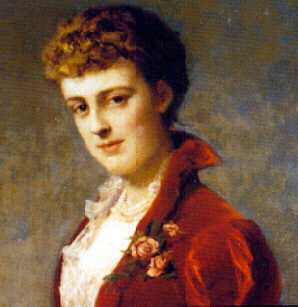
    Edith Wharton

    Gender: Feminine
    Origin: Anglo-Saxon
    Meaning: “blessed war; rich war.”
    Eng: (EE-dith); Ger (EH-dit); Fre (AY-deet)

    The name is derived from the popular Anglo-Saxon female name, Eadgyð, being composed of the elements, ead, meaning, “riches; blessed” and gyð, meaning, “war.”

    The name was quite common among Anglo-Saxon royalty, being borne by Saint Edith of Wilton (b.961), the daughter of King Edgar the Peaceful. Other notable Anglo-Saxon ladies included: Ealdgyth (circ. 1015) wife of Edmund the Ironside; Edith of Wessex (c.1029) the wife of King Edward the Confessor; Edith “Matilda” of Scotland, the wife of Henry I (1080-1118).

    The name was very popular in Medieval England, but fell out of usage after the 15th-century and was suddenly revived in the 19th-century.

    Currently, Edith is the 846th most popular female name in the United States (2009). The highest she has ranked in U.S. naming history was in 1894, when she was the 26th most popular female name.

    Other forms of the name include:

    Eadgyð/Ealdgyð (Anglo-Saxon)
    Edita Едита (Croatian/Czech/Lithuanian/Serbian/Slovak/Slovene: eh-DEE-tah)
    Ditte (Danish/Hungarian: DEET-te)
    Ditta (Hungarian/Italian)
    Edith (Dutch/English/Estonian/German/Scandinavian)
    Édith (French)
    Editha (German/Late Latin)
    Éda (Hungarian)
    Edina (Hungarian)
    Edit (Hungarian/Swedish)
    Editta (Italian)
    Ediva (Late Latin)
    Edyta (Polish: eh-DIH-tah)
    Edite (Portuguese)

      A common English short form is Edie.

      The name has also been borne by: French songstress, Édith Piaf (1915-1963); First-Lady, Edith Roosevelt (1861-1948); British poet and critic, Dame Edith Sitwell (1887-1964); actress, Edith “Edie” Sedgwick (1943-1971); Jewish-born German philosopher, theologian, Catholic nun, and Holocaust victim, Edith Stein (1891-1942).

      The designated name-days are: January 13 (Czech Republic); May 9 (Lithuania); May 14 (Estonia); September 16 (France, Hungary, Lithuanian, Poland); September 26 (Slovakia).

      Sources

      1. http://www.behindthename.com/name/edith
      2. http://www.etymonline.com/index.php?term=Edith

      Dolores

      Gender: Female
      Origin: Spanish
      Meaning: “sorrows.”
      Eng (do-LORE-iss);

      The name is taken from the Spanish word, dolores, meaning “sorrows.” The name was initially used in honour of the Virgin Mary, María de los Dolores, roughly translating as Our Lady of the Sorrows.

      This was the full name of the title character in the Vladimir Nabokov book, Lolita.

      Due to its strong Catholic origins, the name first appeared in Ireland during the 19th-century. In 1880, the name entered the U.S. top 1000, coming in as the 466th most popular female name. By 1930, she was then 13th most popular female name in the United States.

      As of 2009, she does not even appear in the U.S. top 1000.

      The name as also been occasionally used in Slovakia and France.

      The designated name-day in most Catholic countries is September 15.

      Other notable bearers include: Mexican actress, Dolores del Río (1905-1983); Former American actress turned nun, Dolores Hart (b.1938); Irish singer, Dolores O’Riordan (b.1971).

      Other forms of the name include:

      Nekane (Basque)
      Dolors (Catalan)
      Dores (Galician/Portuguese)
      Addolorata (Italian)
      Dolorata (Italian)
      Dolorosa (Italian)
      Doloretta (Italian)
      Dolorina (Italian)
      Dolorinda (Italian)

      A common Spanish nickname is Lola or Lolita, both of which are now used as independent given names.

      Source

      1. http://www.behindthename.com/php/related.php?name=dolores

      Adelphe, Adelphos

      Gender: Masculine
      Origin: Greek
      Meaning: “brother.”
      Fre (AH-delf)

      The name is derived from the Greek, αδελφος (adelphos), meaning “brother.”

      The name was mostly notably borne by Adelphe of Metz, a 5th-century Franco-German saint, the 12th bishop of Metz.

      Other forms of the name include:

      Adelfus (Dutch/German)
      Adelphe (French)
      Adelphos αδελφος (Greek)
      Alfio (Italian)
      Adelphus (Late Latin)

      In France, the designated name-day is September 11.

      Sources

      1. http://www.behindthename.com/name/philadelphia
      2. http://www.behindthename.com/namedays/lists/9.php
      3. http://fr.wikipedia.org/wiki/Adelphe

      Alan, Alain

      Gender: Masculine
      Origin: Breton
      Meaning: debated

      The name is of uncertain derivation but is most likely of Breton Celtic origins as the name has been in usage in Brittany as early as the 6th-century.

      Some theories suggest that it is derived from a Celtic root word meaning “little rock” or from a Celtic word meaning, “handsome.”

      Others have even suggested that it is a Celtic corruption of the Latin given name, Aelius.

      Another popular theory is that it comes from the name of a tribe of Indo-European people who settled the Loire Valley.

      The name was borne by several early Christian saints, and has been quite popular in both England and France since the Middle Ages.

      In England, the name was first introduced during the Norman Conquest in the 11th-century.

      In the United States, the name’s popularity peaked in the Mid-20th century. In 1951, it was the 4oth most popular male name in the United States. Today, it stands as the 142nd most popular male name, (2009).

      His rankings in other countries is as follows:

      # 56 (Chile, 2006)
      # 64 (Ireland, 2009)

      Other forms of the name include:

      Alan (Breton/Czech/English/Irish-Gaelic/Polish/Scottish/Slovak)
      Alanig/Lanig (Breton)
      Alen (Croatian/Slovene)
      Allan (Danish/English/Finnish/Norwegian/Swedish)
      Alain (French)
      Alán (Hungarian)
      Alano (Italian)
      Alanus (Late Latin)
      Alun (Welsh)

      A common English short form is Al.

      Notable bearers include: Alan Shepherd (1923-1998), the first American in space and the fifth man to walk on the moon. Alan Alda, American comedian.

      The designated name days are: March 8 (Slovakia), August 15 (Czech Republic), September 9 (France) and October 14 (Poland)

      Feminine forms include:

      Alanez (Breton)
      Naig/Nezig (Breton)
      Alaine (French)
      Alana (Irish/Scottish)

      Sources

      1. http://www.behindthename.com/php/find.php?name=alain
      2. http://en.wikipedia.org/wiki/Alan_(name)

      Mariana

      Gender: Feminine
      Origin: Latin
      Meaning: “sea-fearer; sailor.”

      The name is a feminine form of the Roman family name, Marianus, which is derived from the Latin, maris, meaning “sea.”

      However, the name has long been associated with the Biblical Mary and Miriam, and was usually bestowed in honour of the Virgin Mary. In other instances, it has been used in reference to both the Virgin Mary and her legendary mother, St. Anne.

      Mariana currently ranks in as the 289th most popular female names in the United States. Her rankings in other countries are as follows:

      Brazil (# 6, 2009)
      # 5 (Portugal, 2008)
      # 7 (Mexico, 2009)

      Throughout the centuries, Mariana has been borne by several important personages, including:

      Mariana of Austria (1634-1696), Queen Consort of Spain and wife to Philip IV. Mariana Victoria of Spain, Portuguese Queen Consort (1718-1781). Spanish national heroin, Mariana Pineda (1804-1831); Mariana Bracetti (1825-1903), considered the designer of the Puerto Rican flag and viewed as a heroin of Puerto Rican Independence. Mexican Telenovela actress, Mariana Levy (1966-2006); Mexican pop singer and actress, Mariana Ochoa (b.1979); American sculptor, Marianna Pineda (1925-1996); and Brazilian actress, Mariana Ximenes (b.1981).

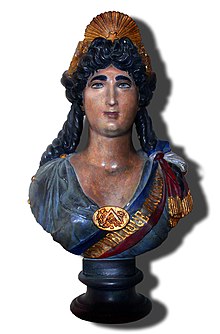
      Shortly after the adoption of the French Republic in 1792, Marianne was a female figure used to personify the state.

      Other forms of the name include:

      Marianna Μαριαννα (Breton/Estonian/Greek/Hungarian/Italian/Occitanian/Polish/Romansch/Slovak)
      Mariana (Bulgarian/Catalan/Czech/English/Italian/Latin/Portuguese/Romanian/Spanish/Swedish)
      Marianne (Danish/Dutch/Estonian/French/English/German/Norwegian/Swedish)
      Marijana Маријана (Croatian/Macedonian/Serbian)
      Mariann (Estonian/Hungarian)
      Mariannina (Italian)
      Marijona (Lithuanian)
      Marianno (Provençal)
      Marionna (Romansch)
      Maryana Марьяна (Russian)

      Nicknames include:

      Májinka/Marjánka/Márinka/Marka/Riana (Czech/Slovak)
      Mariannette (French)

      Male versions include:

      Marijan (Croatian/Slovene)
      Marjan (Croatian/Slovene)
      Mariano (Italian/Portuguese/Spanish)
      Marianno (Italian)
      Mariannino (Italian)
      Marianus (Latin)
      Marian (Polish)

      The designated name-days are: April 30 (Sweden) and September 8 (Czech Republic).

      Source

      1. http://www.behindthename.com/php/find.php?name=mariana

      Beata

      Gender: Feminine
      Origin: Latin
      Meaning: “blessed”
      Eng (bee-AH-tah); Pol (beh-AH-tah).

      The name is derived from the Latin word, beatus, meaning “blessed.”

      The name was borne by an early Christian martyr from Spain.

      It has been a very popular name in Central Europe, particularly in Poland, the Czech Republic, Slovakia, and to a certain extent, Germany.

      The name is/was also borne by Beata Kościeleckich Łaska, a 16th-century Polish noblewoman, mother of Halszka Ostrogska, and speculated to be the first tourist to the Tatry Mountains in Poland; first professional Swedish actress, Beata Sabina Straas (d.1773); Beata Artemska, a famous Polish cabaret dancer (1918-1985); early German feminist, Beate Sirota Gordon (b.1923); Polish pop songstress, Beata Kozidrak (b.1960).

      Other forms of the name include:

      Beáta Беа́та (Czech/Hungarian/Russian/Slovak)
      Beate (Danish/German/Norwegian)
      Beata (Italian/Lithuanian/Polish/Romansch/Spanish/Swedish)
      Béate (French)
      Bietta (Romansch)

      A Polish diminutive is Beatka.

      Masculine forms include

      Béat (French)
      Beato (Italian)
      Beatus (Late Latin)
      Beata (Lithuanian)
      Biet (Romansch)
      Beat (Romansch/Swiss-German)

      The designated name-days are: March 8 (Poland/Lithuania); March 22 (Hungary); June 28 (Slovakia); September 6 (Poland); October 25 (Czech Republic); December 2 (Sweden); December 22 (Poland).

      Source

      1. http://www.behindthename.com/php/find.php?name=beata

      Regina

      Gender: Feminine
      Origin: Latin
      Meaning: “queen.”
      Eng (reh-JEE-nah); Old Eng (reh-JYE-nah); It (ray-JEE-nah); Sp (rey-HEE-nah); Pol/Russ (reh-GHEE-nah).

      The name is of late Latin origins and in the Middle Ages, was popularized by a French saint.

      Saint Reine/Regina was a virgin martyr whose cult was especially popular in the area of Autun France. Her feast day is September 7th.

      In Medieval England, the name was used as a epithet for the Virgin Mary, referencing her as Queen of Heaven. The name fell out of usage after the Reformation and was revived in the 19th-century.

      Other famous Reginas include a concubine to Emperor Charlemagne (708); she was the mother of Drogo and Hugh.

      Currently, the name is borne by Regina Spektor (b.1980).

      Other forms include:

      Regina (Croatian/Dutch/English/German/Italian/Lithuanian/Polish/Romansch/Swedish)
      Regína (Czech/Hungarian/Slovak)
      Regine (Danish/German/Norwegian)
      Regiina (Estonian)
      Reine (French: archaic)
      Régine (French)
      Gina (Italian/English)
      Reggina (Italian)
      Reginella (Italian)
      Reginetta (Italian)
      Reina/Reyna (Spanish/Estonian)

      An obscure Italian male form is Regino.

      Source

      1. http://www.behindthename.com/php/find.php?name=regina