Gregory

Gender: Masculine
Origin: Greek
Meaning:”watchful; alert.”
(GREG-eh-ree)

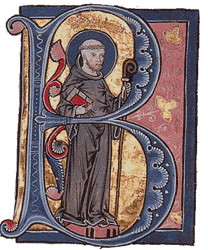
The name is derived from the Late Latin male name, Gregorius, which is derived from the Greek, Gregorios Γρηγόριος, meaning, “watchful; vigilant; alert.”

The name was borne by several saints in the early church, including, St. Gregory Thaumaturgus (3rd-century), St. Gregory of Nyssa (4th-century), St. Gregory of Nazianus (4th-century) and St. Gregory of Tours (6th-century).

It was also borne by St. Gregory 1 the Great, a 6th-century pope and Doctor of the Church. Due to his notoriety, the name became a popular one chosen among popes thereafter.

Currently, Gregory ranks in as the 248th most popular male name in the United States. The highest he has ranked in U.S. naming history was in 1963 coming in as the 21st most popular male name. This may have been in part, due to the fame of American actor, Gregory Peck.

The designated name-days in the West are March 11 and September 3rd.

In the Eastern calendar, the designated name-days are: January 1, January 14, January 18, January 21, January 23, February 1, February 7, February 12, February 23, March 17, March 25, April 15, April 19, April 23, June 6, June 28, August 1, August 21, August 22, August 25, September 10, September 12, October 11, October 13, October 14, November 18, November 20, November 27, November 30, December 3, December 6, December 7, December 11 and December 20.

Other forms of the name include:

Jerjer جريجوري (Arabic)
Krikor/Grigor Գրիգոր (Armenian)
Ryhor Рыгор (Belarusian)
Grigor Григор (Bulgarian/Macedonian/Welsh)
Gregori (Catalan/Romansch)
Grgur (Croatian)
Řehoř (Czech)
Gregers (Danish/Norwegian)
Gregorius (Dutch/Latin)
Gregory (Dutch/English)
Graekaris (Faroese)
Reijo (Finnish)
Reko (Finnish)
Grégory/Grégoire (French)
Joris (Frisian)
Grigol/Grigoli გრიგოლი (Georgian)
Gregor (German/Hungarian/Icelandic/Romansch/Scottish/Slovak/Slovene)
Gergely (Hungarian)
Gréagóir (Irish-Gaelic)
Gregorio (Italian/Spanish)
Goretto (Italian: obscure)
Goriano (Italian: obscure)
Gorino (Italian: obscure)
Grigorijs (Latvian)
Gregoras/Gregorijus/Grigalius (Lithuanian)
Grigorii Григории, Григоріи (Old Church Slavonic)
Grzegosz (Polish)
Gregório (Portuguese)
Gligor/Grigore (Romanian)
Grigoriy Григорий (Russian)
Griogair (Scottish-Gaelic)
Grigoriye Григорије; Gligoriye Глигорије; Grgur Гргур (Serbian)
Grega/Gregori (Slovene)
Greger (Swedish)
Hryhoriy Григорій (Ukrainian)

Diminutives

Greg/Gregg (Dutch/English)
Gregie (Dutch)
Gergõ (Hungarian)
Gorio/Goro (Italian)
Grzeszek (Polish)
Grisha (Russian)
Greig (Scottish)
Goyo (Spanish)

Feminine forms include:

Jorina/Jorinna (Frisian)
Gregoria (Italian/Spanish)
Gregorina (Italian)
Goretta (Italian)
Gorina (Italian)

Source
  1. http://www.behindthename.com/name/gregory

Aegidius, Giles

Gender: Masculine
Origin: Greek
Meaning: “kid, young goat.”
Eng (JILES); FRE (ZHEEL)

Aegidius is a Late Latin name derived from the Greek (αιγιδιον) aigidion, meaning, “kid, young goat.”

Other sources have suggested that it may also come from the Latin aigis, a type of goatskin shield which ultimately derives from the above Greek source.

The name was borne by an 8th-century Christian saint of Greek origin, who ended up settling in what is now the South of France. He was renowned for his miracles and was revered as the patron saint of the crippled during the Middle Ages.

In Old French, the name was rendered as Aegidie, which eventually was contracted to Gidie ultimately becoming Gilles. The name was introduced into England after the Norman Conquest in this form and hence its English derivative became Giles.

Other forms of the name include:

Jilji (Czech)
Egidius (Dutch)
Gillis (Dutch)
Giles (English)
Gidie (French)
Gilles (French)
Ägidius/Ägydius (German)
Egyd (German)
Gilg/Gilgian (German)
Ilg (German)
Egyed (Hungarian)
Egidio (Italian/Spanish)
Egilio (Italian)
Gidio (Italian)
Gilio (Italian)
Gillo (Italian)
Zilio (Italian)
Egidijus (Lithuanian)
Gèli (Occitanian)
Egidiusz (Polish)
Idzi (Polish)
Egídio (Portuguese)
Gil (Portuguese/Spanish)
Egidi/Egidij (Slovene)
Egi (Slovene)
Ilgo (Slovene)
Ilj (Slovene)
Iljko (Slovene)
Tilen (Slovene)
Tilj (Slovene)
Tilih (Slovene)

Feminine forms include

Egida (Italian/Slovene)
Egide (Italian)
Egidia (Italian/Spanish)
Egidija (Slovene)
Egilia (Italian)
Gilia /Gilla (Italian)
Tilka (Slovene)
Zilia/Zilla (Italian)

The designated name-day is September 1.

Source

  1. http://www.behindthename.com/php/related.php?name=giles

Bernard, Bernadette

Gender: Masculine
Origin: Old German
Meaning: “brave as a bear; hardy as a bear.”
(Am. Eng) (ber-NARD); (Brit. Eng) (BER-nerd)

The name is composed of the Old High Germanic elements, bern (bear) and hard (brave; hardy).

The name was introduced into England by the conquering Normans in the 10th-century, replacing the more Anglo-Saxon version of Beornheard.

It became quite prevalent throughout Western Europe during the middle ages due to the associations with St. Bernard of Menthon, a Swiss monastic credited to building hospices in the Alps, (it is from him that the breed of dog, the St. Bernard, takes its name) and St. Bernard of Clairvaux, an influential 12th-century French theologian who is revered as both a saint and Doctor of the Church by the Catholic Church.

As of 2009, the name fell out of the U.S. top 1000 most popular male names. The highest he ever ranked in U.S. naming history was at # 45 in 1919 and again in 1921.

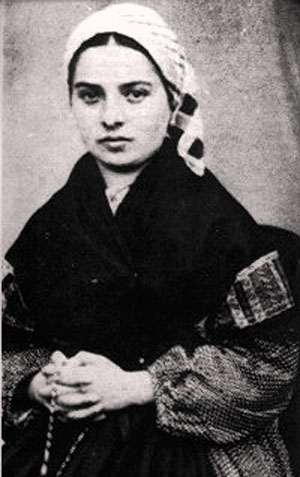
Its more popular feminine version of Bernadette became prevalent, especially among Catholics throughout the Western World, after the Canonization of St. Bernadette Soubirous (née Marie-Bernarde Soubirous). St. Bernadette was a 19th-century French peasant girl credited to seeing visions of the Virgin Mary in Lourdes, France.

Before her recognition throughout the world, Bernadette was primarily a diminutive, used as an affectionate form of the French feminine name, Bernarde.

The last time Bernadette ranked in the U.S. top 1000 was in 1993, coming in at # 891. The highest she ever ranked in U.S. naming history was in 1946, coming in as the 188th most popular female name. Its Hungarian cognate of Bernadett currently ranks in as the 76th most popular female name in Hungary (2009).
Variations

Bernard

Bernardi (Albanian)
Bernal (Aragonese/Galician)
Beñat (Basque)
Bernarta (Basque)
Bernez (Breton)
Bernat (Catalan)
Bernardu (Corsican/Sardinian)
Bernard (Croatian/Czech/English/French/German/Polish/Romanian/Romansch/Slovenian/Swedish)
Bernhardt/Bernhart (Danish/Finnish/German/Norwegian/Swedish)
Berend (Dutch)
Bernaard (Dutch)
Bernhard (Dutch/Estonian/German)
Päärn/Pärn/Pärno (Estonian)
Pääro (Estonian)
Pearn/Pearu (Estonian)
Bernardin (French/Romansch)
Bent (Frisian)
Bernaldo (Galician)
Bernaldino (Galician)
Berendt (German)
Berinhard (German: archaic)
Bernd/Berndt (German/Swedish)
Bernárd (Hungarian)
Bernát (Hungarian)
Bennardo/Bennardino (Italian)
Berardo (Italian)
Bernadetto (Italian)
Bernardino (Italian)
Bernardo (Italian/Portuguese/Spanish)
Bernoardo (Italian)
Bearnárd (Irish-Gaelic)
Bernardus (Late Latin)
Bernards (Latvian)
Bierants (Latvian)
Biernis (Latvian)
Bernardas (Lithuanian)
Beurnard (Poitevin)

Bernadette

Bernardete (Albanian/Portuguese)
Bernada (Catalan/Occitanian)
Bernadeta (Catalan/Occitanian/Polish)
Bernarda (Croatian/German/Italian/Slovene/Spanish/Polish/Portuguese)
Bernadette (English/French)
Bernarde (French)
Bernardine (French)
Bernadett (Hungarian)
Bernadetta/Bernardetta (Italian)
Bernardina (Italian)
Bernadetė (Lithuanian)
Bernardka (Slovenian)
Bernardita (Spanish)

Common English diminutives for both names are Bernie & Benny.

In French it is Bébère, Nanard and Bernie for males.

A Polish female diminutive is Bernardetka.

The designated name-day is August 20.

Source

  1. http://www.behindthename.com/name/bernard

Radegonde

Gender: Feminine
Origin: Germanic
Meaning: “war counsel.”

The name is composed of the Germanic elements, rad meaning “counsel” and gund meaning “war.”

The name was borne by a 6th-century French saint who is particularly venerated in the city of Poitiers in France.

St. Radegonde was a Thuringian Princess, the fourth wife of the Frankish king Clotaire I, she founded the monastery of St. Croix in Poitiers.

St. Radegonde was known for her piety and tried to live a life of humility, chastity and poverty while queen.

Many legends and miracles were attributed to her.

In the city of Poitiers, she is considered the patron saint of university students and till this day, students from the University of Poitiers will often visit her tomb before an exam in hopes that the saint will intervene on their behalf.

The designated name-day is August 12.

Other forms of the name include:

Radegunda (Catalan/Lithuanian/Polish/Portuguese/Spanish)
Radegundis (Dutch/German/Old French)
Radegund (English/German)
Rhadegund (English: archaic)
Radegonde (French)
Radegunde (German)
Radegonda (Italian)

Source

  1. http://fr.wikipedia.org/wiki/Radegonde_de_Poitiers

Norma

Gender: Feminine
Origin: Uncertain
Meaning: Uncertain

The name is of uncertain origin or derivation, although some theories suggest that it is from the Latin word norma meaning “patterns; rule” or that it is a feminine form of the English surname turned given name, Norman.

It first gained recognition from the 1831 opera by Vincenzo Bellini and Felice Romani.

The name has experienced widespread usage across Europe and the Anglo-phone world since. Between 1931-32, Norma was the 22nd most popular female name, today, she does not appear in the U.S. top 1000.

In pop culture, it was borne by Norma Jeane Mortensen Baker (also known as Marilyn Monroe).

The designated name-day in Latvia is August 2.

Source

Azzurra

Gender: Feminine
Origin: Italian
Meaning: “blue.”
Pronunciation: http://www.forvo.com/word/azzurra#it

The name comes directly from the Italian feminine noun meaning “blue.”

It shares the same etymology with the English word azure and the Spanish word azul.

Another form of the name is Azzurrina.

Masculine forms are Azzurro and Azzurrino.

Sources

  1. http://www.behindthename.com/name/azzurra
  2. http://www.forvo.com/word/azzurra#it
  3. http://www.frasi.net/nomi/default.asp?nomepersona=Azzurra
  4. http://it.wikipedia.org/wiki/Azzurra

Ulrich

Gender: Masculine
Origin: German
Meaning: “power and prosperity.”
Germ (OOL-hreeh); Eng (UL-rick); Swe (OOL-reek)

The name is derived from the Germanic elements, uodal, meaning “heritage” and ric meaning, “power.”

Both the feminine and masculine form have been fairly common in Germanic countries for centuries. It was borne by two German saints and it was also the name of the Swiss Protestant Reformor, Ulrich Zwingli (1484-1431).

Other forms of the name include:

Ulric (Catalan/French)
Oldřich (Czech)
Ulrik (Danish/Dutch/Hungarian/Norwegian/Swedish)
Oldrik (Dutch)
Olerik (Dutch)
Ulric (English)
Ulrich (French/German/Icelandic)
Huldrych/Huldreich (German)
Ódor (Hungarian)
Olderico/Olderigi/Olderigo (Italian)
Udalrico/Udalrigo (Italian)
Uldarico/Ulderico (Italian)
Ulderigo (Italian)
Ullrico (Italian)
Uldis (Latvian)
Ulriks (Latvian)
Odalrich (Old High German)
Ulryk (Polish)
Ulrico (Portuguese/Spanish)
Oldrich (Slovak)
Urh (Slovene)
Uldarico (Spanish)

Uli is a common diminutive form used in Germany, while Ueli is the preferred form used in Switzerland.

Feminine forms include:

Ulrika (Czech/German/Norwegian/Slovak/Swedish)
Ulrike (Danish/German/Norwegian)
Ulrikke (Danish/Norwegian)
Ulla (Finnish/German)
Ulrique (French)
Ulrieke (German)
Ulrira (German)
Ulschke (German)
Ulrica (Italian/Romansch/Spanish)
Ulryka (Polish)

Common German feminine diminutive forms include: Ike, Rieke, Rika, Rike, Riken, Rikerl, Riki, Ule, Uli, Ulla, Ulle, Ulli, Ullie, Ully and Uri.

Its feminine counterpart has been borne by at least one Swedish princess, a fictional character in Walter Scott’s 1819 novel, Ivanhoe and Ulrika Pasch, an 18th-century female Swedish painter.

The designated name-day July 4 in most countries and July 10 in France.

Sources

  1. http://www.behindthename.com/name/ulrich
  2. http://www.behindthename.com/namedays/lists/7.php

Urban

Gender: Masculine
Origin: Latin
Meaning: “city-dweller.”
Eng (ER-ben)

The name is derived from the Latin name, Urbanus, which means “city-dweller.”

The name is mentioned briefly in one of St. Paul Epistles in the New Testament and was also borne by several popes.

In 2005, Urban was the 33rd most popular male name in Slovenia.

Other forms of the name include:

Urbà (Catalan)
Urban (Czech/Danish/Dutch/English/Estonian/German/Slovakian/Slovene/Norwegian/Polish/Russian/Swedish)
Urbas/Urbo (Finnish)
Urpa/Urpo (Finnish)
Urbain (French)
Ourbanos (Greek: Biblical)
Orbán/Orbó/Urbán (Hungarian)
Urbano (Italian/Portuguese/Spanish)
Urbanus (Latin)
Urvan (Russian)

An Italian feminine form is Urbana.

The designated name-days are: April 2/16 (Poland), May 25 (Estonia/Slovakia/Sweden), July 2/29 (Poland), September 27 (Poland), October 31 (Poland) and December 19 (Poland).

Source

  1. http://www.behindthename.com/name/urban


Silver, Silvère

Gender: Masculine
Origin: Latin
Meaning: “woods”
Fre (seel-VARE)

The name is derived from the Latin, Silverius, which may possibly be from the Latin word, silva, meaning “forest; woods.”

Its occasional modern usage in English speaking countries is more likely due to its association with the English for the precious metal of the same name.

The name was borne by a few early saints, the most notable be Pope Saint Silver (536-537).

Other forms of the name include:

Siveri (Catalan)
Silverije (Croatian)
Silver (English/Estonian)
Silverio (Galician/Italian/Spanish)
Sylweriusz (Polish)
Silvério (Portuguese)
Silveriu (Romanian)

The designated name-days are June 20 (France) and December 31 (Estonia).

A feminine form is the Spanish/Italian Silveria.

Sources

  1. http://www.behindthename.com/comment/search.php?terms=silver

Germain, Germaine

Origin: French/Latin
Meaning: “seed”

The names are derived from the Roman cognomen, Germanus, which is derived from the Latin, germen, meaning “seed.” The meaning may have been synonymous with “brother; relative” or “blood relation.”

Germain is the French masculine form while Germaine (jer-MANE) Eng; (zhare-MEHN) Fre, is the feminine form.

St. Germaine Cousin was a 16th-century French saint and shepherdess. She was said to have suffered from a debilitating form of Tuberculosis, which crippled her, and she was also physically abused by her stepmother. She was renowned for her piety.

After her death, several miracles were attributed to the saint, and she has been venerated ever since, being canonized by the Catholic Church in 1867.

In France, the designated name-day is June 15.

Other forms of the name include:

    Germana (Italian/Polish/Portuguese/Spanish)
    Zermena (Latvian)

Another masculine form is the Italian/Spanish/Portuguese, Germano. A Polish masculine form is German.

Sources

  1. http://en.wikipedia.org/wiki/Catholic_Encyclopedia
  2. http://www.behindthename.com/name/germanus