Orion

Gender: Masculine
Origin: Greek Ωριων
Meaning: “boundary; limit.”
Eng (o-RIE-ən)

The name is believed to be derived from the Greek, ‘οριον (horion) meaning, “boundary; limit.” In Greek mythology, it was borne by a great huntsman and a favorite companion of Artemis. Zeus turned him into a constellation.

Currently, Orion was the 466th most popular male name in the United States, (2010). Other forms of the name include:

  • Orioni ორიონი (Albanian/Georgian)
  • Orió (Catalan)
  • Orion Ωρίων (English/Greek/Polish)
  • Órión (Hungarian)
  • Orione (Italian)
  • Orions (Latvian)
  • Orionas (Lithuanian)
  • Órion (Portuguese)
  • Orionte (Portuguese)
  • Orión (Spanish)
The name was borne by an early Christian Greek martyr and in recent history it was borne by Orion Clemens (1825-1897), the first and only Secretary of Nevada Territory and the brother of Mark Twain.
The designated name-day is May 16 (Poland).
Source

Gideon

Gender: Masculine
Origin: Hebrew גִּדְעוֹן

The name name could either be Hebrew for “destroyer” or “tree feller.” It is borne in the Old Testament by one of the Hebrew Judges, (Judges 6–8). He is also mentioned in Epistle to the Hebrews: Chapter 11 as an example of a man of faith.

In the Book of Mormon, it is borne by a powerful Nephite leader.

Regarded as a saint in the Catholic Church, it was occasionally used as a given name in Medieval England, but exploded in popularity after the Protestant Reformation, especially in Germany and the Netherlands.

Currently, Gideon is the 461st most popular male name in the United States and the 496th most popular in the Netherlands, (2010).

Other forms of the name include:

  • Gideon Гидеон (Afrikaans/Dutch/English/Estonian/German/Scandinavian/Serbian)
  • Gedeó (Catalan)
  • Gédéon (French)
  • Gid’on גִּדְעוֹן (Hebrew)
  • Gedeon Гедео́н (Hungarian/Polish/Russian)
  • Gedeone (Italian)
  • Gideonas (Lithuanian)
  • Gideão (Portuguese)
  • Gedeón (Spanish)
The name was borne by the first discoverer of the dinosaur, Gideon Mantell (1790-1852).
Common English diminutives are Gid and Giddy.
Source


Solomon

Gender: Masculine
Origin: Hebrew שְׁלֹמֹה
Meaning: “peace.”

The name is borne in the Old Testament by son of David and the King of Israel. He is credited as being the author of Proverbs, the Song of Solomon and Ecclesiastes. In the Talmud he is considered one of the 48 prophets. In Jewish and Christian tradition he is viewed as a wise and holy king but had fallen from grace due to his ego and his marriage to hundreds of foreign wives who led him astray from God. In the Qu’ran, Solomon is a prophet and a messenger from Allah, he is the only one who was ever able to control the djinn with his magical incantations.

The name has always been a popular one among Jews, Muslims and Eastern Orthodox Christians, but has never really been common in the English-speaking world, even after the Protestant Reformation. Currently, Solomon is the 467th most popular male name in the United States, (2010).

Other forms include:

  • Salomo (Afrikaans/Dutch/Finnish/German/Scandinavian)
  • Salomon (Albanian/Croatian/Finnish/French/Polish/Scandinavian/Ukrainian)
  • Sulayman  سليمان (Arabic)
  • Salamon Саламон (Belarusian)
  • Sulejman (Bosnian)
  • Suljo (Bosnian)
  • Solomon Саламон (Bulgarian/English/Macedonian/Romanian/Russian/Serbian)
  • Salomó (Catalan)
  • Šalomoun (Croatian)
  • Saalomon (Estonian)
  • Sálomon (Faroese)
  • Solamh (Gaelic)
  • Solomoni სოლომონი (Georgian)
  • Shlomo שְׁלֹמֹה (Hebrew)
  • Salamon (Hungarian/Occitanian)
  • Silêman (Kurdish)
  • Salomone (Italian)
  • Shelomo (Ladino)
  • Salamans (Latvian)
  • Zālamans (Latvian)
  • Saliamonas (Lithuanian)
  • Sjelomo (Norwegian: archaic)
  • Szlomo (Polish-Yiddish)
  • Salomão (Portuguese)
  • Šalamún (Slovak)
  • Suleymaan (Somalian)
  • Salomón (Spanish)
  • Sөlәjman Сөләйман (Tatar)
  • Süleyman (Turkish)
  • Selyf (Welsh)
  • Zalman (Yiddish)

Common English diminutives are Sol and Solly.

A Russian feminine form which was common among Russian royalty is Solomonia.

Source

  1. http://www.behindthename.com/name/solomon

Adelaide

Gender: Feminine
Origin: Old German
Meaning: “noble kind; noble sort.”
Eng (AD-ə-layd)

An English form of the German name, Adelheid, it is composed of the Germanic elements, adel (noble) and heid (kind, sort, type). It was borne by a 10th-century saint and wife of Otto the Great.

Its popularity in the English-speaking world was sparked in the 19th-century when William IV took Adelaide of Saxe-Meiningen as his wife. As a result, several places throughout the former British Empire were named in her honour, including Adelaide, Australia.

In addition, the name has been borne by several other royal personages throughout history.

Currently, Adelaide is the 434th most popular name in the United States, (2010).

Other forms of the name include:

  • Adelgjejda Адэльгейда (Belarusian)
  • Adeljajda АдэлЯйда (Belarusian)
  • Adelaid (Breton)
  • Adelaida Аделаида (Catalan/Czech/Hungarian/Russian/Slovene/Spanish)
  • Adléta (Czech)
  • Adelaide (Danish/English/Italian/Portuguese/Swedish)
  • Alhed (Danish)
  • Adelheid (Dutch/Finnish/German/Norwegian)
  • Adelheidis (Dutch)
  • Aleida (Dutch/German)
  • Alida (Dutch/Hungarian/Latvian)
  • Aadelheide (Estonian)
  • Alide (Estonian)
  • Adélaïde (French)
  • Alette (French/Norwegian)
  • Aleit (Frisian)
  • Elke (Frisian)
  • Talea (Frisian)
  • Tale (Frisian)
  • Talia/Thalia (Frisian)
  • Talisa (Frisian)
  • Talke/Thalke (Frisian)
  • Adelaira (Galician)
  • Delaira (Galician)
  • Alheit (German)
  • Alke (German)
  • Heide (German)
  • Heidi (German)
  • Adina (Hungarian)
  • Aletta (Hungarian/Italian)
  • Alett (Hungarian)
  • Alitta (Hungarian)
  • Adelasia (Italian: archaic)
  • Aalis (Medieval French)
  • Alides (Norwegian: archaic)
  • Adalais (Occitanian)
  • Asalais or Azalaïs (Occitanian)
  • Ahlheid (Plattdeutsch)
  • Ahlheit (Plattdeutsch)
  • Adelajda (Polish)

Common English diminutives are: Addie, Del and Lady.

The designated name-days are: January 30 (Poland), February 5 (Poland), December 12 (Poland), December 16 (Estonia/Germany/Poland), December 17 (France).

Source

  1. http://www.behindthename.com/name/adelaide

Cyrus

Gender: Masculine
Origin: Persian

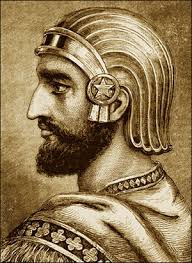
The name is found in History and in the Old Testament as the name of one of the most powerful leaders who ever lived, Cyrus the Great (c. 600 BC or 576 BC–530 BC). He was a conqueror of the Babylonians and who, according to the Bible, freed the captive Jews, allowing them to return to their homeland. It is also borne by several other Persian kings.

Cyrus, in its Persian form, has always been a popular male name in Iran. In the English-speaking world, it did not catch on until after the Protestant Reformation. Currently, Cyrus is the 488th most popular male name in the United States, (2010). The name is commonly used among Iranian-Americans, due to it being such a classic name in Iran and the fact that it is easily translatable to English.

As for its etymology, general consensus agrees that it may derive from the ancient Persian elements khor (sun) and vash (likeness). However, the noted linguist, Karl Hoffman (1915-1996), argued that it is based on an Indo-European root meaning “to humiliate.”

Other forms of the name include:

  • Kores (Afrikaans)
  • Kyowros Կյուրոս (Armenian)
  • Ciru (Asturian)
  • Kir Кир (Azeri/Belarusian/Bosnian/Bulgarian/Croatian/Kyrgyz/Polish/Russian/Rusyn/SerbianUkrainian)
  • Kuir (Basque)
  • Ziro (Basque)
  • Kirus (Breton)
  • Cir (Catalan/Occitanian)
  • Kýros (Czech/Icelandic/Slovak/Slovene)
  • Cyrus (Dutch/English/French/Latin/Polish/Romanian)
  • Kyros Κυρος (Estonian/German/Greek/Scandinavian)
  • Kyyros (Finnish)
  • Cyr (French)
  • Syrus (Frisian)
  • Cíoras (Gaelic)
  • K’iros კიროს (Georgian)
  • Koresh כּוֹרֶשׁ (Hebrew)
  • Círus/Cýrus (Hungarian)
  • Kurus (Hungarian)
  • Cirino (Italian)
  • Ciro (Italian. CHEE-ro)
  • Cirotto (Italian)
  • Kurushi Куруши (Kyrgyz)
  • Kûruşê (Kurdish)
  • Kīrs (Latvian)
  • Kyras (Lithuanian)
  • Kurusy (Malay)
  • Kurush/Kourosh کوروش‎ (Persian)
  • Ciro (Spanish/Portuguese. SEE-ro; THEE-ro)
  • Kiros (Turkish)
The designated name-days are: January 31 (Poland) and September 12 (Poland).
The name has several feminine offshoots, including Cyra, (Eng. SY-rah), which was a popular female name during the Byzantine empire and the Russian, Kira (KEER-ah). Kira  is currently the 90th most popular female name in Hungary, (2010) and the 308th most popular in the United States, (2010). Other feminine forms include:
  • Kira Кира (Bulgarian/German/Hungarian/Latvian/Polish/Russian/Ukrainian)
  • Cyra (English/Latin/Polish)
  • Kiira (Estonian/Finnish)
  • Kyra (Greek/English)
  • Kíra (Hungarian)
  • Cira (Italian/Spanish)
  • Cirina (Italian)
The designated name-days for Kira are: March 10 (Latvia), March 12 (Russia), July 7 (Poland), October 12 (Latvia). November 7 (Estonia).
Source

Serena

Gender: Feminine
Origin: Latin
Meaning: “clear; serene; calm; dry.”
Eng (sə-REEN-ə); It (se-RE-nah)

The name is derived from the Late Latin male name, Serenus, which comes directly from the Latin word meaning “serene, calm, clear, tranquil” and is related to the Greek word  ξηρός (xeros) meaning “dry”, a term used to describe clear weather.

The name was borne by several early Roman martyrs, including the legendary wife of Diocletian, who was murdered by her own husband after defending two Christians her husband had condemned. She is venerated as the patron saint of Lazio in Italy.

It was also borne by the niece of the Emperor Theodosius I, (b.365).

Currently, it is the 398th most popular female name in the United States, (2018).

It’s rankings in other countries are as follows:

  • #58 (Italy, 2018)
  • #325 (France, 2018)
  • #386 Séréna (France, 2018)
  • #458 (England & Wales, 2018)

Other forms of the name include:

  • Serina (English/Norwegian/Romansch)
  • Séréna (French)
  • Szeréna (Hungarian)
  • Szerénke (Hungarian)
  • Serenetta (Italian)
  • Serenilla (Italian)
  • Serine (French/Nowergian)
  • Seraine/Sereine (Old French)
  • Seraina (Romansch)
  • Sereina (Romansch)
Masculine forms include:
  • Seré (Catalan)
  • Sérène (French)
  • Szerénusz (Hungarian)
  • Sereno (Italian/Spanish)
  • Serenillo (Italian)
  • Serenus (Latin)
  • Seren (Polish, rare)

The name is borne by tennis player, Serena Williams (b.1981).

Source

Moses

Gender: Masculine
Origin: Debated
Meaning: debated

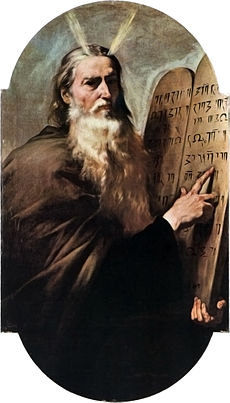
The name is borne in the Old Testament and in the Qu’ran by the a renowned prophet and law giver, who according to tradition was placed in a basket by his Hebrew mother and found by the daughter of Pharaoh (in Judeo-Christian religion) or the wife of Pharaoh (in Islamic tradition) and raised as an Egyptian prince. It is from this tradition that the name is believed to be derived from the Hebrew element משה (mšh) as stated in  Exodus 2:10:

“[…] she called his name Moses (משה): and she said, Because I drew him (משיתהו) out of the water.” (KJV).


It has been suggested that the name is in fact of Egyptian origins, being related to the Coptic elements, mo (water) and uses (saved; delivered) hence: “saved from the water.” Another suggestion is the Egyptian element, ms (child; born) as found in such ancient Egyptian male names as Tuth-Mose and Ram-messes.

The name has always been common among Jews, Muslims and Orthodox Christians, but did not catch on in the English-speaking world until after the Protestant Reformation. Medieval Jews of England used the Middle English form of Moss.

It is currently the 509th most popular male name in the United States, (2010).

Other forms of the name include:

  • Moses (Afrikaans/English/German/Scandinavian/Welsh)
  • Moisiu (Albanian)
  • Musa موسى Муса (Amharic/Arabic/Azeri/Bosnian/Kabyle/Swahili/Tatar/Turkish)
  • Moisen (Aragonese)
  • Movses Մովսես (Armenian)
  • Moises (Basque)
  • Majsjej Майсей (Belarusian)
  • Moizez (Breton)
  • Moisej Моисей (Bulgarian)
  • Moisès (Catalan)
  • Moisije Мојсије (Croatian/Serbian)
  • Moše (Croatian)
  • Mojžíš (Czech/Slovak)
  • Mozes (Dutch)
  • Mooses (Estonian/Finnish)
  • Móses (Faroese/Icelandic)
  • Moïse (French)
  • Maois (Gaelic)
  • Mose მოსე (Georgian/German/Romansch/Swedish)
  • Mouses Μωυσης (Greek)
  • Moshe מֹשֶׁה (Hebrew/Ladino)
  • Mózes (Hungarian)
  • Mosè (Italian)
  • Müsa Мұса (Kazakh)
  • Mosa (Kurdish)
  • Mûsa (Kurdish)
  • Moyses (Latin)
  • Mozus (Latvian)
  • Mozė (Lithuanian)
  • Мојсеј (Macedonian)
  • Moss (Middle English)
  • Moïses (Occitanian/Provençal)
  • Mojżesz (Polish)
  • Moisés (Portuguese/Spanish)
  • Moise (Romanian)
  • Moisej Моісей (Rusyn/Ruthenian)
  • Moiséj Моисе́й (Russian)
  • Muozė (Saimogaitian)
  • Mojzes (Slovene)
  • Muuse (Somalian)
  • Mojsej Мойсей (Ukrainian)
  • Moosõs (Voro)
  • Moishe (Yiddish)
Recently, actress Gwyneth Paltrow bestowed this name on her second child, Moses Bruce Anthony Martin (b. 2006)
Sources

Asia

Gender: Feminine
Origin: Greek Ασιη Ασια
Meaning: uncertain
Eng (AY-juh)

The name is found in Greek mythology as the name of the daughter, (also referred to as Clymene and Clymene-Asie), of Oceanus and Tethys, the wife of Lepatus and mother of Atlas, Prometheus, Epimetheus and Menoetius. It was also the name of a Lydian nymph.

The etymology of the name is uncertain, the myth of Asia existed long before the area of what is now known as Turkey got its name. Herodotus argued that the region was in fact named for the Lydian nymph, while the ancient Lydians themselves claimed that their homeland got its name from a Sardisian prince named Asies.

In the English-speaking world, the earliest usage of the name seems to trace back to Asia Frigga Booth Clarke (1835-1888), the sister to the infamous presidential assassin John Wilkes Booth. Her father, Junius Brutus Booth, a famous actor in his time, chose the name as he believed the Garden of Eden was located in the continent of Asia. Asia Clarke is most noted for her memoires entitled John Wilkes Booth: a sister’s memoir.

Coincidentally, it is also the default Polish diminutive form of Joanna. In this case, it is pronounced (AH-shah).

Currently, Asia is the 23rd most popular female name in Italy (2008) and the 532nd most popular female name in the United States, (2010).

It is currently borne by Italian actress Asia Argento (b.1975).

The name has always been used as a female name in Greece.

Sources

  1. http://www.behindthename.com/name/asia-1
  2. http://www.theoi.com/Nymphe/NympheAsie.html
  3. Hesiod, Theogony – Greek Epic C8th-7th BC
  4. Apollodorus, The Library – Greek Mythography C2nd BC
  5. Herodotus, Histories – Greek History C5th BC


Gloria

Gender: Feminine
Origin: Latin
Meaning: “glory.”
Eng (GLAWR-ee-ə)

The name comes directly from the Latin word for glory and its usage as a given name is relatively recent in naming history. Its first appearance seems to be the name of the protagonist of E.D.E.N. Southworth’s 1891 novel, Gloria: A Novel.

Born Emma Dorothy Eliza Nevitte, Southworth was a popular novelist of her time, and seems to have had a habit of bestowing interesting names on her female characters, particularly names which come directly from Latin words. Her most famous example being her tomboyish character, Capitola Black in her most famous work, The Hidden Hand (1889).

Gloria was used again by George Bernard Shaw for a character in his 1898 play You Never Can Tell.

Due to its seemingly religious connotations, the name skyrocketed among Catholic families during the Depression Era. In this case, the name may have been used in reference to the Great Doxolgy or hymn sung during Catholic masses Gloria in Excelsis Deo. 

Currently, Gloria is the 503rd most popular female name in the United States, (2010).

Other forms of the name include:

  • Glorietta (Italian)
  • Glorinda (Italian)

An obscure Italian diminutive is Gloriuccia.

There is also a very obscure masculine Italian form: Glorio.

Famous bearers include:

  • Gloria Swanson (actress, 1899-1983)
  • Gloria Steinem (feminist, b.1934)
  • Gloria Gaynor (singer, b.1948)
  • Gloria (Bulgarian pop-singer, b.1973)
  • Gloria Princess of Thurn & Taxis (b.1960)
  • Gloria Estefan (singer, b.1957)
In Poland, the designated name-day is May 13.

Source

  1. http://www.behindthename.com/name/gloria


Uriah

Gender: Masculine
Origin: Hebrew אוּרִיָה
Meaning: “yahweh is my light.”
Eng (yoo-RIE-ə)

The name is borne by several characters in the Old Testament, one of the most famous being Uriah the Hittite. King David had sent him out in the forefront of battle in the hopes that he would be killed, so that David could marry Uriah’s wife, Bathsheba.

The name also appears in the Bible in the form of Urijah.

The name was always common among Jews but did not catch on in the Christian world until after the Protestant Reformation. It was a fairly common name in early America.

Charles Dickens used the name for an antagonist in his 1850 novel David Copperfield. Due to the character’s reputation, the term Uriah Heep is often used to describe a “yes man.”

Currently, Uriah is the 548th most popular male name in the United States, while his alternative, Urijah, ranked in at # 623, (2010).

Other forms of the name include:

Uries (Catalan)
Urijáš (Czech)
Urie (French/Romanian)
Urijah Урия (German/Russian)
Ourias Ουριας (Greek)
Uriyah אוּרִיָה (Hebrew)
Uria (Italian)
Urias (Late Latin)
Uriasz (Polish)
Urias (Portuguese)
Uriáš (Slovakian)
Urijá (Slovakian)
Urías (Spanish)

A common modern Hebrew short form is Uri.

Sources

  1. http://www.behindthename.com/name/uriah
  2. http://books.google.com
  3. http://oxforddictionaries.com/definition/yes-man
  4. Magonet, Jonathan (1992) Bible Lives London: SCM, 93 – 4