Annemarie

Gender: Feminine
Origin: French

The name is a compound of Anne and Marie. Originally, the name was used by Catholic families, usually in honour of the Virgin Mary and her legendary mother St. Anne. Its usage spread to German-speaking countries and became especially common in Bavaria.

Currently, Annemarie is the 361st most popular female name in Germany, (2011). Its South Slavic form of Anamarija is currently the 48th most popular female name in Croatia (2010) and the 79th most popular in Slovenia, (2010).

  • Anamarija Анамарија (Croatian/Macedonian)
  • Annemarie (Dutch/English/French/German/Limburgish/Scandinavian)
  • Amrei (Bavarian/Swiss-German)
  • Annamirl (Bavarian)
  • Annamaria (Italian)
  • Anna Maria (Polish/Romansch)
  • Ana María (Spanish)

Gina

Gender: Feminine
Origin: Italian
Eng/It (JEE-nah); Germ (GHEE-nah); Grk (YEE-nah)

The name was originally a short form of Regina, Georgina or Luigina, but has been used as an independent given name in Italy, Greece, the English and German-speaking world.

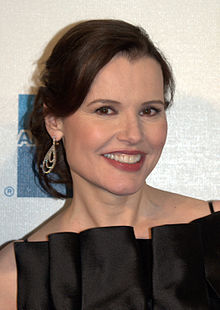
It has been borne by several actresses, including Gina Lollobrigida (b.1927) and Geena Davis (b.1956).

Currently, Gina is the 327th most popular female name in Germany, (2011).

A masculine form is Gino.

Delia

Gender: Feminine
Origin: Greek
Meaning: “from Delos.”
Eng (DEE-lee-ah)

The name comes from an epithet for the goddess Artemis as she was believed to have been born on the island of Delos.

It has also been used as a contracted form of Cordelia.

In the English-speaking world, the name came into usage during the 18th-century.

Currently, it is the 276th most popular female name in Germany, (2011).

Other forms of the name include:

  • Delia (Czech/English/German/Greek/Italian/Romanian/Slovak/Spanish)
  • Délia (French/Hungarian/Portuguese)
  • Délie (French)
It is also the name of a womens’ apparel store.

Gianluca

Gender: Masculine
Origin: Italian
(jahn-LOO-kah)

The name is a compound of the Italian male names, Gianni and Luca.

It is currently the 391st most popular male name in Germany, (2011). The name became common in Germany after the second half of the 20th-century. The German, albeit rare, equivalent is Janlukas.

Pius

Gender: Masculine
Origin: Latin
Meaning: “pious; dutiful.”
Germ (PEE-oos)

The name is derived from the Late Latin, meaning “pious; dutiful.” It was borne by twelve popes, and the name has been especially common in German-speaking countries, particularly among Catholic families.

Currently, it the 386th most popular male name in Germany, (2011).

Other forms of the name include:

  • Pius (German/Latin/Polish/Romansch)
  • Pio (Italian/Portuguese)
  • Pijus (Lithuanian)
  • Pío (Spanish)
A feminine form is Pia 

Quirin

Gender: Masculine
Origin: Latin

Quirin is a German form of the Latin, Quirinus, which was borne by a Sabine god who was later absorbed into the general Roman pantheon. He was sometimes associated as the deified form of Romulus or as a counterpart of Mars. The Qurinal Hill in Rome was named in his honour.

Most agree that the name is derived from the Latin quirus (spear), others have suggested that it is from the name of a Sabine town, Cures, or that it is related to curia.

It was also borne by several early Christian saints. Most notably, St. Quirin of Neuss, a Roman martyr whose body was eventually interred in Neuss Germany.

Another notable bearer is Quirin Kuhlmann (1651-1689) a German poet and mystic.

Currently, Quirin is the 387th most popular male name in Germany, (2011).

Other forms of the name include:

  • Quirí (Catalan)
  • Kvirin (Croatian)
  • Corin (French)
  • Quirin (French/German)
  • Quirino (Italian/Portuguese/Spanish)
  • Kvirinas (Lithuanian)
  • Kwiryn (Polish)

Clarissa

Gender: Feminine
Origin: Latin
Meaning: “clear; bright; brilliant.”
Eng (kluh-RIS-sah); Germ (klah-HRIS-sah)

The name is possibly a modern English form of Clarice, which is an Anglo-French form of the Latin Claritia, a derivative of Clara.

Clarice was introduced into the English-speaking world through the Normans and was a fairly popular female name in Medieval England. It fell out of usage during the Reformation, and was revived in the 18th-century in the form of Clarissa. This may have been due to the eponymous novel by Samuel Richardson (1748), a tragic novel which recounts the unfortunate circumstances of a nouveau-riche girl by the name of Clarissa Harlowe.

It was borne by Clara Barton, née Clarissa Harlowe Barton, (1821-1912), foundress of the American Red Cross.

It is also borne by Clarissa Eden, Countess of Avon (b.1920) and American poet, Clarissa Pinkola Estés (b.1945).

In the early 90s, the name was brought to the spotlight via the Nickelodean sit-com, Clarissa Explains It All.

In Virginia Woolf’s Mrs Dalloway (1925), it is the first name of the heroine.

Currently, Clarissa is the 396th most popular female name in Germany, (2011).

Other forms of the name include:

  • Clarice (English/French/Italian)
  • Clarissa (English/German/Italian/Portuguese)
  • Clarisse (French)
  • Clarisa (Spanish)
  • Klarysa (Polish)

Allegra

Gender: Feminine
Origin: Italian
Meaning: “cheerful; happy.”
Eng (uh-LAY-grah); (uh-LEG-rah); It (ahl-LAY-grah)

Allegra first appeared in Medieval Italy and was used as an auspicious name. It was especially common among Italian-Jewish families and more common in Central and Northern Italy.

It was introduced into the English-speaking world through Clara Allegra Byron (1817-1822), the short lived daughter of Lord Byron and Claire Clairmont. It was also borne by Anne Allegra Longfellow (1855-1934), the daughter of Henry Wadsworth Longfellow who is mentioned in the 1860 poem The Children’s Hour.

It is currently borne by Allegra Versace (b.1986), heiress to the Versace fashion house.

Allegra is also the Romansch word for hello and is used by Romansch-speakers as a given name.

Another Italian form is Allegrina. A Spanish and Ladino cognate is Alegría.

Allegra is the 413th most popular female name in Germany, (2011).


Verena


The name is possibly derived from the Latin, verus, meaning “true.” Others have suggested that the name may actually be of some unknown Egyptian source.

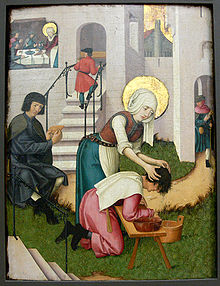
The name was borne by a 3rd-century Egyptian saint who found her way to Switzerland while marching along with the Theban legions. She is considered the patron saint of hairdressers as she was known for converting young native Swiss women to Christianity while washing and styling their hair. There is a shrine dedicated to St. Verena in Zurich, Switzerland.

The name has been popular in Germany and Switzerland and has even experienced some usage in the United States during the 18th and 19th-centuries, no doubt, brought over by German immigrants. It is also an especially common name among Mennonite, Hutterite and Amish families and is a popular name among Egyptian Christians.

It is also the name of a fictional goddess in the popular fantasy/video game series Warhammer. She is the goddess of healing and learning and is based on both Minerva and Athena.

Currently, Verena is the 383rd most popular female name in Germany, (2011).

Other forms of the name include:

  • Virina (Coptic)
  • Vérène (French)
  • Verena Верена (English/German/Italian/Russian/Slovene)
  • Werena (Polish)
  • Frena (Romansch)
  • Varena (Romansch)
  • Vreni (Swiss-German)
  • Vreneli (Swiss-German)


Orlando

Gender: Masculine
Origin: Italian/Spanish

The name is an Italian form of the Germanic, Roland, meaning “famous land.” Orlando has been in usage in the English-speaking world since at least the 16th-century, most likely due to the character in Shakespeares As You Like It (1599). It also the name of the eponymous character of the Italian epic Orlando Furioso (circ. 1520).

The name has been borne by English composer, Orlando Gibbons (1582-1625), American general, Orlando Ward (1891-1972) and British actor, Orlando Bloom (b.1977).

It is also the name of a city in Florida, which, according to legend may have been named for the Shakespeare character or it could have been named for an American sentinel Orlando Reeves who was killed during the Seminole warrior.

Actor Orlando Bloom was named for Orlando Gibbons.

Currently, Orlando is the 425th most popular male name in Germany, (2011) and the 435th most popular in the United States, (2010).

A feminine form is Orlanda.