Paul

Gender: Masculine
Origin: Latin
Meaning: “short; small; humble; few.”
Eng (PAWL)

The name is derived from the Latin Roman family name, Paulus, which could translate as meaning, “small, short; humble; few.”

Paul and his various forms has to be one of the most common male names used throughout the Christian world. It has been used equally among Orthodox Christians, Roman Catholics and Protestants.

Its most famous bearer was Paul of Tarsus, whose real name was Saul. St. Paul, as referred to by the Roman Catholic and Eastern Orthodox Churches, is attributed as being the author of much of the New Testament.

The name was borne by several popes, royals and saints thereafter.

Currently, its Germanic form of Paul is the 8th most popular male name in Germany, (2011). His rankings in other countries are as follows:

  • # 13 (Austria, 2010)
  • # 22 (France, 2009)
  • # 41 (Romania, 2009)
  • # 90 (Ireland, 2010)
  • # 130 (Scotland, 2010)
  • # 178 (United States, 2010)
  • # 485 (Netherlands, 2010)
His foreign equivalents rankings are as follows:
  • # 3 (Pablo, Spain, 2010)
  • # 4 (Páll, Faroe Island, 2010)
  • # 4 (Pau, Catalonia, 2010)
  • # 17 (Paweł, Poland, 2010)
  • # 26 (Pablo, Chile, 2010)
  • # 29 (Pavel, Czech Republic, 2010)
  • # 31 (Pablo, Catalonia, 2010)
  • # 44 (Pau, Spain, 2010)
  • # 91 (Pál, Hungary, 2010)
  • # 144 (Pablo, France, 2009)
  • # 202 (Paolo, France, 2009)
  • # 361 (Pablo, United States, 2010)

Other forms of the name include:

  • Pali (Albanian)
  • Paulë (Albanian)
  • Boulos/Bulos بولس (Arabic)
  • Faulus (Aramaic)
  • Boghos Պողոս (Armenian)
  • Poghos Պողոս (Armenian)
  • Paul (Basque/Dutch/English/Estonian/German/French/Romanian/Scandinavian/Silesian)
  • Paweł Павeл (Belarusian/Polish)
  • Polus (Berber)
  • Paol (Breton)
  • Pavel Павел (Bulgarian/Czech/Russian/Slovene)
  • Pavolo (Calabrian)
  • Pavulu (Calabrian)
  • Pau (Catalan/Occitanian)
  • Pawl (Cornish/Welsh)
  • Paulu (Corsican/Sardinian/Sicilian)
  • Pavao (Croatian)
  • Pavle პავლე Павле (Croatian/Georgian/Macedonian/Serbian)
  • Pavo (Croatian)
  • Palle (Danish)
  • Poul (Danish)
  • Pauwel (Dutch)
  • Paavel (Estonian)
  • Paavo (Estonian/Finnish)
  • Páll (Faroese/Icelandic)
  • Paavali (Finnish)
  • Pauli (Finnish)
  • Pol (Flemmish/Romansch)
  • Paale (Frisian)
  • Pals (Frisian)
  • Paulus पौलुस (Frisian/Hindi/Latin)
  • Pay (Frisian)
  • Powles (Frisian)
  • Pouw (Frisian)
  • Pauli (Fruilian)
  • Pódhl (Gaelic)
  • Pól (Gaelic)
  • Paulo (Galician)
  • Pavlos Παυλος (Greek)
  • Pāl पॉल (Hindi)
  • Pál (Hungarian)
  • Pósa (Hungarian)
  • Paolo (Italian/Portuguese)
  • Paolino (Italian/Portuguese)
  • Paulinus (Latin)
  • Pāvils (Latvian)
  • Paulius (Lithuanian)
  • Povilas (Lithuanian)
  • Paol (Lombard)
  • Paulose (Malayalam)
  • Pawl (Maltese)
  • Pawlu (Maltese)
  • Payl (Manx)
  • Paora (Maori)
  • Pål (Norwegian/Swedish)
  • Pavel (Romanian)
  • Paulin (Romansch)
  • Polet (Romansch)
  • Polin (Romansch)
  • Pulegn (Romansch)
  • Pàl (Scots-Gaelic)
  • Pawůł (Silesian)
  • Pavol (Slovak)
  • Pawoł (Sorbian)
  • Pablo (Spanish)
  • Paoro (Tahitian)
  • Pàul (Tuscan)
  • Pavlo Павло (Ukrainian)

For a Reference a Female forms See Paula and Paulina (soon to come)
Linus

Gender: Masculine
Origin: Greek
Meaning: debated
Eng (LIE-nus); Germ (LEE-nuws); Swe (LEE-nus)

The name is either derived from the Greek verb ailinon meaning “to whine; complain” or it could be from the Greek Λινος (linos) meaning “flax.” In the latter case, the Lithuanian male name, Linas, would share the same etymology. It was also a Roman cognomen, which may have been derived from the Greek.

In Greek mythology, the name was borne by a son of Apollo, who in some legends was accidentally killed by his own father and in other legends was the music teacher of Hercules.

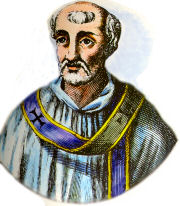
The name was also borne by the 2nd pope and saint who succeeded St. Peter.

In the English-speaking world, the name is often associated with the Charles Schulz character who appears in the Peanuts Comic strips.

The name was fairly common in 19th-century America and Britain, being borne by Linus Bacon Comins (1817-1892), a Massachusetts politician, Linus Yale, Jr. (1821-1868) a mechanical engineer, Linus Pauling (1901-1994) a famous American chemist and British actor, Linus Roache (b.1964)

Currently, Linus is the 30th most popular male name in Germany, (2011). His rankings in other countries are as follows:

  • # 44 (Sweden, 2010)
  • # 53 (Norway, 2010)

Other forms of the name include:

  • Llinu (Asturian)
  • Lin Лін Лин (Belarusian/Breton/Bulgarian/French/Piedmontese/Russian/Serbian/Slovene/Ukrainian)
  • Lli (Catalan)
  • Lino (Croatian/Galician/Italian/Portuguese/Spanish)
  • Linus (Danish/Dutch/English/Estonian/Finnish/French/German/Hungarian/Norwegian/Polish/Romanian/Swedish)
  • Líneas (Gaelic)
  • Linusi ლინუსი (Georgian)
  • Linos Λινος (Greek)
  • Línus (Icelandic)
  • Lins (Latvian)
  • Linas (Lithuanian)

Silvan

Gender: Masculine
Origin: Latin
Meaning: “of the forest.”
Eng (SIL-ven); Germ (SIL-vahn)

In English, the name could either be from the Latin male name, Silvanus, or come directly from the adjective. In either case, both the Latin male name and the adjective shares the same etymology.

It was borne in Roman mythology by a titular forest and fertility god, Silvanus, who was linked with the Etruscan god, Selvans.

Currently, Silvan is the 48th most popular male name in German-speaking Switzerland, (2010) and the 496th most popular in the Netherlands, (2010).

In the case of Switzerland, the name was extremely popular among Romansch-speakers and its usage was isolated in the Canton of Grisons up until recently.

Other forms of the name include:

  • Silvà (Catalan)
  • Silvan (Dutch/German/Romansch)
  • Sylvan (English)
  • Selvans (Etruscan)
  • Sylvain (French)
  • Silvano (Italian/Spanish)
  • Silvanus (Latin)
  • Sylwan (Polish)

Feminine forms include:

  • Sylvaine (French)
  • Silvana (German/Italian/Romansch/Spanish)

Jonas, Jonah

Gender: Masculine
Origin: Hebrew
Meaning: “dove.”

The name is derived from the Greek, Ionas Ιωνας, a Greek form of the Hebrew name, Jonah, which is from the Hebrew יוֹנָה (Yonah) meaning, “dove.”

Jonah is found in the Old Testament in the Book of Jonah as the name of a prophet who was swallowed by a whale. His story was very popular during the Middle Ages.

Currently, its Greek translation of Jonas is one of the most popular male names in Northern Europe. He is the 5th most popular male name in Germany, (2011) and Norway (2010). His rankings in other countries are as follows:

  • # 4 (German-speaking, Switzerland, 2010)
  • # 6 (Austria, 2010)
  • # 22 (Denmark, 2010)
  • # 53 (Belgium, 2009)
  • # 154 (Netherlands, 2010)
  • # 163 (Czech Republic, 2006)
  • # 288 (France, 2009)
  • # 455 (United States, 2010)

While its original Biblical form of Jonah is far more rare, his rankings are as follows:

  • # 144 (United States, 2010)
  • # 301 (Netherlands, 2010)

Other forms of the name include:

  • Yunus يونس (Arabic/Turkish)
  • Jonàs (Catalan)
  • Jona (Croatian/Serbian)
  • Jonáš (Czech/Slovak)
  • Jonas (Dutch/English/French/German/Lithuanian/Scandinavian)
  • Joona (Finnish)
  • Joonas (Finnish)
  • Jonne (Finnish)
  • Jona (German)
  • Ionas (Greek)
  • Yonah יוֹנָה (Hebrew)
  • Jónás (Hungarian)
  • Jónas (Icelandic)
  • Giona (Italian)
  • Jonasz (Polish)
  • Iona (Romanian/Russian)
  • Jonás (Spanish)
In the Lithuanian case, this name is the Lithuanian form of John.

Luana

The name is of a few different meanings and origins.

It could come directly from the Albanian meaning, “lioness.”

The name is found in several Romanian folktales as a name of a princess/heroine. In this case, the origins of the name are not clear.

It could be an Italian contraction of Luisa and Anna.

In Hawaiian, it comes directly from the word meaning “to be at leisure; to relax.”

Currently, in German-speaking Switzerland, it is the 21st most popular female name, (2010). Its popularity in Switzerland may be due to a popular Swiss rapper known simply as Luana.


Lina

The name is of several different origins and meanings. It could be a German and Swedish short form of any name ending in –lina.

In Lithuanian, it is the feminine form of Linas, meaning, “flax.” It is also the Estonian and Finnish word for flax, and is used as a given name in both countries.

It could also be from the Arabic لينا meaning “palm tree” or “tender.”

In Sanskrit लीना it means “absorbed; united.”

The name is also used in Chinese, being a composition of the words 丽 (Li) meaning “pretty” and 娜 (Na), meaning “elegant.”

Currently, Lina is the 7th most popular female name in Germany, (2011). Her rankings in other countries are as follows:

  • # 15 (German-speaking, Switzerland, 2010)
  • # 19 (France, 2009)
  • # 20 (Slovenia, 2010)
  • # 25 (Belgium, 2009)
  • # 36 (Austria, 2010)
  • # 61 (Netherlands, 2010)
  • # 84 (Norway, 2010)
  • # 91 (Sweden, 2010)
  • # 848 (United States, 2010)

Mia

The name could be of several different meanings and origins, but its most popular usage is from the Northern Germanic diminutive form of Maria.

In the English-speaking world, the name was introduced via actress, Mia Farrow (b.1945) whose full name is Maria de Lourdes. The name did not even appear in the U.S. top 1000 the year Mia Farrow was born, but started to rise in popularity in the late 1990s. Currently, Mia is the 10th most popular female name in the United States, (2010) and her rankings in other countries are as follows:

  • # 1 (Germany, 2011)
  • # 2 (German-speaking, Switzerland, 2010)
  • # 2 (Romansch-speaking, Switzerland, 2010)
  • # 3 (Faroe Islands, 2010)
  • # 4 (Isle of Man, 2009)
  • # 4 (Liechtenstein, 2010)
  • # 5 (Luxembourg, 2010)
  • # 6 (Australia, 2010)
  • # 7 (Croatia, 2010)
  • # 13 (England/Wales, 2010)
  • # 15 (Northern Ireland, 2010)
  • # 15 (Norway, 2010)
  • # 16 (New Zealand, 2010)
  • # 17 (Austria, 2010)
  • # 18 (Scotland, 2010)
  • # 20 (Ireland, 2010)
  • # 25 (Slovenia, 2010)
  • # 27 (Canada, B.C., 2010)
  • # 37 (Chile, 2010)
  • # 38 (Bosnia & Herzegovina, 2010)
  • # 49 (Denmark, 2010)
  • # 40 (French-speaking, Switzerland, 2010)
  • # 40 (Italian-speaking, Switzerland, 2010)
  • # 206 (France, 2009)
  • # 221 (Netherlands, 2010)

In the case of its usage in Southern Slavic countries, it is most likely derived from a diminutive form of any Slavic name containing the mio element, meaning “dear.”

In English-speaking countries, it was often used as a diminutive form of Amelia, Emilia and Hermione.

In Romansch, it was originally used as a diminutive form of Anna Maria.

Coincidentally, mia is also the feminine Italian and Spanish pronoun meaning “mine”, but the name was originally never used in reference to the pronoun.


Jael

Gender: Feminine
Origin: Hebrew יָעֵל
Meaning: “ibex.”
Eng (JAY-el); Germ/Heb/Sp (yah-EL)

The name comes directly from the Hebrew word for the Nubian Ibex. It appears in the Old Testament as the name of the wife of Heber. Jael is known for killing Sisera with a tent peg in order to deliver Israel from the troups of King Jabin.

The name has always been very popular among Jews and has only recently become more common among non-Jews.

In German-speaking Switzerland, Jaël is currently the 35th most popular female name, (2010). This may be due to the Swiss pop singer, Jaël whose real name is Rahel Krebs (b.1979). In France, Yael ranked in as the 396th most popular female name, (2009).

Other forms of the name include:

  • Jael (Catalan/English/Spanish/Portuguese)
  • Yaël (French)
  • Jaël (German)
  • Giaele (Italian)
  • Iahel (Latin)
  • ‘Iail Иаиль (Russian)

Justus

Gender: Masculine
Origin: Latin
Meaning: “just.”
Eng (JUST-us); Germ (YUWS-tuws)

The name is derived from the Latin word for “just.” It was borne by at least 8 saints, one of whom was a Roman bishop sent to England to convert the Anglo-Saxons in the 7th-century.

The name was also borne by a son of the Roman Jewish Historian, Josephus, whose full name was Titus Flavius Justus (b.76 B.C.E). It was actually a common name among the early Roman/Italian Jewish community.

Another notable bearer was the 15th-century Dutch painter, known as Joos van Gent.

Currently, Justus is the 92nd most popular male name in Germany, (2011). His rankings in other countries are as follows:

  • # 68 (Jošt, Slovenia, 2010)
  • # 130 (Joost, Netherlands, 2010)
  • #848 (United States, 2010)

Other forms of the name include:

  • Joos (Dutch)
  • Joost (Dutch)
  • Justus (Dutch/English/Finnish/German/Latin/Romansch/Scandivanian)
  • Juste (French)
  • Jusztusz (Hungarian)
  • Giusto (Italian)
  • Just (Polish)
  • Güst (Romansch)
  • Jüst (Romansch)
  • Justo (Spanish)
Feminine forms include:
  • Justa (Dutch/German/Latin/Polish/Spanish)
  • Giusta (Italian)


Benedict, Benedikt

Gender: Masculine
Origin: Latin
Meaning: “blessed.”

The name comes directly from the Late Latin name Benedictus meaning “blessed.” The name was borne by a 6th-centuy Italian monk and saint who credited for being the founder of the Order of the Benedictines.

The name was very common throughout Medieval Europe, being borne by 16 popes, it was fairly popular in England, in the form of Bennett.

The name was also commonly used among German-Jews, being used as a cognate of the Hebrew male name Baruch בָּרוּךְ (blessed).

In the United States, the name became taboo to use due to its associations with Benedict Arnold (1741-1801) a famous American deserter and traitor to the British.

The name recently skyrocketed in Germany after the succession of the German born Pope Benedict XVI. It is currently the 93rd most popular male name in Germany, (2011). It is especially popular in Bavaria.

His rankings in other countries are as follows:

  • # 1 (Bence, Hungary, 2010)
  • # 32 (Benedek, Hungary, 2010)
  • # 294 (Benoît, France, 2009)

Other forms of the name include:

  • Benedikti (Albanian)
  • Benedet (Aragonese)
  • Benedictu (Asturian)
  • Benedita (Basque)
  • Beñat (Basque)
  • Benead (Breton)
  • Benet (Catalan)
  • Benedettu (Corsican/Maltese/Sardinian)
  • Benedikt Венедикт (Croatian/Czech/German/Icelandic/Norwegian/Russian/Serbian/Scandinavian/Ukrainian)
  • Ben(d)t (Danish/Norwegian)
  • Benedictus (Dutch/Late Latin)
  • Benedict (English/German/Romanian/Scandinavian)
  • Bennett (English)
  • Pentti (Finnish)
  • Bénédict (French)
  • Benoît (French)
  • Beinidict (Gaelic)
  • Bieito (Galician)
  • Benedikhti ბენედიქტე (Georgian)
  • Bendix (German/Norwegian)
  • Bennet (German)
  • Benz (German)
  • Venediktos Βενέδικτος (Greek)
  • Bence (Hungarian)
  • Benedek (Hungarian)
  • Benett (Hungarian)
  • Benedetto (Italian)
  • Benito (Italian/Spanish)
  • Bettino (Italian)
  • Bendiks (Latvian)
  • Benediktas (Lithuanian)
  • Bendik (Norwegian)
  • Benedix (Plattdeutsch)
  • Benedykt (Polish)
  • Benedito (Portuguese)
  • Bento (Portuguese)
  • Benezet (Provençal)
  • Banadet (Romansch)
  • Banadegt (Romansch)
  • Bandet (Romansch)
  • Benedegt (Romansch)
  • Binidittu (Sicilian)
  • Beňadik (Slovak)
  • Bengt (Swedish)
  • Bened (Welsh)
  • Benesh (Yiddish)

Feminine forms include:

  • Benedetta (Corsican/Maltese/Italian/Sardinian)
  • Benedikta (Czech/German)
  • Benedikte (Danish/Norwegian)
  • Bénédicte (French)
  • Benoîte (French)
  • Benita (Italian/Spanish)
  • Bettina (Italian)
  • Benedicta (Latin/Romansch)
  • Benedykta (Polish)
  • Benedita (Portuguese)
  • Bengta (Swedish)