Korbinian

Gender: Masculine
Origin: German
Meaning: “raven”
(kor-BIN-nee-ahn)

Before I get into the history, I just want to say that I quite like this name. He has the same trendy vibe as Corbin and the sophisticated feel of Sebastian all wrapped into one. With the popularity of other trendy male K names, I could see this picking up in the United States. If only more Anglophones were aware of its existence..
Korbinian does share a common ancestor with Corbin. Both names are derived from the Latin corvus meaning “raven.”  It may have actually been a Latin translation of the German male name, Hraban (raven).
Korbinian’s roots are Latin, but its usage seems to be isolated to Bavaria and Austria. The reason being is that the name is connected to a 7th-century Frankish saint who was known for converting the region of Bavaria to Christianity. Interestingly enough, he was not borne as Korbinian, his real name was Waldegiso, being named after his father. For reasons unknown, his mother who was named Corbiniana, decided to rename her son upon her husband’s death, making him a junior of herself.
St. Corbinian had lived as a hermit in France, he was very popular among the locals, who would often visit him and listen to his sermons. One day, he decided to make a pilgrimage to Rome, where he met with the Pope, who convinced Corbinian to quit the life of a hermit and instead evangelize the Germanic tribes on the French border. He was delegated by the Pope to administer to the Duke of Bavaria. Corbinian was made the first bishop of Freising.
According to legend, while on his way to Rome, Corbinian was attacked by a wild bear. He managed to tame it and made the animal carry his belongings all the way to Rome. Upon his arrival to Rome, Corbinian set the bear free.
It is often believed that the story was apocryphal, a way to symbolize the saint’s conversion of the ferocious German tribes to docile Christians. His motifs and symbols are often the bear. The bear, (which is in reference to St. Corbinian), is found in Freising and Bavarian heraldry. In fact, the current pope, Benedict XVI, was previously the bishop of Freising-Munich when he assumed the Papacy, he integrated the bear into his papal coat-of-arms, in honour of St. Corbinian. The source of Corbinian’s life can be found in the Vita Corbiniani written by Bishop Arbeo of Freising.
Possible nickname options are Korby and Binny. The Latin spelling is Corbinian. This form is also used in Germany.
It feminine form of Corbiniana  is not a bad choice either. With the recent interest in such names as Cordelia and Georgiana across the pond in Britain, this might make an appealing alternative.
Currently, Korbinian is the 227th most popular male name in Germany, (2011).

Svenja

Gender: Feminine
Origin: German
Meaning: debated
Germ (SFEN-yah)

It could either be a feminine form of of the Scandinavian male name, Sven, or it could be derived from any ancient Germanic name containing the element, Swan, such as Swanhild, hence the name could simply be from the German meaning, “swan.” Since Svenja has never had a history of usage in Scandinavia, the latter etymology is the most likely.

The name was especially popular in Germany in the early 1990s, she is currently the 201st most popular female name in Germany, (2011). Another spelling is Swenja.

Fenja

Gender: Feminine
Origin: Old Norse
Meaning: unknown
(FEN-yah)

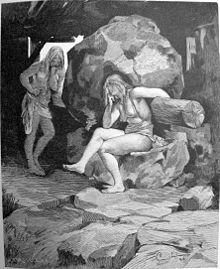
The name is found in the Old Norse poem, the Song of Grótti (Grottasöngr) and in Snorri Sturlesson’s Prose Edda as the name of one of two sister giantesses, Fenja and Menja.

According to the Song of Grótti, both sisters are enslaved to the Danish king Frodi, forced to grind out wealth from a magical stone and to sing for the king. They sing of the king’s benevolence and wealth, but as they become overworked, the king refuses to hear their pleas until they start to sing a warning that the king shall soon be destroyed by an army, which they eventually create from the magical grindstone.

Fenja is of Old Norse origins, but its etymology has been lost. Both sisters supposedly inspired the names of the Danish Islands, Fanø and Mandø.

Currently, Fenja is the 181st most popular female name in Germany, (2011).

It is also borne by German actress, Fenja Rühl (b.1963)

Florentine

Gender: Feminine
Origin: Latin
Meaning: “prosperous; flourishing.”

The name is German or French form of the Latin female name, Florentina, which is a feminine form of the Late Latin male name Florentinus, which is ultimately derived from florens (prosperous, flourishing).

Currently, Florentine is the 197th most popular female name in Germany, (2011).

Other forms of the name include:

  • Florentine (Dutch/French/German)
  • Florentina (German/Italian/Latin/Spanish)
  • Florentyna (Polish)
Masculine forms include the French, Florentin and the Italian, Florentino.


Saskia

Gender: Feminine
Origin: German/Dutch
Meaning: “Saxon.”
Germ/Dutch (SAHS-kee-ah)

The name is derived from the Germanic element, sachs, meaning “Saxon.”

The name is most famously borne by Saskia van Uleynburgh (1612-1642) the wife of Rembrandt. She was often the subject of many of his paintings.

Currently, Saskia is the 183rd most popular female name in Germany, (2011).

Due to many early Dutch settlers, the name has had some usage in the United States, especially among the East Coast elite. It is also prevalent in South Africa.

It is currently borne by Princess Saskia of Hanover (b.1970).

Sáskie is a Czech form.


Madita

Gender: Feminine
Origin: German
(mah-DEE-tah)

The name is from an obscure German diminutive form of Margarete, and was popularized in Germany as an independent given name via the German translation title of the Astrid Lindgren novel, Madicken.

Madicken is an archaic Swedish diminutive form of Margaret, now occasionally used as an independent given name.

It is also the stage name of Austrian singer known simply as Madita born Edita Malovčić (b.1978).

Currently, Madita is the 200th most popular female name in Germany, (2011).


Tamina

Gender: Feminine
Origin: Debated
Meaning: Debated
Germ (tah-MEE-nah)

The name may have several different possible etymologies. Its most likely explanation is that it is a Frisian feminine form of Tamme.

It may very well be a feminine form of Tamino, which is the name of the main character in Wolfgang Amadeus Mozart’s The Magic Flute. In this case, the name is of uncertain origin and meaning and may been the invention of Mozart himself.

It could also be taken from the name of the river in Switzerland and an eastern valley in the Swiss Alps.

A similar name, Tahmina, is found in Persian mythology, as the name of the wife of Rostam and the mother of Sohrab. Tamina may be a Germanized form.

Currently, it is the 180th most popular female name in Germany, (2011).

Leandra

Gender: Feminine
Origin: Greek
Meaning: “lion man.”
Eng (lee-AHN-druh); Germ/Grk/Rus (ley-AHN-drah)

The name is a feminine form of Leander.

Currently, Leandra is the 182nd most popular female name in Germany.

The name is also in Greece, Poland, Romania, Russia and throughout the former Yugoslav. It is also used in Italy and in Spanish and Portuguese-speaking countries.

The name is borne by teen German-pop singer, Leandra Gamine (b.1994) and Belarusian-German pianist, Leandra Ophelia Dax (b.1981)

Ina

Gender: Feminine
Origin: English/German/Scandinavian
Germ (EE-nah); Eng (I-nah)

The name is a contracted form of any female given name ending in -ina.

In the United States, the name was fairly prevalent at the beginning of the 20th-century, the highest she ever ranked was in 1881 coming in as the 151st most popular female name.

Currently, Ina is the 192nd most popular female name in Germany, (2011).

Coincidentally, the name could also be an Anglo-Saxon male name meaning, “fire.” It was borne by an 8th-century Anglo-Saxon king.

Common German double names include Ina-Maria and Ina-Alice.