Guénolé

Gender: Masculine
Origin: Breton/French
Meaning: “white; brave.”

The name is derived from an ancient Breton source, being composed of the elements uuin meaning “white; pure” and uual, meaning,”brave.”

The name was borne by a legendary Breton saint who was said to have been inspired by a dream he had of St. Patrick to found an abbey in Brittany. His feast and the designated name-day in France is March 3.

Other rare forms include:

  • Gwenole (Breton/Welsh)
  • Winwaloe (Cornish/English)
  • Winwallus/Winwalloeus (Latin)
  • Walloy (Picard)
  • Gwenol (Polish)

Sources

  1. Tous les Saints du calendrier de Jacques Chabannes, Librairie académique Perrin, 1970
  2. http://pagesperso-orange.fr/jean-jacques.lelez/legende.htm

Jason

Gender: Masculine

Origin: Greek

Meaning: “to heal”

Eng (JAY-sen)

The name is derived from the Greek ιασθαι (iasthai) meaning, “to heal.” In Greek mythology, the name was borne by one of the more important mythical heros. According to legend, Jason was the leader of the Argonauts and went on a long search for the Golden Fleece. He was later connected with the tragedy of Medea, (a sorceress and also his wife), when she tragically murdered their children in revenge of his unfaithfulness to her. He makes an appearance in both the epic poem, Argonautica and the play Medea. In Slovenian folklore, he is also attributed as the founder of Ljubljana.

The name also appears in the New Testament as the name of a man who sheltered Paul and Silas, (Acts 17:5–9; Romans 16:21).

The name has been popular in the English-speaking world since the Renaissance. Currently, he is the 60th most popular male name in the United States, (2008). Between 1974 and 1978, he ranked as high as # 2. His popularity in other countries is as follows:

  • # 80 (Canada, B.C., 2008)
  • #93 (the Netherlands, 2009)

Other forms of the name include:

  • Jasó (Catalan)
  • Jazon Јасон (Croatian/Polish/Serbian/Slovene)
  • Iásón (Czech)
  • Jason Ясо́н (Danish/Dutch/English/German/French/Icelandic/Norwegian/Russian/Swedish/Ukrainian)
  • Iason Ιασων (Finnish/German/Greek: Ancient/Biblical/Romanian)
  • Xasón (Galician: shah-SONE)
  • Iasoni იასონი (Georgian)
  • Iaszón (Hungarian)
  • Giasone (Italian)
  • Jasonas (Lithuanian)
  • Jasão (Portuguese)
  • Giasuni (Sicilian)
  • Jasón (Spanish)
  • İason (Turkish)

The designated name-day is July 12 (France).

A common English short form is Jay.

Sources

  1. http://www.behindthename.com/namedays/search.php?terms=jason\
  2. http://www.askoxford.com/firstnames/jason?view=uk
  3. Bulfinch’s Mythology, Medea and Aeson.
  4. Publius Ovidius Naso. Metamorphoses

Galen, Galina

Origin: Greek
Meaning: “calm”
Eng Masc (GAY-len); Russ fem (gah-LEE-nah)

Galen is a latinized form of the Greek masculine name, Γαληνος (Galenos), which means “calm.”

The name was borne by a 2nd-century B.C.E. Graeco-Roman physician who contributed to the study of anatomy and medicine.

The feminine form of Galina is an extremely popular name in Russia.

Other forms of the masculine include:

  • Galén (Aragonese)
  • Galen Гален (Belarusian/Croatian/Danish/English/Norwegian/Occitanian/Polish/Slovene/Swedish/Russian/Ukrainian)
  • Galè (Catalan)
  • Galén (Czech)
  • Galenus (Dutch/German/Latin/Romanian)
  • Galien (French)
  • Galeno (Galician/Italian/Portuguese/Spanish)
  • Galénosz (Hungarian)
  • Galenas (Lithuanian)
  • Galénos (Slovak)

Feminine forms include:

  • Galene Γαληνη (Greek)
  • Halina (Polish)
  • Halyna Галина (Ukrainian)

The designated name-day for Galina is March 10 (Bulgaria.)

A common Russian diminutive is Gala or Galya.

Eudocia, Eudoxia

Gender: Feminine
Origin: Greek
Meaning: “to seem well.”
Eng (yoo-DOH-shuh); Russ (ef-doh-KEE-yah)

Eudocia/Eudoxia is a latinized form of the Greek feminine name Ευδοκια (Eudokia), which is composed of the Greek elements, ευ (ev) meaning, “good” and δοκεω (dokeo) meaning, “to seem.”

The name has been popular throughout the Orthodox Christian world for centuries. It was popularized by the cult of an Eastern Orthodox saint who was martyred for her faith in pre-Islamo-Christian Syria.

It was also an extremely popular name among Byzantine royalty, being borne by at least nine Byzantine empresses.

Other forms of the name include:

  • Evdokiya Евдокия (Bulgarian/Russian)
  • Eudòcia (Catalan)
  • Eudocia (English/Latin/Spanish)
  • Eudoxia (English/German/Hungarian/Latin/Spanish)
  • Eudoxie (French)
  • Evdok’ia ევდოკია (Georgian)
  • Eudokia Ευδοκια (Greek: Ancient)
  • Evdokia Ευδοκια (Greek: Modern)
  • Eudossia (Italian)
  • Ewdokia/Eudokia/Eudoksja/Jewdocha (Polish)
  • Avdotya Авдотья (Russian)
  • Yevdokiya Евдокия (Russian)
  • Evdokija Евдокија (Serbian)
  • Evdokia Євдокія (Ukrainian)

Common Russian diminutives are Dunya and Dunyasha.

The designated name-day is March 1.

Sources

  1. http://www.behindthename.com/name/eudocia

Annabel, Annabelle

Gender: Feminine
Origin: English
Meaning: uncertain

The name first appeared in 12th-century Scotland and is believed to be a corruption of the Late Latin feminine name, Amabel, which is a feminine form of Amabilis meaning “lovable.”

It was fashionable in 19th-century America and was further popularized by the Edgar Allan Poe poem Annabel Lee.

Ever since the popularity of Isabella, Annabelle has been rising in popularity, she is currently the 188th most popular female name in the United States. Her rankings in other countries are as follows:

  • # 61 (Australia, 2008)
  • # 400 (the Netherlands, 2009)

Other forms of the name include:

  • Annabel/Annabelle (English/Dutch)
  • Annabelle (French: very rare)
  • Anabela (Hungarian/Portuguese/Slovak)
  • Annabella (Italian)
  • Anabel (Spanish)

In Slovakia, the designated name-day is August 20.

Sources

  1. http://www.behindthename.com/name/annabelle
  2. http://www.askoxford.com/firstnames/annabel?view=uk

Esmé, Esmée

Origin: French
Meaning: “esteemed.”
(EZ-may)

Both names are derived from the French, meaning “esteemed.” It was introduced to the British Isles via the Duke of Lennox in the 16th-century. Though Esmé is now often used on females in both England and Scotland, it is actually masculine, while Esmée is its feminine version.

Currently, Esmé is the 100th most popular female name in England/Wales, (2008) and Esmée is the 71st most popular female name in the Netherlands, (2009).

Sources

Aaron

Gender: Masculine
Origin: Biblical
Meaning: debated

The name appears in the Old Testament as the name of the brother of Moses, (Exodus 6:16-20). Aaron was appointed by God to be the spokesperson for Moses and was also the first High Priest of the Israelites.

The name is of debated origin and meaning, many sources agree that it is of an unknown Egyptian source. It has also been linked with the Hebrew har-on meaning “exalted” or “mountain of strength” but this has often been debunked as a folk etymology.

In most of the Western World, its usage as a given name was exclusive among Jews until after the Protestant Reformation, when it became quite fashionable among Christians. Among Eastern Christians, the name has always been in usage.

The name is also popular among Muslims, in the forms of Haroun, Haron or Harun. It is borne by Harun al-Rashid, a 9th-century Caliph.

Currently, Aaron is the 50th most popular male name in the United States, (2008). His rankings in other countries are as follows:

  • # 69 (Australia, 2008)
  • # 65 (Belgium, 2008)
  • # 62 (Canada, B.C., 2008)
  • # 55  (England/Wales, 2008)
  • # 12 (Ireland, 2008)
  • # 158 (the Netherlands, 2009)
  • # 7 (Scotland, 2009)

Other forms of the name include:

  • Haroun/Haron/Harun هارون (Arabic)
  • Aaron/Aharon Аарон/Ахарон (Belarusian/Bulgarian)
  • Aihran (Breton)
  • Aaron Ααρών Ааро́н (Catalan/English/Estonian/Finnish/French/German/Greek/Romanian/Russian/Slovene/Ukrainian)
  • Aron Арон (Croatian/Danish/Norwegian/Polish/Serbian/Swedish)
  • Árón/Áron (Czech)
  • Aäron (Dutch)
  • Aharon אַהֲרֹן (Hebrew)
  • Áron (Hungarian/Slovak)
  • Aronne (Italian)
  • Aroni (Kiswahili)
  • Aaronas (Lithuanian)
  • Aarão/Arão (Portuguese)
  • Aarón (Spanish)
  • Áárọ́nì (Yoruba)

The name was borne by several Eastern Orthodox and Roman Catholic saints.

An obscure Spanish feminine form is Aárona.

The designated name-days are: July 1 (France/Poland).

Sources

  1. http://www.askoxford.com/firstnames/aaron?view=uk
  2. http://www.behindthename.com/php/find.php?name=aaron
  3. http://www.biblegateway.com/passage/?search=Exodus%206:16-20;&version=NIV;KJV;YLT
  4. http://en.wikisource.org/wiki/Catholic_Encyclopedia_(1913)/Aaron
  5. http://www.jewishencyclopedia.com/view.jsp?artid=4&letter=A&search=aaron#18
  6. Scofield Reference Bible, Proper Names

Robert, Robin

Gender: Masculine
Origin: German
Meaning: “bright fame.”

The name is composed of the Germanic elements, hrod (fame) and beraht meaning (bright). In Pre-Norman England, the name existed in the form of Hreodbeorht and was replaced by the now more favored Robert after the Norman Conquest.

The name has been consistently popular in the English-speaking world since. It has been worn by hundreds of notable bearers, including two French kings, three Scottish kings, (Robert the Bruce being one) and several saints.

Currently, Robert ranks in as the 49th most popular male name in the United States, (2008). His rankings in other countries are as follows:

  • # 80 (Canada, B.C., 2008)
  • # 89 (England/Wales, 2008)
  • # 44 (Hungary, 2008)
  • # 49 (Ireland, 2008)
  • # 56 (Scotland, 2009)

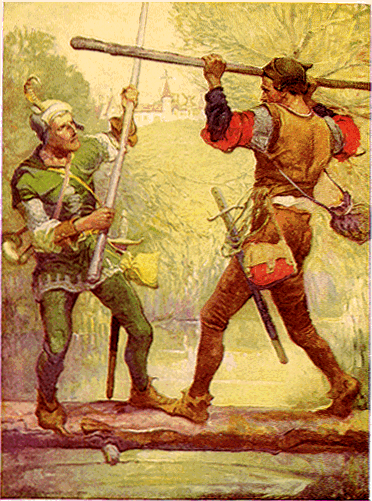
Robert has introduced several offshoots, the Medieval English diminutive form of Robin was the name of the protagonist of the legendary Robin Hood, Prince of Thieves. It is also used in Scandinavia and in German-speaking countries.

Its low Germanic counterpart of Rupert was popularized in Austria via an early Christian saint and was later introduced into England by Prince Rupert of the Rhine, a military commander and nephew of King Charles I. The name has enjoyed some usage in England ever since.

Other forms of the name include:

  • Hreodbeorht (Anglo-Saxon)
  • Roupen (Armenian)
  • Roparzh/Roperzh (Breton)
  • Robert Роберт (Catalan/Danish/Dutch/Croatian/Czech/English/Estonian/Finnish/French/German/Polish/Romanian/Russian/Serbian/Slovene)
  • Robrecht (Dutch/Afrikaans: rare, archaic)
  • Rupert (Dutch/English/German/Polish)
  • Robin (English/Finnish/Scandinavian)
  • Roobert (Finnish)
  • Roopertti (Finnish)
  • Robèrto (Fruilian)
  • Roberte (Galician)
  • Robrecht (German: rare, archaic)
  • Rodebrecht/Rotebert (German: rare, archaic)
  • Rudbert/Ruotbert (German: archaic)
  • Ruprecht (German: rare, archaic)
  • Rovēros/Rovértos Ροβῆρος Ροβέρτος (Greek)
  • Röpke (Frisian/Plattdeutsch)
  • Róbert (Hungarian/Icelandic/Slovak)
  • Roibeard (Irish-Gaelic)
  • Robertino (Italian: rare, originally a diminutive form)
  • Roberto (Italian/Portuguese/Spanish)
  • Robertus/Rupertus (Late Latin)
  • Roberts (Latvian)
  • Robertu (Leonese/Sardinian)
  • Robertas (Lithuanian)
  • Raibeart (Scottish Gaelic)
  • Robbetto (Sicilian)
  • Ruperto (Spanish)
  • Ropati (Tahitian)
  • Hopkin/Hopcyn (Welsh: originally a Medieval Welsh diminutive, occasionally used as an independent given name and now more associated with the surname).
  • Robat/Rhobert (Welsh)

Diminutives forms abound, which include: Bob, Bobbie, Rob and Robbie (English), Hob, Dob and Dobby (Medieval English diminutive forms no longer in usage), Rab/Rabbie (Scottish), Robbi (Icelandic), Röbi Swiss German, Robban (Swedish), Robercik/Robuś (Polish), and Roope/Pertti (Finnish).

A common feminine form is Roberta, which is used in English, German, Polish, Italian and Spanish. Common English short forms are Bobbie and Bertie.

A more obscure Italian/Spanish feminine form is Robertina.

Robina is a Renaissance Scots feminine form of Robin.

Name-days are: April 29 (Czech Republic/Germany/Poland), April 30 (France), June 7 (Estonia/Hungary/Poland/Slovakia/Sweden), July 18 (Poland).

Sources

  1. http://www.behindthename.com/name/robert
  2. http://www.askoxford.com/firstnames/robert?view=uk

Nestor

Gender: Masculine
Origin: Greek
Meaning: “homecoming.”
(NES-ter)

In Homer’s the Iliad, the name is borne by the wise and advisory king of Pylos. It was also borne by a few early Christian saints.

Other forms of the name include:

  • Nestor Νεστωρ Нестор (Bulgarian/English/French/German/Greek/Polish/Russian)
  • Nèstor (Catalan)
  • Nestór (Czech)
  • Néstor (Galician/Portuguese/Spanish)
  • Nestore (Italian)
  • Nestoras (Lithuanian)

Designated name-days are:  February 26 (France/Poland), September 8 (Poland), October  27 (Bulgaria/Greece), November 9 (Poland).

Romeo

Gender: Masculine
Origin: Italian
Meaning: “pilgrim to Rome”
Eng (ROH-mee-o); It (roh-MAY-o)

The name is derived from the Latin romaeus which means “pilgrim to Rome”.

The name was introduced into the English speaking world via Shakespeare’s Romeo and Juliet (1596).

Currently, Romeo ranks in as the 466th most popular name in the United States.

An Italian and Romansch feminine form is Romea, (roh-MAY-ah).

Other forms include:

  • Romeu (Catalan/Portuguese)
  • Roméo (French)
  • Rómeó (Hungarian/Icelandic)
  • Romaeus (Latin)

The designated name-day is February 25.