
- Origin: Estonian
- Meaning: “anointed.
- Gender: masculine
The name comes directly from the Estonian word võitud (anointed).
The name is currently very rare in Estonia, being given to less than 5 people.
The designated in Estonia is May 12th.
Sources
The name comes directly from the Estonian word võitud (anointed).
The name is currently very rare in Estonia, being given to less than 5 people.
The designated in Estonia is May 12th.
Sources

The name was born by an 8th-century Anglo-Saxon female saint who did missionary work in Germany. It is composed of the Anglo-Saxon element, weald (power) and burg (fortress). Her feast day was celebrated on May 1st and the day before is called Walpurgisnacht (St. Walpurgis’ Eve).
In German-speaking countries, the name is most common in Bavaria and Austria, more so at the turn of the 20th-century.
In the Harry Potter series by J.K. Rowling, this is the name of the mother of Sirius Black.
The name spread in use across Europe, especially in Nordic and Germanic countries. Other forms include:
A common German short form is Wally, while a Swedish nickname is Bojan.
Italian masculine forms are Valburgo, Walburgo, Walpurgo and Valpurgo.
Sources

The name comes directly from the Estonian word for battle ax. It ultimately derives from the Russian, topor. It has been in use as a given-name, though rarely, there are fewer than 5 bearers of this name in Estonia.
It has a designated name day in Estonia of May 12th.
Sources

The name is borne in the Bible by the son of Joseph and Asenath, who is considered a patriarch, as he is a founder of one of the 12 trubes of Israel. According Genesis 41:52, he is named thus by Joseph because “God has made me fruitful in the land of my suffering.”
The name was also borne by a few early Christian saints, including St. Ephraim of Syria (4th-century, CE).
Ephraim appeared in the U.S. Top 1000 between 1880-1914, it disappeared for 99 years and reappeared in the charts in 2013. For its first centennial cycle, it peaked at #403 in 1880. As of 2023, it was the 992nd most popular male name.
Its Spanish counterparts of Efraín and Efrén have also appeared in the U.S. Top 1000, Efraín appeared between 1950 and 2014, peaking at #469 in 1981 whilst Efrén appeared between 1966-2007, peaking at #768 in 1990.
Forms/Usages
Sources
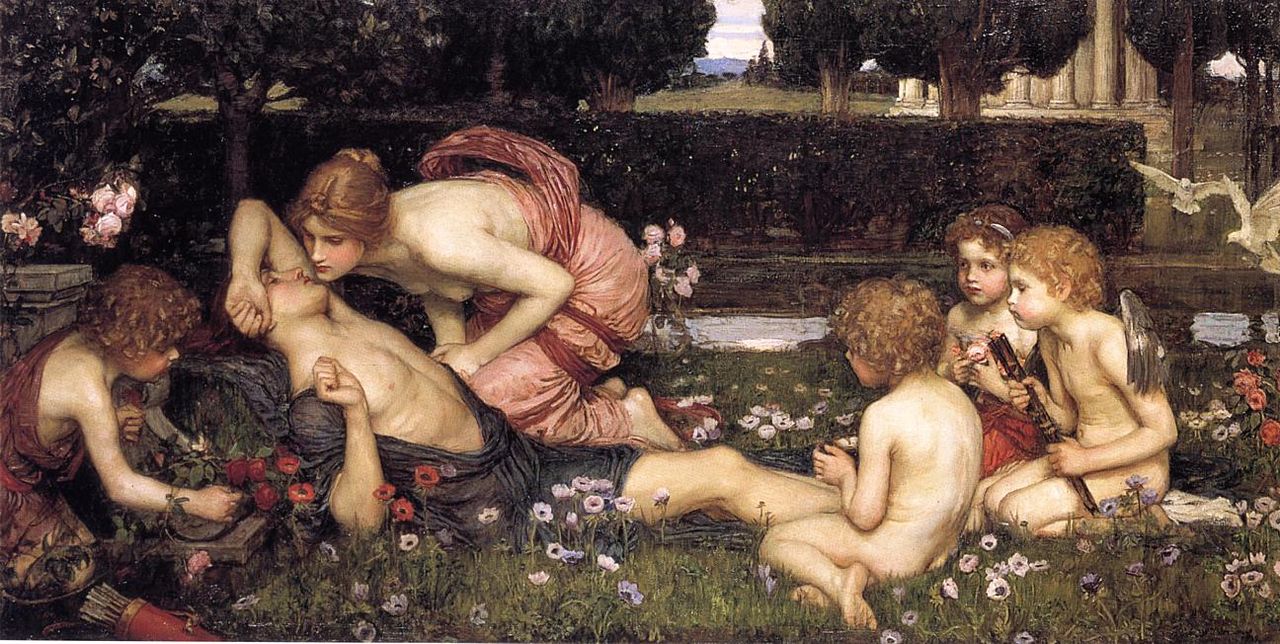
Adonis is borne in Greek mythology by the god of beauty and desire. According to the most popular myth, he was born of the incestuous union of Theias and his daughter Myrrha. Myrrha had tricked her own father into having sex with her. The gods transformed Myrrha into a myrrh tree after Theias attempted to kill her whilst pregnant with Adonis. Adonis was beloved of Aphrodite and mothered by Persephone, but he was subsequently killed by a boar when Artemis, or in some versions, Ares, sent a boar to kill Adonis out of jealousy. When Adonis died, Aphrodite cried tears which mingled with Adonis’ blood, producing the Anemone flower. Aphrodite instituted the Adonia festival in his commemoration, whereby all women had a mass mock funeral of Adonis by growing plants in potsherds on their rooftops and performing a mass funeral ritual as soon as the plants sprouted.
It is likely Adonis was imported by the Greeks from the Phoenicians, the latter being the descendants of the Sumerians, Mesopotamians & Babylonians. It is believed by most scholars that Adonis is an adaptation of the Sumerian story of Dumuzid & Inanna (later Tammuz & Ishtar), in which a ritual funeral rite was also performed by women across the former Babylonian empire. Adonis itself is a Hellenized form of the Canaanite, adon, which means “lord” and was often used as an appellation by the Canaanites for the god Tammuz. The Jews adopted this appellation for Yahweh in the form of Adonai (my lord).
Adonis is borne by an 8th-century French saint of Vienne. He is also listed as Adon & Ado. Adonis has sporadically been used as a given-name in Greece, anglophone, francophone & hispanophone countries. The French feminine off-shoots, though rare these days, are Adonise (AH-do-NEEZ) and Adonie, and were actually prevalent in 18th-centurry Quebec & New Orleans. An obscure Italian feminine form is Adonella.
There is the male Biblical Hebrew name, Adonijah meaning (my lord is Yahweh). It is borne by a son of King David and was Hellenized in the Septuagint as Adonias.
Other forms include:
Currently, Adonis is the 242nd most popular male name in the United States and the 461st most popular in France.
Other forms include:
Sources

The name can be of several different origins and meanings.
It is a Biblical male name that occurs in 2 Samuel 23:25 as the name of Elika the Harodite, one of David’s 37 special warriors. In this case, אֵַליקָא (Eli’ka), may mean “vomit of God” or “Congregation of God.” Some sources also list this as meaning “pelican of God.” In English, the name would be pronounced ee-LYE-kuh.
Pronounced, EH-lee-KAW الیکا, it is a Persian female name that derives from the Mazanderani language, meaning, “wild cherry.” However, it’s use in Iran may be influenced by an identical sounding Indian female name, which is derived from the Sanskrit एलीका (Elika), meaning “small cardamom.” It is also the name of a village in northern Iran of the same aforementioned Mazanderani etymology.
Elika is also a Nordic female name of uncertain etymology, it’s earliest use is recorded in 18th-century Iceland. It may derive from the the Frisian diminutive name, Alike, which is a diminutive form of any name beginning in the Adal- element, or the Frisian unisex diminutive name Elike, which is a short form of any name beginning in the EGG- element.
It may also be linked with a Greenlandic female name of uncertain etymology.
It’s Nordic form has been in use in Finland & Estonia, as well as all of Scandinavia & Iceland. It should be noted that Elike has occurred in use as a unisex name in Norway and Friesland.
Swedish and Frisian female variations include Eliko & Eliken.
Alternately, it is a Mari female name, but is of uncertain meaning, it may be a variation of Evika, meaning “slender.”
It is also the Hawaiian translation of Elisa, Eliza, Erica & Eric.
Sources

The name is Germanic and of disputed meaning. It is most likely derived from a Germanic element bib- meaning “to tremble,” which formed an etymological basis for the Late Latin nickname, pippinus (little child). This same root is related to the modern French word, pépin, which means “seed” or “pulp” in French, but also a “glitch” in modern French slang.
This was a name that appeared among the Carolingian rulers of the Franks. It was most notably borne by King Pepin the Short (8th-century CE), father of Charlemagne, as well as Pepin of Landen, an ancestor, who was revered as a saint in Belgium (6th-century CE).
Pépin appeared in the French Top 500 between 1902-1945, peaking at #358 in 1942.
Its Dutch form of Pepijn (PEP-pine) currently appears in Netherlands’ Top 100, coming in as the 64th most popular male name in the Netherlands (2019).
Forms and usages in other languages are as follows:
Sources
From the name of an ancient Germanic people who ultimately settled in what is now France and the Netherlands, the origin of the name itself is somewhat disputed. A popular etymology is that it comes from the Old German frank (free). Others contend that it comes from a Germanic word for “javelin” or its linked with an Old Germanic root word meaning “bold, fierce; insolent.”
As a given-name, it has been in use since the 8th-century, preceding the use of the name of Francis, of which Frank later became a popular diminutive. The name of the country of France and its old currency of francs, gets its name from the Franks.
Frank was a very popular name in the U.S. at the turn of the 20th-century. Its appeared in the U.S. Top 10 between 1881-1922, peaking at #6 between 1880-1892. As of 2018, it was the 392nd most popular male name. His rankings in other countries are as follows:
Frank is also used in Estonia, Finland, French-speaking countries, Dutch-speaking countries, German-speaking countries and Scandinavia.
Other forms include:
Feminine forms include:
Sources

From one of the most common Roman praenomen, its origin and meaning is uncertain. A popular etymology is that it relates to Mars, others suggest it may be from the Etruscan Marce, which may come from mar (to harvest). It is said the name was originally bestowed on those who were born in March.
Marcellus and the name of the month of March likely shares the same etymological root.
It was borne by several notable Romans, including Mark Antony, Marcus Aurelius & Cicero.
It was the name of one of the Evangelists who authored the eponymous Gospel, known as St. Mark in the Christian world, he is revered as the founder of Christianity in Africa and is traditionally believed to have founded the Church in Alexandria. Coptic Christians hold him in high regard. His bones were smuggled out of Egypt in a barrel of pork fat by Venetian merchants from Alexandria when Egypt fell under Islamic rule and were transported back to Venice where they were eventually installed and dedicated in the Basilica of San Marco.
The name was borne by a 2nd-century pope as well.
Marcus, Mark and Marc have been quite popular in several countries. Marcus was in the U.S. Top 100 between 1970-2000, Sweden’s between 1998-2008, New Zealand’s between 2008-2014, England & Wales between 1996-2003, and in Denmark’s between 1994-2006. Currently, his rankings in other countries are as follows:
Its latinate form of Marco, which started off as a mainly Italian form, became widespread across the continent. His rankings in the following countries are as follows:
It’s English form of Mark appears in the legend of Tristan & Isolde as the name of the King of Cornwall, supposedly the name was not common in the English-speaking world until the 19th-century, but became a hit by the Mid-1900s. Mark appeared in the U.S. Top 100 between 1944-2002, which is quite a long stretch. Mark peaked the highest in popularity between 1955-1970, peaking at #6, six years in a row between 1959-1964. Marks’s rankings in other countries are as follows:
Marc is the French, Catalan & Welsh form and has been popularly used in the English-speaking world, it is currently the most popular male name in Catalonia, 2018 and between 1968-1976 it was in the U.S. Top 100. Marc’s rankings in the popularity charts are as follows
Other forms of the name include:
It’s feminine forms include Marca but and sometimes Marcia was used as a feminine form, though it is more the feminine equivalent of Marcius.
Other feminine forms include:
Sources
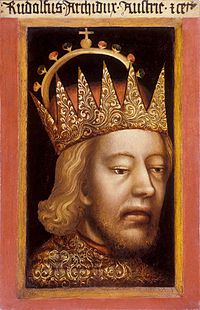
The name is derived from the Germanic Hrodulf, which is composed of the elements hrod (fame) and wulf (wolf). The name was borne by several European rulers.
In England, it has been in use since Anglo-Saxon times, its Anglo-Saxon form of Hroðulf was usurped by the Norman Rudolph and Rodolph in the 11th-century.
In the English-speaking world, the name has come to be associated with the Christmas folk hero, Rudolph the Red-nosed Reindeer, based on a children’s book written by Robert L. May in 1939.
Rudolf appeared in the U.S. Top 1000 between 1887-1932, and peaked at # 715 in 1916. He appeared 3 times in the French Top 1000 in 1914, 1931 and again in 1933, peaking at #454 in 1934. He was in the German Top 20 between 1893 and 1936, peaking at #11 in 1899 and in 1916.
In France, it’s native form of Rodolphe appeared in the Top 1000 between 1900 and 2001 and peaked at #79 in 1970.
Its contracted form of Rolf has been in occasional use in England since the 11th-century. It was a favorite in German-speaking countries in the 1920s-50s, peaking at #11 in 1947. In Norway, it peaked at #14 in 1945. Rolf has also appeared in the American and French charts, though not very high. Rolf peaked at #210 in France in 1943 and #772 in 1960 in the U.S.
It his diminutive form of Rudy, often used as an independent given-name, is the one which has gained some traction in recent years. Rudy appeared in the French Top 100 between 1979-1984, and peaked at #76 in 1980. Rudy’s current rankings in the popularity charts are as follows:
Rudolf is used in Albanian, Armenian, Czech-Slovak, Dutch, Hungarian, Icelandic, Polish, Serbo-Croatian, Slovene, the Scandinavian languages and Russian.
Other forms include:
Feminine forms include:
Sources