Moses

Gender: Masculine
Origin: Debated
Meaning: debated

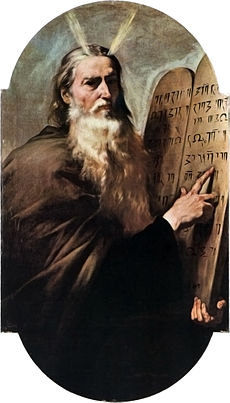
The name is borne in the Old Testament and in the Qu’ran by the a renowned prophet and law giver, who according to tradition was placed in a basket by his Hebrew mother and found by the daughter of Pharaoh (in Judeo-Christian religion) or the wife of Pharaoh (in Islamic tradition) and raised as an Egyptian prince. It is from this tradition that the name is believed to be derived from the Hebrew element משה (mšh) as stated in  Exodus 2:10:

“[…] she called his name Moses (משה): and she said, Because I drew him (משיתהו) out of the water.” (KJV).


It has been suggested that the name is in fact of Egyptian origins, being related to the Coptic elements, mo (water) and uses (saved; delivered) hence: “saved from the water.” Another suggestion is the Egyptian element, ms (child; born) as found in such ancient Egyptian male names as Tuth-Mose and Ram-messes.

The name has always been common among Jews, Muslims and Orthodox Christians, but did not catch on in the English-speaking world until after the Protestant Reformation. Medieval Jews of England used the Middle English form of Moss.

It is currently the 509th most popular male name in the United States, (2010).

Other forms of the name include:

  • Moses (Afrikaans/English/German/Scandinavian/Welsh)
  • Moisiu (Albanian)
  • Musa موسى Муса (Amharic/Arabic/Azeri/Bosnian/Kabyle/Swahili/Tatar/Turkish)
  • Moisen (Aragonese)
  • Movses Մովսես (Armenian)
  • Moises (Basque)
  • Majsjej Майсей (Belarusian)
  • Moizez (Breton)
  • Moisej Моисей (Bulgarian)
  • Moisès (Catalan)
  • Moisije Мојсије (Croatian/Serbian)
  • Moše (Croatian)
  • Mojžíš (Czech/Slovak)
  • Mozes (Dutch)
  • Mooses (Estonian/Finnish)
  • Móses (Faroese/Icelandic)
  • Moïse (French)
  • Maois (Gaelic)
  • Mose მოსე (Georgian/German/Romansch/Swedish)
  • Mouses Μωυσης (Greek)
  • Moshe מֹשֶׁה (Hebrew/Ladino)
  • Mózes (Hungarian)
  • Mosè (Italian)
  • Müsa Мұса (Kazakh)
  • Mosa (Kurdish)
  • Mûsa (Kurdish)
  • Moyses (Latin)
  • Mozus (Latvian)
  • Mozė (Lithuanian)
  • Мојсеј (Macedonian)
  • Moss (Middle English)
  • Moïses (Occitanian/Provençal)
  • Mojżesz (Polish)
  • Moisés (Portuguese/Spanish)
  • Moise (Romanian)
  • Moisej Моісей (Rusyn/Ruthenian)
  • Moiséj Моисе́й (Russian)
  • Muozė (Saimogaitian)
  • Mojzes (Slovene)
  • Muuse (Somalian)
  • Mojsej Мойсей (Ukrainian)
  • Moosõs (Voro)
  • Moishe (Yiddish)
Recently, actress Gwyneth Paltrow bestowed this name on her second child, Moses Bruce Anthony Martin (b. 2006)
Sources

Asia

Gender: Feminine
Origin: Greek Ασιη Ασια
Meaning: uncertain
Eng (AY-juh)

The name is found in Greek mythology as the name of the daughter, (also referred to as Clymene and Clymene-Asie), of Oceanus and Tethys, the wife of Lepatus and mother of Atlas, Prometheus, Epimetheus and Menoetius. It was also the name of a Lydian nymph.

The etymology of the name is uncertain, the myth of Asia existed long before the area of what is now known as Turkey got its name. Herodotus argued that the region was in fact named for the Lydian nymph, while the ancient Lydians themselves claimed that their homeland got its name from a Sardisian prince named Asies.

In the English-speaking world, the earliest usage of the name seems to trace back to Asia Frigga Booth Clarke (1835-1888), the sister to the infamous presidential assassin John Wilkes Booth. Her father, Junius Brutus Booth, a famous actor in his time, chose the name as he believed the Garden of Eden was located in the continent of Asia. Asia Clarke is most noted for her memoires entitled John Wilkes Booth: a sister’s memoir.

Coincidentally, it is also the default Polish diminutive form of Joanna. In this case, it is pronounced (AH-shah).

Currently, Asia is the 23rd most popular female name in Italy (2008) and the 532nd most popular female name in the United States, (2010).

It is currently borne by Italian actress Asia Argento (b.1975).

The name has always been used as a female name in Greece.

Sources

  1. http://www.behindthename.com/name/asia-1
  2. http://www.theoi.com/Nymphe/NympheAsie.html
  3. Hesiod, Theogony – Greek Epic C8th-7th BC
  4. Apollodorus, The Library – Greek Mythography C2nd BC
  5. Herodotus, Histories – Greek History C5th BC


Gloria

Gender: Feminine
Origin: Latin
Meaning: “glory.”
Eng (GLAWR-ee-ə)

The name comes directly from the Latin word for glory and its usage as a given name is relatively recent in naming history. Its first appearance seems to be the name of the protagonist of E.D.E.N. Southworth’s 1891 novel, Gloria: A Novel.

Born Emma Dorothy Eliza Nevitte, Southworth was a popular novelist of her time, and seems to have had a habit of bestowing interesting names on her female characters, particularly names which come directly from Latin words. Her most famous example being her tomboyish character, Capitola Black in her most famous work, The Hidden Hand (1889).

Gloria was used again by George Bernard Shaw for a character in his 1898 play You Never Can Tell.

Due to its seemingly religious connotations, the name skyrocketed among Catholic families during the Depression Era. In this case, the name may have been used in reference to the Great Doxolgy or hymn sung during Catholic masses Gloria in Excelsis Deo. 

Currently, Gloria is the 503rd most popular female name in the United States, (2010).

Other forms of the name include:

  • Glorietta (Italian)
  • Glorinda (Italian)

An obscure Italian diminutive is Gloriuccia.

There is also a very obscure masculine Italian form: Glorio.

Famous bearers include:

  • Gloria Swanson (actress, 1899-1983)
  • Gloria Steinem (feminist, b.1934)
  • Gloria Gaynor (singer, b.1948)
  • Gloria (Bulgarian pop-singer, b.1973)
  • Gloria Princess of Thurn & Taxis (b.1960)
  • Gloria Estefan (singer, b.1957)
In Poland, the designated name-day is May 13.

Source

  1. http://www.behindthename.com/name/gloria


Uriah

Gender: Masculine
Origin: Hebrew אוּרִיָה
Meaning: “yahweh is my light.”
Eng (yoo-RIE-ə)

The name is borne by several characters in the Old Testament, one of the most famous being Uriah the Hittite. King David had sent him out in the forefront of battle in the hopes that he would be killed, so that David could marry Uriah’s wife, Bathsheba.

The name also appears in the Bible in the form of Urijah.

The name was always common among Jews but did not catch on in the Christian world until after the Protestant Reformation. It was a fairly common name in early America.

Charles Dickens used the name for an antagonist in his 1850 novel David Copperfield. Due to the character’s reputation, the term Uriah Heep is often used to describe a “yes man.”
Currently, Uriah is the 548th most popular male name in the United States, while his alternative, Urijah, ranked in at # 623, (2010).

Other forms of the name include:

Uries (Catalan)
Urijáš (Czech)
Urie (French/Romanian)
Urijah Урия (German/Russian)
Ourias Ουριας (Greek)
Uriyah אוּרִיָה (Hebrew)
Uria (Italian)
Urias (Late Latin)
Uriasz (Polish)
Urias (Portuguese)
Uriáš (Slovakian)
Urijá (Slovakian)
Urías (Spanish)

A common modern Hebrew short form is Uri.

Sources

  1. http://www.behindthename.com/name/uriah
  2. http://books.google.com
  3. http://oxforddictionaries.com/definition/yes-man
  4. Magonet, Jonathan (1992) Bible Lives London: SCM, 93 – 4

Chad

Gender: Masculine
Origin: English
Eng (CHAD)

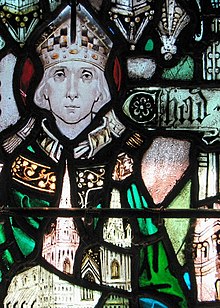
The name is a modern English form of the Anglo-Saxon, Ceadda (CHAD-duh). The meaning and origins of the name are somewhat of a mystery, but since St. Chad was believed to have been of Celtic origins it has been suggested that it may be a derivative of the Welsh, cad, meaning “battle.”

The name was borne by a major 7th-century English saint. His cult was very popular in England before the Protestant Reformation and the name seems to have died out with the Reformation as well. Chad was not revived until the mid-20th-century. Between 1972-1973, Chad peaked at its highest coming in as the 23rd most popular male name in the United States. As of 2010, he is the 547th most popular male name.

The designated name-day is March 2nd.

Source

  1. http://www.behindthename.com/name/chad


Liana

The name can either be a contraction of Juliana or Liliana or it may be taken from the name of the type of vine that grows in the jungle.

Currently, Liana is the 448th most popular female name in France, (2009) and the 525th most popular in the United States, (2010).

Another form of the name is the French and German Liane.

The name is also used in the Czech Republic, Estonia, Greece, Latvia, Romania, Slovakia and in Spanish-speaking and Portuguese-speaking countries.

Designated name-days are: April 8 (Estonia), April 30 (Latvia) and December 10 (Czech Republic and Slovakia)

Czech diminutives include:

Li
Lia
Lianka
Liuška

Sources

  1. http://www.behindthename.com/name/liana
  2. http://cs.wikipedia.org/wiki/Liana
  3. http://www.nordicnames.de/Aussprache.html

Elisha

Gender: Masculine
Origin: Hebrew אֱלִישַׁע
Meaning: “my God is salvation”
Eng (ee-LIE-shah)

The name comes from the Hebrew (Elishu’a)  אֱלִישׁוּעַ and is found in the Old Testament and in the Quran as the name of a prophet and successor to Elijah.

In the English-speaking world, the name did not become common until after the Protestant Reformation.

Currently, Elisha is the 656th most popular male name in the United States, (2010).

Other forms of the name include:

Elyasa  الْيَسَع‎ (Arabic)
Eliseu (Catalan/Portuguese)
Elíša (Czech)
Elisa (Dutch/Finnish/Swedish: obscure)
Élisée (French)
Elise ელისე (Georgian)
Elischa (German)
Elisäus (German)
Elisaίos Ελισαίος (Greek: modern)
Eliseo (Italian/Spanish)
Eliseus (Latin)
Eliziejus (Lithuanian)
Elisie Елисие (Macedonian)
Elisja (Norwegian)
Elizeusz (Polish)
Elisei (Romanian)
Elisej Елисей (Russian)
Elizeus (Slovene)
Jelisej Јелисеј (Serbian)
Elyesa (Turkish)
Yelyséj Єлисе́й (Ukrainian)

The designated name day is June 14.

Source

  1. http://www.behindthename.com/name/elisha

Sariah

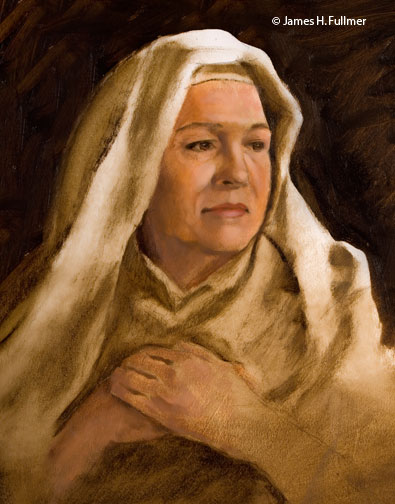
The name is found in the Book of Mormon as the name of the wife of Lehi and the mother of Laman, Lemuel, Sam, Nephi, Jacob and Joseph. It is a very common name among people of the Church of Latter Day Saints. Pronounced (suh-RYE-ah), the origin and meaning of the name is debated, but it has been agreed among LDS linguist that it may be from the Hebrew  שׂריה (Śaryāh) meaning “the Lord is Prince.” Others have suggested that it may be a derivative of another Biblical name, the male Seraiah meaning “Yahweh is ruler.”
Currently, Sariah is the 656th most popular female name in the United States (2010).

Sources

  1. http://www.behindthename.com/name/sariah
  2. http://en.wikipedia.org/wiki/Sariah
  3. http://www.bookofmormonbattles.com/Characters/SariahBio.html

Tabitha

Gender: Feminine
Origin: Aramaic
Meaning: “gazelle.”
(TAB-bih-thuh)

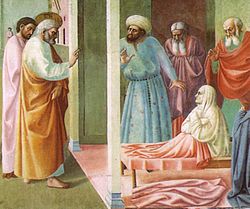
The name is found in the New Testament as the name of a woman brought back to life by the Apostle Peter, she is also referred to as Dorcas which is the Greek equivalent of the name (see Acts 9:36).

As a given name, it seems to have been popular among the Puritans and remained very common among early Americans. It was borne by Tabitha Babbitt (1784-1853) an early American woman tool maker credited for inventing the circular saw. It was also borne by Oregon pioneer Tabitha Brown (1780-1858) credited as the foundress of Pacific University.

The name was again brought to the American public’s attention via the 1960s sitcom, Bewitched, in which the daughter of Samantha and Darren Stephens is named Tabitha. There was also a spin-off of the show entitled Tabitha.

Currently, Tabitha 641st most popular female name in the United States. Its German offshoot of Tabea (tah-BEY-ah) is the 139th most popular female name in Germany (2010).

Other forms of the name include:

Tabita (Czech/Slovak. Diminutive is Tabitka)
Tabea (German)
Tavitha Ταβιθά (Greek: modern)
Tábita (Hungarian)
Gazela (Polish: very unusual)

The default English diminutives are either Tabby or Tibby.

The designated name day is October 25.

Sources

  1. http://www.behindthename.com/name/tabitha
  2. http://www.beliebte-vornamen.de/jahrgang/j2010/top500-2010
  3. http://de.wikipedia.org/wiki/Tabea

Rory, Ruaidhrí

Gender: Masculine
Origin: Gaelic (Irish)
Meaning: red king)
(RORE-ree)

Rory is an anglicized form of the Irish Gaelic male name, Ruaidhrí, which is composed of the Gaelic words ruaidh (red) and  (king). The name was borne by two Irish kings, notably the last high king of Ireland who ruled in the 12th-century.

Its more modern Gaelic equivalent of Ruairí is currently the 66th most popular male name in Northern Ireland and the 88th most popular in Ireland (2010). Rory itself is the 37th most popular name in Scotland (2010). His rankings in other countries are as follows:

# 57 (Ireland, 2010)
# 61 (Northern Ireland, 2010)
#750 (United States, 2010)

Other forms of the name include:

Ruairí (Irish)
Ruaidrí (Irish)
Ruairi (Scottish)
Ruairidh/Ruaraidh/Ruaridh (Scottish)

Source

  1. http://www.behindthename.com/name/rory