Briana

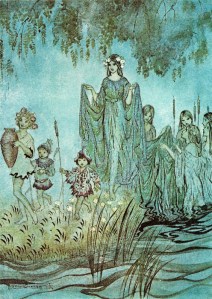
The name is found as far back as the 16th-century being used by Edmund Spenser for his epic poem The Faerie Queene. It is uncertain whether he invented the name himself or derived it from some lost Celtic source. The name has been erroneously listed as a feminine form of Brian but this does not seem to be the case.

The name is currently the 183rd most popular female name in the United States, (2010). Its more common form of Brianna seems to be a recent spin off. It is currently the 29th most popular female name in the United States. However, we at Legitimate Baby Names do not recognize this form as a legitimate name as it has no history before the 1990s. It is recommended to use the Briana form.

Source

  1. http://www.behindthename.com/name/briana

Delilah

Gender: Feminine
Origin: Hebrew דְּלִילָה
Meaning: “delicate; weak; languishing.”
(di-LIE-lə)

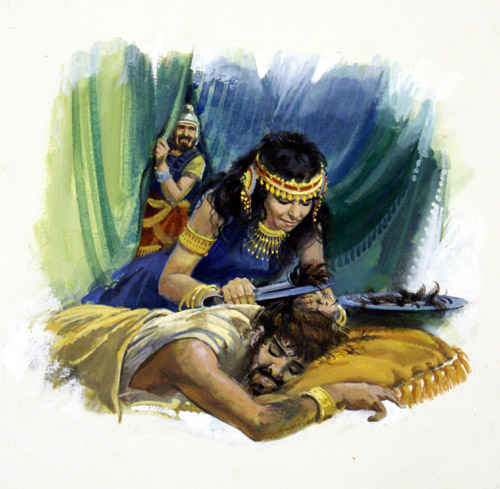
The name is derived from the ancient Hebrew source dal meaning “delicate; weak; poor.” The name is found in the Old Testament in the Book of Judges 16 as the name of the woman Samson loved and who eventually ended up betraying him to Philistines. The name was never used among Jews due to the character’s bad associations, but for whatever reason, was a very popular name among the 17th-century Puritans of England and North America. It has only recently become common in the general population, more specifically Mexican-Americans. It has also recently come into usage in Israel.

Currently, Delilah is the 187th most popular female name in the United States, (2010).

Other forms of the name include:

  • Dalila (Catalan/Czech/French/Italian/Polish/Portuguese/Romanian/Spanish)
  • Delíla (Czech)
  • Delila (Dutch/German/Hungarian/Scandinavian)
  • Dalíla Дали́ла (Russian)
Sources

Miranda

Gender: Feminine
Origin: Latin
Meaning: “admirable; wonderful”
Eng (mə-RAN-də)

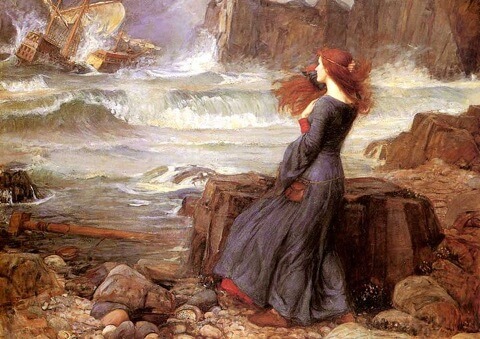
The name is derived from the Latin word mirandus meaning “admirable; wonderful” it has the same root as the English word mirandous. The name seems to have been first used by William Shakespeare for a key character in his 1611 play The Tempest.

Currently, Miranda is the 175th most popular female name in the United States, (2010).

The name is used in Italy, Poland, Estonia, German, Scandinavia and in Spanish-speaking countries.

It is also the name of a satellite of Uranus.

Common short forms are Randa, Randy and Mira.

Source

  1. http://www.behindthename.com/name/miranda

Nehemiah

Gender: Masculine
Origin: Hebrew
Meaning: “comforted by Yahweh.”
nee-hə-MIE-ə

According to the Book of Nehemiah, he was responsible for the rebuilding of Jerusalem and strengthening the Jewish community after being released from Babylonian captivity.

Currently, Nehemiah is the 339th most popular male name in the United States, (2010).

Other forms of the name include:

  • Neemija Неемия (Bulgarian/Russian/Serbian)
  • Nehemia (Dutch/Finnish)
  • Néhémie (French)
  • Neemias Νεεμίας (Greek: modern/Portuguese)
  • Nechemyah  נְחֶמְיָה (Hebrew)
  • Neemia (Italian)
  • Nehemja (Norwegian)
  • Nehemiasz (Polish)
  • Nehemias (Scandinavian)
  • Nehemiáš (Slovak)
  • Nejemija Неємія (Ukrainian)
Source

Crystal

Gender: Feminine
Origin: English

The name first appeared in the 19th-century and it comes directly from the English word which describes colourless glass sometimes used as a gem substitute. It is derived from the Greek κρυσταλλος (krystallos) meaning “ice.”

It first appeared in the U.S. top 1000 in 1884, coming in as the 640th most popular female name in the United States. Just shy of a 100 years later, in 1982, it was the 9th most popular female name. Today Crystal only ranked in as the 318th most popular female name, (2010).

Other forms of the name include:

  • Cristal (Spanish)

Source

  1. http://www.behindthename.com/name/crystal


Esmeralda

Gender: Feminine
Meaning: “emerald.”

The base name is the Greek Smaragda which is a feminine form of Smaragdos Σμάραγδος meaning, “emerald.” Its masculine and feminine forms were most likely used in the Pre-Christian Hellene world but were later popularized across Christian Europe in the vernacular forms we know today as Emerald, Esmeralda & Smeralda due to the cult of a 3rd-century Greek martyr and saint of the same name, as well as it’s associations with St. John the Apostle.

Contrary to popular belief, gemstone names have been in use as traditional female given name since at least the 12th-century. The old French form of Esmeraude is recorded in 13th-century France. Though unusual these days in French-speaking countries, Émeraude is a legitimate French feminine given name which has been in out of use since Medieval times.

Esméralda is currently borne by Princess Marie-Esméralda of Belgium (b. 1956).

It’s Spanish and Portuguese form of Esmeralda was used by Victor Hugo as the name of one of the key characters in The Hunchback of Notre Dame (1831), which inspired several Ballets of the same name.

The gemstone itself is the birthstone of May. It is also the name of a genus of orchid.

Currently, Esmeralda is the 379th most popular female name in the United States, (2019), it peaked in popularity in 1998 when it was the 133rd most popular female name in the United States.

Emerald recently entered the U.S. Top 1000 in 2019, coming in at #968. It has been in and out of the U.S. Top 1000 since 1991.

It’s Turkish form of Zümra is currently the 19th most popular female name in Turkey.

Other forms of the name include:

  • Zümrüd (Azeri)
  • Smaragda (Belarusian/Bosnian/Bulgarian/Croatian/Greek/Lithuanian/Macedonian/Serbian/Slovene)
  • Maragda (Catalan)
  • Esmeralda (Czech/English/Icelandic/Ladino/Latvian/Polish/Swedish)
  • Smeraldina (Czech)
  • Émeraude (French)
  • Esmeralde (Old French)
  • Esmeraude (Old French)
  • Eszmeralda (Hungarian)
  • Smeralda (Italian)
  • Emerauda (Late Latin)
  • Smaralda (Romanian)
  • Zümrüt (Turkish)

Diminutives include:

  • Esminka (Czech)
  • Mera (Czech)
  • Esme (English)
  • Essie (English)

Masculine forms include:

  • Smaragdos Σμάραγδος (Greek)
  • Esmeraldo (Italian)
  • Smeraldo (Italian)
  • Smaragdus (Latin)
  • Smaragds (Latvian)
  • Smaragdas (Lithuanian)
  • Szmaragd (Polish)
Sources

Hope

Gender: Feminine
Origin: English

The name comes directly from the English word and has been in usage since the Middle Ages due to the popularity of a cult of sister saints, Hope, Faith and Charity.

Its popularity was in enhanced in the 17th-century due to its usage among the Puritans.

Currently, Hope is 245th most popular female name in the United States, (2010). Its Spanish cognate of Esperanza is currently the 75th most popular female name in Chile and the 948th most popular in the United States, (2010).

Other forms of the name include:

  • Nadzieja Надзе́я (Belarusian/Polish. nod-JAY-yah)
  • Nada (Bosnian/Croatian/Serbian/Slovene)
  • Esperañs (Breton)
  • Esperança (Catalan/Portuguese)
  • Naděžda (Czech)
  • Spes (German/Latin)
  • Elpida Ελπίδα (Greek)
  • Elpis (Greek/Coptic)
  • Hopeful (English: a popular female name among Puritans)
  • Hopestill (English: a popular female name among Puritans)
  • Hopewell (English: a popular female name among Puritans)
  • Espérance (French)
  • Speranza (Italian)
  • Speranță (Romanian)
  • Nadezhda наде́жд (Russian)
  • Spiranza (Sicilian)
  • Esperanza (Spanish)
Source

Sabrina

The name is first recorded in Geoffrey of Monmouth’s Historia Regum Britanniae (c.1136) as the name of a princess drowned in the River Severn. Her story is the subject of John Milton’s Comus.

The same story later inspired Samuel A. Taylor’s 1953 stage play Sabrina Fair which was later adapted into a movie starring Audrey Hepburn.

The name did not come into regular usage until the 20th-century, most likely being popularized by the play and movie.

In the 1960s, Sabrina the Teenage Witch was a comic series that debuted.

It is currently the 219th most popular female name in the United States (2010).

Its popularity in other countries is as follows:

  • # 268 (France, 2009)
  • # 491 (the Netherlands, 2010)

The name is also used in German-speaking countries, Greece, France, the Netherlands, Italy and Slovenia.

Other forms of the name include:

  • Sabriina (Finnish)
  • Hafren (Welsh)
Source


Theodore

Gender: Masculine
Origin: Greek
Meaning: “god’s gift.”

The name is derived from the Greek Theodoros (Θεοδωρος) which is composed of the elements θεος (theos) meaning “god” and δωρον (doron) “gift.” The name was borne by several early saints, two popes and three tsars of Russia.

In recent American history the name was borne by President Theodore Roosevelt (1858-1919) of whom the Teddy Bear was named for.

It is currently the 263rd most popular male name in the United States, (2010).

An interesting fact: Dorothy is derived from the same Greek roots but in reverse order.

Other forms of the name include:

  • Tewodros ተውዶሮስ (Amharic)
  • Tadros تادرس (Arabic: used among Arab Christians)
  • Todos ܛܘܕܘܫ (Aramaic: used among Assyrian and Chaldean Christians)
  • Hvejdar Хведар (Belarusian)
  • Teodor Теодор (Bulgarian/Catalan/Croatian/Czech/Danish/Estonian/Finnish/Hungarian/Polish/Romanian/Scandinavian/Slovakian/Slovene/Ukrainian)
  • Todor (Bulgarian/Serbiab/Northern Greek)
  • Theirn (Cajun)
  • Theodoor (Dutch)
  • Theodorus (Dutch/Latin)
  • Theodore თევდორე (English/Georgian)
  • Tuudor (Estonian)
  • Teuvo (Finnish)
  • Théodore (French)
  • Theodor (German)
  • Theodoros Θεόδωρος (Greek)
  • Thodoros Θόδωρος (Greek)
  • Fedor (Hungarian)
  • Tivadar (Hungarian)
  • Tódor (Hungarian)
  • Téodóir (Irish)
  • Teodoro (Italian/Portuguese/Spanish)
  • Todaro (Italian)
  • Teodors (Latvian)
  • Thei (Limburgish)
  • Teodoras (Lithuanian)
  • Toše Тоше (Macedonian)
  • Tiodore (Occitanian)
  • Toader (Romanian)
  • Tudor (Romanian/Welsh)
  • Fedor Федор (Russian/Slovene)
  • Fjodor Фёдор (Russian)
  • Teodoru (Sicilian)
  • Fedja (Slovene)
  • Todor (Slovene)
  • Fedir Федір (Ukrainian)
  • Tewdwr/Tudur (Welsh)
Common diminutives include:
  • Tosho Тошо (Bulgarian)
  • Toshko Тошко(Bulgarian)
  • Ted/Teddy (English)
  • Tedo თედო (Georgian)
  • Fedja Федя (Russian)

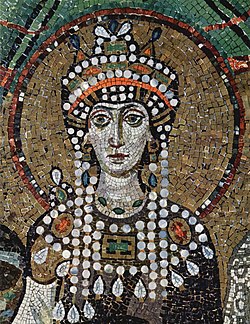
Its feminine form of Theodora was very popular in Byzantium, it was borne by at least five Byzantine Empresses including Empress Theodora who is also revered as a saint.

Other feminine forms include:

  • Teodora Теодора თეოდორა (Bulgarian/Catalan/Crotian/Georgian/Italian/Macedonian/Polish/Portuguese/Romanian/Serbian/Slovene/Spanish/Swedish)
  • Todorka Тодорка (Bulgarian/Macedonian)
  • Theodora Θεοδώρα (Czech/English/German/Greek)
  • Theda (English/German)
  • Théodora (French)
  • Teodóra (Hungarian)
  • Fedora Федора (Russian/Slovene)
  • Feodora Феодора (Russian)

Daria, Darius

Gender: Masculine
Origin: Persian
Meaning: “riches, he possesses.”
ENG də-RIE-əs, DER-ee-əs, DAR-ee-əs.

The name is derived from the ancient Persian male name Dārayavahush which is composed of the elements dâraya (to possess) and vahu (good). The name was borne by several early Persian kings including Darius the Great. The name also appears in the Old Testament.

As a given name it was never popular in the English-speaking world but a very common one on Continental Europe, especially Eastern Europe due to the fact that it was borne by several Greek saints, both male and female (in the form of Daria).

Currently, Darius is the 341st most popular male name in the United States, (2010).

Other forms of the name include:

  • Daryj Дарый (Belarusian)
  • Darij Дарий (Bulgarian/Ukrainian)
  • Darios (Catalan)
  • Darijo (Croatian)
  • Darius (Czech/English/French/German)
  • Dareius (German)
  • Dareios Δαρείος (Greek)
  • Dárius (Hungarian/Slovakian)
  • Dariush/Daryush  داریوش (Iranian)
  • Dario (Italian/Portuguese)
  • Darijus (Lithuanian)
  • Dariusz (Polish. DAHR-yoosh)
  • Dа́rij Да́рий (Russian)
  • Darío (Spanish) 

A Polish diminutive form is Darek.

Its feminine counterpart of Daria is extremely popular in Eastern Europe, she is currently the 36th most popular female name in Poland (2010).

Her rankings in other countries are as follows:

  • # 1 (Belarus, 2010)
  • # 2 (Moscow, Russia, 2010)
  • # 4 (Estonia among Russian-speakers, 2010)
  • # 5 (Ukraine, 2010)
  • # 10 (Romanian, 2010)

It was borne by an early Greek Christian saint and martyr.

Other forms of the name include:

  • Darja (Belarusian/Czech/Estonian/Latvian/Slovene)
  • Dària (Catalan)
  • Tárie Та́рие (Chuvash)
  • Daria Дарья (Croatian/Italian/Macedonian/Polish/Romanian/Russian)
  • Darija Дарія (Croatian/Lithuanian/Serbian/Ukrainian)
  • Darinka (Croatian/Slovene)
  • Tarja (Finnish)
  • Darie (French)
  • Dareia Δαρεια (Greek)
  • Dária (Hungarian)
  • Dariella (Italian)
  • Taira Тайра́ (Mari)
  • Darjana (Slovene)
  • Darjanka (Slovene)
  • Darjenka (Slovene)
  • Daría (Spanish)

Diminutive forms include:

  • Daruška (Czech)
  • Dasia (Polish. DAH-shah)
  • Dasha (Russian/Ukrainian)
  • Darijna  Дарина (Ukrainian)
Source