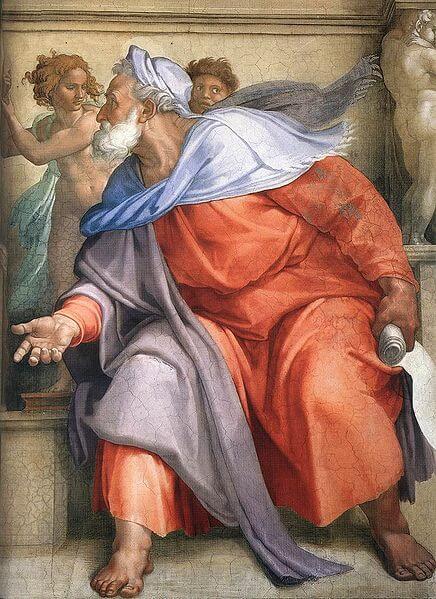
Ezekiel

Gender: Masculine
Origin: Hebrew יְחֶזְקֵאל 
Meaning: “God strengthens.”

The name is found in the Old Testament as the name of the author of the Book of Ezekiel, a major prophet in Christian, Jewish and Islamic tradition. In the English-speaking world, the name did not become popular until after the Protestant Reformation.

It is currently the 213th most popular male name in the United States, (2010).

Other forms of the name include:

  • Jezjekiil Езекііль (Belarusian)
  • Ezechiel (Czech/German/Polish/Romanian)
  • Ezechiël (Dutch)
  • Hesekiel (Finnish/Swedish)
  • Ézéchiel (French)
  • Ezekieli ეზეკიელი (Georgian)
  • Yechezkel: יְחֶזְקֵאל (Hebrew)
  • Ezechiele (Italian)
  • Ezechielis (Lithuanian)
  • Esekiel (Norwegian)
  • Ezequiel (Portuguese/Spanish)
  • Iezekiíl’ Иезекии́ль (Russian)
  • Jezekiel Језекиљ (Serbian)
  • Ezekiel (Slovene)
  • Yezekiyíl Єзекії́ль (Ukrainian)
  • Eseciel (Welsh)
  • Haskel (Yiddish)
Source

Savannah

Gender: Feminine
Origin: English

The name comes directly from the English word for a large grassy plain. It is believed to be derived from a Taino word, zabana. The name has been in usage since at least the 18th-century. In 1884 it was the 324th most popular female name in the United States. Currently, she is the 46th most popular female name in the United States, (2010).

Her rankings in other countries is as follows:

  • #58 (Australia, NSW, 2010)
  • #83 (Canada, BC, 2010)
  • # 350 (France, 2009)
The name is currently borne by Savannah Phillips (b.2010) the daughter of Peter Phillips and the granddaughter of Princess Anne.

Source

  1. http://www.behindthename.com/name/savannah

Eliana

Gender: Feminine
Origin: Italian/Spanish
Meaning: “sun”
(ay-lee-AH-nah)

The name is an Italian and Spanish form of the Latin Aeliana which is a feminine form of the Roman cognomen Aelianus which is derived from the Greek helios meaning “sun.”

The name was borne by an early Christian saint and martyr.

Aelia was a very popular female name during the Byzantine Empire.

Alternately, it could be from the Hebrew meaning “my God has answered.” (אֶלִיעַנָה)

Currently, Eliana is the 169th most popular female name in the United States, (2010).

Other forms of the name include:

  • Elijana (Croatian)
  • Ailiana Αιλιανα (Greek)
  • Aelia (Latin)
  • Aeliana (Latin)
  • Éliane (French)
  • Éliette (French)
  • Eliana (Italian/Spanish/Portuguese)
  • Liana (Italian/Spanish)

Diminutives include:

  • Ellie (English)
  • Éliette (French)
  • Eli (Italian)
  • Lala (Italian)
  • Lali (Italian)
  • Leli (Italian)
  • Lili (Italian)

Masculine forms include:

  • Elian Елиан (Bulgarian/Russian)
  • Elià (Catalan)
  • Elijan (Croatian)
  • Aelian (English)
  • Élien (French)
  • Älianus (German)
  • Ailianos Αιλιανός (Greek)
  • Aelianus (Latin)
  • Aelius (Latin)
  • Eliano (Italian/Spanish)
  • Eliusz (Polish)

Source

  1. http://www.behindthename.com/name/eliana-1

Raymond

Gender: Masculine
Origin: German
Meaning: “advice protector.”
(RAY-mund)

The name is composed of the Germanic elements ragin (advice) and mund (protector). It was introduced to England via the Normans. It was borne by several saints.

Currently, Raymond is the 225th most popular male name in the United States, (2010).

Other forms of the name include:

  • Remund (Aragonese)
  • Erramun (Basque)
  • Raimon (Catalan)
  • Raimondu (Corsican)
  • Rejmond Рејмонд (Croatian/Serbian)
  • Rajmund (Czech/Hungarian)
  • Raimund (Danish/Finnish/Norwegian/Romanian/Swedish)
  • Ramund (Danish)
  • Raymundus (Dutch/Latin)
  • Raymond (Dutch/English/French)
  • Raimo (Finnish)
  • Reima (Finnish)
  • Reemt (Frisian)
  • Réamann (Gaelic)
  • Redmund/Redmond (Irish)
  • Raimund (German)
  • Reimund (German)
  • Raimundur (Icelandic)
  • Raimondo (Italian)
  • Raimonds (Latvian)
  • Remao (Limburgish)
  • Mao (Limburgish)
  • Raimondas (Lithuanian)
  • Reimund (Norman)
  • Raginmund (Old German)
  • Rajmund (Polish/Slovene)
  • Ramun (Romansch)
  • Arrammundu (Sardinian)
  • Ramundu (Sardinian)
  • Rámon (Spanish)
  • Raimundo (Spanish/Portuguese)
  • Raymundo (Spanish/Brazilian Portuguese)
A common English short form is Ray.

Feminine forms include:

  • Ramona (English/Hungarian/Portuguese/Romanian/Spanish)
  • Raymonde (French)
  • Raimunde (German)
  • Raimonda (Italian)
  • Raimondina (Italian)
  • Rajmunda (Polish)
  • Ramuna (Romansch)
Source

Drake

Gender: Masculine
Origin: Anglo-Saxon/Latin
Meaning: “dragon.”
(DRAKE)

The name comes from the Anglo-Saxon personal name Draca meaning “dragon”, it may have been an Anglo-Saxon form of the Latin male name Draco. The name went out of usage after the Norman Conquest and was only recently revived.

It is currently the 199th most popular male name in the United States, (2010).

Source

  1. http://www.behindthename.com/name/drake

Ezra

Gender: Masculine
Origin: Hebrew עֶזְרָא
Meaning: “God helps.”
(EZ-rah)

The name may be derived from the ancient Hebrew Azaryahu meaning “God helps.” It is borne in the Old Testament by the author of the Book of Ezra. He is said to have reintroduced the Torah after the return from the Babylonian Exile. The name has always been popular among Jews and Orthodox Christians but did not catch on in the Western Christian world until after the Protestant Reformation.

Ezra is also mentioned in the Qu’ran and is traditonally believed to be a prophet among Muslim scholars. It is believed his tomb is located at Al-‘Uzair in Iraq and is a popular pilgrimage destination for the local Marsh Arabs.

Currently, Ezra is the 243rd most popular male name in the United States, (2010) and the 323rd most popular in the Netherlands (2010).

Other forms of the name include:

  • Uzair عزير (Arabic)
  • Jezdra Ездра (Belarusian/Bulgarian/Russian/Serbian/Ukrainian)
  • Uzajr Узайр (Bosnian/Russian)
  • Esdres (Catalan)
  • Ezra (Croatian/Dutch/English/Hebrew/Scandinavian/Spanish)
  • Ezdráš (Czech)
  • Esra (Finnish/German/Scandinavian)
  • Esdras Εσδρας (French/Greek/Portuguese)
  • Esdra (Italian)
  • Ezdras (Lithuanian)
  • Ezdrasz (Polish)
  • Üzeyir (Turkish)
Source

Jared

Gender: Masculine
Origin: Hebrew  יָרֶד 
Meaning: “descent.”
Eng (JARE-ed)

The name is found in the Old Testament as the name of the great-great grandson of Adam , the son of Mahalalel and the father of Enoch. His history is mentioned in the apocryphal Book of Jubilees and the Book of Enoch. According to the Book of Enoch, Jared was named by Mahalalel because he was born during the time when the angels of the Lord descended to earth.

He is revered as a saint in the Ethiopian Orthodox Church and in the Coptic Christian Church.

In the Book of Mormon it is borne by two characters, one is Jared the primary ancestor of the Jaredites who came to the Americas. It is also the name of a Jaredite king who dethroned his father Omer.

It is currently the 242nd most popular male name in the United States, (2010).

Other forms of the name include:

  • Jaredi (Albanian)
  • Yared  יָרֶד (Amharic/Coptic/Hebrew)
  • Jèred (Catalan)
  • Jered (Croatian/German/Polish)
  • Jared (Dutch/French/English/Scandinavian/Spanish)
  • Yered יֶרֶד (Hebrew)
  • Iared Иаред (Italian/Romanian/Russian)
  • Jarede (Portuguese)
The name is borne by actor and singer Jared Leto (b.1971)
Source

Griffin

Gender: Masculine
Origin: Welsh
Meaning: uncertain
(GRIF-fin)

The name is an anglicized form of the Welsh male name Gruffudd, the later part which carries the Welsh element of udd meaning “lord” but the first part of the name has an uncertain meaning.

In Medieval times, this was a popular name in Wales and was borne by an 11th-century Welsh king.

In recent years, the name has been used in reference to the legendary creature that has the head of an eagle and the body of a lion. In this case it is derived from the Greek γρυψ (gryps) meaning “hooked, curved”.

Currently, Griffin is the 231st most popular male name in the United States, (2010).

Other forms of the name include:

  • Griffith (English/Welsh)
  • Gruffudd (Welsh)
  • Gryffudd (Welsh)

A common Welsh diminutive is Guto.

Sources

  1. http://www.behindthename.com/name/gruffudd
  2. http://en.wikipedia.org/wiki/Griffith_(name)

Marissa

Gender: Feminine
Origin: Italian/Spanish
Eng (muh-RIS-sah); It/Sp (mah-REE-sah)

The name is an anglicized form of the Italian and Spanish Marisa. In Italy, Marisa its more common in the Southern parts as a contraction of Maria Rosaria. In Spanish-speaking countries, it is used as a contraction of Maria Luisa.

Currently, Marissa is the 203rd most popular female name in the United States, (2010).

Other forms include:

  • Marissa (Dutch/English)
  • Marijse (Dutch)
  • Marise/Maryse (French)
  • Marisa Мари́са (German/Italian/Portuguese/Russian/Slovene/Spanish)
  • Marisella (Italian)
  • Marisetta (Italian)
  • Marisina (Italian)
The name is borne by actress, Marisa Tomei (b.1964)
Source

Brendan

Gender: Masculine
Origin: Irish
Meaning: “prince.”
(BREN-den)

The name is derived from the Latin Brendanus which is a late Latinzation of the Gaelic male name Bréanainn which is inturn derived from an Old Welsh word breenhín meaning “prince.”

The name was borne by a St. Brendan the Voyager who is considered one of the Twelve Apostles of Ireland and is known for his legendary explorations of exotic lands one of the being the St. Brendan’s Island popularly speculated to be North America.

Currently, Brendan is the 229th most popular male name in the United States, (2010).

Other forms of the name include:

  • Brendan Брендан (Breton/English/German/Faroese/French/Icelandic/Polish/Russian/Scandinavian/Slovene/Ukrainian)
  • Brévalaire (Breton)
  • Brandà (Catalan)
  • Brandan (Catalan/Spanish)
  • Brandaan (Dutch)
  • Brennan (English)
  • Breandán (Gaelic)
  • Bréanainn (Gaelic. BREN-nen)
  • Brendano (Italian)
  • Brendanus (Late Latin)
  • Brendanas (Lithuanian)
  • Brandão (Portuguese)
  • Brendanu (Sicilian)
Source