Maya

The name can either be from the Sanskrit meaning “illusion.” In this case it is the name of a concept found both in Hinduisim and Sikhism. It is also another name for the goddess Durga.

In Buddhism it is the name of the mother of Buddha.

It could also be a contraction of Maria.

In Eastern European languages, it is the word for May and may be used in reference to the month.

Currently, Maya is the 19th most popular female name in the United States, (2010). Her rankings in other countries are as follows:

  • # 46 (Australia, NSW, 2010)
  • # 51 (Belgium, 2010)
  • # 57 (England/Wales, 2010)
  • # 64 (Scotland, 2010)
  • # 67 (United States, 2010)
  • # 75 (France, 2009)
  • # 84 (Ireland, 2010)
  • # 91 (Norway, 2010)
  • # 193 (the Netherlands, 2010)

Spelled Maja she is one of the most popular female names on continental Europe. Her rankings are as follows:

  • # 1 (Sweden, 2010)
  • # 2 (Poland, 2010)
  • # 7 (Denmark, 2010)
  • # 10 (Slovenia, 2010)
  • # 19 (Norway, 2010)
  • # 26 (Croatia, 2010)
  • # 35 (Austria, 2010)
  • # 37 (Hungary, 2010)
  • # 54 (Ireland, 2010)
  • # 277 (the Netherlands, 2010)
Another form is the Finnish Maija.

Source

  1. http://www.behindthename.com/name/maja-2

Sadie

The name is a contraction of Sarah, but has been used as an independent given name since at least the 19th-century. It is also sometimes used as a short form of Mercedes.

In 1889 she was the 67th most popular female name in the United States. Today she ranked in as the 78th most popular female name in British Columbia, Canada (2010) and the 118th most popular in the United States, (2010).

In the United States, Sadie Hawkins’ Day is a folk holiday in which junior high girls invite boys to a dance.

Source

  1. http://www.behindthename.com/name/sadie

Jenna

The name could either be from the Cornish form of Jane or from the Finnish which is a contraction of Johanna. The name exploded in popularity in the 1980s due to its similarity to the popular Jennifer. Currently, Jenna is the 94th most popular female name in British Columbia, Canada, (2010). Her rankings in other countries are as follows:

  • # 141 (United States, 2010)
  • # 201 (the Netherlands, 2010)
  • # 328 (France, 2010)
Currently, the name is borne by former First Daughter, Jenna Bush Hager (b.1981).

Source

  1. http://www.behindthename.com/name/jenna-1

Seth

The name is found in the Old Testament, the Book of Mormon, the Qu’ran and in ancient Egyptian mythology, though the later may have a completely different etymology.

In both the Bible and the Qu’ran it is borne by the son of Adam and Eve, who was borne after the murder of Abel and the banishment of Cain. In this case, it may be derived from the Hebrew (syt) meaning “plant; seed” or it may be from another Hebrew source meaning “appointed.”

In the Book of Mormon, it is borne by the son of Lehi a Jaredite.

In Egyptian mythology it is the name of the god of chaos, the desert, foreigners and of the planet Mars. In this case, the etymology is uncertain.

Currently, Seth is the 165th most popular male name in the United States (2010) and the 217th most popular in the Netherlands, (2010).

Other forms of its Biblical counterpart include:

  • Shith  شيث‎ (Arabic)
  • Şeys (Azeri)
  • Set Сэт (Belarusian/Finnish/German/Italian/Russian/Scandinavian/Spanish)
  • Sif Сіф (Belarusian)
  • Šit (Bosnian)
  • Šet (Croatian/Czech/Serbian)
  • Seth Σηθ (Dutch/English/Greek/French/Plattdeutsch/Polish)
  • Sett (Estonian)
  • Shet  שֵׁת (Hebrew)
  • Séth (Hungarian)
  • Szet (Polish)
  • Sete (Portuguese)
  • Šét (Slovak)
Other forms of the Egyptian include:
  • Set (Ancient Egyptian/Coptic)
  • Setekh (Ancient Egyptian)
  • Setesh (Ancient Egyptian)
  • Sutekh (Ancient Egyptian)
  • Suty (Ancient Egyptian)
The name is borne by actor and comedian Seth Green (b.1974)
Sources 

Derek

Gender: Masculine
Origin: Frisian

The name is a contracted Frisian form of Diederich. It was imported to England in the 15th-century via trade with the Netherlands. It is currently the 169th most popular male name in the United States, (2010).

Another form is Dirk which is currently the 142nd most popular male name in the Netherlands, (2010).

Sources

  1. http://www.behindthename.com/name/derek
  2. http://en.wikipedia.org/wiki/Derek

Virginia

Gender: Feminine
Origin: Latin
Meaning: “virgin”
(ver-JIN-yah)

Virginia is a feminine form of the Roman family name Virginius which is believed to be derived from the Latin virgo meaning “virgin; maiden.”

According to Roman legend, the name was borne by a girl who was killed by her father in order to save her from a corrupt Roman official.

The Commonwealth of Virginia was named by Sir Walter Raleigh in 1584 in part for Queen Elizabeth I of England (known as the Virgin Queen) and also in part an anglicized form of a Native American chief’s name, Wingina. 

The name was borne by Virginia Dare (1587), lauded to be the first ethnically English child to be born in the New World. The name seems to have been very popular in the United States among early settlers, either as a nod to an American birth or in honour of the first English child born in the United States.

Among Catholic immigrants, the name caught on due to its associations with the Virgin Mary.

Currently, Virginia is the 608th most popular female name in the United States, but in 1921, it ranked in as the 6th most popular female name.

Other forms of the name include:

  • Virginië (Afrikaans)
  • Virxinia (Asturian)
  • Virgínia (Catalan)
  • Vijini (Creole)
  • Verginia(Latin: early)
  • Virginie (French/Czech)
  • Firginia (Frisian)
  • Wilikinia (Hawaiian)
  • Virzsini (Hungarian)
  • Verginia(Italian)
  • Virna (Italian)
  • Virginia (Italian/Spanish/Portuguese)
  • Virdžīnija (Latvian)
  • Virdžinija (Lithuanian)
  • Virginn-a (Ligurian)
  • Wirginia (Polish)
  • Verge (Occitanian)
  • Virgínia (Occitanian)
  • Verjhini (Occitanian)
  • Virdžinėjė (Saimogaitian)

A common English short form is Ginny.

Source

  1. http://www.behindthename.com/name/virginia

Update

Hello everyone, after a long hiatus I am officially back. I know Legitimate Baby Names had a very uneventful 2011, but here’s hoping to a very exciting 2012! Just a heads up

  • I have now included categories at the top of the menu. They are separated by region or language family, (hence is why I have Basque names listed under Spanish names even though I know they are completely different languages). To make things almost perfect, the process of categorization and order is not yet quite finished. Bear with me. I would like to make this blog very easy to navigate. Suggestions would be great!
  • I will alternate between 10 male names a day and 10 female names a day.
  • I have also decided not to include sources. Last week, my blog was almost shut down. Apparently, one of my sources had somehow violated the wordpress terms. I am not quite sure what I did wrong, but, needless to say, it was rather scary. I was truly frightened that all my hard work was lost forever 🙁 Anyway, if anyone has any questions as to where I get my sources just shoot me an e-mail and I will be more than happy to share 🙂

Edwin

Gender: Masculine
Origin: Anglo-Saxon
Meaning: “rich friend.”

The name is composed of the Anglo-Saxon elements æde (rich) and wine (friend). It was borne by a Northumbrian king and saint. The name fell out of usage after the Norman Conquest but was revived in the 19th-century. It is currently the 209th most popular male name in the United States, (2010).

Other forms of the name include:

  • Eadwine (Anglo-Saxon)
  • Edwin (Dutch/English/German/Polish)
  • Edvin (Estonian/Finnish/Hungarian/Scandinavian)
  • Otwin (German)
  • Eduino (Italian)
  • Edvino (Italian)
  • Edvinas (Lithuanian)
Common English nicknames are Ed and Eddie.

Feminine forms include:

  • Edwina (English/Polish)
  • Eduina (Italian)
  • Edvina (Italian)
Source

Lila

The name can have several different etymologies, in Sanskrit it is derived from the word  लीला (lilá) meaning, “play; amusement; sport.” In Hinduisim, lila is used to describe how the Universe is a playground for the Gods.

In English it could be an abbreviated form of Delilah, sometimes also spelled Lilah.

In German, Finnish, French and Spanish, it may be taken directly for the word for purple or lilac.

Currently, Lila is the 105th most popular female name in France and the 155th most popular in the United States. In English it is pronounced (LIE-lah) but in all other languages (LEE-lah).

Source

  1. http://www.behindthename.com/name/lila-1

Alyssa

The name is either derived from the alyssum flower which is composed of the Greek elements, α “not; against” and λυσσα (lyssa) meaning “madness; rabies.” The plant was used as a cure against madness.

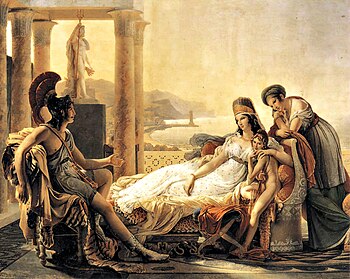
Alternately, it may be an anglicized form of the Greek Elissa which is a Hellenized form of the Phoenician name Elishat meaning “wanderer.” Queen Elissa (also known as Dido) was the name of the legendary foundress of Carthage.

Currently, Alyssa is the 20th most popular female name in the United States, (2010). Her popularity in other countries is as follows:

  • # 42 (Canada, BC, 2010)
  • # 45 (Australia, NSW, 2010)
  • # 100 (Scotland, 2010)
  • # 129 (France, 2009)
  • # 157 (the Netherlands, 2010)

Other forms of Elissa include:

  • Alissa/Alissar  اليسار  اليسا عليسا عليسة (Arabic: a very popular name among Assyrian and Lebanese Christians)
  • Élissa (French)
  • Elissa (Greek/Italian)
  • Elyssa (Greek)
  • Elisa (Spanish)
Source