Brendan

Gender: Masculine
Origin: Irish
Meaning: “prince.”
(BREN-den)

The name is derived from the Latin Brendanus which is a late Latinzation of the Gaelic male name Bréanainn which is inturn derived from an Old Welsh word breenhín meaning “prince.”

The name was borne by a St. Brendan the Voyager who is considered one of the Twelve Apostles of Ireland and is known for his legendary explorations of exotic lands one of the being the St. Brendan’s Island popularly speculated to be North America.

Currently, Brendan is the 229th most popular male name in the United States, (2010).

Other forms of the name include:

  • Brendan Брендан (Breton/English/German/Faroese/French/Icelandic/Polish/Russian/Scandinavian/Slovene/Ukrainian)
  • Brévalaire (Breton)
  • Brandà (Catalan)
  • Brandan (Catalan/Spanish)
  • Brandaan (Dutch)
  • Brennan (English)
  • Breandán (Gaelic)
  • Bréanainn (Gaelic. BREN-nen)
  • Brendano (Italian)
  • Brendanus (Late Latin)
  • Brendanas (Lithuanian)
  • Brandão (Portuguese)
  • Brendanu (Sicilian)
Source

Nehemiah

Gender: Masculine
Origin: Hebrew
Meaning: “comforted by Yahweh.”
nee-hə-MIE-ə

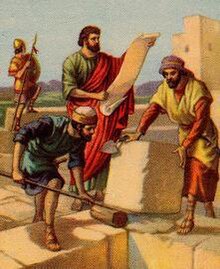
According to the Book of Nehemiah, he was responsible for the rebuilding of Jerusalem and strengthening the Jewish community after being released from Babylonian captivity.

Currently, Nehemiah is the 339th most popular male name in the United States, (2010).

Other forms of the name include:

  • Neemija Неемия (Bulgarian/Russian/Serbian)
  • Nehemia (Dutch/Finnish)
  • Néhémie (French)
  • Neemias Νεεμίας (Greek: modern/Portuguese)
  • Nechemyah  נְחֶמְיָה (Hebrew)
  • Neemia (Italian)
  • Nehemja (Norwegian)
  • Nehemiasz (Polish)
  • Nehemias (Scandinavian)
  • Nehemiáš (Slovak)
  • Nejemija Неємія (Ukrainian)
Source

Hope

Gender: Feminine
Origin: English

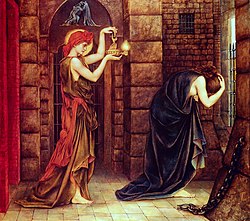
The name comes directly from the English word and has been in usage since the Middle Ages due to the popularity of a cult of sister saints, Hope, Faith and Charity.

Its popularity was in enhanced in the 17th-century due to its usage among the Puritans.

Currently, Hope is 245th most popular female name in the United States, (2010). Its Spanish cognate of Esperanza is currently the 75th most popular female name in Chile and the 948th most popular in the United States, (2010).

Other forms of the name include:

  • Nadzieja Надзе́я (Belarusian/Polish. nod-JAY-yah)
  • Nada (Bosnian/Croatian/Serbian/Slovene)
  • Esperañs (Breton)
  • Esperança (Catalan/Portuguese)
  • Naděžda (Czech)
  • Spes (German/Latin)
  • Elpida Ελπίδα (Greek)
  • Elpis (Greek/Coptic)
  • Hopeful (English: a popular female name among Puritans)
  • Hopestill (English: a popular female name among Puritans)
  • Hopewell (English: a popular female name among Puritans)
  • Espérance (French)
  • Speranza (Italian)
  • Speranță (Romanian)
  • Nadezhda наде́жд (Russian)
  • Spiranza (Sicilian)
  • Esperanza (Spanish)
Source

Theodore

Gender: Masculine
Origin: Greek
Meaning: “god’s gift.”

The name is derived from the Greek Theodoros (Θεοδωρος) which is composed of the elements θεος (theos) meaning “god” and δωρον (doron) “gift.” The name was borne by several early saints, two popes and three tsars of Russia.

In recent American history the name was borne by President Theodore Roosevelt (1858-1919) of whom the Teddy Bear was named for.

It is currently the 263rd most popular male name in the United States, (2010).

An interesting fact: Dorothy is derived from the same Greek roots but in reverse order.

Other forms of the name include:

  • Tewodros ተውዶሮስ (Amharic)
  • Tadros تادرس (Arabic: used among Arab Christians)
  • Todos ܛܘܕܘܫ (Aramaic: used among Assyrian and Chaldean Christians)
  • Hvejdar Хведар (Belarusian)
  • Teodor Теодор (Bulgarian/Catalan/Croatian/Czech/Danish/Estonian/Finnish/Hungarian/Polish/Romanian/Scandinavian/Slovakian/Slovene/Ukrainian)
  • Todor (Bulgarian/Serbiab/Northern Greek)
  • Theirn (Cajun)
  • Theodoor (Dutch)
  • Theodorus (Dutch/Latin)
  • Theodore თევდორე (English/Georgian)
  • Tuudor (Estonian)
  • Teuvo (Finnish)
  • Théodore (French)
  • Theodor (German)
  • Theodoros Θεόδωρος (Greek)
  • Thodoros Θόδωρος (Greek)
  • Fedor (Hungarian)
  • Tivadar (Hungarian)
  • Tódor (Hungarian)
  • Téodóir (Irish)
  • Teodoro (Italian/Portuguese/Spanish)
  • Todaro (Italian)
  • Teodors (Latvian)
  • Thei (Limburgish)
  • Teodoras (Lithuanian)
  • Toše Тоше (Macedonian)
  • Tiodore (Occitanian)
  • Toader (Romanian)
  • Tudor (Romanian/Welsh)
  • Fedor Федор (Russian/Slovene)
  • Fjodor Фёдор (Russian)
  • Teodoru (Sicilian)
  • Fedja (Slovene)
  • Todor (Slovene)
  • Fedir Федір (Ukrainian)
  • Tewdwr/Tudur (Welsh)
Common diminutives include:
  • Tosho Тошо (Bulgarian)
  • Toshko Тошко(Bulgarian)
  • Ted/Teddy (English)
  • Tedo თედო (Georgian)
  • Fedja Федя (Russian)

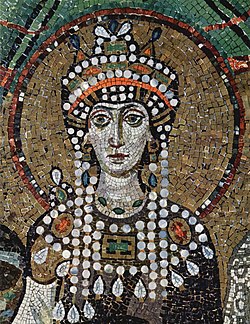
Its feminine form of Theodora was very popular in Byzantium, it was borne by at least five Byzantine Empresses including Empress Theodora who is also revered as a saint.

Other feminine forms include:

  • Teodora Теодора თეოდორა (Bulgarian/Catalan/Crotian/Georgian/Italian/Macedonian/Polish/Portuguese/Romanian/Serbian/Slovene/Spanish/Swedish)
  • Todorka Тодорка (Bulgarian/Macedonian)
  • Theodora Θεοδώρα (Czech/English/German/Greek)
  • Theda (English/German)
  • Théodora (French)
  • Teodóra (Hungarian)
  • Fedora Федора (Russian/Slovene)
  • Feodora Феодора (Russian)

Lawrence

Gender: Masculine
Origin: Latin
Meaning: “from Laurentum.”
Eng (LAW-rents)

The name is derived from the Latin cognomen Laurentius meaning “from Laurentum.” It was popularized by an early Roman deacon, martyr and saint who was roasted alive when he refused to turn over church property to the Roman authorities. According to legend, he is the patron saint of comedians because when he was being roasted he told his torturers “turn me over, I am done on this side.”

It was borne by several other saints.

Lawrence has been a popular given name since Medieval times and it consistently appeared in the U.S. top 100 from 1880-1971. By 1972 it mysteriously and suddenly fell completely out of popularity and it has been so since. It is currently only the 457th most popular male name, (2010).

Other forms include:

  • Nadja/Nadjeh (Arabic: used among Arab Christians)
  • Toufiq  لورنس (Arabic: used among Arab Christians)
  • Loren (Aragonese)
  • Lorient (Aragonese)
  • Lari (Basque)
  • Lawrencij Лаўрэнцій (Belarusian)
  • Laorañs (Breton)
  • Llorenç (Catalan)
  • Larenzu (Corsican)
  • Lovrenco (Croatian)
  • Lovre (Croatian. Currently the 58th most popular name in Croatia, 2010)
  • Lovro (Croatian)
  • Vavřinec (Czech/Slovak: literally from the Czech word for laurel, it has been used as the proper cognate for Lawrence since Christianity was introduced to the area)
  • Laurits/Lauritz (Danish/Estonian/Icelandic/Norwegian)
  • Lasse (Dutch/Norwegian/Swedish. LAHS-se)
  • Laurens (Dutch)
  • Loris (Dutch/French/German/Italian. Currently the 100th most popular male name in France, 2009)
  • Rens (Dutch. Currently the 79th most popular male name in the Netherlands)
  • Larkin (English: a Medieval diminutive form of Lawrence)
  • Lauri (Estonian/Finnish)
  • Lars (Finnish/Norwegian/Swedish. Currently the 14th most popular male name in the Netherlands, the 23rd most popular in Belgium and the 57th most popular in Norway)
  • Lassi (Finnish)
  • Laurent (French)
  • Laurentin (French)
  • Lourens (Frisian)
  • Labhrás (Gaelic) 
  • Loenso (Genovese)
  • Laurenzius (German: archaic)
  • Lenz (German)
  • Lorenz (German)
  • Lavrentios Λαυρεντιος (Greek)
  • Lőrinc (Hungarian)
  • Lárus (Icelandic)
  • Lorenzo (Italian/Spanish. Currently the 5th most popular male name in Italy and 52nd most popular in France (2009). It is also the 187th most popular in the Netherlands and the 322nd most popular in the United States, 2010)
  • Laurentius (Latin)
  • Lau (Limburgish)
  • Lor (Limburgish)
  • Laurynas (Lithuanian)
  • Lawrenz (Maltese)
  • Laurys (Manx)
  • Louothains (Norman)
  • Lavrans (Norwegian)
  • Laurenç (Occitanian)
  • Lleurant (Occitanian)
  • Laurencjusz (Polish)
  • Laurenty (Polish)
  • Wawrzyniec (Polish: literally from the Polish word for laurel, it has been used as the proper cognate for Lawrence since Christianity was introduced to the area)
  • Lourenço (Portuguese)
  • Laurențiu (Romanian)
  • Lavrentie (Romanian)
  • Lurintg (Romansch)
  • Lavrenti Лаврентий ლავრენტი (Russian/Georgian)
  • Larentu (Sardinian)
  • Labhrainn (Scottish)
  • Lovrenc (Slovene)
  • Laurisch (Sorbian)
  • Lorencio (Spanish: Medieval)
  • Lorens (Swedish)
  • Lavrentij Лаврентій (Ukrainian)
  • Lorenso (Venetian)
A common English diminutive is Larry a less common one Laurie
  • Toufiqia (Arabic)
  • Laurendia (Basque)
  • Laurenza (Corsican)
  • Laurenzia (Corsican)
  • Laurentien (Dutch)
  • Renske (Dutch)
  • Laurence (French)
  • Laurentine (French)
  • Lavrentia Λαυρεντία (Greek)
  • Lorentina (Italian)
  • Lorenza (Italian/Spanish)
  • Lorenzina (Italian)
  • Larentia (Latin)
  • Laurentina (Latin)
  • Laurencja (Polish)
  • Laurentyna (Polish)
Source

Uriel

Gender: Masculine
Origin: Hebrew אוּרִיאֵל
Meaning: “God is my light.”
Eng (YUR-ee-el)

In post-Exilic rabbinical tradition, Uriel is an angel, he is mostly apocryphal and legendary and is not mentioned in the Jewish or Christian Bible. He appears in the apocryphal Book of Enoch and in the Book of Esdras in which Uriel is sent by God to instruct Ezra.

In Catholic legend, Uriel rescued St. John the Baptist and his mother St. Elizabeth from Herod’s Massacre of the Innocents, miraculously transporting them to be with the Holy Family as depicted in Leonardo da Vinci’s Virgin of the Rocks.

In Eastern Orthodox tradition he is considered one of the seven major archangels.

In Jewish legend, Uriel is the Angel of Saturday, the Angel of Poetry and is one of the Holy Sephiroth.

In Anglican tradition, Uriel is an archangel and is the patron saint of the Sacrement of Confirmation.

He also plays a role in Milton’s Paradise Lost.

Currently, Uriel is the 440th most popular male name in the United States, (2010).

Other forms of the name include:

  • Uriil Уриил (Bulgarian/Russian)
  • Uriël (Dutch)
  • Uriel ურიელ (Georgian)
  • Uri’yel אוּרִיאֵל(Hebrew)
  • Urielis (Lithuanian)
  • Uril Урил (Macedonian)
  • Urijel Урил  (Serbian)
  • Uryyíl Уриї́л (Ukrainian)

Source

  1. http://www.behindthename.com/name/uriel

Evangeline

Gender: Feminine
Origin: Greek
Meaning: “good news.”
Eng (ee-VAN-je-LEEN)

The name is derived from the Greek ευ (good) and αγγελμα (news; message). Evangelos (masculine) and Evangelina (feminine) have always been popular names in Greece. Evangeline seems to be particularly common among French-Canadians and the Acadians of Louisiana since the 16th-century. The name was used for the title character in Henry Longfellow’s 1847 poem Evangeline, which recounts the trials and tribulations of the Acadians after their expulsion from Canada.

A parish in Louisiana was named in the character’s honour.

Currently, Evangeline is 333rd most popular female name in the United States, (2010).

Other forms of the name include:

  • Evangeliya Евангелия (Bulgarian)
  • Evangeline/Evangéline (Cajun/Franco-English)
  • Evangelina (Croatian/Hungarian/Italian/Portuguese/Romanian/Serbian/Spanish)
  • Évangéline (French)
  • Evangelia Ευαγγελία (Greek)
  • Vangelia Βαγγελιώ (Greek)
  • Evangelija Евангелија (Macedonian)
  • Vangelija Вангелија (Macedonian)
  • Evangelica (Romanian)

Masculine forms include:

  • Evangelis Ευαγγέλης (Greek)
  • Evangelos Ευάγγελος (Greek)
  • Vangelis Βαγγέλης (Greek)
  • Evangelo (Italian)

Source

  1. http://www.behindthename.com/name/evangeline

Salvador

Gender: Masculine
Origin: Spanish
Meaning: “savior.”

The name is derived from the Spanish word for Savior and is used in honour of Christ. It is currently the 457th most popular male name in the United States, (2010). Its Italian cognate of Salvatore is the 895th most popular male name in the United States, (2010).

Other forms of the name include:

  • Sotir (Albanian)
  • Gaizka (Basque)
  • Salbatore (Basque)
  • Xalbador/Xalba (Basque)
  • Salvador (Catalan/Spanish)
  • Saveur (French: archaic)
  • Salvatore (Italian)
  • Salvator (German/Latin)
  • Sotirios  Σωτήριος (Greek)
  • Sauvaire (Occitanian)
  • Salwator (Polish)
  • Sarbadore (Sardinian)
  • Sarbaturi (Sicilian)
Common diminutives used especially among Italian-Americans are: Sal and Tory.

Feminine forms include:

  • Salvatrice (Italian)
  • Salvatorica (Italian)
  • Salvatorina (Italian)
  • Torella (Italian)
  • Torina (Italian)
  • Salvatrix (Latin)
  • Salvadora (Spanish)
Source


Gideon

Gender: Masculine
Origin: Hebrew גִּדְעוֹן

The name name could either be Hebrew for “destroyer” or “tree feller.” It is borne in the Old Testament by one of the Hebrew Judges, (Judges 6–8). He is also mentioned in Epistle to the Hebrews: Chapter 11 as an example of a man of faith.

In the Book of Mormon, it is borne by a powerful Nephite leader.

Regarded as a saint in the Catholic Church, it was occasionally used as a given name in Medieval England, but exploded in popularity after the Protestant Reformation, especially in Germany and the Netherlands.

Currently, Gideon is the 461st most popular male name in the United States and the 496th most popular in the Netherlands, (2010).

Other forms of the name include:

  • Gideon Гидеон (Afrikaans/Dutch/English/Estonian/German/Scandinavian/Serbian)
  • Gedeó (Catalan)
  • Gédéon (French)
  • Gid’on גִּדְעוֹן (Hebrew)
  • Gedeon Гедео́н (Hungarian/Polish/Russian)
  • Gedeone (Italian)
  • Gideonas (Lithuanian)
  • Gideão (Portuguese)
  • Gedeón (Spanish)
The name was borne by the first discoverer of the dinosaur, Gideon Mantell (1790-1852).
Common English diminutives are Gid and Giddy.
Source


Solomon

Gender: Masculine
Origin: Hebrew שְׁלֹמֹה
Meaning: “peace.”

The name is borne in the Old Testament by son of David and the King of Israel. He is credited as being the author of Proverbs, the Song of Solomon and Ecclesiastes. In the Talmud he is considered one of the 48 prophets. In Jewish and Christian tradition he is viewed as a wise and holy king but had fallen from grace due to his ego and his marriage to hundreds of foreign wives who led him astray from God. In the Qu’ran, Solomon is a prophet and a messenger from Allah, he is the only one who was ever able to control the djinn with his magical incantations.

The name has always been a popular one among Jews, Muslims and Eastern Orthodox Christians, but has never really been common in the English-speaking world, even after the Protestant Reformation. Currently, Solomon is the 467th most popular male name in the United States, (2010).

Other forms include:

  • Salomo (Afrikaans/Dutch/Finnish/German/Scandinavian)
  • Salomon (Albanian/Croatian/Finnish/French/Polish/Scandinavian/Ukrainian)
  • Sulayman  سليمان (Arabic)
  • Salamon Саламон (Belarusian)
  • Sulejman (Bosnian)
  • Suljo (Bosnian)
  • Solomon Саламон (Bulgarian/English/Macedonian/Romanian/Russian/Serbian)
  • Salomó (Catalan)
  • Šalomoun (Croatian)
  • Saalomon (Estonian)
  • Sálomon (Faroese)
  • Solamh (Gaelic)
  • Solomoni სოლომონი (Georgian)
  • Shlomo שְׁלֹמֹה (Hebrew)
  • Salamon (Hungarian/Occitanian)
  • Silêman (Kurdish)
  • Salomone (Italian)
  • Shelomo (Ladino)
  • Salamans (Latvian)
  • Zālamans (Latvian)
  • Saliamonas (Lithuanian)
  • Sjelomo (Norwegian: archaic)
  • Szlomo (Polish-Yiddish)
  • Salomão (Portuguese)
  • Šalamún (Slovak)
  • Suleymaan (Somalian)
  • Salomón (Spanish)
  • Sөlәjman Сөләйман (Tatar)
  • Süleyman (Turkish)
  • Selyf (Welsh)
  • Zalman (Yiddish)

Common English diminutives are Sol and Solly.

A Russian feminine form which was common among Russian royalty is Solomonia.

Source

  1. http://www.behindthename.com/name/solomon