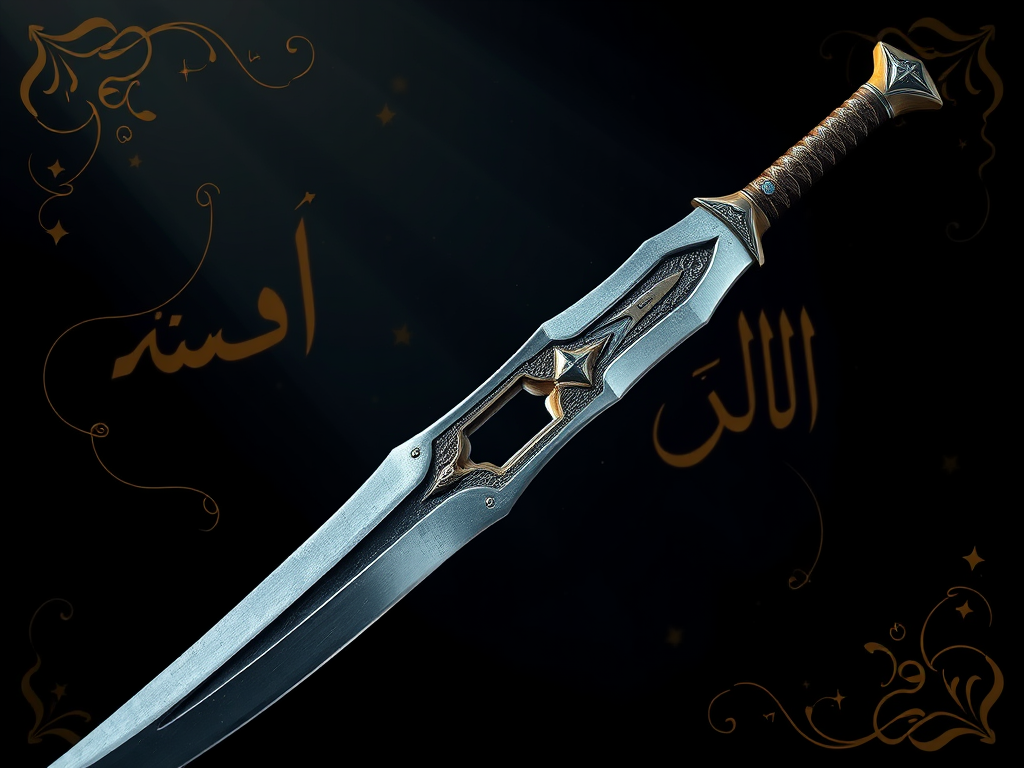
Zulfiqar

  • Origin: Arabic ذو الفقار
  • Meaning: debated
  • Gender: Male
  • Pron: ZOOL-fee-KAR

In Islamic tradition it specifically refers to a sword with a split or notched blade—the legendary weapon given by the Prophet Muhammad to his cousin and son-in-law ʿAlī ibn Abī Ṭālib.

It possibly comes from classical Arabic compound dhū / dhu (ذو) (possessor of; one who has), and fiqār / fiqar (فقار) (spine; vertebrae). Other sources suggest the second element may relate to the stars of Orion’s belt.

The phrase literally means “the one with the notches” or “owner of the notched spine.”

International Variations

  • Zylfikari, Zilfikari (Albanian)
  • Zupulkar Зулпукъар (Avar)
  • Zülfüqar (Azeri)
  • Zulfikar (Bosnian, Indonesian)
  • Zulfakar Зульфакъар (Chechen)
  • Zülpykar Зұлпықар (Kazakh)
  • Zilfiqar (Kurdish)
  • Zulfaqar (Malay)
  • Zolfeghar ذوالفقار (Persian)
  • Zulfikor (Tajik/Uzbek)
  • Zülfikar (Turkish)

Sources

Bayram, Bajram

  • Origin: Turkic
  • Meaning: “festival; holiday.”
  • Gender: masculine
  • BY-rahm

The name comes directly from the Turkic word referring to any festival or public holiday, whether religious or secular.

Between 1980-2004, the name appeared in the Top 100 Most Popular Turkish Male Names, and peaked at #42 in 1981.

Sources

Latif, Latifa

  • Origin: Arabic لَطِيْف
  • Meaning: “gentle; kind; benevolent.”

Latif is a masculine given-name which comes directly from the Arabic word لَطِيف (gentle; kind; benevolent). In Islam, Al-Latif لطيف, (the Kind; the Benevolent) is one of the 99 names of Allah (God). It’s feminine form is Latifa.

Latif & Latifa are commonly used throughout the Islamic world.

A notable American bearer is actress & singer, Queen Latifah.

Other forms include:

  • Latıif (m), Latıifa (f) (Avar)
  • Lətif (m), Lətife (f) (Azeri)
  • Latheef, Latheefa (Dhivehi)
  • Latifah (f) (Indonesian, Malaysian)
  • Letîf (m), Letîfe (f) (Kurdish)
  • Lәtyjif (m), Lәtyjifә (f) (Tatar)
  • Letife (f) (Turkish)
  • Lateef لطیف, Lateefa(h) (Urdu)

Sources

Sawda

Sawdah

By Omaislam – Own work, CC BY-SA 4.0, https://commons.wikimedia.org/w/index.php?curid=41784804


  • Origin: Arabic سودة
  • Meaning: uncertain
  • Gender: feminine
  • (SOW-dah)

The name is of uncertain meaning but is believed to be from the Arabic root S-W-D which can mean “blackness” or “large number of palm trees.”

The name was borne by one of the wives of the Prophet Muhammed known as Sawda bint Zama, considered one of the Mothers of Believers. Sawda bint Zama was a widow who married Prophet Muhammed at around the age of 50 to help care for his children.


Other transliterations are Sauda & Saudah.

Other forms include:

  • Seuda (Albanian)
  • Säüdä, Säüzä, Savda Сәүҙә (Bashkir)
  • Sevda (Bosnian)
  • Sawda Савда (Avar)
  • Sawdat Савдат (Chechen)
  • Saudah (Indonesian, Malaysian)
  • Sauda Сауда (Kazakh)
  • Sevde (Turkish)

Sources