George

Gender: Masculine
Origin: Greek Γεωργιος
Meaning: “farmer.”
Eng (JORJ)

The name is an English and Romanian form of the Greek, Georgios Γεωργιος, which is derived from the Greek γεωργος (georgos) meaning, “farmer; earth worker.”

The name was borne by a 4th-century Christian saint and martyr, a Roman soldier of Greek ancestry who refused to sacrifice to pagan gods as demanded by the Roman Emperor at the time. He was popularized in the Western Christian Church after the Crusades, when soldiers brought the story back to Western Europe. The saints’ story was embellished and his story appears in the Golden Legend.

The most famous legend was that during the saint’s life, he managed to rescue a maiden who was about to be sacrificed to a dragon by slaying it with his lance. This legend has been the subject of art for centuries.

Though revered as the patron saint of England, the name itself did not catch on in until the 18th-century, following the accession of George I of England. The name has been borne by several kings throughout Europe. It was also borne by the first president of the United States, George Washington.

In Medieval times, English troops would chant “by George“, as a invocation to the saint to protect them in battle.

Between 1880 and 1937, George remained in the U.S. top 10. As of 2010, he only ranked in as the 164th most popular male name. His rankings in other countries are as follows:

  • # 1 (Georgi, Bulgaria, 2007)
  • # 1 (Georgios, Greece, 2010)
  • # 2 (Giorgi, Georgia, 2011)
  • # 5 (Yegor, Belarus, 2011)
  • # 9 (England/Wales, 2010)
  • # 12 (Yegor, Russia, 2011)
  • # 16 (Jorge, Spain, 2010)
  • # 19 (Jiří, Czech Republic, 2010)
  • # 20 (Romania, 2009)
  • # 22 (Jordi, Catalonia, 2010)
  • # 27 (Jure, Slovenia, 2010)
  • # 42 (Jorge, Chile, 2010)
  • # 53 (Juraj, Croatia, 2010)
  • # 69 (Jure, Croatia, 2010)
  • # 73 (Australia, NSW, 2010)
  • # 75 (Jurij, Slovenia, 2010)
  • # 76 (Jørgen, Norway, 2010)
  • # 78 (Jorge, Mexico, 2010)
  • # 80 (Joris, Netherlands, 2010)
  • # 82 (Jordi, Spain, 2010)
  • # 84 (Jurica, Croatia, 2010)
  • # 100 (Scotland, 2010)
  • # 168 (Jorge, United States, 2010)
  • # 233 (Joris, France, 2009)
  • # 420 (Jordi, Netherlands, 2010)

Other forms of the name include:

  • Gjergj (Albanian)
  • Jorgo (Albanian)
  • Giorgis ጊዮርጊስ (Amharic)
  • Jurj(us)  جرج  جرجس (Arabic)
  • George  جورج (Arabic/English/Romanian)
  • Khodor  خضر (Arabic)
  • Chorche (Aragonese)
  • Gev(or) Գեվ Գեվոր (Armenian)
  • Gevorg Գեվորգ (Armenian)
  • Kevork Գեւորգ (Armenian)
  • Xurde (Asturian)
  • Gorka (Basque)
  • Jury Юры (Belarusian)
  • Yegor Егор (Belarusian/Russian)
  • Jord (Breton)
  • Jorj (Breton)
  • Georgi Георги (Bulgarian)
  • Jordi (Catalan)
  • Juraj (Croatian/Slovak/Slovene)
  • Jurica (Croatian)
  • Jure (Croatian/Slovene)
  • Jiří (Czech)
  • Jørgen (Danish/Norwegian)
  • Joris (Dutch/Frisian)
  • Sjors (Dutch)
  • Georg (Faroese/Estonian/German/Icelandic/Romansch/Scandinavian)
  • Jurjen (Frisian)
  • Jüri (Estonian/Volapuk)
  • Jørundur (Faroese)
  • Jokora (Finnish)
  • Jori (Finnish)
  • Jyr(k)i (Finnish)
  • Yrjänä (Finnish)
  • Yrjö (Finnish)
  • Georges (French)
  • Xurxo (Galician)
  • Giorgi გიორგი (Georgian/Monegasque)
  • Jörgen (German/Swedish)
  • Jörg (German/Swedish)
  • Jürgen (German)
  • Jürg (German)
  • Georgios Γεώργιος (Greek)
  • Joorut (Greenlandic)
  • Juulut (Greenlandic)
  • Keoki (Hawaiian)
  • György (Hungarian)
  • Seoirse (Irish-Gaelic)
  • Giorgio (Italian/Venetian)
  • Georgius (Latin)
  • Jur(g)is (Latvian)
  • Jurgis (Lithuanian)
  • Gjoko  Ѓок (Macedonian)
  • Gjorgje Ѓорѓе (Macedonian)
  • Gjorgji  Ѓорѓи (Macedonian)
  • Gheevargees ഗീവര്‍ഗീസ് (  (Malayalam)
  • Gheevarugees ഗീവറുഗീസ് ( (Malayalam)
  • Varghees വര്‍ഗീസ്‌ (Malayalam)
  • Verghese വെര്‍ഗീസ് (Malayalam)
  • Varughese വറുഗീസ് (Malayalam)
  • Ġorġ (Maltese)
  • Jore (Norman)
  • Jørn (Norwegian)
  • Ørjan (Norwegian)
  • Jordi (Occitanian/Provençal)
  • Jerzy (Polish)
  • Jorge (Portuguese/Spanish)
  • Gheorghe (Romanian)
  • Georgy Георгий (Russian/Ukrainian)
  • Yuri Юрий (Russian)
  • Deòrsa (Scottish)
  • Seòrsa (Scottish)
  • Đorđe Ђорђе (Serbian)
  • Đorđo Ђорђо (Serbian)
  • Đurađ Ђурађ(Serbian)
  • Jurij (Slovene)
  • Göran (Swedish)
  • Örjan (Swedish)
  • Gewarges ܓܝܘܪܓܣ(Syriac)
  • Gorges ܓܪܓܣ (Syriac)
  • Yorgo (Turkish)
  • Heorhiy Георгій (Ukrainian)
  • Yur Юр (Ukrainian)
  • Sior (Welsh)
In ancient Greece, Georgos may have also been used as an epithet for Zeus.
As for its feminine forms, I shall save that for a separate post 🙂

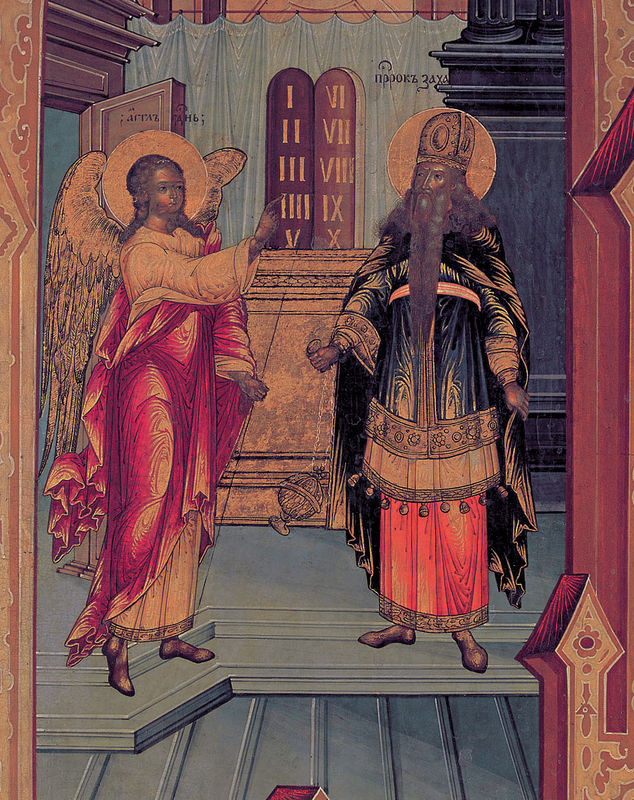
Zechariah, Zachary

St. Zachary Gender: Masculine
Origin: Hebrew  זְכַרְיָה
Meaning: “God remembers.”
Eng (zek-e-RIE-ah); (ZACK-e-REE)

Zachary is an English form of the Hebrew Zechariah, a theophoric name that means “God remembers; Yahweh remembers.”

The name is borne by several characters in both the Old and New Testament. In the Old Testament, it was borne by a prophet who authored the Book of Zechariah and in the New Testament, it was borne by the father of John the Baptist.

In the Qu’ran, the father of John the Baptist is viewed as a prophet and also as the protector of Mary, the mother of Jesus.

The name also appears as Zacharias, a Greek rendition, in some versions of the New Testament.

In the English speaking world, the name has been in usage since Medieval times. In Eastern Europe, especially in Orthodox dominated countries, it has always been a common name.

Currently, Zachary is the 61st most popular male name in the United States, (2010). In 1994, he ranked as high as # 12.

In other countries, his popularity is as follows:

  • # 51 (Australia, NSW, 2010)
  • # 51 (England/Wales, 2010)
  • # 55 (Canada, BC, 2010)
  • # 331 (Zacharie, France, 2009)
  • # 446 (France, 2009)

Other forms of the name include:

  • Sagarias (Afrikaans)
  • Zakariyya زكرياء (Arabic/Assyrian/Circassian/Coptic/Ethiopian/Lebanese/Syrian)
  • Zacharij/Zachari Захари (Bulgarian)
  • Zacaries (Catalan)
  • Zekarija Закария (Chechen/Kazakh)
  • Zakaria ზაქარია (Coptic/Ethiopian/Georgian/Kurdish)
  • Zaharije Зaxapиje (Croatian/Serbian)
  • Zachariáš (Czech/Slovak)
  • Zachary (Czech/English/French/Polish)
  • Zacharias (German/Scandinavian)
  • Sakarias (Faroese/Norwegian/Swedish)
  • Sakari (Finnish: Sakke is a diminutive form)
  • Saku (Finnish)
  • Zacharie (French)
  • Sagaire/Sagairi (Gaelic)
  • Zacharias Zαχαριας (Greek)
  • Zakariás (Hungarian)
  • Zakeus (Hungarian)
  • Zekarja (Hungarian)
  • Zaccaria (Italian)
  • Zaccheo (Italian)
  • Cherian (Malayalam)
  • Sakaria (Malayalam)
  • Scaria (Malayalam)
  • Zaxaria Захарїа (Old Church Slavonic)
  • Zachariasz (Polish)
  • Zacarias (Portuguese)
  • Zaharia (Romanian)
  • Zaccaria(s) (Romansch)
  • Zachar Захар (Russian)
  • Sachairi (Scottish-Gaelic)
  • Zacarías (Spanish)
  • Zakarya (Swahili)
  • Zekeriya (Turkish)

The name is also borne by several saints as well as by one Roman Catholic pope and a Coptic pope.

Zaharina Захарина is a Bulgarian feminine form and Zara is its pet form.

Other notable bearers include an 8th-century Nubian king, a 9th-century Khazar king, and American president, Zachary Taylor (1784-1850)

Sources

  1. http://www.askoxford.com/firstnames/zachary?view=uk
  2. http://www.behindthename.com/php/find.php?name=zachary
  3. http://www.svenskanamn.se/
  4. http://bibref.hebtools.com/?book=%20Matthew&verse=23:35&src=!

Enoch

Gender: Masculine
Origin: Biblical Hebrew חֲנוֹך 
Meaning: “dedicated.”
Eng (EE-nock)

The name is derived from the Hebrew,  חֲנוֹך Chanokh, meaning, “dedicated.”

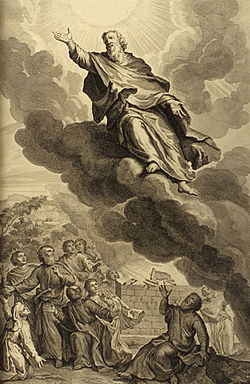
The name appears several times in the Old Testament, the most notable bearers being a son of Cain and a father of Methuselah. The latter is one of the seven pre-Deluge Patriarchs and is considered a major figure in Islam, (in Islam he is referred to as Idris), Judaism and various Christian branches. He is attributed as being the author of the apocryphal Book of Enoch,  which recounts the rise and fall of the Nephilim.

In the English-speaking world, the name came into usage after the Protestant Reformation. It was borne by American Revolutionary soldier and spy, Enoch Crosby (1750-1835), American entrepreneur and philanthropist, Enoch Pratt (1808-1896) and British politician, Enoch Powell (1912-1998).

As of 2010, its Scandinavian form of Enok was the 8th most popular male name in the Faroe Islands.

Other forms of the name include:

  • Enok (Albanian)
  • Henock (Amharic)
  • Enoch Енох (Bulgarian/English/German/Italian/Polish/Russian/Ukrainian)
  • Henoc (Catalan)
  • Henok (Croatian)
  • Eenok (Estonian)
  • Enok (Faroese/Icelandic/Scandinavian)
  • Enokur (Faroese)
  • Hanok (Faroese)
  • Henoch (Faroese)
  • Eeno (Finnish)
  • Eenokki (Finnish)
  • Eenukki (Finnish)
  • Einokki (Finnish)
  • Einukki (Finnish)
  • Ienokki (Finnish)
  • Enoki ენოქი (Georgian)
  • Énokh (Hungarian)
  • Enoque (Portuguese)
  • Enoh (Romanian)
  • Henoh (Slovene)
  • Enoc (Spanish)
  • Enock (Swedish)

Rebecca

Gender: Feminine
Origin: debated
Meaning: debated
Eng (re-BEK-ka)

Rebecca is the English form of the Biblical Hebrew רִבְקָה (Rivqah), which possibly means “snare” or “noose” possibly referring to captivation or beauty, but may also be of an unknown Aramaic source.

The name is borne in the Bible by the Aramean wife of Isaac and the mother of Jacob and Esau. She is considered a Jewish matriarch.

In the English speaking world, the name was seldom used until the Protestant Reformation, where it became an exceedingly popular name. Pocahantas even took this as her Christian name upon her baptism.

Currently, Rebekka is the 3rd most popular female name in Faroe Islands, (2010). Her rankings in other countries are as follows:

  • # 20 (Rebecca, Italy, 2010)
  • # 24 (Rebeka, Hungary, 2010)
  • # 37 (Rebecca, Northern Ireland, 2010)
  • # 38 (Rebecca, Scotland, 2010)
  • # 48 (Rebecca, Ireland, 2010)
  • # 75 (Rebeka, Slovenia, 2010)
  • # 75 (Rebecca, Sweden, 2010)
  • # 82 (Rebecca, England/Wales, 2010)
  • # 137 (Rebecca, United States, 2010)
  • # 290 (Rebecca, Netherlands, 2010)
  • # 304 (Rebecca, France, 2009)
  • # 404 (Rebekah, United States, 2010)

Other forms of the name include:

  • Rafqa ﻪﻔﻴﻓﺍﺭ (Arabic/Syriac)
  • Rebeka Ребека (Bosnian/Bulgarian/Czech/Hungarian/Lithuanian/Polish/Slovak/Slovene)
  • Rebeca (Catalan/Ladino/Portuguese/Romanian/Spanish)
  • Rebekka (Dutch/Ethiopian/Finnish/German/Scandinavian)
  • Rebecca (English/Italian/Scandinavian)
  • Becca (English)
  • Reba (English)
  • Rebekah (English)
  • Rébecca (French)
  • Rebèque (French)
  • Rebekah (Greek: Biblical)
  • Revekka Ρεβέκκα (Greek: Modern)
  • Rifqa (Hebrew: Biblical)
  • Riva/Rivka רִבְקָה, רבקה אמנו (Hebrew: Modern)
  • Réba (Hungarian)
  • Ribka (Indonesian)
  • Ryfka (Polish-Yiddish)
  • Rebecke (Plattdeutsch)
  • Revekka Реве́кка (Russian)
  • Reveka (Serbian)
  • Rebecka (Swedish)
  • Rifka/Riwka (Yiddish)

The name was the subject of the 1938 British novel of the same name, written by Daphne du Maurier. It is also borne by a 19th-century Lebanese Christian saint. The designated name-day is March 23 (France).

Common English diminutive forms include: Becca, Beck, Becky, Bex, Reba and Rebi.

Sources

  1. Genesis 22:20-23
  2. http://www.ou.org/torah/ti/5764/toldot64.htm
  3. http://www.behindthename.com/name/rebecca
  4. http://www.askoxford.com/firstnames/rebecca?view=uk

Leah

Gender: Feminine
Origin: Hebrew
Meaning: debated
Eng (LEE-uh); Heb (LAY-ah)

The name is found in the Old Testament as the name of the sister of Rachel and the first wife of Jacob.

In Jewish tradition, Leah is considered a matriarch and among Christians, she is believed to be the direct ancestor of Jesus.

Its exact meaning and origins are debated. Many scholars believe that it is from the Hebrew לְאָה (le’ah), meaning, “weary.” Other sources have suggested that it is from an Akkadian source meaning, “lady; mistress.”

In the English speaking world and on the continent, it was not common outside the Jewish community until after the Protestant Reformation.

Currently, Leah ranks in as the 24th most popular female name, (2010) and this is the highest the name has ranked in U.S. naming history. She is quite popular in other countries, her rankings in other countries are as follows:

  • # 1 (Lea, Faroe Islands, 2010)
  • # 1 (Léa, Monaco, 2009)
  • # 1 (Lea, Romansch-speaking, Switzerland, 2010)
  • # 2 (Léa, French-speaking, Switzerland, 2010)
  • # 2 (Lea, Liechtenstein, 2010)
  • # 3 (Léa, France, 2009)
  • # 3 (Lea, Luxembourg, 2009)
  • # 5 (Lea, Austria, 2010)
  • # 5 (Lea, German-speaking, Switzerland, 2010)
  • # 5 (Léa, Belgium, 2010)
  • # 5 (Lea/Leah, Germany, 2011)
  • # 9 (Lea, Malta, 2010)
  • # 14 (Leah, Norway, 2010)
  • # 15 (Leah, Ireland, 2010)
  • # 17 (Lea, Croatia, 2009)
  • # 20 (Leah, Northern Ireland, 2010)
  • # 25 (Leah, Scotland, 2010)
  • # 39 (Lea, Slovenia, 2010)
  • # 46 (Lea, Denmark, 2010)
  • # 49 (Lea, Sweden, 2010)
  • # 50 (Leah, England/Wales, 2010)
  • # 55 (Leia, Sweden, 2010)
  • # 56 (Leah, Canada, BC, 2010)
  • # 59 (Lia, Slovenia, 2010)
  • # 63 (Leah, New Zealand, 2010)
  • # 89 (Lea, Norway, 2010)
  • # 95 (Lia, Hungary, 2010)
  • # 96 (Leah, Australia, NSW, 2010)
  • # 299 (Lia, France, 2009)
  • # 320 (Leia, France, 2009)
  • # 356 (Lia, Netherlands, 2010)
  • # 386 (Leah, Netherlands, 2010)
  • # 418 (Lea, Netherlands, 2010)
  • # 566 (Lea, United States, 2010)
  • # 830 (Leia, United States, 2010)

Other forms of the name include:

  • Lia (Catalan/Czech/Hungarian/Italian/Portuguese/Biblical Latin/Slovene)
  • Lea (Czech/Dutch/Estonian/Finnish/German/Hungarian/Icelandic/Norwegian/Polish/Romansch/Scandinavian/Slovak/Slovene/Spanish/Turkish)
  • Leah (English/Ethiopian/German/Scandinavian)
  • Leea (Finnish)
  • Leija (Finnish)
  • Leja (Finnish)
  • Lessu (Finnish)
  • Léa (French)
  • Leaette/Liette (French: originally a diminutive form, used as an independent given name, especially among French Huguenots).
  • Lía (Galician/Spanish)
  • Leia Λεια (Greek: Biblical)
  • Léá (Irish-Gaelic)
  • Lija/Liya Лия (Russian)
  • Lejá (Sami)

Common Czech diminutives include:

  • Leana
  • Leí
  • Leonka
  • Leoša
  • Leuška
  • Leúšik
  • Lienka
  • Liuška

The designated name-days are: January 5 (Estonia/Finland), March 22 (France), April 29 (Slovak), June 26 (Sweden).

Eva, Eve

Gender: Feminine
Origin: Hebrew
Meaning: “life.”
Eng (EEV); (EE-vuh); Germ/Sp/Pol (EV-ah)

The name is borne in the Bible and in the Quran by the first woman created by God. She and her husband were expelled from the Garden of Eden after eating from the Tree of Knowledge.

The name is believed to be derived from the Hebrew roots חַוָּה, Ḥavvāh, from the Hebrew root ḥāyâ meaning “life” and the Semitic element, ḥyw “to live.” Both the Hebrew word chavah meaning “to live” and chayah meaning “to breath” share the same root.

Despite Eve’s fall from Grace in the Bible, the name was always in usage among Jewish, Christian and Muslim communities. In England, its usage can be traced back to the 12th-century. Its Latinate form of Eva, has always been a classic in continental Europe, especially in Germany, Poland, Slovakia and the Czech Republic.

As of 2010, Eva was the most popular female name in the Faroe Islanda and in Slovenia. Eve, Eva and all her various forms’ rankings in other countries are as follows:

  • # 3 (Iceland, 2010)
  • # 4 (French-speaking, Switzerland, 2010)
  • # 5 (Netherlands, 2010)
  • # 7 (Ieva, Lithuania, 2010)
  • # 10 (Armenia, 2010)
  • # 10 (Evie, England/Wales, 2010)
  • # 14 (Northern Ireland, 2010)
  • # 15 (France, 2009)
  • # 17 (Scotland, 2010)
  • # 20 (Belgium, 2009)
  • # 24 (New Zealand, 2010)
  • # 26 (Australia, NSW, 2010)
  • # 29 (Croatia, 2010)
  • # 31 (Evie, Scotland, 2010)
  • # 33 (Evie, Australia, NSW, 2010)
  • # 37 (England/Wales, 2010)
  • # 44 (Eevi, Finland among Finnish-speakers, 2010)
  • # 44 (Ireland, 2010)
  • # 46 (Austria, 2010)
  • # 47 (Canada, BC, 2010)
  • # 48 (Spain, 2010)
  • # 55 (Catalonia, 2010)
  • # 55 (Éabha, Ireland, 2010)
  • # 56 (Eve, Northern Ireland, 2010)
  • # 59 (Eve, Ireland, 2010)
  • # 86 (Norway, 2010)
  • # 91 (United States, 2010)
  • # 92 (Eve, England/Wales, 2010)
  • # 99 (Eve, Australia, NSW, 2010)
  • # 201 (Eve, France, 2009)
  • # 589 (Eve, United States, 2010)
  • # 705 (Evie, United States, 2010)

Other forms of the name include:

  • Eva Ева ევა
    (Afrikaans/Albanian/Armenian/Basque/Belarusian/Bosnian/Catalan/Croatian/Czech/Dutch/Faroese/French/Frisian/Galician/Georgian/German/Icelandic/Italian/Portuguese/Romansch/Spanish/Scandinavian)
  • Evis (Albanian)
  • Mahalet/Mahlet (Amharic)
  • Hawa حواء Хауа (Arabic)
  • Yeva (Armenian)
  • Həvva (Azeri)
  • Yeva Ева Эва (Belarusian/Russian/Ukrainian)
  • Yevga Евга (Belarusian)
  • Hava (Bosnian)
  • Evy (Danish/Norwegian/Swedish: initially a diminutive form, occasionally used as an independent given name)
  • Eveke (Dutch: initially a diminutive form, used as an independent given name, EV-eh-ke)
  • Eve (English/Estonian/Walon)
  • Evie (English)
  • Hawat/Hewa (Egyptian/Coptic)
  • Eeva (Estonian/Finnish)
  • Eevi (Estonian/Finnish)
  • Evi (Estonian)
  • Ivi/Iivi (Estonian)
  • Iivika (Estonian)
  • Ève (French)
  • Eefje, Eefke (Frisian)
  • Hawwa ሕይዋን (Ge-ez)
  • Eua Ευα (Greek)
  • Chava חַוָה (Hebrew: Modern: KHAH-vah, gutteral CH sound)
  • Éva (Hungarian: AY-vaw, diminutive form is Évike)
  • Hawa (Indonesian/Malayalam)
  • Éabha (Irish-Gaelic)
  • Ieva (Latvian/Lithuanian: YEH-vah)
  • Evuzus (Malaysian)
  • Aaue (Manx)
  • Èva (Occitanian)
  • Ewa (Polish: EH-vah, diminutive forms are Ewka, Ewunia and Ewusia)
  • Evá (Sami)
  • Evelia (Spanish)
  • Evita (Spanish)
  • Eba (Tagalog)
  • Havva (Turkish)
  • Efa (Welsh)

Italian masculine form is Evo.

Traditionally, in most European countries, the name-day for Adam and Eve is December 24.

Faris

Gender: Masculine
Origin: Arabic فارس
Meaning: “knight.”

The name comes directly from the Arabic word  فارس (faris) meaning, “knight.”

As of 2018, Faris was the 24th Most Popular Male Name in Bosnia & Herzegovina. It peaked at #8 in 2010.

Its Maghrebi form of Farès appeared in the French Top 500, coming in as the 469th most popular male name in France (2018).

Ammar

Gender: Masculine
Origin: Arabic  عمّار
Meaning: “pious; virtuous.”

The name is from the Arabic meaning, “pious; virtuous.”

It was borne by Ammar ibn Yasir al-Ansi, a desciple of the Prophet Mohammed.

As of 2010, its Bosnian form of Amar was the most popular male name in Bosnia & Herzegovina. His rankings in other countries are as follows:

  • # 10 (Iraq, 2007)
  • # 10 (United Arab Emirates)
  • # 45 (Amer, Bosnia & Herzegovina, 2010)
  • # 80 (Ammar, Bosnia & Herzegovia, 2010)

Other forms of the name include:

  • Amar (Bosnian)
  • Əmmar (Azeri)
  • Gammer Гаммәр (Tatar)
The name is used throughout the Islamic world.
A Bosnian feminine form is Amera.

Tariq

Gender: Masculine
Origin: Arabic طارق
Meaning: “morning star; messenger; the knocking one; traveller, path finder.”
طارق

The name is of Arabic origins and can have several different interpretations, one is that it is from the Arabic verb ṭaraqa meaning “to knock” or “to pound.” In this case, the name would take on the meaning of “messenger” or “bringer of news.”

In the Qu’ran, the morning star is named ṭāriq and is described as something that shines and leads the way and in this case, the name can take on the meaning of “someone who leads the way” “traveller” or “pathfinder.”

As of 2010, Tarik was the 2nd most popular male name in Bosnia & Herzegovina, while Tareq is the 8th most popular male name in Libya.

The name was most notably borne by Tariq ibn Ziyad, the Islamic general who helped conquer Spain in the 8th-century.

The name is used by both Muslim and Christian Arabs.

Other forms of the name include:

  • Tarik (Albanian/Bosnian)
  • Tarak/Tarek (Algerian/Lebanese/Moroccan/Tunisian: these are usually the way the name is transcribed in French and hence is most often used in the Francophone world)
  • Tarık (Azeri/Kurdish/Turkish)

The name is also transliterated as Tareq and Tareeq.

Leila, Layla

Gender: Feminine
Origin: Arabic לילה‎ ليلى
Meaning: “night.”
(LAY-la)

The name is derived from the Arabic and has a variety of different meanings depending on its spelling, the most popular etymology is that it is from a Semitic root, l-y-l, meaning, “night” and shares the same etymology as the name Lilith.

The name has always been popular in the Middle East and is found in the 7th-century romantic poem, Qays & Layla also known as Layla & Majnun (written by Persian poet, Nizami Ganjavi). The legend trickled down to throughout the Middle East, Near East, Central Asia and South Eastern Europe, making the name a long time classic in all those regions.

It was introduced into the English-speaking world via Lord Byron in which the name appears in two of his works, The Gaiour (1813) and Don Juan (1819). It was further popularized in the 1970s when the name was the subject of two songs, one being the famous Eric Clapton song and the other being “Layla” by Derek and the Dominos.

Her Bosnian form of Lejla is the 7th most popular female name in Bosnia & Herzegovina, (2010). Her rankings in other countries are as follows:

  • # 3 (Leyla, Azerbaijan, 2010)
  • # 36 (Layla, Australia, 2010)
  • # 37 (Layla, United States, 2010)
  • # 44 (Layla, England/Wales, 2010)
  • # 50 (Layla, Ireland, 2010)
  • # 50 (Layla, Scotland, 2010)
  • # 71 (Leila, Hungary, 2010)
  • # 76 (Layla, Canada, BC, 2010)
  • # 95 (Laila, England/Wales, 2010)
  • # 138 (Laila, United States, 2010)
  • # 143 (Leila, France, 2009)
  • # 204 (Leila, United States, 2010)
  • # 304 (Layla, Netherlands, 2010)
  • # 478 (Laila, Netherlands, 2010)
  • # 747 (Leyla, United States, 2010)

The name is also common in Iran, Israel, the Balkans and in the Turkic world.

In the Middle East, the name was popularized by a 7th-century poet by the name of Qays, whose lady love was named Layla. His story became a popular Medieval Arabic romance.

Other forms of the name include:

  • Lejla Лейла (Albanian/Bosnian/Dagestani/Kazakh/Maltese/Tatar)
  • Laïla (Algerian/Moroccan/Tunisian)
  • Leïla (Algerian/Moroccan/Tunisian)
  • Leyli Լեյլի (Armenian)
  • Leyla (Azeri/English/Kurdish/Turkish)
  • Lajla Лайла (Chechen)
  • Leila ლეილა (Circassian/English/Ethiopian/French/Georgian/Hungarian)
  • Laila (Dutch/English/Estonian/Finnish/Hindi/German/Latvian/Scandinavian/Urdu)
  • Layla (English/Italian/Uzbek)
  • Lejli Лейли (Kazakh)
  • Ljajlim Ляйлим (Kazakh)
Laila can also be a Sami form of Helga.